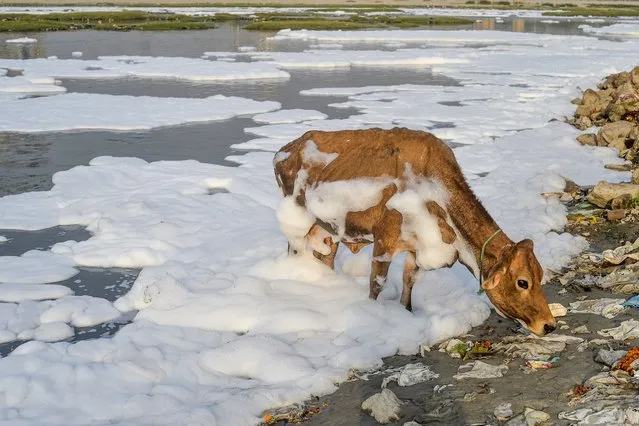
A cow covered with foam scavenges in the waste left on the banks of the polluted Yamuna river in New Delhi on October 10, 2020. (Photo by Sajjad Hussain/AFP Photo)
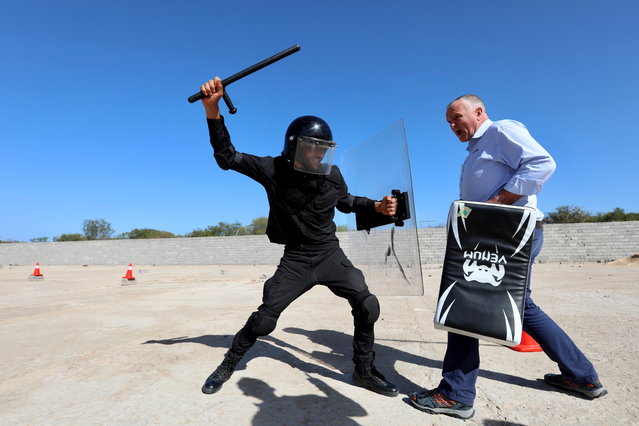
A member of security forces takes part in a training session arranged by a security company in Tajoura suburb of Tripoli, Libya on February 10, 2021. (Photo by Hazem Ahmed/Reuters)
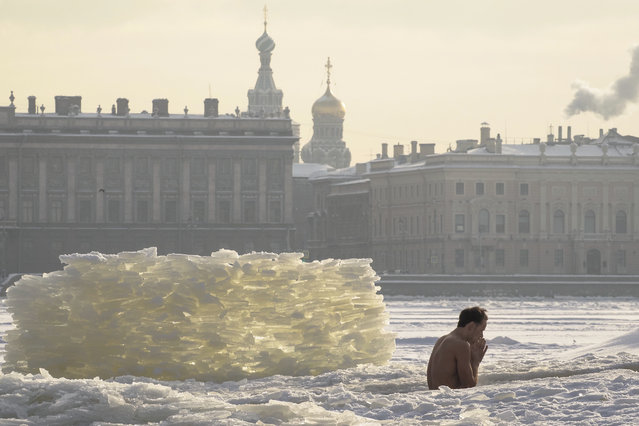
A man bathes in an ice hole in the Neva River St. Petersburg, Russia, Wednesday, February 10, 2021. The temperature in St. Petersburg is –15C ( 5 °F). (Photo by Dmitri Lovetsky/AP Photo)
A Naga Sadhu or Hindu holy man adjusts the beads around his neck ahead of the first Shahi Snan at “Kumbh Mela” or the Pitcher Festival, in Haridwar, India, March 10, 2021. (Photo by Anushree Fadnavis/Reuters)
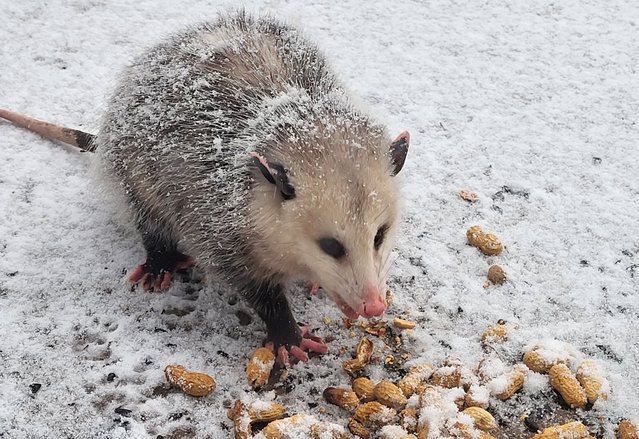
An urban Opossum covered in light snow visits a suburban Chicago deck on December 10, 2025. (Photo by H Rick Bamman/ZUMA Press Wire/Rex Features/Shutterstock)
Japanese Yuuka Hasumi, 17, and Ibuki Ito, 17, also from Japan, who want to become K-pop stars, perform at an Acopia School party in Seoul, South Korea, March 16, 2019. Acopia is a prep school offering young Japanese a shot at K-pop stardom, teaching them the dance moves, the songs and also the language. (Photo by Kim Hong-Ji/Reuters)
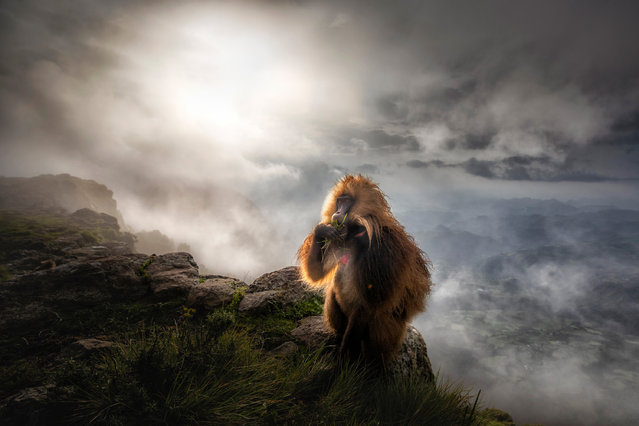
Highly commended, mammals: Gelada after the storm – Marco Gaiotti (Italy). “Gelada baboons are the only monkey species in the world that feed on grasses. They are native to the tableland of Ethiopia. Every morning large family groups wander from their sleeping places in the steep rock face, up to 1,000 metres high, to the feeding grounds at the tablelands. This image clearly depicts their feeding strategy: they pull out bunches of grass, sort the stalks and then lift them to their mouth. This shot was taken towards the end of the rainy season after a heavy storm”. (Photo by Marco Gaiotti/2019 GDT European Wildlife Photographer of the Year)
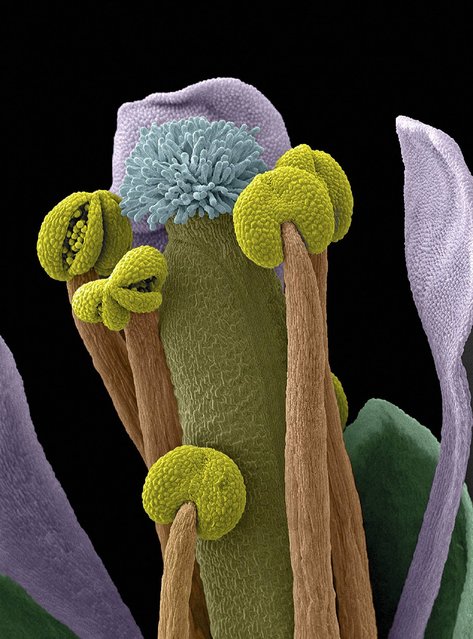
Beautiful, strange and occasionally alarming pictures from the shortlist for this year’s Wellcome image awards – which celebrate the very best in science photography and imaging – from an x-ray of a bat to a micrograph of a kidney stone. The exhibition opens on 12 March at three science centres and the Museum of Science and Industry in Manchester. Photo: Scanning electron micrograph (SEM) of an Arabidopsis thaliana flower, also commonly known as thale cress. Some of the anthers are open, revealing pollen grains ready for dispersal. Arabidopsis was the first plant to have its entire genome sequenced and is widely used as a model organism in molecular and plant biology. Horizontal width of image is 1200 microns. Magnification 100x. (Photo by Stefan Eberhard/Wellcome Images)