Loading...
Done
Three cabaret dancers sit glum-faced in the Windmill Theatre's canteen upon hearing the news that the theatre's owners have sold out to a cinema company, on October 02, 1964. The theatre, which was the first to include nudity in its shows, has been able to cope with competition from a growing number of West End strip clubs. (Photo by Hulton-Deutsch Collection/CORBIS/Corbis via Getty Images)

Three cabaret dancers sit glum-faced in the Windmill Theatre's canteen upon hearing the news that the theatre's owners have sold out to a cinema company, on October 02, 1964. The theatre, which was the first to include nudity in its shows, has been able to cope with competition from a growing number of West End strip clubs. (Photo by Hulton-Deutsch Collection/CORBIS/Corbis via Getty Images)
Details
26 Jan 2018 06:51:00
Revellers of street parties known as blocos, dance during a protest against restrictions by city officials in Rio de Janeiro, Brazil, Wednesday, April 13, 2022. City Hall has banned the street parties during Carnival celebrations, which were delayed by almost two months due to the pandemic. (Photo by Silvia Izquierdo/AP Photo)

Revellers of street parties known as blocos, dance during a protest against restrictions by city officials in Rio de Janeiro, Brazil, Wednesday, April 13, 2022. City Hall has banned the street parties during Carnival celebrations, which were delayed by almost two months due to the pandemic. (Photo by Silvia Izquierdo/AP Photo)
Details
01 May 2022 04:59:00
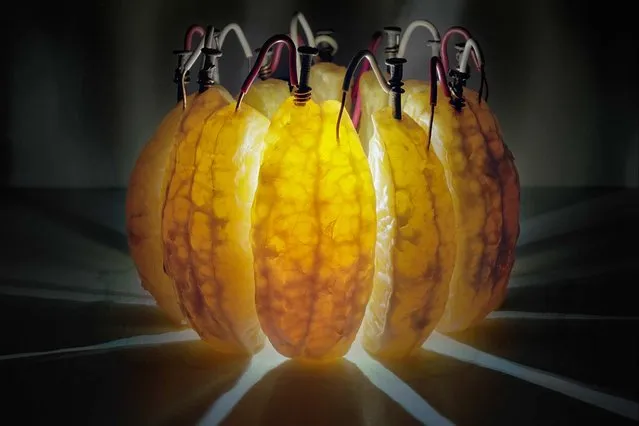
Wedges of an orange generate enough current and electrical juice – 3.5 volts – to power an LED. The fruit’s citric acid helps electrons flow from galvanized nails to copper wire in this 14-hour exposure. This image was published in September’s Visions of Earth, a trio of photos that appear in each issue of National Geographic. (Photo by Caleb Charland/National Geographic)

Wedges of an orange generate enough current and electrical juice – 3.5 volts – to power an LED. The fruit’s citric acid helps electrons flow from galvanized nails to copper wire in this 14-hour exposure. This image was published in September’s Visions of Earth, a trio of photos that appear in each issue of National Geographic. (Photo by Caleb Charland/National Geographic)
Details
06 Jan 2014 12:09:00
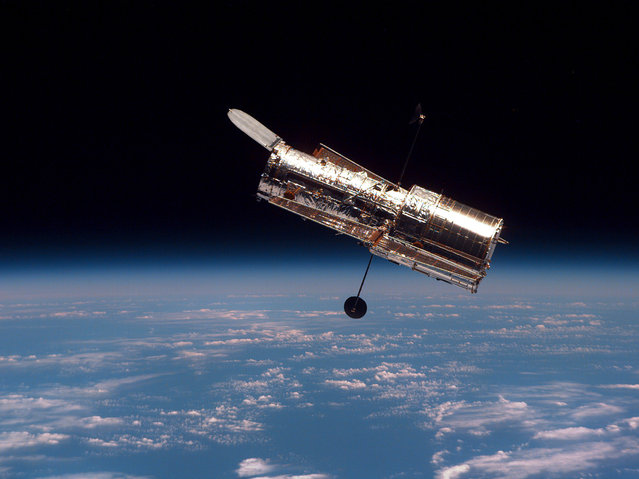
The Hubble Space Telescope is shown following its release from the space shuttle Discovery Wednesday, February 19, 1997. The Hubble Space Telescope, one of NASA'S crowning glories, marks its 25th anniversary on Friday, April 24, 2015. With more than 1 million observations, including those of the farthest and oldest galaxies ever beholden by humanity, no man-made satellite has touched as many minds or hearts as Hubble. (Photo by AP Photo/NASA)

The Hubble Space Telescope is shown following its release from the space shuttle Discovery Wednesday, February 19, 1997. The Hubble Space Telescope, one of NASA'S crowning glories, marks its 25th anniversary on Friday, April 24, 2015. With more than 1 million observations, including those of the farthest and oldest galaxies ever beholden by humanity, no man-made satellite has touched as many minds or hearts as Hubble. (Photo by AP Photo/NASA)
Details
24 Apr 2015 11:25:00
Heugh Breakwater by Caroline Walker. Winner in the Coastal Views category. (Photo by Caroline Walker/Sea View Photography Competition 2020)

Heugh Breakwater by Caroline Walker. Winner in the Coastal Views category. (Photo by Caroline Walker/Sea View Photography Competition 2020)
Details
01 Oct 2020 00:03:00
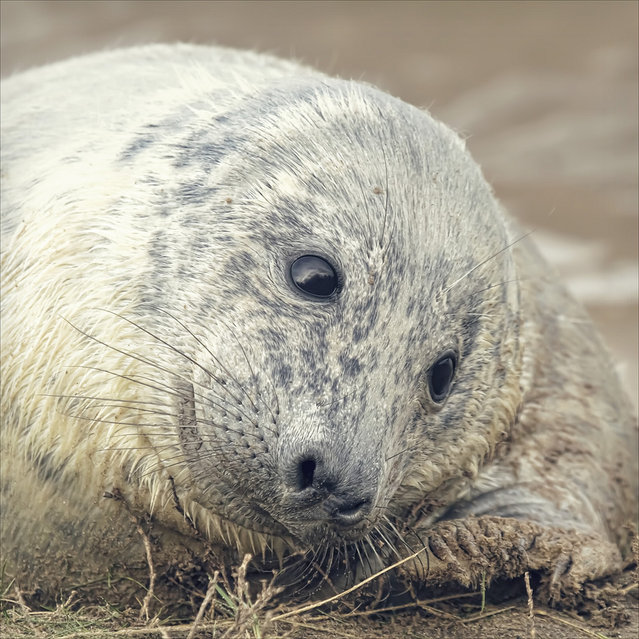
I really need a manicure!

“Nature is beautiful and amazing – i just point my camera at it”. – Black Cat. Photo: “I really need a manicure”! (Photo by Black Cat)

Details
05 Nov 2012 10:26:00
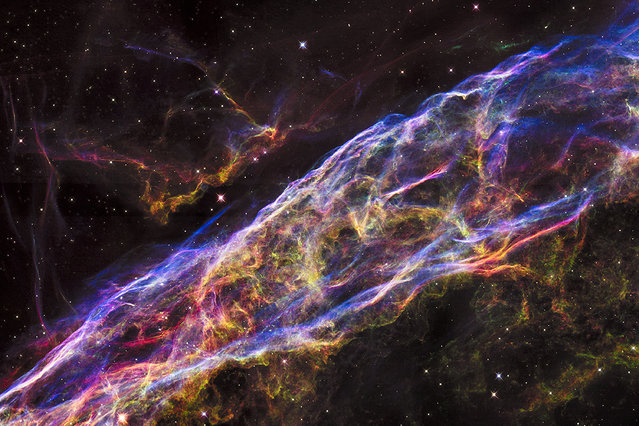
A small section of the expanding remains of the Veil Nebula, a massive star that exploded about 8,000 years ago. The entire nebula is 110 light-years across, covering six full moons on the sky as seen from Earth, and resides about 2,100 light-years away in the constellation Cygnus, the Swan. Image taken by NASA's Hubble Space Telescope. Released September 24, 2015. (Photo by Reuters/NASA/ESA/Hubble Heritage Team)

A small section of the expanding remains of the Veil Nebula, a massive star that exploded about 8,000 years ago. The entire nebula is 110 light-years across, covering six full moons on the sky as seen from Earth, and resides about 2,100 light-years away in the constellation Cygnus, the Swan. Image taken by NASA's Hubble Space Telescope. Released September 24, 2015. (Photo by Reuters/NASA/ESA/Hubble Heritage Team)
Details
10 Dec 2015 08:01:00
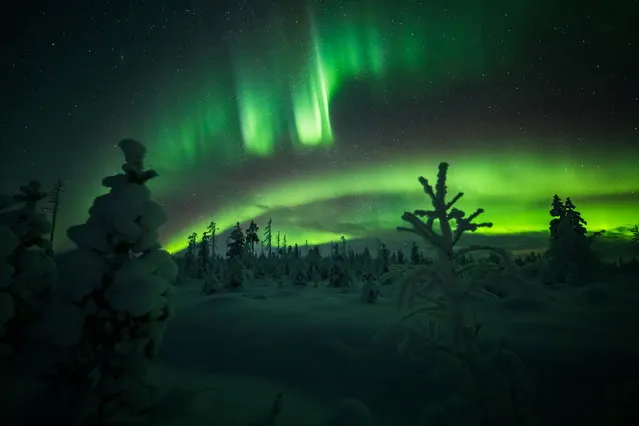
The Aurora Borealis (Northern Lights) is seen in the sky over Muonio in Lapland, Finland on January 18, 2021. (Photo by Alexander Kuznetsov/Reuters)

The Aurora Borealis (Northern Lights) is seen in the sky over Muonio in Lapland, Finland on January 18, 2021. (Photo by Alexander Kuznetsov/Reuters)
Details
12 Nov 2021 09:09:00