Loading...
Done
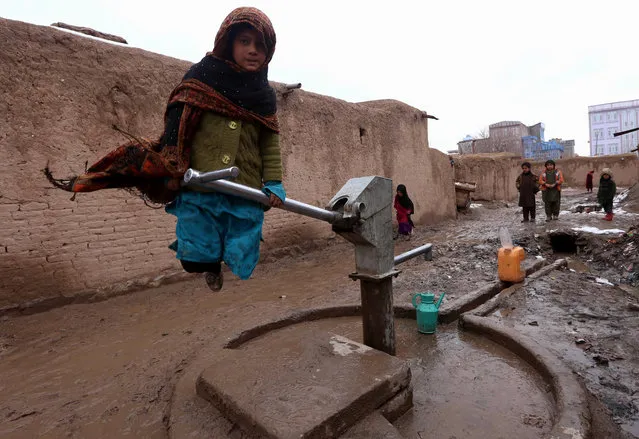
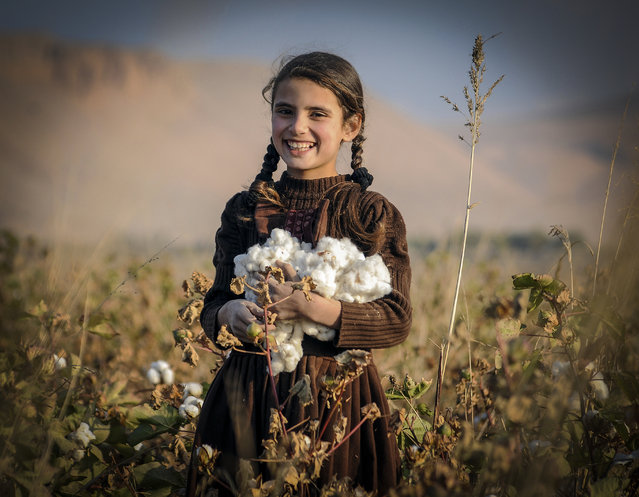
An Afghan girl harvests Cotton buds at a field on the outskirts of Balkh province, Afghanistan, November 15, 2014. (Photo by Sayed Mustafa/EPA)

An Afghan girl harvests Cotton buds at a field on the outskirts of Balkh province, Afghanistan, November 15, 2014. (Photo by Sayed Mustafa/EPA)
Details
22 Nov 2014 13:08:00
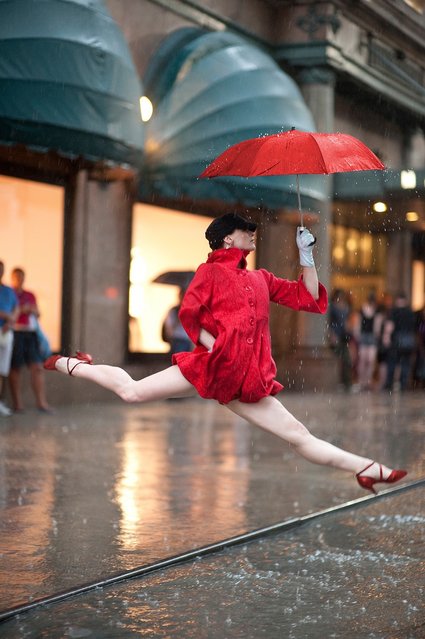
“Dancers Among Us”: Macys, NYC – Annmaria Mazzini. (Photo by Jordan Matter)

“The inspiration for this book came to me one afternoon as I watched my son, Hudson, playing with his toy bus. I was trying to keep pace with his three-year-old mind as he got deeper and deeper into a fantasy involving nothing more than a yellow plastic box and armless figurines. At least that’s what I saw. He saw frantic commuters rushing to catch the 77 local bus to Australia. He jumped in place, mouth open and slapping his knees, joyously reacting to a world I couldn’t see, but one powerfully present for him...”. – Jordan Matter

Photo: “Dancers Among Us”: Macys, NYC – Annmaria Mazzini. (Photo by Jordan Matter)
Details
12 Nov 2012 11:17:00
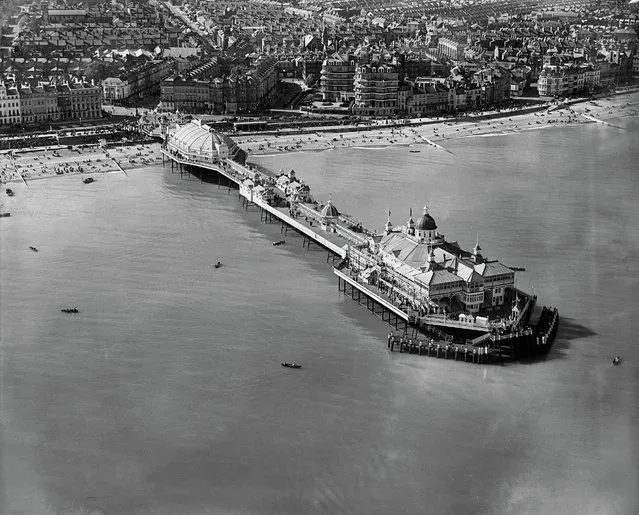
While the lido was described as bringing “modernism to the masses” on the British coast it was just the latest example of a trend that had been developing since Victorian times – transforming seaside towns into resorts for leisure and entertainment. In the latter half of the nineteenth century, the fashion was for local authorities to build great piers stretching from the promenade out into the sea

While the lido was described as bringing “modernism to the masses” on the British coast it was just the latest example of a trend that had been developing since Victorian times – transforming seaside towns into resorts for leisure and entertainment. In the latter half of the nineteenth century, the fashion was for local authorities to build great piers stretching from the promenade out into the sea. The Eastbourne Pier, pictured here in May 1931, was erected between 1866 and 1870 to an ingenious design by Eugenius Birch, which saw the structure sitting on special cups allowing the supporting struts to “move” in bad weather. Arranged on the pier's 1,000-foot length were kiosks, a theatre, a ballroom and a camera obscura. 1931. (Photo by Aerofilms Collection via “A History of Britain From Above”)
Details
25 Feb 2014 12:59:00
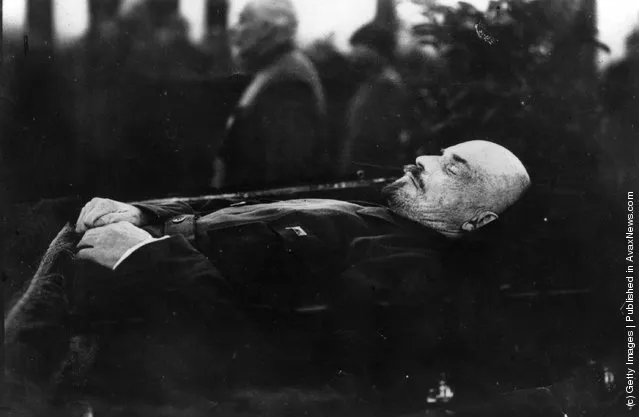
1924:  Vladimir Ilyich Lenin lying in state in the Kremlin

Photo: Vladimir Ilyich Lenin (1870 – 1924) lying in state in the Kremlin. (Photo by Hulton Archive/Getty Images). 1924

Important! For the same article in Russian language click here.

Something quite intriguing is happening within Russian-speaking internet during the last few – should you type a fully academic inquiry (at least, according to Russian academic requirements) in national search engines for "Lenin's mausoleum" – the first thing you get (even in top 10 searches) is website pages talking about black magic and occult. Website authors view this construction differently, but unconditionally agree on one thing: the mausoleum of the "leader of the world proletariat” – the essence of a magical artifact, a sort of “energy vampire”. It was built with a certain purpose: to drain the energy out of miserable Soviet citizens on one hand; and to poison the anthroposphere of one-sixth part of the earth with its vibes (the exact territory that was occupied by the former Soviet Union), depriving the Russian people of will to resist on the other hand. Complete nonsense? No doubt. Nevertheless, an intriguing one. Well, probably because some oddities do exist in mausoleum's history. These oddities are the thing we are going to discuss this time. First, let me refresh you memory on the subject.
Details
16 Oct 2011 11:27:00
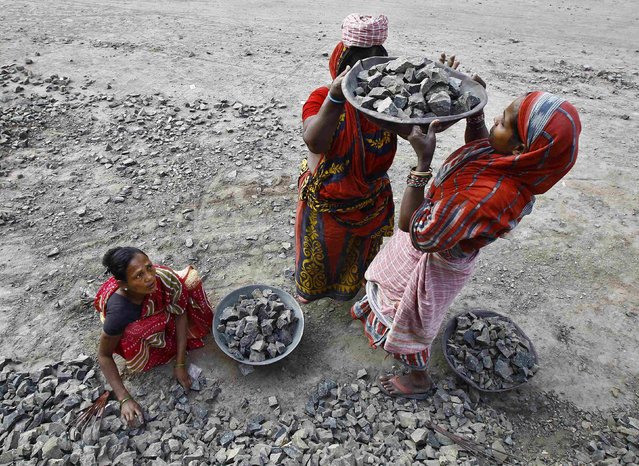
Women labourers work at the construction site of a road in Kolkata January 8, 2015. Across towns and cities in India, it is not uncommon to see women cleaning building sites, carrying bricks and or shoveling gravel - helping construct the infrastructure necessary for the country's economic and social development. (Photo by Rupak De Chowdhuri/Reuters)

Women labourers work at the construction site of a road in Kolkata January 8, 2015. Across towns and cities in India, it is not uncommon to see women cleaning building sites, carrying bricks and or shoveling gravel – helping construct the infrastructure necessary for the country's economic and social development. They help build roads, railway tracks, airports, and offices. They lay pipes for clean water supplies, cables for telecommunications, and dig the drains for sewage systems. But although women make up at least 20 percent of India's 40 million construction workers, they are less recognized than male workers with lower pay and often prone to safety hazards and sexual harassment. They are often unaware of their rights or scared to complain, say activists now trying to campaign for better treatment of women in the construction industry. (Photo by Rupak De Chowdhuri/Reuters)
Details
15 Jan 2015 13:47:00
An Afghan woman fills containers with water near her temporary shelter at an internally displaced person's (IDP) camp on the outskirts of Herat, Afghanistan, January 21, 2015. Dozens of families are living in temporary shelters even in harsh winters and most depend on aid distributions by the United Nations High Commissioner for Refugees (UNHCR). (Photo by Jalil Rezayee/EPA)

An Afghan woman fills containers with water near her temporary shelter at an internally displaced person's (IDP) camp on the outskirts of Herat, Afghanistan, January 21, 2015. Dozens of families are living in temporary shelters even in harsh winters and most depend on aid distributions by the United Nations High Commissioner for Refugees (UNHCR). (Photo by Jalil Rezayee/EPA)
Details
23 Jan 2015 12:35:00
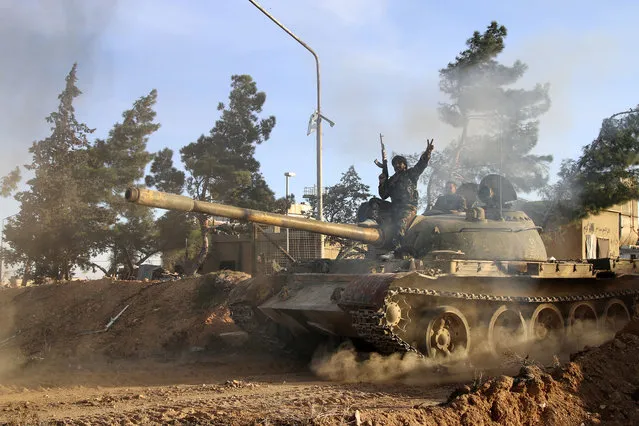
In this photo taken on Wednesday, February 17, 2016, a volunteer fighter with the Syrian Government forces sits atop a tank in the province of Raqqa, Syria. In recent weeks, Syrian government forces captured dozens of villages and towns across the country. (Photo by Alexander Kots/Komsomolskaya Pravda via AP Photo)

In this photo taken on Wednesday, February 17, 2016, a volunteer fighter with the Syrian Government forces sits atop a tank in the province of Raqqa, Syria. In recent weeks, Syrian government forces captured dozens of villages and towns across the country. (Photo by Alexander Kots/Komsomolskaya Pravda via AP Photo)
Details
22 Feb 2016 09:35:00
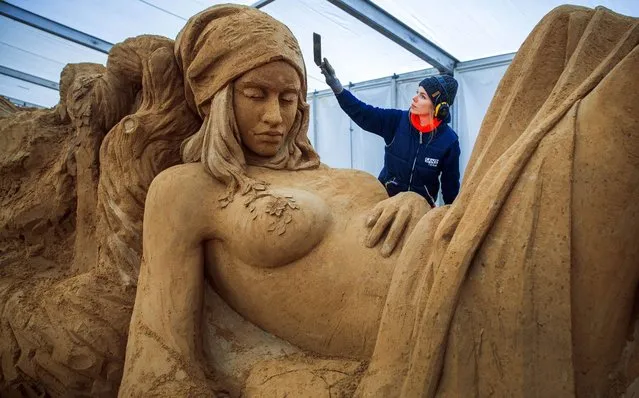
Marieke van der Meer from the Netherlands works on her sculpture “Flora” at the sand sculpture show in Binz on Ruegen island, Germany, 09 March 2016. With the motto “Fascination Nature”, 50 sand artists have created oversized sculptures. The sculptors use 16,000 tons of special sand that is pressed into big blocks first and then formed. The 7th sand sculpture show on 5,600 square meters of exhibition ground opens on 12 March 2016. (Photo by Ens Buettner/EPA)

Marieke van der Meer from the Netherlands works on her sculpture “Flora” at the sand sculpture show in Binz on Ruegen island, Germany, 09 March 2016. With the motto “Fascination Nature”, 50 sand artists have created oversized sculptures. The sculptors use 16,000 tons of special sand that is pressed into big blocks first and then formed. The 7th sand sculpture show on 5,600 square meters of exhibition ground opens on 12 March 2016. (Photo by Ens Buettner/EPA)
Details
10 Mar 2016 13:03:00