Loading...
Done
A Chinese People's Liberation Army soldier marches with members of an honor guard as they prepare for a welcome ceremony for visiting Luxembourg's Prime Minister Xavier Bettel outside the Great Hall of the People in Beijing, Monday, June 12, 2017. (Photo by Andy Wong/AP Photo)

A Chinese People's Liberation Army soldier marches with members of an honor guard as they prepare for a welcome ceremony for visiting Luxembourg's Prime Minister Xavier Bettel outside the Great Hall of the People in Beijing, Monday, June 12, 2017. (Photo by Andy Wong/AP Photo)
Details
25 Jun 2017 06:52:00
Courtney Stodden is seen on June 22, 2017 in Los Angeles, California. (Photo by Splash News and Pictures)

Courtney Stodden is seen on June 22, 2017 in Los Angeles, California. (Photo by Splash News and Pictures)
Details
25 Jun 2017 07:02:00
A woman dries chili peppers in the sun at a village in Wuyuan County, Jiangxi province, China July 21, 2017. (Photo by Reuters/China Stringer Network)

A woman dries chili peppers in the sun at a village in Wuyuan County, Jiangxi province, China July 21, 2017. (Photo by Reuters/China Stringer Network)
Details
22 Jul 2017 08:33:00
The lead singer of one band talks to two bemused kids at a gig at the “Warzone Centre” in Belfast, Northern Ireland, 1980s. (Photo by Ricky Adam/Mediadrumworld)

The lead singer of one band talks to two bemused kids at a gig at the “Warzone Centre” in Belfast, Northern Ireland, 1980s. (Photo by Ricky Adam/Mediadrumworld)
Details
23 Jul 2017 07:40:00
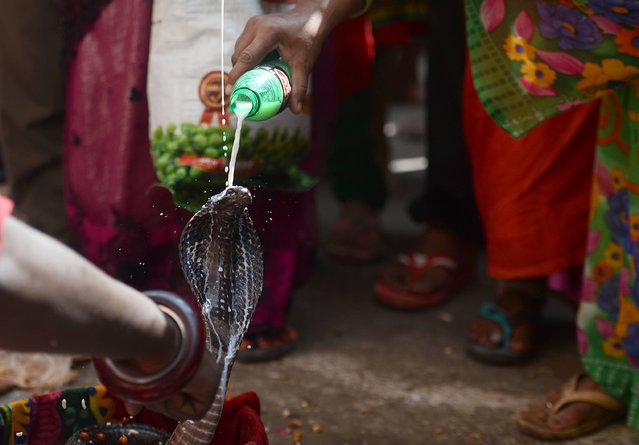
An Indian Hindu devotee pours milk on a snake as an offering during the annual Nag Panchami festival, dedicated to the worship of snakes outside the Nagvasuki temple, in Allahabad, on July 28, 2017. (Photo by Sanjay Kanojia/AFP Photo)

An Indian Hindu devotee pours milk on a snake as an offering during the annual Nag Panchami festival, dedicated to the worship of snakes outside the Nagvasuki temple, in Allahabad, on July 28, 2017. Officially the snake charmers' profession is banned in India, but many in the country offered prayers and milk blessings to cobras and other deadly serpents on July 28 in an annual tribute. The 800,000 charmers and their young apprentices come to the fore for the Nag Panchami festival which dates back several centuries. (Photo by Sanjay Kanojia/AFP Photo)
Details
31 Jul 2017 09:17:00
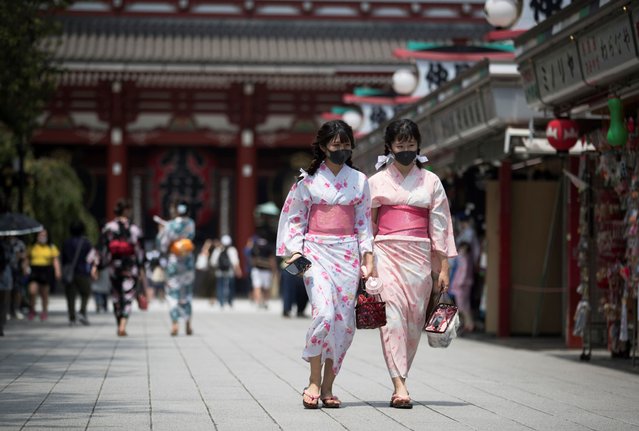
Two women in traditional kimonos wear face masks to help curb the spread of the coronavirus as they visit the Sensoji temple in Tokyo on Friday, August 7, 2020. (Photo by Hiro Komae/AP Photo)

Two women in traditional kimonos wear face masks to help curb the spread of the coronavirus as they visit the Sensoji temple in Tokyo on Friday, August 7, 2020. (Photo by Hiro Komae/AP Photo)
Details
03 Sep 2020 00:01:00
Enthusiasts participate in the historical re-enactment of the Sevastopol Fortress assault, which took place during the Crimean War of 1853-1856, at a military historical festival in Sevastopol, Crimea, September 5, 2020. (Photo by Alexey Pavlishak/Reuters)

Enthusiasts participate in the historical re-enactment of the Sevastopol Fortress assault, which took place during the Crimean War of 1853-1856, at a military historical festival in Sevastopol, Crimea, September 5, 2020. (Photo by Alexey Pavlishak/Reuters)
Details
21 Sep 2020 00:01:00
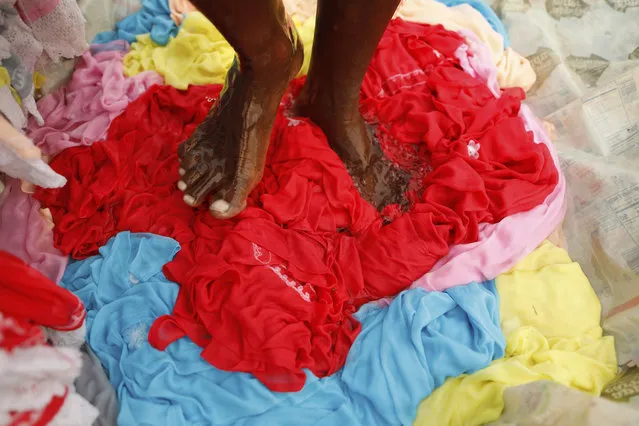
A dhobi, or a washerman washes cloths on the banks of the River Gomti in Lucknow, India, Saturday, September 12, 2020. Dhobis are traditional laundry workers who wash clothes by hand and dry them in the sun, an occupation which has been in existence for generations. Most cities in India have a Dhobi Ghat, or washermen's area, where the city's pile of clothes is laundered. This practice is still popular in India, despite of modern technology. Around 1,000 families work in Lucknow's Dhobi Ghat. However, in light of the novel coronavirus, their wages have decreased drastically. With each family earning around US$100-200 per month. (Photo by Rajesh Kumar Singh/AP Photo)


A dhobi, or a washerman washes cloths on the banks of the River Gomti in Lucknow, India, Saturday, September 12, 2020. Dhobis are traditional laundry workers who wash clothes by hand and dry them in the sun, an occupation which has been in existence for generations. Most cities in India have a Dhobi Ghat, or washermen's area, where the city's pile of clothes is laundered. This practice is still popular in India, despite of modern technology. Around 1,000 families work in Lucknow's Dhobi Ghat. However, in light of the novel coronavirus, their wages have decreased drastically. With each family earning around US$100-200 per month. (Photo by Rajesh Kumar Singh/AP Photo)

Details
25 Sep 2020 00:03:00