Loading...
Done
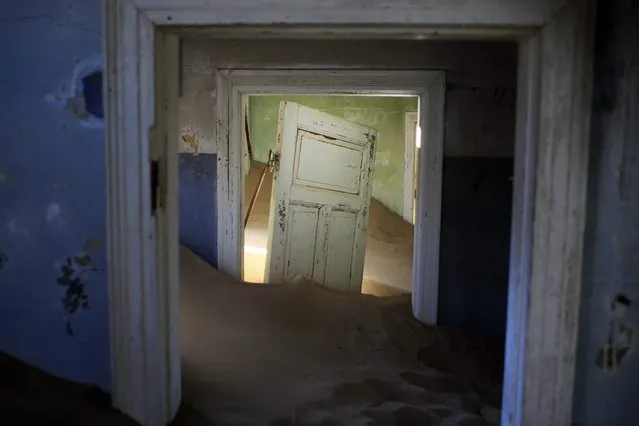
In this July 23, 2013 photo, sand fills an abandoned house in Kolmanskop, Namibia. Kolmanskop, was a diamond mining town south of Namibia, build in 1908 and deserted in 1956. SInce then, the desert slowly reclaims its territory, with sand invading the buildings where 350 German colonists and more than 800 local workers lived during its hay-days of the 1920s. (Photo by Jerome Delay/AP Photo)

In this July 23, 2013 photo, sand fills an abandoned house in Kolmanskop, Namibia. Kolmanskop, was a diamond mining town south of Namibia, build in 1908 and deserted in 1956. SInce then, the desert slowly reclaims its territory, with sand invading the buildings where 350 German colonists and more than 800 local workers lived during its hay-days of the 1920s. (Photo by Jerome Delay/AP Photo)
Details
14 Nov 2014 14:34:00
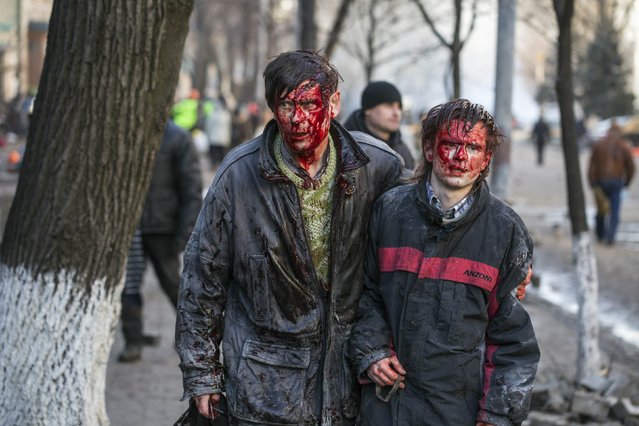
Wounded people walk after clashes with riot police in central Kiev February 18, 2014. Ukrainian riot police advanced on the heart of 12-week-old protests against President Viktor Yanukovich on Tuesday and security forces set a deadline to end disturbances after at least five protesters were reported killed in a day of clashes. (Photo by Vlad Sode/Reuters)

Wounded people walk after clashes with riot police in central Kiev February 18, 2014. Ukrainian riot police advanced on the heart of 12-week-old protests against President Viktor Yanukovich on Tuesday and security forces set a deadline to end disturbances after at least five protesters were reported killed in a day of clashes. (Photo by Vlad Sode/Reuters)
Details
19 Feb 2014 09:14:00
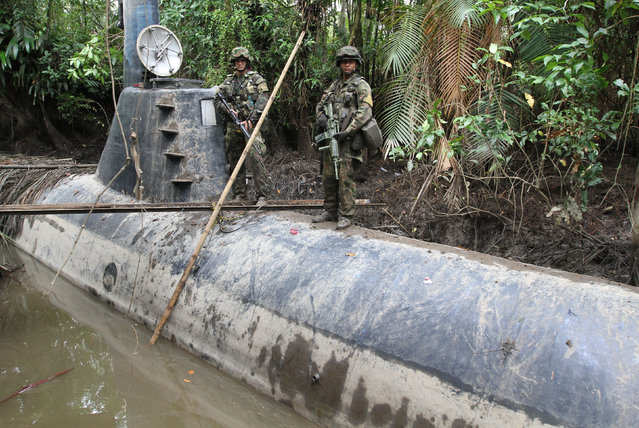
Members of the Colombian Navy stand guard on top of a seized submarine built by drug smugglers in a makeshift shipyard in Timbiqui, department of Cauca February 14, 2011. Colombian authorities said the submersible craft was to be used to transport 8 tons of cocaine illegally into Mexico. (Photo by Jaime Saldarriaga/Reuters)

Members of the Colombian Navy stand guard on top of a seized submarine built by drug smugglers in a makeshift shipyard in Timbiqui, department of Cauca February 14, 2011. Colombian authorities said the submersible craft was to be used to transport 8 tons of cocaine illegally into Mexico. (Photo by Jaime Saldarriaga/Reuters)
Details
14 Aug 2015 13:34:00
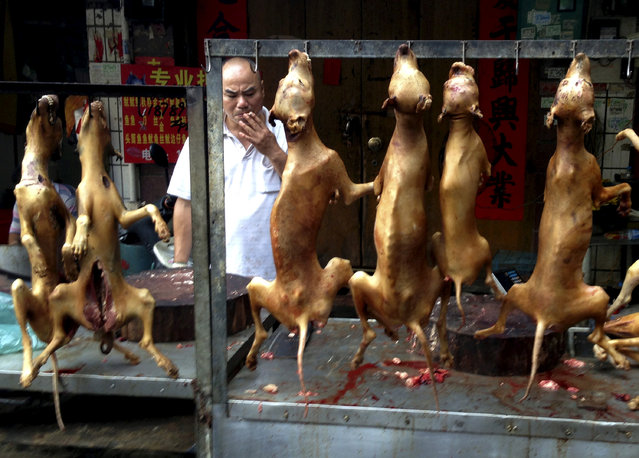
A vendor smokes behind a display of dog meat at a dog meat market on the day of a local dog meat festival in Yulin, Guangxi Autonomous Region, June 22, 2015. (Photo by Kim Kyung-Hoon/Reuters)

A vendor smokes behind a display of dog meat at a dog meat market on the day of a local dog meat festival in Yulin, Guangxi Autonomous Region, June 22, 2015. (Photo by Kim Kyung-Hoon/Reuters)
Details
22 Jun 2016 13:02:00
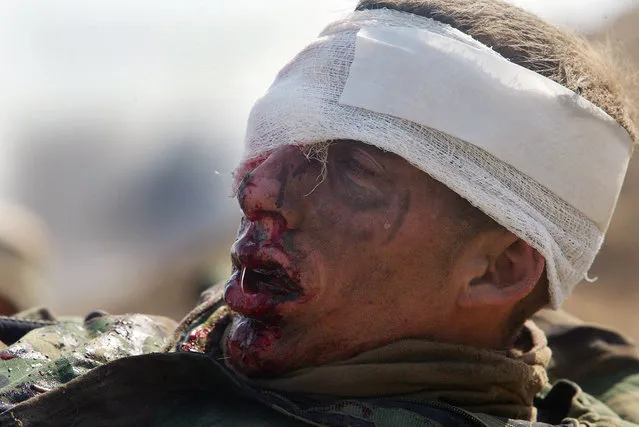
U.S. Marine Lt. Ben Reid from 1/2 Charlie Company of Task Force Tarawa waits to be medivaced after being hit with shrapnel and a machine gun round, in the southern Iraqi city of Nasiriyah, on March 23, 2003. The Marines suffered a number of deaths and casualties during gun battles throughout the city. (Photo by Joe Raedle/The Atlantic)

U.S. Marine Lt. Ben Reid from 1/2 Charlie Company of Task Force Tarawa waits to be medivaced after being hit with shrapnel and a machine gun round, in the southern Iraqi city of Nasiriyah, on March 23, 2003. The Marines suffered a number of deaths and casualties during gun battles throughout the city. (Photo by Joe Raedle via The Atlantic)
Details
20 Mar 2013 08:50:00
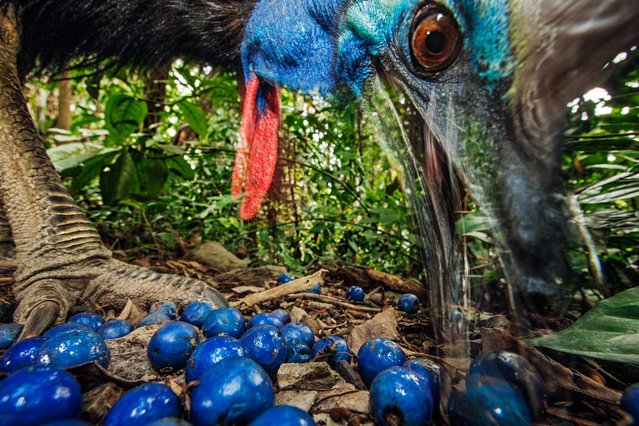
“Cassowaries are large, flightless birds related to emus and (more distantly) to ostriches, rheas, and kiwis”, writes Olivia Judson in the September issue of National Geographic magazine. (Photo by Christian Ziegler/National Geographic)

“Cassowaries are large, flightless birds related to emus and (more distantly) to ostriches, rheas, and kiwis”, writes Olivia Judson in the September issue of National Geographic magazine. How large? People-size: Adult males stand well over five foot five and top 110 pounds. Females are even taller, and can weigh more than 160 pounds. Dangerous when roused, they’re shy and peaceable when left alone. But even birds this big and tough are prey to habitat loss. The dense New Guinea and Australia rain forests where they live have dwindled. Today cassowaries might number 1,500 to 2,000. And because they help shape those same forests – by moving seeds from one place to another – “if they vanish”, Judson writes, “the structure of the forest would gradually change” too. (Photo by Christian Ziegler/National Geographic)
Details
06 Jan 2014 12:21:00
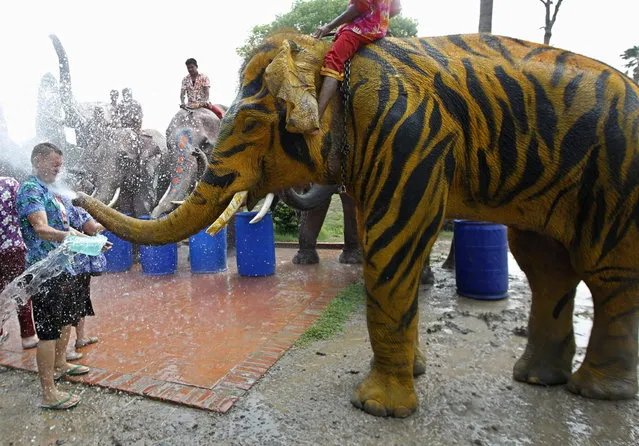
Elephants spray tourists with water in celebration of the Songkran water festival in Thailand's Ayutthaya province, about 80 km (50 miles) north of Bangkok, April 9, 2014. (Photo by Rungroj Yongrit/EFE)

Elephants spray tourists with water in celebration of the Songkran water festival in Thailand's Ayutthaya province, about 80 km (50 miles) north of Bangkok, April 9, 2014. (Photo by Rungroj Yongrit/EFE)
Details
12 Apr 2014 13:30:00
What the World Eats By Peter Menzel And Faith D'Aluisio Part 2

A stunning photographic collection featuring portraits of people from 30 countries and the food they eat in one day. In this fascinating study of people and their diets, 80 profiles are organized by the total number of calories each person puts away in a day. Featuring a Japanese sumo wrestler, a Massai herdswoman, world-renowned Spanish chef Ferran Adria, an American competitive eater, and more, these compulsively readable personal stories also include demographic particulars, including age, activity level, height, and weight. Essays from Harvard primatologist Richard Wrangham, journalist Michael Pollan, and others discuss the implications of our modern diets for our health and for the planet. This compelling blend of photography and investigative reportage expands our understanding of the complex relationships among individuals, culture, and food.
Details
02 May 2014 09:20:00