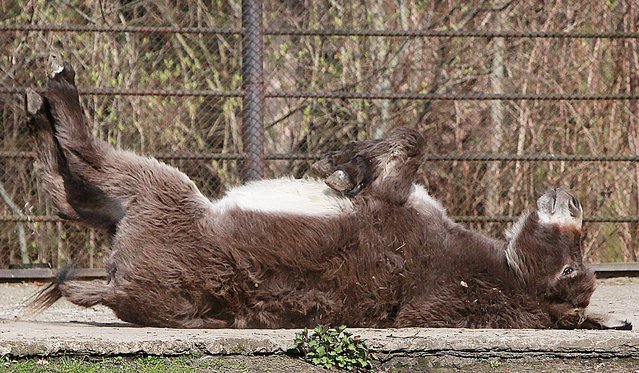
A donkey savors warming temperatures after a long winter at the zoo in Warsaw, Poland, on Wednesday, April 8, 2015. (Photo by Czarek Sokolowski/AP Photo)
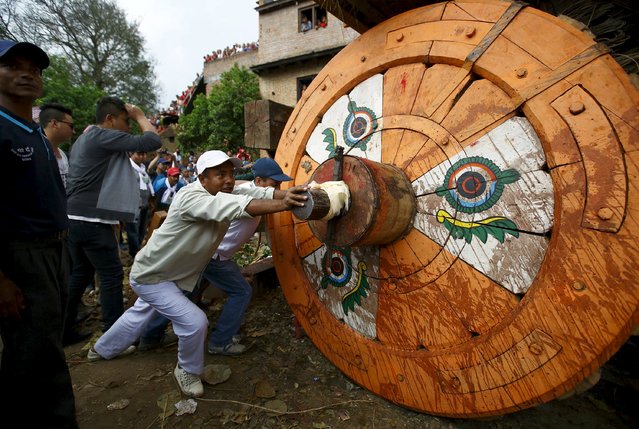
Devotees push the chariot of Rato Machhindranath during the chariot festival at Bungamati in Lalitpur April 22, 2015. Rato Machhindranath is known as the god of rain and both Hindus and Buddhists worship Machhindranath for good rain to prevent drought during the rice harvest season. (Photo by Navesh Chitrakar/Reuters)
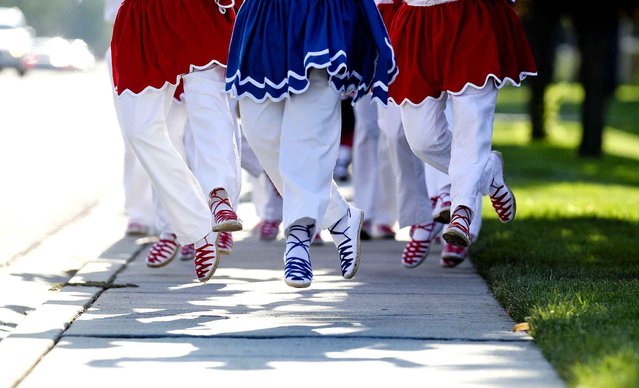
Onati Basque dancers go airborne as they perform Basque traditional dances while making their way to the front of Saint Mark's Catholic Church, Saturday, August 1, 2015, in Boise, Idaho. The annual Mass, conducted in English and Basque, was held at the church for the first time. (Photo by Kyle Green/Idaho Statesman via AP Photo)
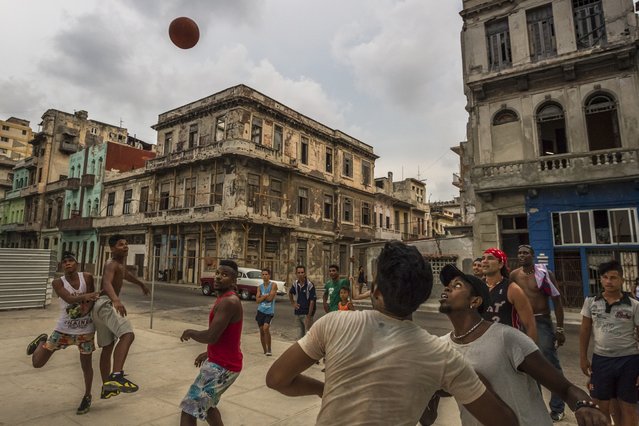
Young men play basketball on an improvised court wedged between a construction site and the shells of once grand colonial homes in Havana, July 20, 2015. As much as the young in Cuba welcome political opening and economic reform, such changes are unlikely to filter down to their lives anytime soon. (Photo by Meridith Kohut/The New York Times)
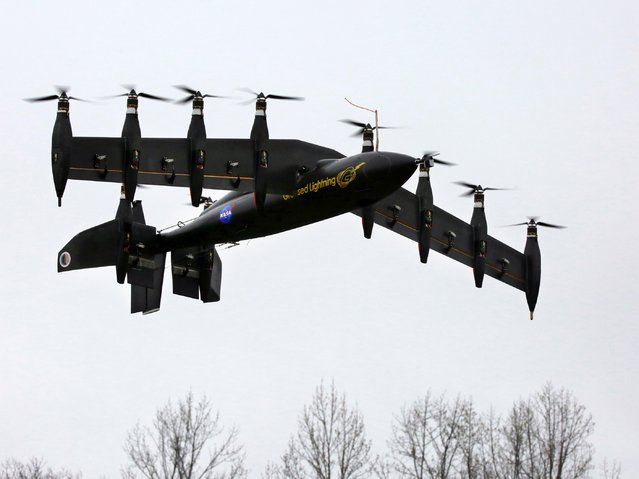
A prototype battery-powered plane, called Greased Lightning or GL-10 is pictured flying at NASA's Langley Research Center in this undated handout photo obtained by Reuters May 1, 2015. The plane, which has 10 engines and can take off like a helicopter and fly efficiently like an aircraft, is currently in the design and testing phase. (Photo by Reuters/NASA)
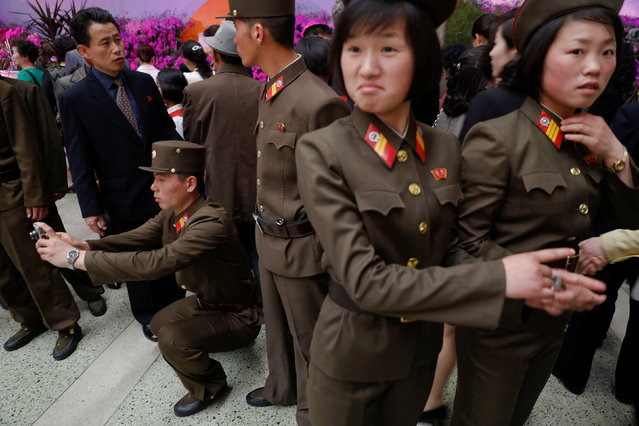
Soldiers pose for a photo during the flower exhibition marking the 105th birth anniversary of the country's founding father, Kim Il Sung in Pyongyang, North Korea April 16, 2017. (Photo by Damir Sagolj/Reuters)
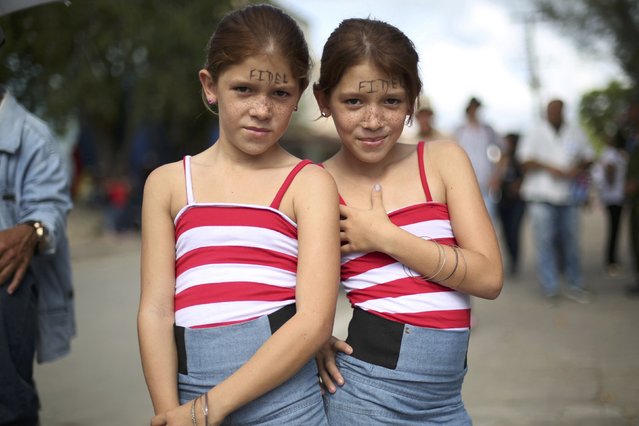
Sisters await the arrival of the caravan carrying the late Cuban President Fidel Castro's ashes in El Maja, Cuba, December 1, 2016. (Photo by Edgard Garrido/Reuters)
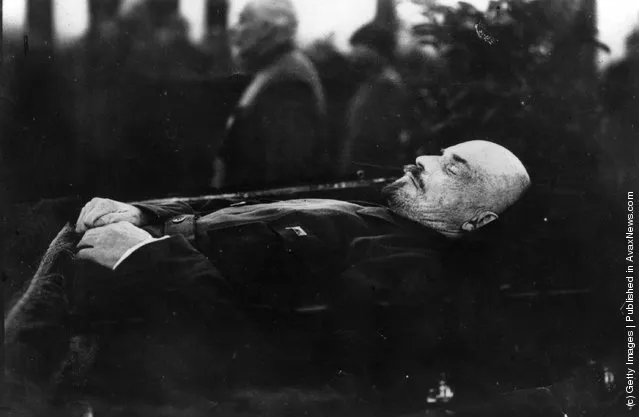
Photo: Vladimir Ilyich Lenin (1870 – 1924) lying in state in the Kremlin. (Photo by Hulton Archive/Getty Images). 1924
Important! For the same article in Russian language click here.
Something quite intriguing is happening within Russian-speaking internet during the last few – should you type a fully academic inquiry (at least, according to Russian academic requirements) in national search engines for "Lenin's mausoleum" – the first thing you get (even in top 10 searches) is website pages talking about black magic and occult. Website authors view this construction differently, but unconditionally agree on one thing: the mausoleum of the "leader of the world proletariat” – the essence of a magical artifact, a sort of “energy vampire”. It was built with a certain purpose: to drain the energy out of miserable Soviet citizens on one hand; and to poison the anthroposphere of one-sixth part of the earth with its vibes (the exact territory that was occupied by the former Soviet Union), depriving the Russian people of will to resist on the other hand. Complete nonsense? No doubt. Nevertheless, an intriguing one. Well, probably because some oddities do exist in mausoleum's history. These oddities are the thing we are going to discuss this time. First, let me refresh you memory on the subject.