Loading...
Done
A military cadet gets help from a colleague to adjust her hair before taking part the military parade in Bucharest, Romania, Saturday, December 1, 2018. (Photo by Vadim Ghirda/AP Photo)

A military cadet gets help from a colleague to adjust her hair before taking part the military parade in Bucharest, Romania, Saturday, December 1, 2018, as thousands turned out Saturday to celebrate 100-years since Romania became a modern-day state, amid concerns about rule of law and the state of democracy. Crowds braved temperatures of minus 5 Celsius (23 Fahrenheit) to watch the military parade of troops, tanks and military vehicles. (Photo by Vadim Ghirda/AP Photo)
Details
03 Dec 2018 00:07:00
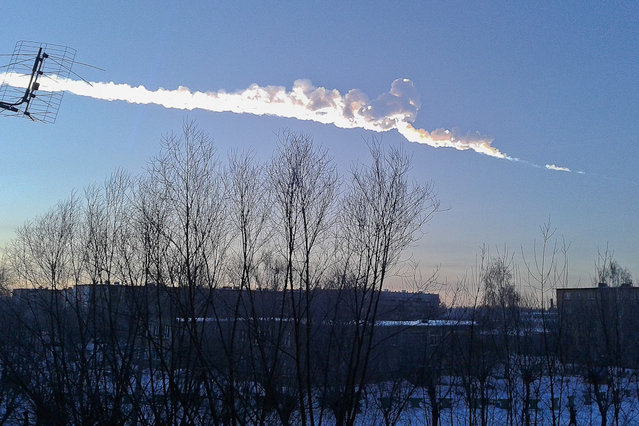
Meteor falls in Russia's Chelyabinsk region on February 15 , 2013. (Photo by Alexey Bulaew/RIA Nowosti)

“A meteor streaked across the sky above Russia's Ural Mountains on Friday morning, causing sharp explosions and injuring more than 500 people (20 had been hospitalized in serious condition), many of them hurt by broken glass. “There was panic. People had no idea what was happening. Everyone was going around to people's houses to check if they were OK”, said Sergey Hametov, a resident of Chelyabinsk, about 1500 kilometres (930 miles) east of Moscow, the biggest city in the affected region”. (Photo by Alexey Bulaew/RIA Nowosti)
Details
15 Feb 2013 12:04:00
Dorothy Bradley (left), photographed for LIFE magazine article on obesity, 1949. (Photo by Martha Holmes/Time & Life Pictures)

“The most serious health problem in the U.S. today is obesity.” Sounds familiar, doesn’t it? But that pronouncement about obesity’s primacy in the hierarchy of national health problems is not new. Rather, it’s the opening line to a remarkable article published 60 years ago in LIFE magazine. This photographs made by Martha Holmes to illustrate that March 1954 article, titled “The Plague of Overweight.” Photo: Dorothy Bradley (left), photographed for LIFE magazine article on obesity, 1949. (Photo by Martha Holmes/Time & Life Pictures)
Details
11 Apr 2013 11:42:00
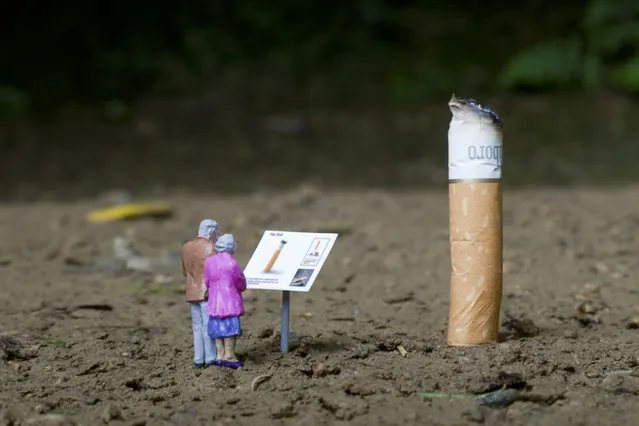
little people street art

The street artist known only as Slinkachu has been abandoning little people on the streets of London since 2006. His first project, “Little People in the City”, saw minature men, women and children living their lives on the streets of London and was immortalised in the 2008 book entitled “Little People in the City”. Since then, Slinkachu has done a number of other projects, notably “Whatever Happened to the Men of Tomorrow” which documented the decline of a tiny, middleaged and balding super-hero on the streets of London and “Inner City Snail – a slow moving street art project” which saw Slinkachu “customising” a number of London snails which then presumably went about their business none the wiser.
Details
09 Jun 2012 12:11:00
Little squirrel in Minsk worked with the taxi driver

Belarusian soldiers found a little squirrel two years ago. The little baby squirrel was just about to die but the officer of the team Peter Pankraty start feeding and taking care of it. The squirrel survived and two years later it just refuses to be separated by its saviour. Now Peter is taxi driver and squirrel Minsk makes him a good company through the entire shift. He uses the squirrel as an attraction and even promotes the tax at his taxi as “Just 45 cents and a few nuts per km”.
Details
04 Oct 2012 08:46:00
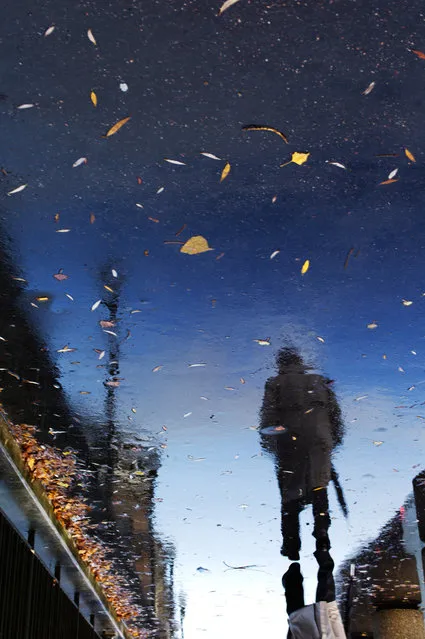
“Reflets” Project by Manuel Plantin aka Yodamanu

“In a nutshell and to prevent my english readers from experiencing eye bleeding after having read too many syntax errors, I’m a french journalist – I work as an editor, not as photographer – who happens to be nuts about photography. Being the happy owner of too many Leica M for a man to shoot, I spend most of my free time shooting my friend and my town, Strasbourg, in b&w and sometimes in colors”. – Manuel Plantin

Photo: “Even detectives got the blues”. Strasbourg, 2011 (Photo by Manuel Plantin)
Details
18 Dec 2012 10:28:00
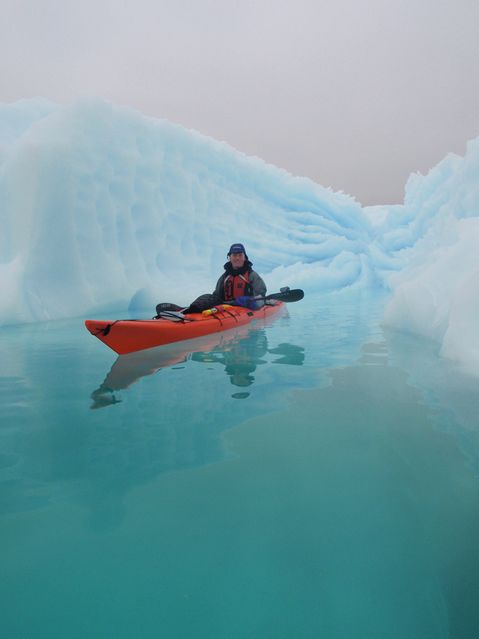
Chasing Ice in Greenland

The Greenland ice sheet is a vast body of ice covering 660,235 sq miles, roughly 80% of the surface of Greenland. It is the second largest ice body in the world, after the Antarctic Ice Sheet. Some scientists predict that climate change may be near a "tipping point" where the entire ice sheet will melt in about 2000 years. If the entire 2,850,000 cubic kilometres (683,751 cu mi) of ice were to melt, it would lead to a global sea level rise of 7.2 m (23.6 ft).
Details
30 Apr 2014 13:15:00
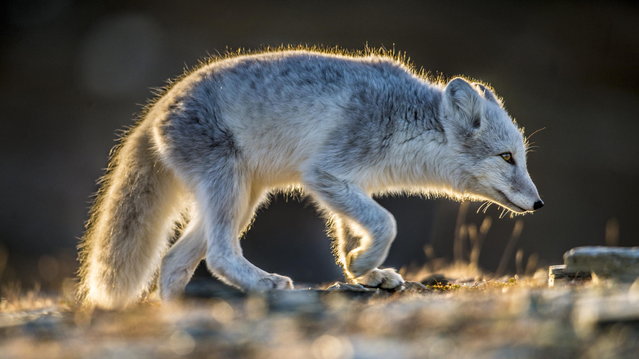
Arctic Fox. (Photo by Trond Eriksen)

“The arctic fox (Vulpes lagopus), also known as the white fox, polar fox, or snow fox, is a small fox native to the Arctic regions of the Northern Hemisphere and is common throughout the Arctic tundra biome. It is well adapted to living in cold environments. It has a deep thick fur which is brown in summer and white in winter. It averages in size at about 85.3 cm (33.6 in) in body length, with a generally rounded body shape to minimize the escape of body heat. – Wikipedia. (Photo by Trond Eriksen)
Details
26 May 2014 14:09:00