Loading...
Done
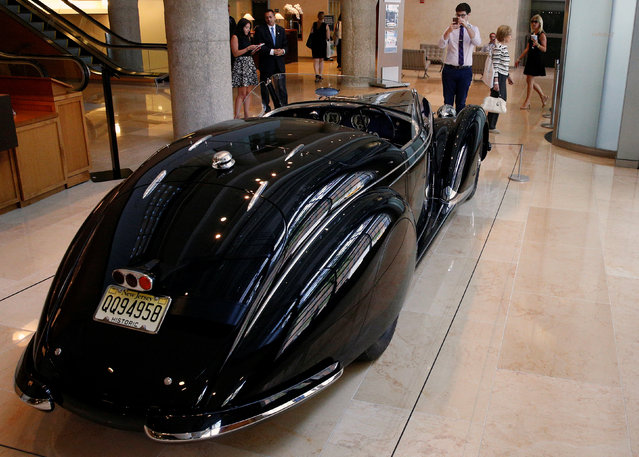
People look at a 1939 Alfa Romeo 8C 2900B Lungo Touring Spider displayed at Sotheby's in New York City, New York, U.S. July 21, 2016. The car, unveiled in a pre-publicity showing in New York on Thursday, is expected to sell for more than US$15 million – and could set a record for the most money ever paid for a pre-war auto at auction. “This is a personal favourite of mine, the 1939 Alfa Romeo is one of the grandest pre-war cars ever built”, said Ian Kelleher, managing director, RM Sotheby's US West Coast division. “You can achieve speeds in excess of 100 miles an hour in this car. (Photo by Brendan McDermid/Reuters)

People look at a 1939 Alfa Romeo 8C 2900B Lungo Touring Spider displayed at Sotheby's in New York City, New York, U.S. July 21, 2016. The car, unveiled in a pre-publicity showing in New York on Thursday, is expected to sell for more than US$15 million – and could set a record for the most money ever paid for a pre-war auto at auction. (Photo by Brendan McDermid/Reuters)
Details
22 Jul 2016 12:22:00
Britain's Mo Farah reacts as he wins the men's 5000m final at the London 2012 Olympic Games at the Olympic Stadium in Britain August 11, 2012. Lucy Nicholson: “When Mo Farah was rounding the final corner for the 5000m the huge stadium was electric, everybody was on their feet and he knew he was going to win as he came into that final stretch. All the photographers were excited because we knew he was going to react in a very dramatic way so it was a lovely sequence of photos as he crossed the finish line – he put his hands over his head, he wrapped himself in the British flag, it was a very long celebration sequence, which is all you can really wish for as a photographer”. (Photo by Lucy Nicholson/Reuters)

The Rio de Janeiro Olympics kick off on August 5 for some two weeks of competitive games drawing athletes as well as audiences from around the world. As they prepare to cover the event, Reuters photographers look back on their favourite pictures from past Olympics where they captured the action on the ground as well as the participants' tears and joy that followed. (Photo by Lucy Nicholson/Reuters)
Details
03 Aug 2016 11:19:00
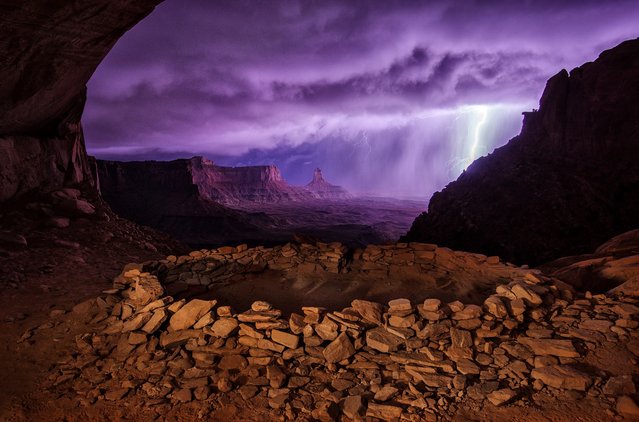
Second Place Winner: “Thunderstorm at False Kiva”. I hiked out to these ruins at night hoping to photograph them with the Milky Way, but instead a thunderstorm rolled through, creating this dramatic image. – Max Seigal. (Photo and caption by Max Seigal/National Geographic Traveler Photo Contest)

Second Place Winner: “Thunderstorm at False Kiva”. I hiked out to these ruins at night hoping to photograph them with the Milky Way, but instead a thunderstorm rolled through, creating this dramatic image. – Max Seigal. National Geographic Traveler Director of Photography Dan Westergren, one of this year's judges, shares his thoughts on the second place winner: “This photo combines two different scenes into one: the small kiva in a cliff dwelling and the grand vista of Canyonlands National Park across the valley. I really like the two different color palettes – warm inside and purple outside. This two-for-one scene was caused by the lightning storm outside the dwelling, which lit up the landscape like it was a huge electronic flash. Looking at this picture I can imagine what a wonderful sight it must have been for the ancient people who lived here. It doesn't seem too amazing now in our modern world, but might have been mind-blowing for the prehistoric residents”. Location: Utah. (Photo and caption by Max Seigal/National Geographic Traveler Photo Contest)
Details
02 Aug 2013 06:16:00
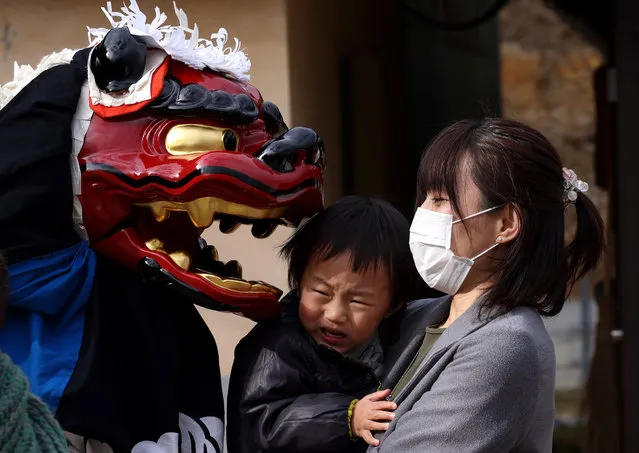
A performer wearing a lion mask performs the Ise Daikagura lion dance at the remote village of Yamanawa on February 08, 2021 in Ryuo, Japan. Ise Daikagura is a group of traditional Lion Dance performers who pray in front of farmers houses and businesses for good grain harvests and disease-free lives. Performers play sacred music using drums and flutes with two lion mask dancers. A lion mask is considered a symbol of God, who enters the house and performs in front of the Shinto God, a statue placed inside the house, mostly in the kitchen. These prayers are called “Kamodo Barai”. After the prayers, they are gifted with money, rice, sake and Japanese sweets from the householders. A group can travel for more than one hundred days to thousands of households and businesses throughout rural-villages in western Japan, and pray to those who are unable to visit the country’s most sacred shrine, the Grand Ise Shrine in Mie Prefecture. The group started its performance in the Edo era between 1603 to 1868 according to Japanese history. The Japanese government designated it as an important folk cultural national property in 1981. (Photo by Buddhika Weerasinghe/Getty Images)

A performer wearing a lion mask performs the Ise Daikagura lion dance at the remote village of Yamanawa on February 08, 2021 in Ryuo, Japan. Ise Daikagura is a group of traditional Lion Dance performers who pray in front of farmers houses and businesses for good grain harvests and disease-free lives. (Photo by Buddhika Weerasinghe/Getty Images)
Details
18 Feb 2021 09:27:00
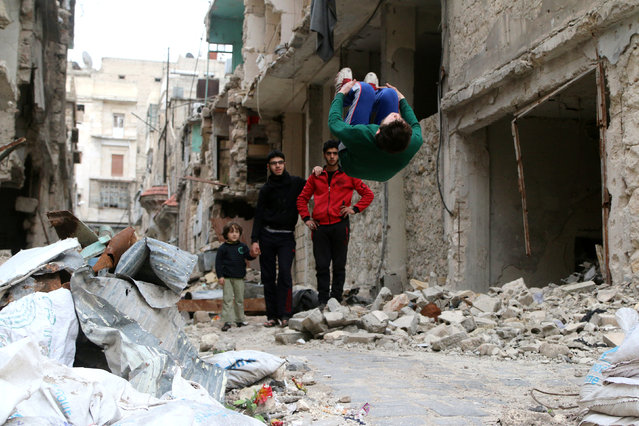
Gymnast Ahmad al-Sawas performs gymnastic moves near damaged buildings in the rebel-held Bustan al-Qasr neighbourhood of Aleppo, Syria March 26, 2016. As Syrian gymnast Ahmad al-Sawas watched his country fall apart, his Olympic dream collapsed too. The last national champion before the fighting began, he knew that supporting the anti-government side in the five-year-old civil war would prevent him from being selected for the Rio Games. “I chose to be an athlete who participates in the revolution”, said Ahmad, who trains where he can for two hours a day – be it on a mattress on a soccer field, in a local hall or somersaulting off a wall. (Photo by Abdalrhman Ismail/Reuters)

Gymnast Ahmad al-Sawas performs gymnastic moves near damaged buildings in the rebel-held Bustan al-Qasr neighbourhood of Aleppo, Syria March 26, 2016. As Syrian gymnast Ahmad al-Sawas watched his country fall apart, his Olympic dream collapsed too. The last national champion before the fighting began, he knew that supporting the anti-government side in the five-year-old civil war would prevent him from being selected for the Rio Games. (Photo by Abdalrhman Ismail/Reuters)
Details
05 Aug 2016 13:25:00
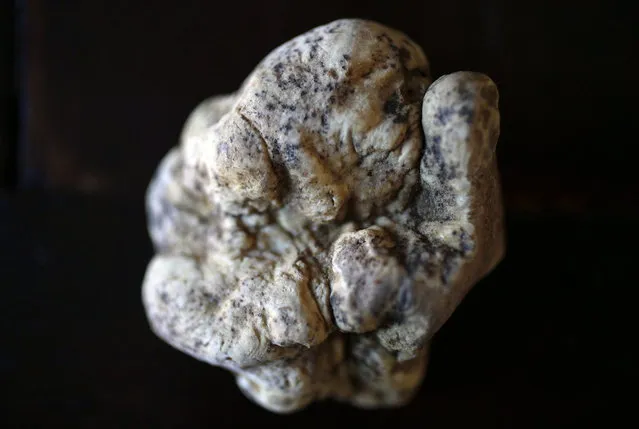
A truffle is seen on a table in Alba, north-western Italy November 11, 2013. Located in the heart of the Langhe – the hilly southern area of Italy's northwestern Piedmont region – Alba is the country's capital of white truffles, a variety of the prized fungus which grows underground. Truffles are found two to eight inches (5-20cm) below the ground near the roots of trees. (Photo by Stefano Rellandini/Reuters)

A truffle is seen on a table in Alba, north-western Italy November 11, 2013. Located in the heart of the Langhe – the hilly southern area of Italy's northwestern Piedmont region – Alba is the country's capital of white truffles, a variety of the prized fungus which grows underground. Truffles are found two to eight inches (5-20cm) below the ground near the roots of trees. They give off an odour which lasts for a limited period of time and can be detected with the assistance of well-trained dogs and experienced hunters. Output of white truffles, which are not cultivated and only grow naturally in forests, has fallen in Italy over the past few years, largely because climate change has brought a damaging mix of drought and torrential rains. (Photo by Stefano Rellandini/Reuters)
Details
31 Dec 2013 11:22:00
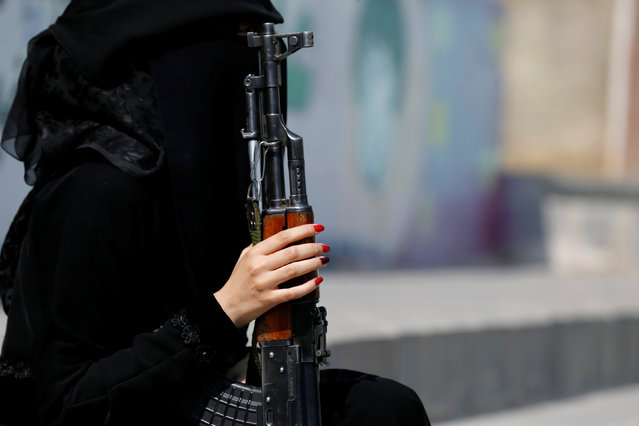
A woman loyal to the Houthi movement holds a rifle as she takes part in a parade to show support to the movement in Sanaa, Yemen September 6, 2016. Dressed in the head to toe garments which obscured their faces, the female fighters brandished machine guns, rocket launchers and grenades. The women also wore hats as they showed support for the Shiite Houthi rebels. The Saudi-led Arab coalition launched a military campaign against the Houthis and their allies in March 2015. It was after the rebels closed in on Gulf-backed President Abedrabbo Mansour Hadi in his southern refuge of Aden, forcing him into exile. The female protesters have pledged to remain supportive and do whatever they can to back the ongoing resistance against the kingdom. Yemen is in the grip of its most severe crisis in years, and is on the brink of civil war. (Photo by Khaled Abdullah/Reuters)

A woman loyal to the Houthi movement holds a rifle as she takes part in a parade to show support to the movement in Sanaa, Yemen September 6, 2016. The Saudi-led Arab coalition launched a military campaign against the Huthis and their allies in March 2015, after the rebels closed in on Gulf-backed President Abedrabbo Mansour Hadi in his southern refuge of Aden, forcing him into exile. (Photo by Khaled Abdullah/Reuters)
Details
07 Sep 2016 10:24:00
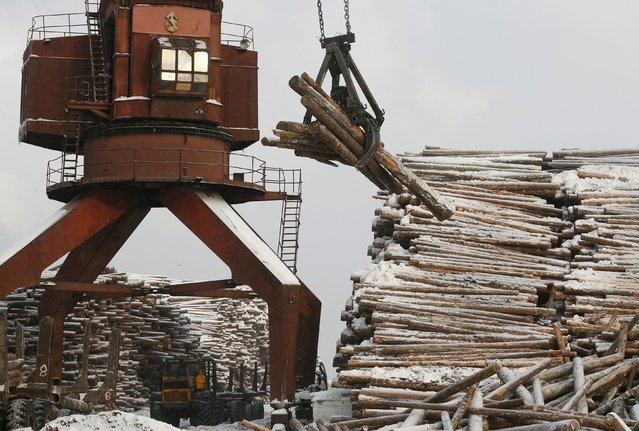
A crane loads logs at the Novoyeniseisk wood processing plant, with the air temperature at about minus 20 degrees Celsius (minus 4 degrees Fahrenheit), in the town of Lesosibirsk in Krasnoyarsk Region, Siberia, Russia, February 16, 2016. The plant exports timber to Europe, Northern Africa and Asia. The Taiga, also known as the boreal forest, on the coast of the Angara River and Yenisei River is one of the main areas for the industrial cutting of wood thanks to the high quality of the Angara pine. (Photo by Ilya Naymushin/Reuters)

A crane loads logs at the Novoyeniseisk wood processing plant, with the air temperature at about minus 20 degrees Celsius (minus 4 degrees Fahrenheit), in the town of Lesosibirsk in Krasnoyarsk Region, Siberia, Russia, February 16, 2016. The plant exports timber to Europe, Northern Africa and Asia. The Taiga, also known as the boreal forest, on the coast of the Angara River and Yenisei River is one of the main areas for the industrial cutting of wood thanks to the high quality of the Angara pine. Open air work continues all year around regardless to temperatures which can drop to minus 52 degrees Celsius (minus 61.6 degrees Fahrenheit), according to employees. (Photo by Ilya Naymushin/Reuters)
Details
18 Feb 2016 13:10:00