Loading...
Done
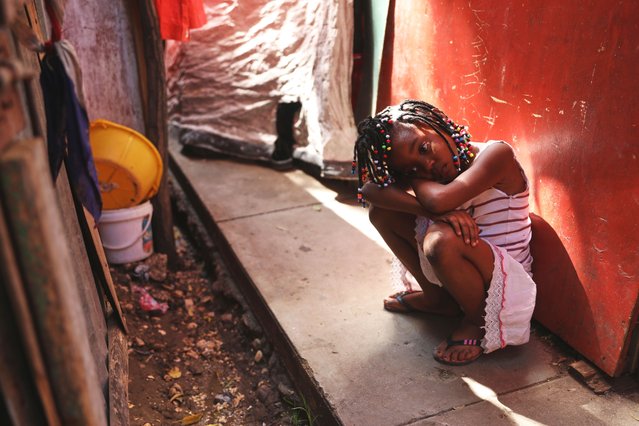
A child sits in a walkway at a shelter for families displaced by gang violence, in Port-au-Prince, Haiti, Thursday, May 22, 2025. (Photo by Odelyn Joseph/AP Photo)

A child sits in a walkway at a shelter for families displaced by gang violence, in Port-au-Prince, Haiti, Thursday, May 22, 2025. (Photo by Odelyn Joseph/AP Photo)
Details
20 Oct 2025 03:39:00
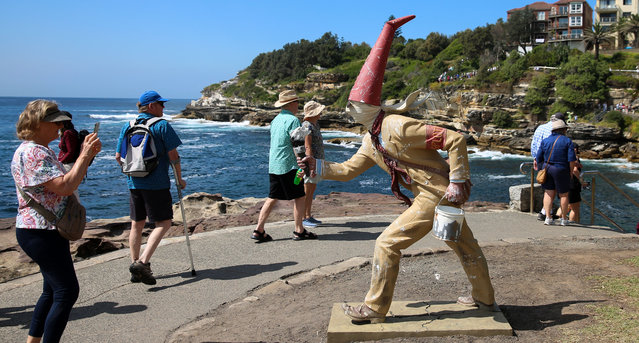
Visitors pass an exhibit for Sculpture by the Sea, along the coastal walk from Bondi to Tamarama in Sydney, Australia on October 24, 2025. The annual event is Australia’s largest annual outdoor sculpture exhibition. (Photo by Xinhua News Agency/Rex Features/Shutterstock)

Visitors pass an exhibit for Sculpture by the Sea, along the coastal walk from Bondi to Tamarama in Sydney, Australia on October 24, 2025. The annual event is Australia’s largest annual outdoor sculpture exhibition. (Photo by Xinhua News Agency/Rex Features/Shutterstock)
Details
29 Nov 2025 06:33:00
A Swiss police officer accompanies a migrant from Syria carrying her baby, upon her arrival at the railway station in the north-eastern Swiss town of Buchs September 1, 2015. (Photo by Arnd Wiegmann/Reuters)

A Swiss police officer accompanies a migrant from Syria carrying her baby, upon her arrival at the railway station in the north-eastern Swiss town of Buchs September 1, 2015. (Photo by Arnd Wiegmann/Reuters)
Details
03 Sep 2015 11:58:00
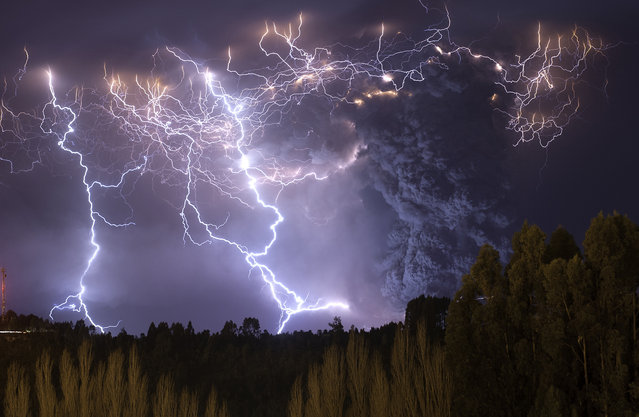
The eruption of Cordon Caulle began on June 4, 2011, located in the Region of Los Rios in Chile. For about 12 months, people and animals became accustomed to living with the daily fall of ash, which also caused problems in the air traffic in South America. The explosions and lightning during first days of the eruption could be seen from hundreds of miles around. This photograph was taken on the second night of eruption from the town of Lago Ranco. (Photo and caption by Francisco Negroni/National Geographic Traveler Photo Contest)

The eruption of Cordon Caulle began on June 4, 2011, located in the Region of Los Rios in Chile. For about 12 months, people and animals became accustomed to living with the daily fall of ash, which also caused problems in the air traffic in South America. The explosions and lightning during first days of the eruption could be seen from hundreds of miles around. This photograph was taken on the second night of eruption from the town of Lago Ranco. (Photo and caption by Francisco Negroni/National Geographic Traveler Photo Contest)

ATTENTION! All pictures are presented in high resolution. To see Hi-Res images – just TWICE click on any picture. In other words, click small picture – opens the BIG picture. Click BIG picture – opens VERY BIG picture.
Details
23 Jun 2013 11:24:00


Two drunk race-goers make their way home after the last race of the third day of the Royal Ascot horse racing week June 19, 2003 in Ascot, England. (Photo by Scott Barbour/Getty Images)
Details
07 May 2011 08:54:00
A resident types a text message on her mobile phone, as she sits on a bench made from a tree, which is a creation by Brazilian artist Hugo Franca at Largo da Batata square in Sao Paulo March 17, 2015. (Photo by Nacho Doce/Reuters)

A resident types a text message on her mobile phone, as she sits on a bench made from a tree, which is a creation by Brazilian artist Hugo Franca at Largo da Batata square in Sao Paulo March 17, 2015. Franca, a designer from Sao Paulo is working with the city to make use of fallen trees to turn them into sculpture furniture to line the city's parks, streets and plazas. Brazil's largest city was slammed by several strong storms this rainy season that brought with them heavy rain, lightning and winds as high as 90 kilometres (55 miles) per hour. (Photo by Nacho Doce/Reuters)
Details
20 Mar 2015 11:34:00
Russia's Maria Stavitskaia performs during the ladies short program at the Rostelecom Cup ISU Grand Prix of Figure Skating in Moscow November 14, 2014. (Photo by Grigory Dukor/Reuters)

Russia's Maria Stavitskaia performs during the ladies short program at the Rostelecom Cup ISU Grand Prix of Figure Skating in Moscow November 14, 2014. (Photo by Grigory Dukor/Reuters)
Details
15 Nov 2014 12:53:00
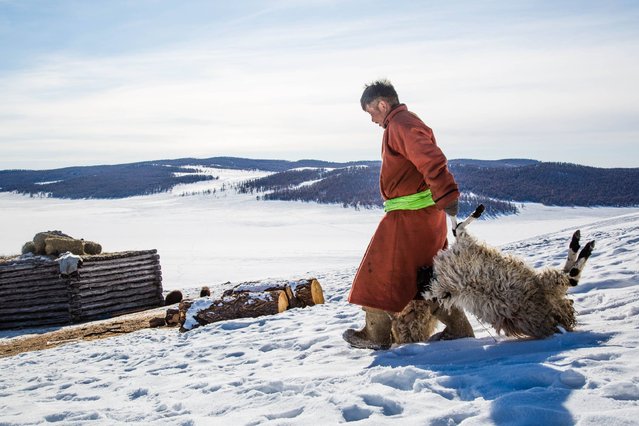
This handout photo taken on February 12, 2017 and released on February 16 by the International Federation of Red Cross and Red Crescent Societies (IFRC) shows Mongolian herder Munkhbat Bazarragchaa (C) dragging two sheep – which recently died due to the weather - to a pile of dead animals behind his “ger” in Khuvsgul province, northern Mongolia. Thousands of Mongolian herders face disastrous livestock losses from dreaded severe weather  known as the “dzud”, the Red Cross said on February 16, 2017 in launching an international emergency aid appeal. (Photo by Mirva Helenius/AFP Photo/IFRC)

This handout photo taken on February 12, 2017 and released on February 16 by the International Federation of Red Cross and Red Crescent Societies (IFRC) shows Mongolian herder Munkhbat Bazarragchaa (C) dragging two sheep – which recently died due to the weather - to a pile of dead animals behind his “ger” in Khuvsgul province, northern Mongolia. Thousands of Mongolian herders face disastrous livestock losses from dreaded severe weather known as the “dzud”, the Red Cross said on February 16, 2017 in launching an international emergency aid appeal. (Photo by Mirva Helenius/AFP Photo/IFRC)
Details
17 Feb 2017 11:40:00