Loading...
Done
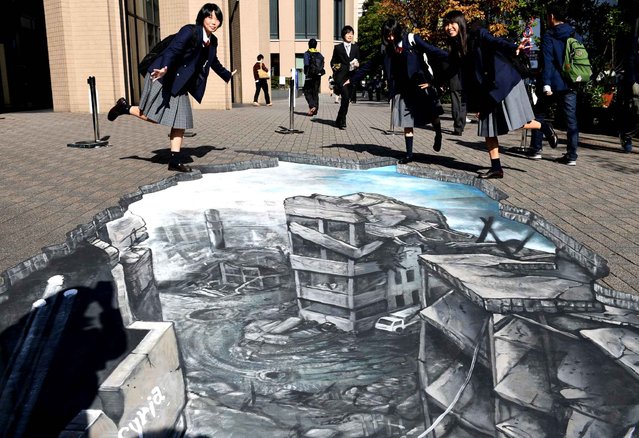
Students pose for a picture with a 3- D optical illusion artwork of a devastated cityscape in Aleppo, Syria at the campus of the Meiji University in Tokyo on November 18, 2016. The Japanese branch of the human rights organisation Amnesty International displayed the artwork to encourage people to think about the Syrian civil war. (Photo by Toshifumi Kitamura/AFP Photo)

Students pose for a picture with a 3- D optical illusion artwork of a devastated cityscape in Aleppo, Syria at the campus of the Meiji University in Tokyo on November 18, 2016. The Japanese branch of the human rights organisation Amnesty International displayed the artwork to encourage people to think about the Syrian civil war. (Photo by Toshifumi Kitamura/AFP Photo)
Details
19 Nov 2016 11:36:00
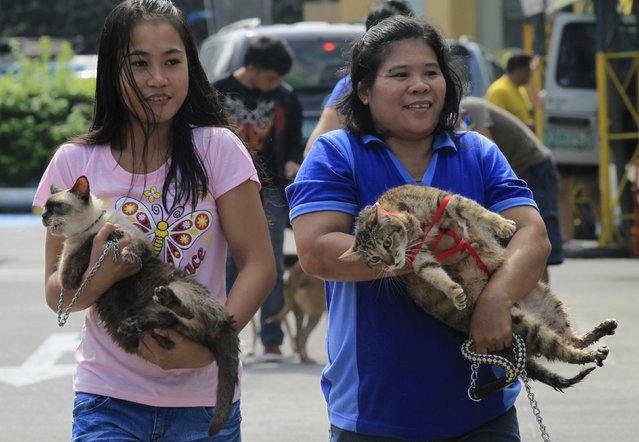
People carry their pets before the start of a pet blessing at Greenhills shopping mall in Manila October 3, 2015. (Photo by Romeo Ranoco/Reuters)

People carry their pets before the start of a pet blessing at Greenhills shopping mall in Manila October 3, 2015. Pets were blessed on Saturday in a celebration honouring the patron saint of animals Saint Francis of Assisi. (Photo by Romeo Ranoco/Reuters)
Details
05 Oct 2015 08:07:00
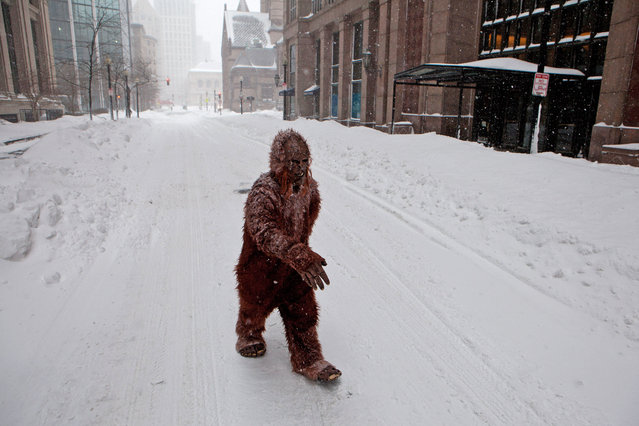
A person dressed as “bigfoot” makes their way through the strong wind and snow in the Back Bay neighborhood during a blizzard on January 27, 2015 in Boston, Massachusetts. (Photo by Kayana Szymczak/Getty Images)

A person dressed as “bigfoot” makes their way through the strong wind and snow in the Back Bay neighborhood during a blizzard on January 27, 2015 in Boston, Massachusetts. (Photo by Kayana Szymczak/Getty Images)
Details
31 Jan 2015 12:27:00
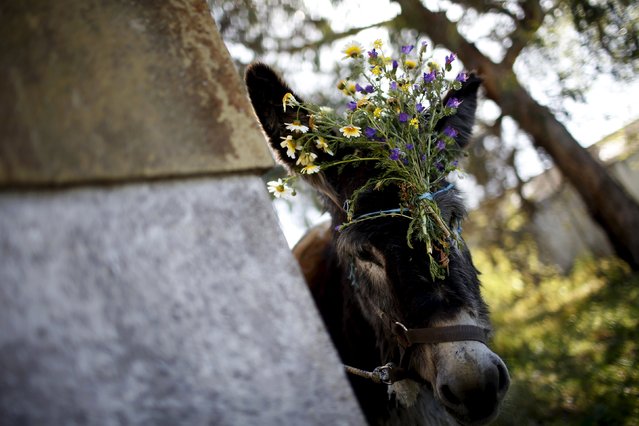
A donkey is seen before the start of the procession of the “Virgem da Atalaia” during Holy Week at Alcochete, near Lisbon April 5, 2015. (Photo by Rafael Marchante/Reuters)

A donkey is seen before the start of the procession of the “Virgem da Atalaia” during Holy Week at Alcochete, near Lisbon April 5, 2015. Women ride donkeys during the “Virgem da Atalaia” procession, that has been held annually for about 400 years. In the past, only single women rode the donkeys to ask for help from the Virgin to find a husband. (Photo by Rafael Marchante/Reuters)
Details
06 Apr 2015 09:43:00
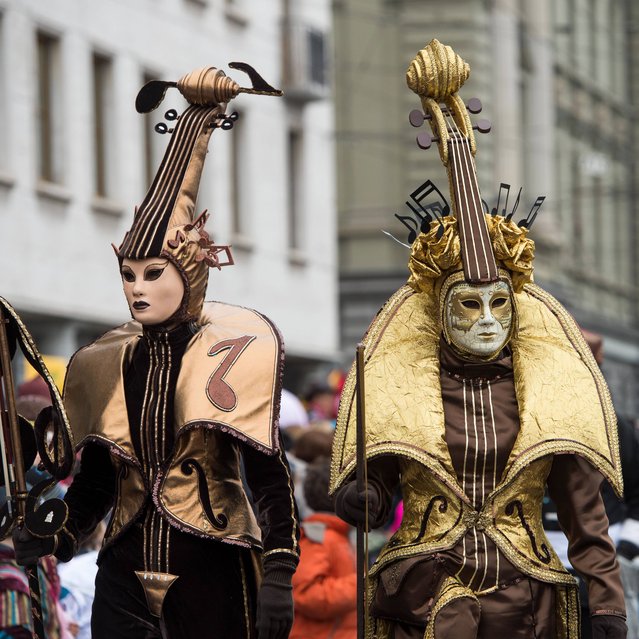
Costumed revellers  walk in the streets of Lucerne during the annual carnival parade   on Rose Monday  March 3, 2014. (Photo by Sigi Tischler/AP Photo/Keystone)

Costumed revellers walk in the streets of Lucerne during the annual carnival parade on Rose Monday March 3, 2014. (Photo by Sigi Tischler/AP Photo/Keystone)
Details
05 Mar 2014 10:18:00
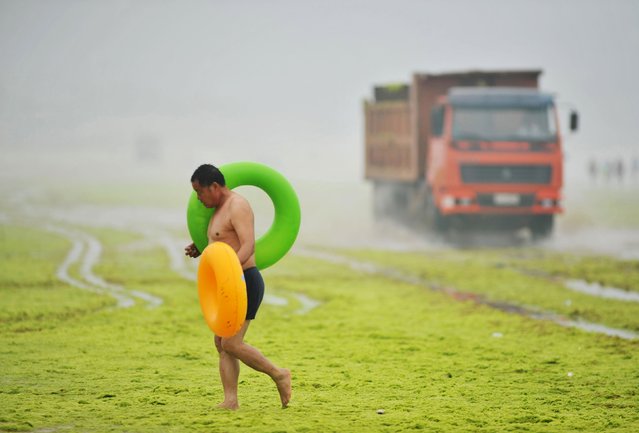
A man carries floats as he walks on an algae covered beach as a truck collecting algae passes by, along the coastline in Qingdao, Shandong province, July 6, 2015. (Photo by Reuters/China Daily)

A man carries floats as he walks on an algae covered beach as a truck collecting algae passes by, along the coastline in Qingdao, Shandong province, July 6, 2015. (Photo by Reuters/China Daily)
Details
08 Jul 2015 12:41:00
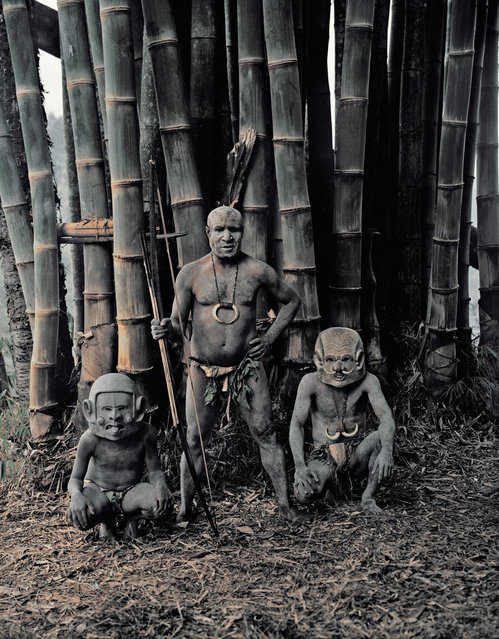
“Asaro from the Eastern Highlands”. The mudmen could not cover their faces with mud because the people of Papua New Guinea thought that the mud from the Asaro river was poisonous. So instead of covering their faces with this alleged poison, they made masks from pebbles that they heated and water from the waterfall, with unusual designs such as long or very short ears either going down to the chin or sticking up at the top, long joined eyebrows attached to the top of the ears, horns and sideways mouths. (Jimmy Nelson)

“Asaro from the Eastern Highlands”. The mudmen could not cover their faces with mud because the people of Papua New Guinea thought that the mud from the Asaro river was poisonous. So instead of covering their faces with this alleged poison, they made masks from pebbles that they heated and water from the waterfall, with unusual designs such as long or very short ears either going down to the chin or sticking up at the top, long joined eyebrows attached to the top of the ears, horns and sideways mouths. (Photo and caption by Jimmy Nelson)
Details
20 Oct 2013 08:54:00
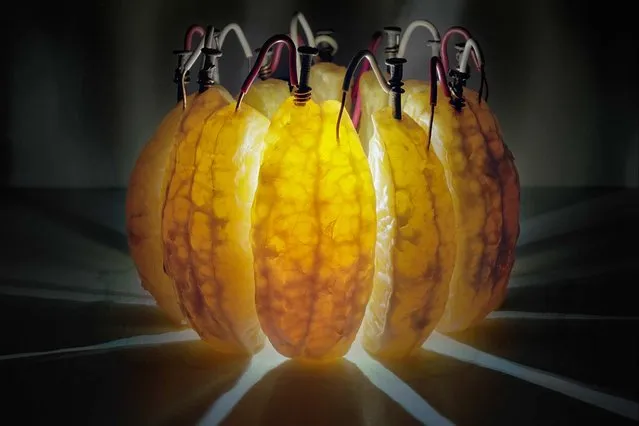
Wedges of an orange generate enough current and electrical juice – 3.5 volts – to power an LED. The fruit’s citric acid helps electrons flow from galvanized nails to copper wire in this 14-hour exposure. This image was published in September’s Visions of Earth, a trio of photos that appear in each issue of National Geographic. (Photo by Caleb Charland/National Geographic)

Wedges of an orange generate enough current and electrical juice – 3.5 volts – to power an LED. The fruit’s citric acid helps electrons flow from galvanized nails to copper wire in this 14-hour exposure. This image was published in September’s Visions of Earth, a trio of photos that appear in each issue of National Geographic. (Photo by Caleb Charland/National Geographic)
Details
06 Jan 2014 12:09:00