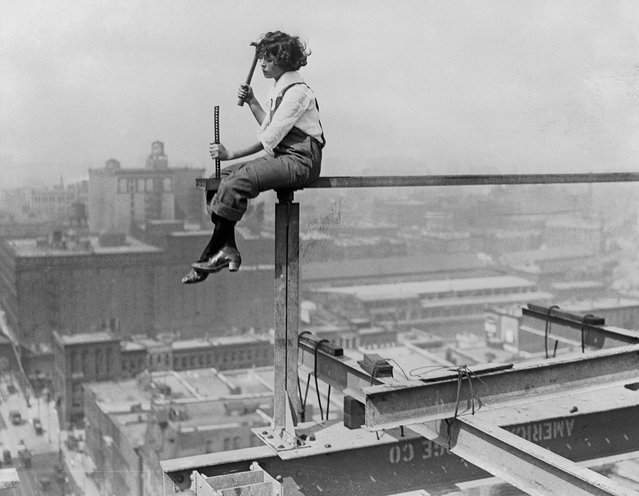
After finding the bricklaying business too full of ups and downs, this amazing young girl decided to take a shot at iron girdering for a change. She is Miss “Collie” Collier, a reporter for the Chicago Herald-Examiner. August 17, 1920. (Photo by Bettmann Archive/Getty Images)
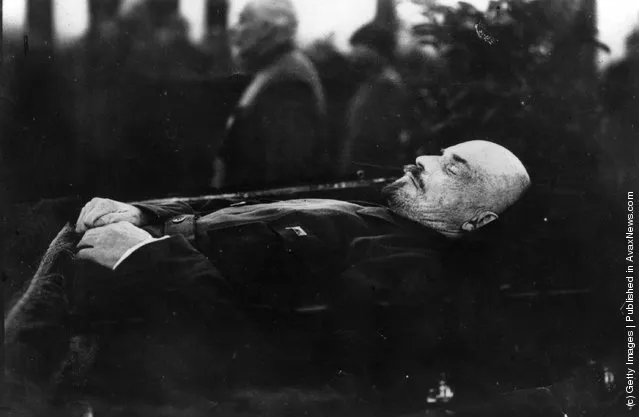
Photo: Vladimir Ilyich Lenin (1870 – 1924) lying in state in the Kremlin. (Photo by Hulton Archive/Getty Images). 1924
Important! For the same article in Russian language click here.
Something quite intriguing is happening within Russian-speaking internet during the last few – should you type a fully academic inquiry (at least, according to Russian academic requirements) in national search engines for "Lenin's mausoleum" – the first thing you get (even in top 10 searches) is website pages talking about black magic and occult. Website authors view this construction differently, but unconditionally agree on one thing: the mausoleum of the "leader of the world proletariat” – the essence of a magical artifact, a sort of “energy vampire”. It was built with a certain purpose: to drain the energy out of miserable Soviet citizens on one hand; and to poison the anthroposphere of one-sixth part of the earth with its vibes (the exact territory that was occupied by the former Soviet Union), depriving the Russian people of will to resist on the other hand. Complete nonsense? No doubt. Nevertheless, an intriguing one. Well, probably because some oddities do exist in mausoleum's history. These oddities are the thing we are going to discuss this time. First, let me refresh you memory on the subject.
The antennas of the European Southern Observatory's Atacama Large Millimeter/Submillimeter Array, also known as ALMA, are set against the splendor of the Milky Way in this picture by Babak Tafreshi. Construction of the full ALMA array is due to be completed in Chile's Atacama Desert in 2013, but the facility is already making scientific observations with a partial array of antennas. (Photo by ESO/B. Tafreshi/TWAN)
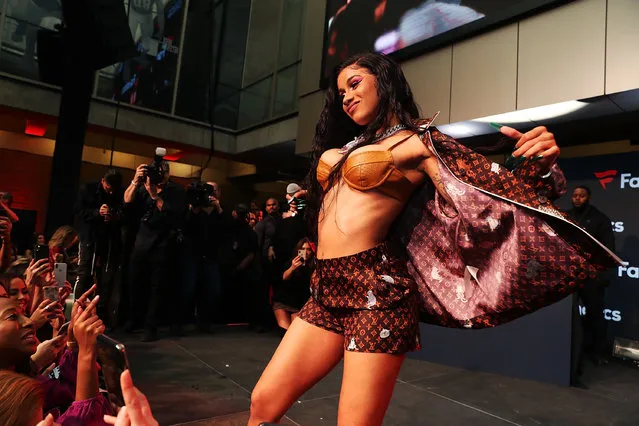
Cardi B attends the Fanatics Super Bowl Party at College Football Hall of Fame on February 2, 2019 in Atlanta, Georgia. (Photo by Shareif Ziyadat/WireImage)
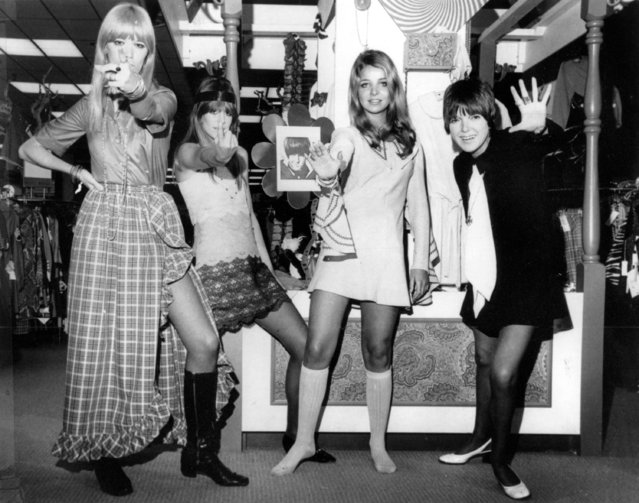
British fashion designer Mary Quant, right, waves as she poses with models wearing her Mod creations in Little Rock, Ark. on October 25, 1968. The models, from left, are, Amanda Tear, Rory Davis and Penny Yates. (Photo by AP Photo)