Loading...
Done
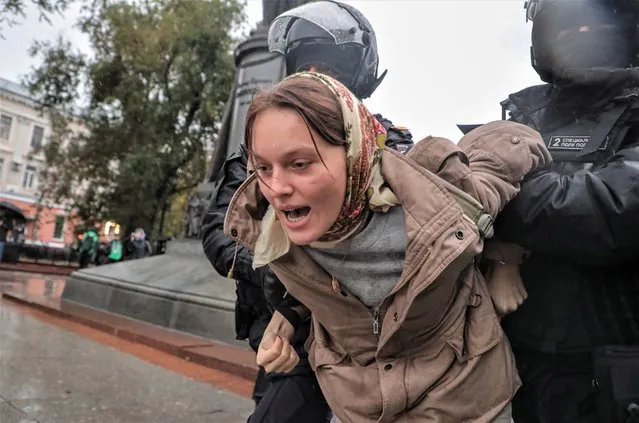
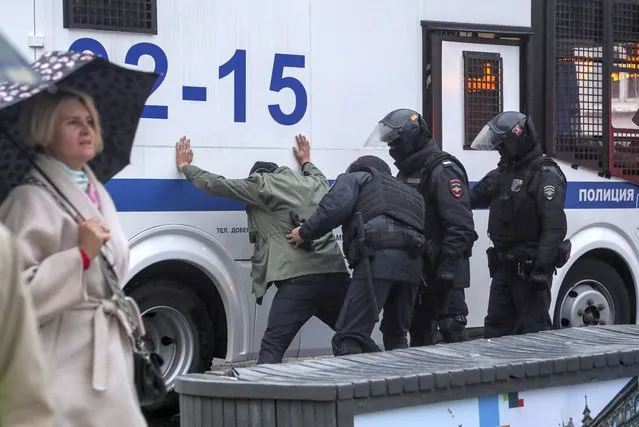
Russian policemen detain a participant taking part in an unauthorized protest against Russia's partial military mobilization due to the conflict in Ukraine, in downtown of Moscow, Russia, 24 September 2022. Russian President Putin announced in a televised address to the nation on 21 September, that he signed a decree on partial mobilization in the Russian Federation. Russian citizens who are in the reserve will be called up for military service. On 24 February 2022 Russian troops entered the Ukrainian territory in what the Russian president declared a “Special Military Operation”, starting an armed conflict that has provoked destruction and a humanitarian crisis. (Photo by Maxim Shipenkov/EPA/EFE)

Russian policemen detain a participant taking part in an unauthorized protest against Russia's partial military mobilization due to the conflict in Ukraine, in downtown of Moscow, Russia, 24 September 2022. Russian President Putin announced in a televised address to the nation on 21 September, that he signed a decree on partial mobilization in the Russian Federation. Russian citizens who are in the reserve will be called up for military service. On 24 February 2022 Russian troops entered the Ukrainian territory in what the Russian president declared a “Special Military Operation”, starting an armed conflict that has provoked destruction and a humanitarian crisis. (Photo by Maxim Shipenkov/EPA/EFE)
Details
28 Sep 2022 04:46:00
Russian policemen detain a person taking part in an unauthorized protest against Russia's partial military mobilization due to the conflict in Ukraine, in downtown Moscow, Russia on 24 September 2022. Russian President Putin announced in a televised address to the nation on 21 September, that he signed a decree on partial mobilization in the Russian Federation. Russian citizens who are in the reserve will be called up for military service. On 24 February 2022 Russian troops entered the Ukrainian territory in what the Russian president declared a “Special Military Operation”, starting an armed conflict that has provoked destruction and a humanitarian crisis. (Photo by Maxim Shipenkov/EPA/EFE)

Russian policemen detain a person taking part in an unauthorized protest against Russia's partial military mobilization due to the conflict in Ukraine, in downtown Moscow, Russia on 24 September 2022. Russian President Putin announced in a televised address to the nation on 21 September, that he signed a decree on partial mobilization in the Russian Federation. Russian citizens who are in the reserve will be called up for military service. On 24 February 2022 Russian troops entered the Ukrainian territory in what the Russian president declared a “Special Military Operation”, starting an armed conflict that has provoked destruction and a humanitarian crisis. (Photo by Maxim Shipenkov/EPA/EFE)
Details
29 Sep 2022 03:47:00
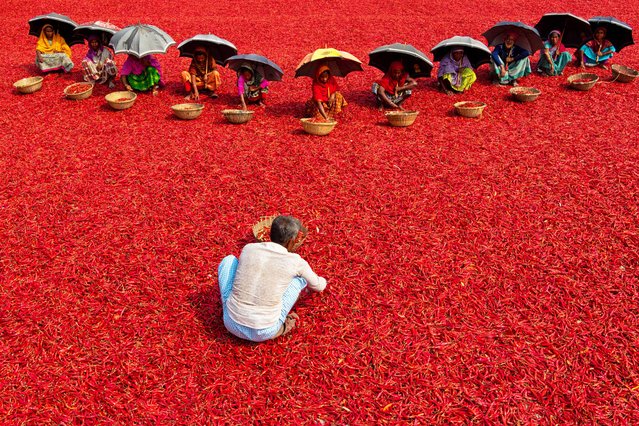
Rows of workers shelter under umbrellas from the scorching heat as they painstakingly sort through a red carpet of millions of chilli peppers in Bogra, Bangladesh on October 3, 2023. They sort the rotten and broken chilli peppers out to separate the poor quality ones which won't sell. In a line, the pickers who are paid less than £3 for a 10-hour shift slowly move forward with their baskets to separate the bad from the good after the chilies have been dried in the sun for a week. The dried & sorted chillies are then packaged and taken to the local market where they are brought mainly by companies to be made into chilli powder. The workers sort them in a warm environment, with temperatures reaching up to 45°C. More than 5,000 people work in almost 100 chilli farms in the Bogra district of Bangladesh to supply local spice companies with chillies for their recipes. Known as “Lal Morich” to the locals, chilli peppers are a major part of Bengali cuisine and are used as part of a combination of spices for various meat dishes, including chicken and beef. (Photo by Joy Saha/Rex Features/Shutterstock)

Rows of workers shelter under umbrellas from the scorching heat as they painstakingly sort through a red carpet of millions of chilli peppers in Bogra, Bangladesh on October 3, 2023. They sort the rotten and broken chilli peppers out to separate the poor quality ones which won't sell. In a line, the pickers who are paid less than £3 for a 10-hour shift slowly move forward with their baskets to separate the bad from the good after the chilies have been dried in the sun for a week. (Photo by Joy Saha/Rex Features/Shutterstock)
Details
21 Oct 2023 04:04:00
Russian-born Zlata is pictured in Fifties style glam while still managing to bend herself in half. (Photo by Barcroft Media)

For many of us, simply bending over to touch our toes can be a difficult. But it's not a problem for the world's bendiest woman Julia Günthel aka Zlata (27). Russian-born Zlata can twist herself like a snake into the most extreme poses imaginable – and has broken numerous world records for her flexibility. The former gymnast, who is 5ft 8in, is so flexible she can cram herself into a 50cm squared box. Photo: Russian-born Zlata is pictured in Fifties style glam while still managing to bend herself in half. (Photo by Barcroft Media)
Details
25 Oct 2013 08:21:00
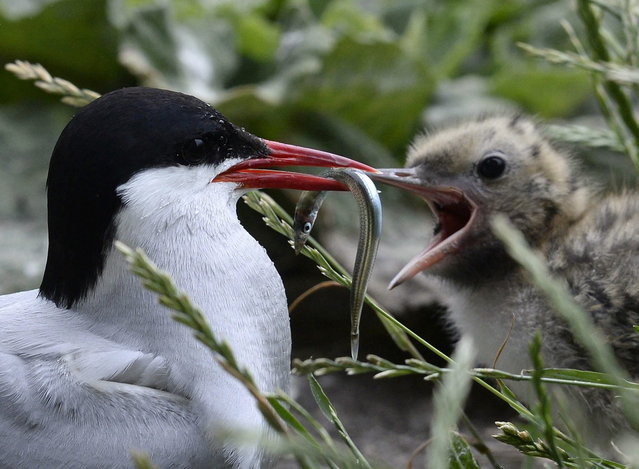
An arctic tern feeds its chick on the Farne Islands off the Northumberland coast, northern England July 8, 2013. (Photo by Nigel Roddis/Reuters)

An arctic tern feeds its chick on the Farne Islands off the Northumberland coast, northern England July 8, 2013. The Farne Islands, which lie off the coast of northeast England, are home to a huge array of wildlife. The islands are owned and protected by the British conservation charity, the National Trust, which says they host some 23 species of seabird, as well as a substantial colony of grey seals, who come to have their pups there in the autumn. Every five years the National Trust carries out a census of the islands' population of puffins, and this year's survey showed there were almost 40,000 nesting pairs on the islands – an 8 percent rise from 2008. (Photo by Nigel Roddis/Reuters)
Details
11 Dec 2013 09:21:00
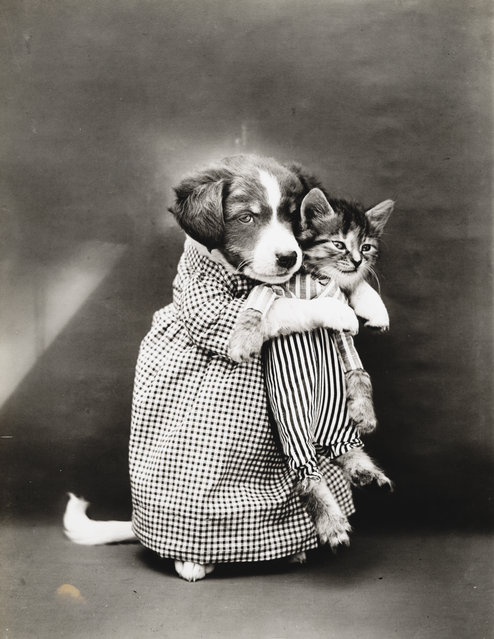
Photograph shows a puppy holding a kitten, 1914. (Photo by Harry Whittier Frees/Library of Congress)

“Harry Whittier Frees (1879–1953) was an American photographer who created novelty postcards and children's books based on his photographs of animals. He dressed the animals and posed them in human situations with props, often with captions; these can be seen as progenitors of modern lolcats”. – Wikipedia. Photo: “The nurse”. Photograph shows a puppy holding a kitten, 1914. (Photo by Harry Whittier Frees/Library of Congress)

P.S. All pictures are presented in high resolution. To see Hi-Res images – just TWICE click on any picture. In other words, click small picture – opens the BIG picture. Click BIG picture – opens VERY BIG picture (if available; this principle works anywhere on the site AvaxNews).
Details
28 Mar 2014 11:20:00
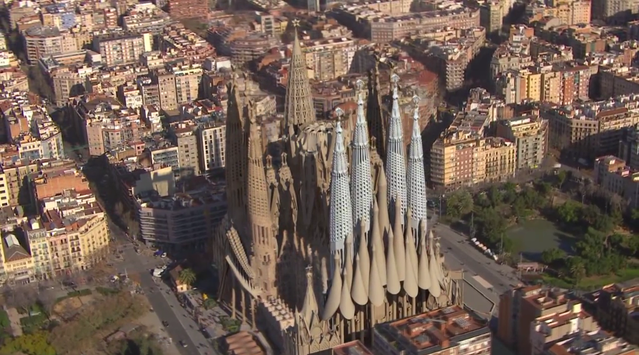
We Build Tomorrow – Sagrada Familia 2026 ( VIDEO )

For more than a century, the Barcelona skyline has been graced (or marred, depending on who’s talking) by the spectacle of the Basilica designed by Anton Gaudi, first started in 1882. If you want to know what it’ll look like when finished, don’t fret — 2026 is right around the corner. Or you can watch this video, released last week on YouTube by Basílica de la Sagrada Família and titled simply “2026 We Build Tomorrow,” a 3-D artists’ rendering of the building stages through completion.
(If 144 years sounds like a long time to finish a cathedral, keep in mind that there were decades that they didn’t work on it — and that Notre Dame de Paris took 182 years, although the 13th century Parisians didn’t have diesel-powered industrial cranes.) Now, if only the video could show us what the admission and hours will be in 2026 (and how to avoid the inevitable long lines).
Details
11 Jan 2014 10:59:00
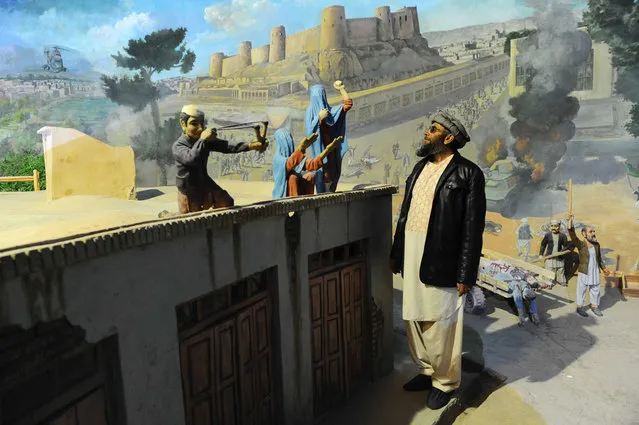
Museum assistant and former Soviet soldier, Sheikh Abdullah looks at a display in the Manzar-e Jahad, or Jihad Museum, which depicts the Soviet invasion of 1979 and the Afghan resistance, in Herat, on February 15, 2014. (Photo by Aref Karimi/AFP Photo via The Atlantic)

Museum assistant and former Soviet soldier, Sheikh Abdullah looks at a display in the Manzar-e Jahad, or Jihad Museum, which depicts the Soviet invasion of 1979 and the Afghan resistance, in Herat, on February 15, 2014. Sheikh Abdullah, who was a Soviet intelligence officer by the name of Khakimov Bakhrodin, was captured after being injured in battle with the Mujahideen. Abdullah stayed with his captors, converted to Islam and was renamed Abdullah. He never returned to his former homeland and now works at the Jihad Museum. (Photo by Aref Karimi/AFP Photo via The Atlantic)
Details
10 Mar 2014 09:08:00