Loading...
Done
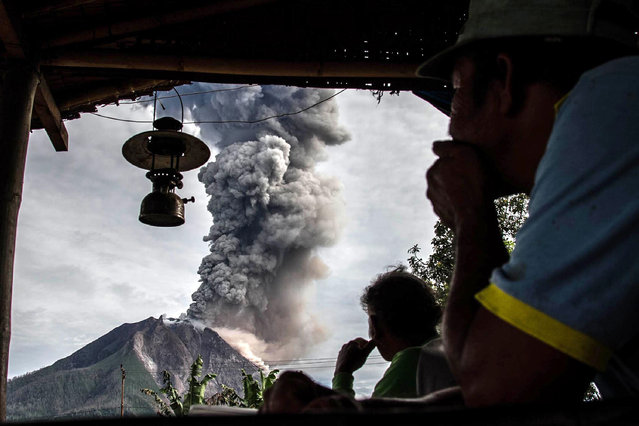
Villagers look on as Mount Sinabung volcano spews thick volcanic ash, as seen from Beganding village in Karo, North Sumatra province, on May 19, 2017. Sinabung roared back to life in 2010 for the first time in 400 years. After another period of inactivity, it erupted once more in 2013 and has remained highly active since. (Photo by Ivan Damanik/AFP Photo)

Villagers look on as Mount Sinabung volcano spews thick volcanic ash, as seen from Beganding village in Karo, North Sumatra province, on May 19, 2017. Sinabung roared back to life in 2010 for the first time in 400 years. After another period of inactivity, it erupted once more in 2013 and has remained highly active since. (Photo by Ivan Damanik/AFP Photo)
Details
20 May 2017 10:09:00
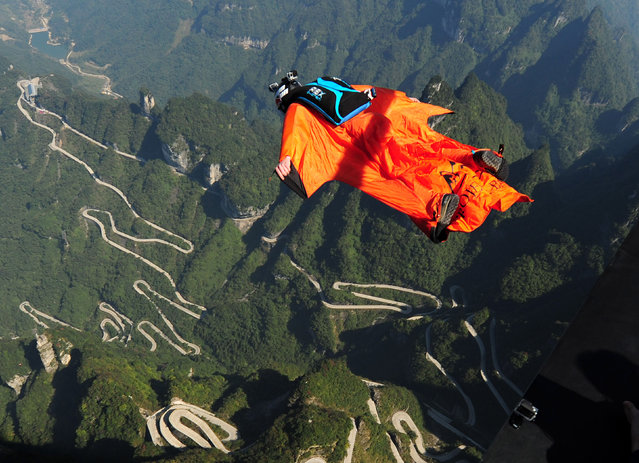
A participant in wingsuit flies above Tianmen Mountain at Zhangjiajie Scenic Spot during the 4th Red Bull WWL China Grand Prix on October 16, 2015 in Zhangjiajie, Hunan Province of China. The 4th Red Bull WWL China Grand Prix will last three days from October 16-18 in Zhangjiajie. (Photo by ChinaFotoPress/Getty Images)

A participant in wingsuit flies above Tianmen Mountain at Zhangjiajie Scenic Spot during the 4th Red Bull WWL China Grand Prix on October 16, 2015 in Zhangjiajie, Hunan Province of China. The 4th Red Bull WWL China Grand Prix will last three days from October 16-18 in Zhangjiajie. (Photo by ChinaFotoPress/Getty Images)
Details
18 Oct 2015 08:09:00
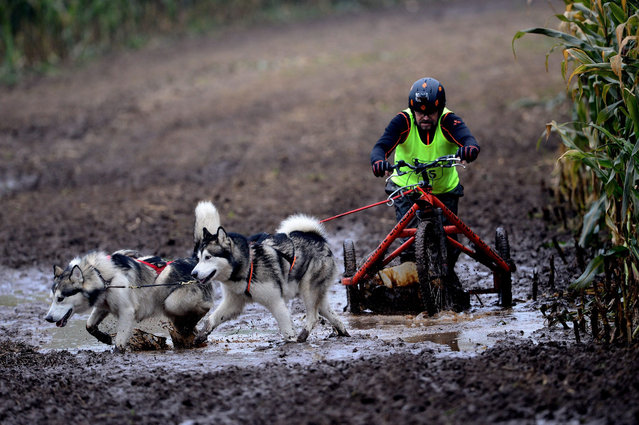
A participant of the sled dogs race in action with the dogs in Stroehen (Lower Saxony), Germany, 18 October 2015. It is the first round of the North German Championship. (Photo by Peter Steffen/EPA)

A participant of the sled dogs race in action with the dogs in Stroehen (Lower Saxony), Germany, 18 October 2015. It is the first round of the North German Championship. (Photo by Peter Steffen/EPA)
Details
21 Oct 2015 08:08:00
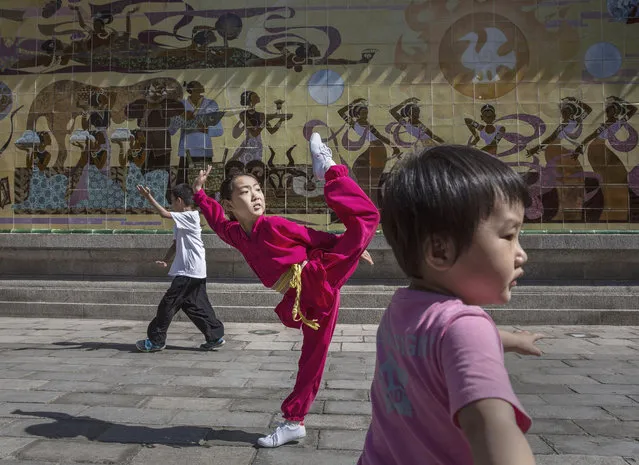
A young Chinese girl kicks during a kung-fu class at Ritan Park on June 11, 2016 in Beijing, China. Ritan, meaning “sun altar”, is among the oldest parks in Beijing, built in the early 1500s during the Ming dynasty for the emperor to make sacrifices to the sun. Less than half a kilometer square, Ritan these days is considered an oasis of green space in a sprawling city of skyscrapers, notorious air pollution, and a population of over 20 million people. Most Chinese live in small apartments with no access to gardens, leaving parks as a welcome haven for people, especially the elderly, to exercise, socialize, or enjoy a degree of privacy. (Photo by Kevin Frayer/Getty Images)

A young Chinese girl kicks during a kung-fu class at Ritan Park on June 11, 2016 in Beijing, China. Ritan, meaning “sun altar”, is among the oldest parks in Beijing, built in the early 1500s during the Ming dynasty for the emperor to make sacrifices to the sun. (Photo by Kevin Frayer/Getty Images)
Details
14 Jun 2016 13:01:00
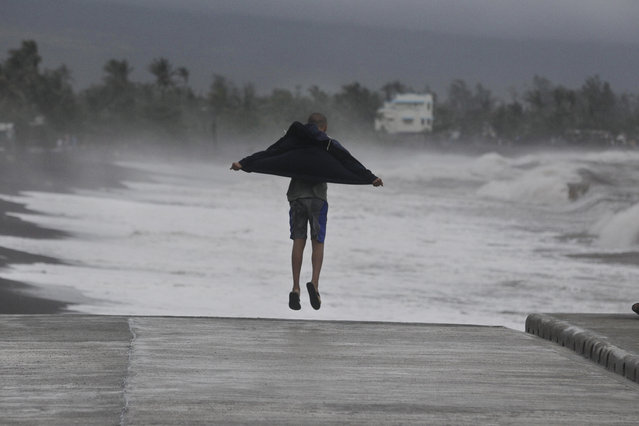
A resident jumps as he watches strong waves crash into shore as an effect of Typhoon Hagupit in Legazpi, Albay province, eastern Philippines on Sunday, December 7, 2014. Typhoon Hagupit knocked out power in entire coastal provinces, mowed down trees and sent more than 650,000 people into shelters before it weakened Sunday, sparing the central Philippines a repetition of unprecedented devastation by last year's storm. (Photo by Aaron Favila/AP Photo)

A resident jumps as he watches strong waves crash into shore as an effect of Typhoon Hagupit in Legazpi, Albay province, eastern Philippines on Sunday, December 7, 2014. Typhoon Hagupit knocked out power in entire coastal provinces, mowed down trees and sent more than 650,000 people into shelters before it weakened Sunday, sparing the central Philippines a repetition of unprecedented devastation by last year's storm. (Photo by Aaron Favila/AP Photo)
Details
08 Dec 2014 12:13:00
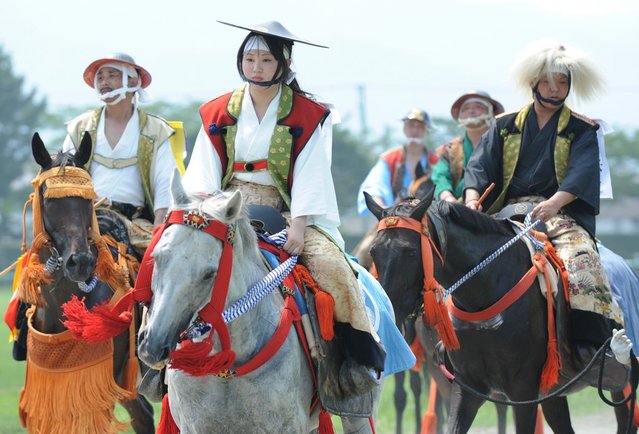
A young woman (C) clad in samurai costume leads other local poeple as she rides her horse during a parade at the annual Soma Nomaoi festival in Minamisoma, Fukushima Prefecture, on July 28, 2012.  The traditional full-scale festival kicked off for the first time after the accident of the Fukushima Dai-ichi Nuclear Power Plant following the massive earthquake and the tsunami on March 11, 2011. (Photo by Toru Yamanaka/AFP Photo)

Soma-Nomaoi is a festival that recreates a battle scene from more than 1,000 years ago. It is annually held for 4 days from July 22 to 25 in Haramachi City, Fukushima Prefecture, in the eastern part of Japan. In this historical event, 600 mounted samurai in traditional Japanese armor, with long swords at their side and ancestral flagstaffs streaming from their backs, ride across open fields. Soma-Nomaoi has been designated an Important Intangible Folk Cultural Property.

Photo: A young woman (C) clad in samurai costume leads other local poeple as she rides her horse during a parade at the annual Soma Nomaoi festival in Minamisoma, Fukushima Prefecture, on July 28, 2012. The traditional full-scale festival kicked off for the first time after the accident of the Fukushima Dai-ichi Nuclear Power Plant following the massive earthquake and the tsunami on March 11, 2011. (Photo by Toru Yamanaka/AFP Photo)
Details
02 Aug 2012 12:59:00
Two models sit in an acrylic “ZF-Car” from the German manufacturer of the same name at the Automechanika automotive service industry trade fair in Frankfurt am Main, Germany, 12 September 2016. The Automechanika Fair runs from 13 to 17 September 2016. (Photo by Boris Rössler/EPA)

Two models sit in an acrylic “ZF-Car” from the German manufacturer of the same name at the Automechanika automotive service industry trade fair in Frankfurt am Main, Germany, 12 September 2016. The Automechanika Fair runs from 13 to 17 September 2016. (Photo by Boris Rössler/EPA)
Details
13 Sep 2016 10:17:00
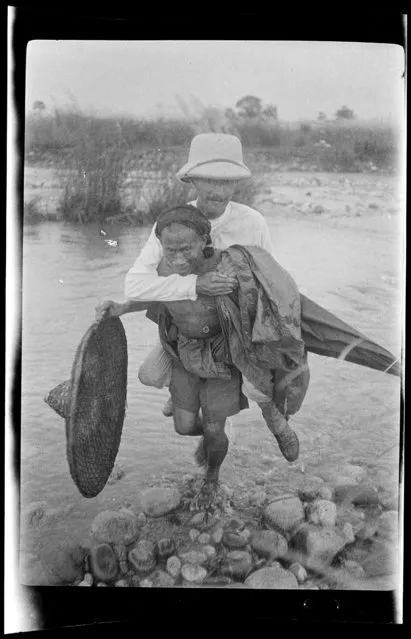
Hillcoat Riding Fu Tu. China, An Xian, 1917-1919. (Photo by Sidney David Gamble)

“Sidney D. Gamble (July 12, 1890 – 1968) was born in Cincinnati, Ohio, to David Berry and Mary Huggins Gamble; grandson of James Gamble, who, with William Procter, founded Procter & Gamble in 1837. in 1912 he graduated magna cum laude from Princeton University with a Bachelor of Literature degree and was elected to Phi Beta Kappa. He visited China for four extended periods, 1908, 1917–1919, 1924–27, and 1931–1932, doing Christian social work for the Y.M.C.A and conducting social surveys. He is now best known for his remarkable and extensive photographs of Peking and North China.” – Wikipedia. (Photo by Sidney David Gamble via Duke University Libraries)

Photo: Hillcoat Riding Fu Tu. China, An Xian, 1917-1919. P.S. All photos are available in high resolution.
Details
16 Aug 2012 11:24:00