Loading...
Done
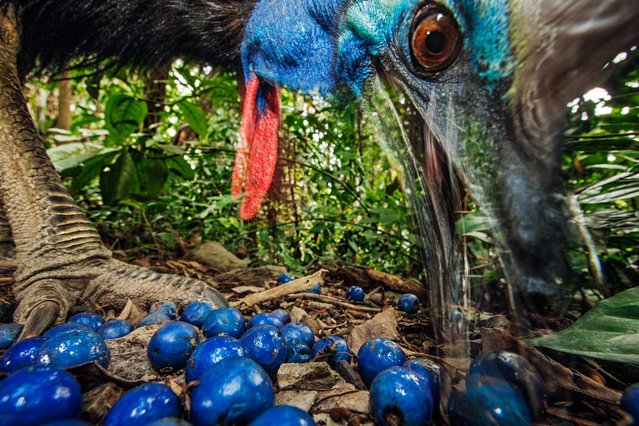
“Cassowaries are large, flightless birds related to emus and (more distantly) to ostriches, rheas, and kiwis”, writes Olivia Judson in the September issue of National Geographic magazine. (Photo by Christian Ziegler/National Geographic)

“Cassowaries are large, flightless birds related to emus and (more distantly) to ostriches, rheas, and kiwis”, writes Olivia Judson in the September issue of National Geographic magazine. How large? People-size: Adult males stand well over five foot five and top 110 pounds. Females are even taller, and can weigh more than 160 pounds. Dangerous when roused, they’re shy and peaceable when left alone. But even birds this big and tough are prey to habitat loss. The dense New Guinea and Australia rain forests where they live have dwindled. Today cassowaries might number 1,500 to 2,000. And because they help shape those same forests – by moving seeds from one place to another – “if they vanish”, Judson writes, “the structure of the forest would gradually change” too. (Photo by Christian Ziegler/National Geographic)
Details
06 Jan 2014 12:21:00
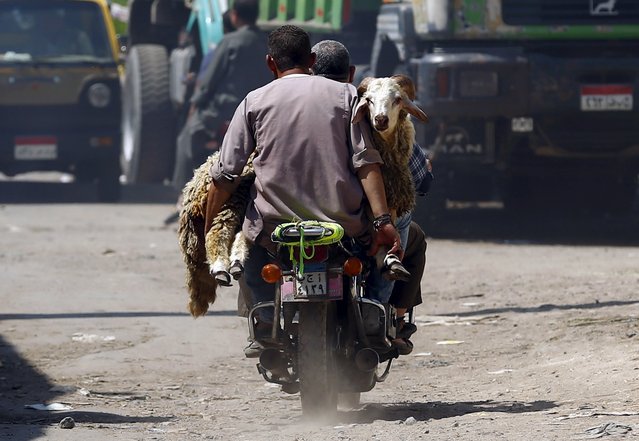
Men transport a sheep on their motorcycle after buying it at an old cattle market named “Al Emam Market” ahead of the Muslim festival Eid al-Adha in Cairo, Egypt, September 19, 2015. Muslims across the world are preparing to celebrate the annual festival of Eid al-Adha or the Festival of Sacrifice, which marks the end of the annual hajj pilgrimage, by slaughtering goats, sheep. (Photo by Amr Abdallah Dalsh/Reuters)

Men transport a sheep on their motorcycle after buying it at an old cattle market named “Al Emam Market” ahead of the Muslim festival Eid al-Adha in Cairo, Egypt, September 19, 2015. Muslims across the world are preparing to celebrate the annual festival of Eid al-Adha or the Festival of Sacrifice, which marks the end of the annual hajj pilgrimage, by slaughtering goats, sheep, cows and camels in commemoration of the Prophet Abraham's readiness to sacrifice his son to show obedience to Allah. (Photo by Amr Abdallah Dalsh/Reuters)
Details
22 Sep 2015 08:05:00
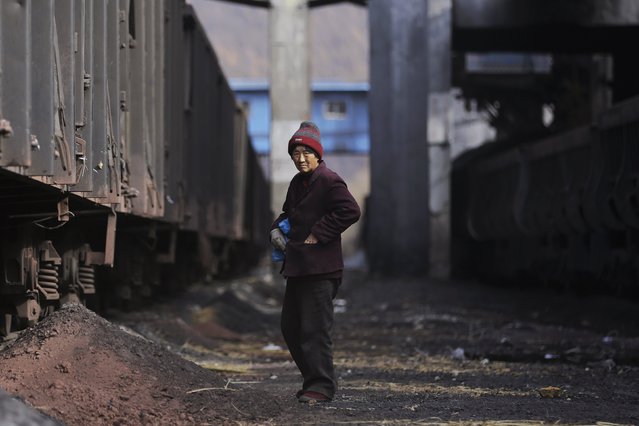
A rag-and-bone woman stands next to carriages of a coal train outside a coal mine of the state-owned Longmay Group on the outskirts of Jixi, in Heilongjiang province, China, October 22, 2015. (Photo by Jason Lee/Reuters)

A rag-and-bone woman stands next to carriages of a coal train outside a coal mine of the state-owned Longmay Group on the outskirts of Jixi, in Heilongjiang province, China, October 22, 2015. (Photo by Jason Lee/Reuters)
Details
07 Nov 2015 08:00:00
A street vendor spreads vermilion powder used for worship during the Tihar festival, also called Diwali in Kathmandu, Nepal, November 9, 2015. Hindus all over Nepal are celebrating the Tihar festival during which they worship cows, which are considered a maternal figure, and other animals. (Photo by Navesh Chitrakar/Reuters)

A street vendor spreads vermilion powder used for worship during the Tihar festival, also called Diwali in Kathmandu, Nepal, November 9, 2015. Hindus all over Nepal are celebrating the Tihar festival during which they worship cows, which are considered a maternal figure, and other animals. Also known as the festival of lights, devotees also worship the goddess of wealth Laxmi by illuminating and decorating their homes using garlands, oil lamps, candles and colourful light bulbs. (Photo by Navesh Chitrakar/Reuters)
Details
18 Nov 2015 08:05:00
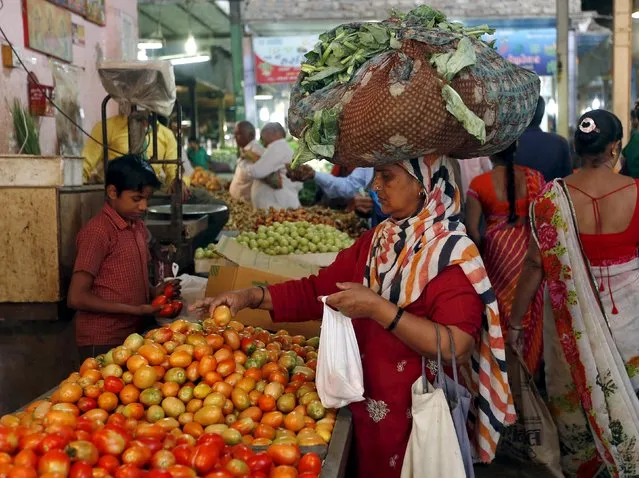
A woman carrying cabbage leaves on her head buys tomato at a market in Ahmedabad, India, November 9, 2015. (Photo by Amit Dave/Reuters)

A woman carrying cabbage leaves on her head buys tomato at a market in Ahmedabad, India, November 9, 2015. India's villages face a sharp spike in food prices in 2016, as a second year of drought drives up the cost of ingredients such as sugar and milk, and poor transport infrastructure stops falling global prices from reaching rural areas. (Photo by Amit Dave/Reuters)
Details
19 Nov 2015 08:02:00
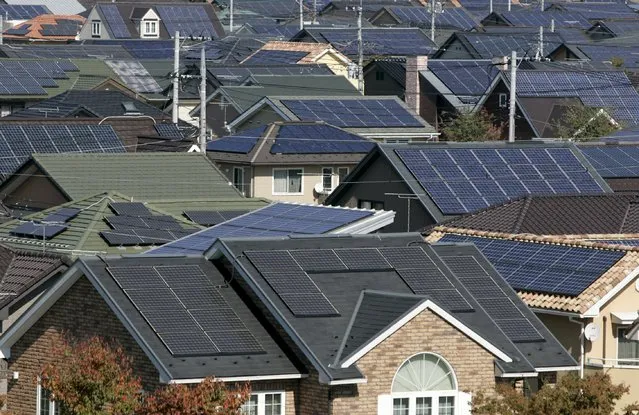
Rooftops of solar powered houses are pictured in Ota, 80 km northwest of Tokyo in this October 28, 2008 file photo. One by one, Japan is turning off the lights at the giant oil-fired power plants that propelled it to the ranks of the world's top industrialised nations. With nuclear power in the doldrums after the Fukushima disaster, it's solar energy that is becoming the alternative. (Photo by Yuriko Nakao/Reuters)

Rooftops of solar powered houses are pictured in Ota, 80 km northwest of Tokyo in this October 28, 2008 file photo. One by one, Japan is turning off the lights at the giant oil-fired power plants that propelled it to the ranks of the world's top industrialised nations. With nuclear power in the doldrums after the Fukushima disaster, it's solar energy that is becoming the alternative. Solar power is set to become profitable in Japan as early as this quarter, according to the Japan Renewable Energy Foundation (JREF), freeing it from the need for government subsidies and making it the last of the G7 economies where the technology has become economically viable. (Photo by Yuriko Nakao/Reuters)
Details
24 Nov 2015 08:04:00
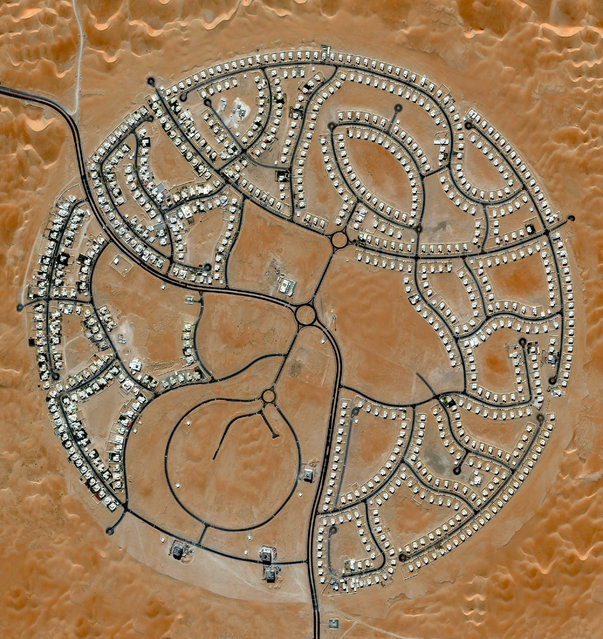
The villas of Marabe Al Dhafra in Abu Dhabi, United Arab Emirates are home to approximately 2,000 people. Located in one of the hottest regions of the world, the record high temperature here is 49.2C° (120.6F°). (Photo by Benjamin Grant/Penguin Random House)

The villas of Marabe Al Dhafra in Abu Dhabi, United Arab Emirates are home to approximately 2,000 people. Located in one of the hottest regions of the world, the record high temperature here is 49.2C° (120.6F°). (Photo by Benjamin Grant/Penguin Random House)
Details
21 Sep 2016 10:04:00
Women wearing traditional dresses with pins of pictures of former North Korean leaders Kim Il Sung and Kim Jong Il welcome foreign reporters on a government organised visit to the Kim Jong Suk Pyongyang textile mill in Pyongyang, North Korea May 9, 2016. (Photo by Damir Sagolj/Reuters)

Women wearing traditional dresses with pins of pictures of former North Korean leaders Kim Il Sung and Kim Jong Il welcome foreign reporters on a government organised visit to the Kim Jong Suk Pyongyang textile mill in Pyongyang, North Korea May 9, 2016. (Photo by Damir Sagolj/Reuters)
Details
11 May 2016 11:12:00