Loading...
Done
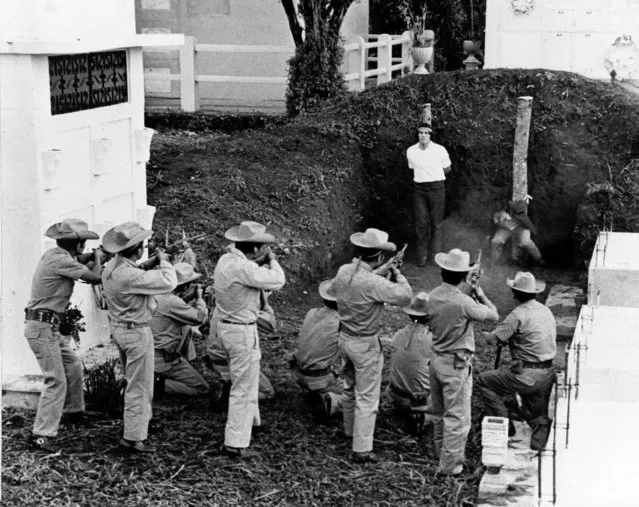
Convicted murderer Hector Alvarado Mazariegos, right, drops to the ground as he is hit by bullets of a Guatemala firing squad in the public cemetery at Mazatenango, June 28, 1975. His companion, Rocael Ortiz, met the same fate a few seconds later. Both were convicted of murder. (Photo by AP Photo/Anzueto)

Convicted murderer Hector Alvarado Mazariegos, right, drops to the ground as he is hit by bullets of a Guatemala firing squad in the public cemetery at Mazatenango, June 28, 1975. His companion, Rocael Ortiz, met the same fate a few seconds later. Both were convicted of murder. (Photo by AP Photo/Anzueto)
Details
29 Jul 2017 07:53:00
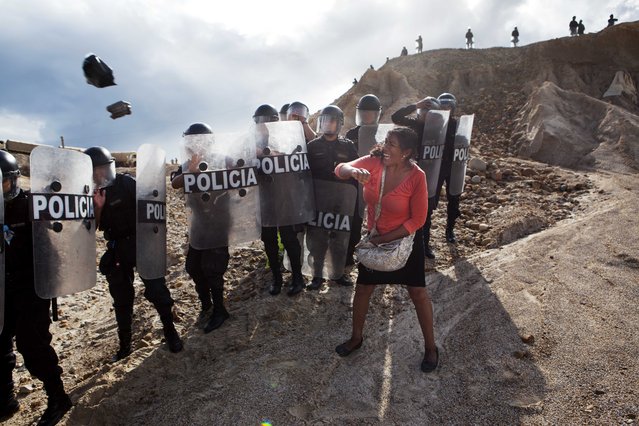
In this April 28, 2014 file photo, a woman throws a rock and a bag at police blocking her from getting home in the Huepetuhe district of the Madre de Dios region of Peru. Security forces began destroying illegal gold mining machinery in Peru's southeastern jungle region of Madre de Dios, as authorities began enforcing a ban on illegal mining. (Photo by Rodrigo Abd/AP Photo)

In this April 28, 2014 file photo, a woman throws a rock and a bag at police blocking her from getting home in the Huepetuhe district of the Madre de Dios region of Peru. Security forces began destroying illegal gold mining machinery in Peru's southeastern jungle region of Madre de Dios, as authorities began enforcing a ban on illegal mining. (Photo by Rodrigo Abd/AP Photo)
Details
16 Dec 2014 12:51:00
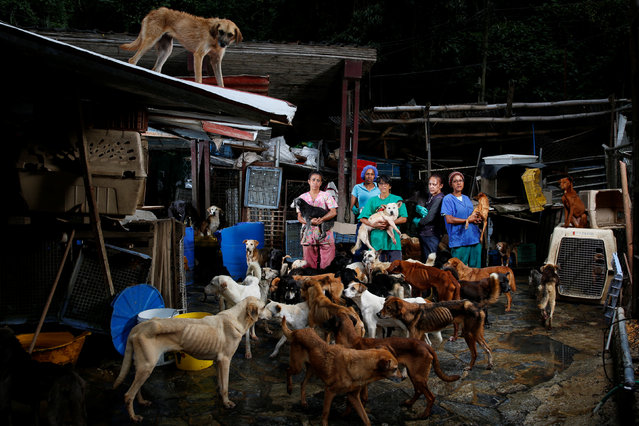
(L-R) Maria Silva, Milena Cortes, Maria Arteaga, Jackeline Bastidas and Gissy Abello pose for a picture at the Famproa dogs shelter where they work, in Los Teques, Venezuela, August 25, 2016. Venezuelans struggling to feed their families let alone their pets are dumping animals on the streets, in parks and at makeshift homes overrun with scrawny animals amid an economic crisis. An hour from Caracas in Los Teques, hundreds of dogs bark and run around the streets scavenging for food outside a makeshift shelter. People come by every few hours to hand over scrawny dogs which are fed by volunteers every day. Venezuela is undergoing a major economic and social crisis, with shortages of basic foods and medicines. Triple digit inflation is hitting everybody hard, including those who own pets. (Photo by Carlos Garcia Rawlins/Reuters)

(L-R) Maria Silva, Milena Cortes, Maria Arteaga, Jackeline Bastidas and Gissy Abello pose for a picture at the Famproa dogs shelter where they work, in Los Teques, Venezuela, August 25, 2016. Venezuelans struggling to feed their families let alone their pets are dumping animals on the streets, in parks and at makeshift homes overrun with scrawny animals amid an economic crisis. An hour from Caracas in Los Teques, hundreds of dogs bark and run around the streets scavenging for food outside a makeshift shelter. (Photo by Carlos Garcia Rawlins/Reuters)
Details
08 Sep 2016 10:01:00
Two young women, having enjoyed a drink at a party, dance together in Tehran, Iran. Although unrelated men and women are forbidden to socialise together many people ignore these strictures in the privacy of their own homes. (Photo by Hossein Fatemi/Reuters/Panos Pictures/Courtesy of World Press Photo Foundation)

Two young women, having enjoyed a drink at a party, dance together in Tehran, Iran. Although unrelated men and women are forbidden to socialise together many people ignore these strictures in the privacy of their own homes. (Photo by Hossein Fatemi/Reuters/Panos Pictures/Courtesy of World Press Photo Foundation)
Details
15 Feb 2017 00:04:00
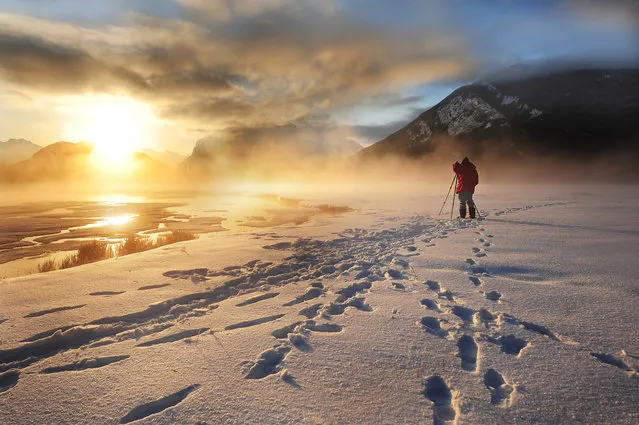
“Artist of the light”. While shooting sunrise in the Vermilion lakes area of Banff national park, Canada, I met a fellow photographer on the scene. Most of the time, we tried not to get in each other's way, however, just by accident, I snapped a picture with him in it working on his tripod settings, and it turned out to be a great photo compared to my sunrise shots. (Photo and caption by Victor Liu/National Geographic Traveler Photo Contest)

“Artist of the light”. While shooting sunrise in the Vermilion lakes area of Banff national park, Canada, I met a fellow photographer on the scene. Most of the time, we tried not to get in each other's way, however, just by accident, I snapped a picture with him in it working on his tripod settings, and it turned out to be a great photo compared to my sunrise shots. (Photo and caption by Victor Liu/National Geographic Traveler Photo Contest)

ATTENTION! All pictures are presented in high resolution. To see Hi-Res images – just TWICE click on any picture. In other words, click small picture – opens the BIG picture. Click BIG picture – opens VERY BIG picture.
Details
27 Jun 2013 13:11:00
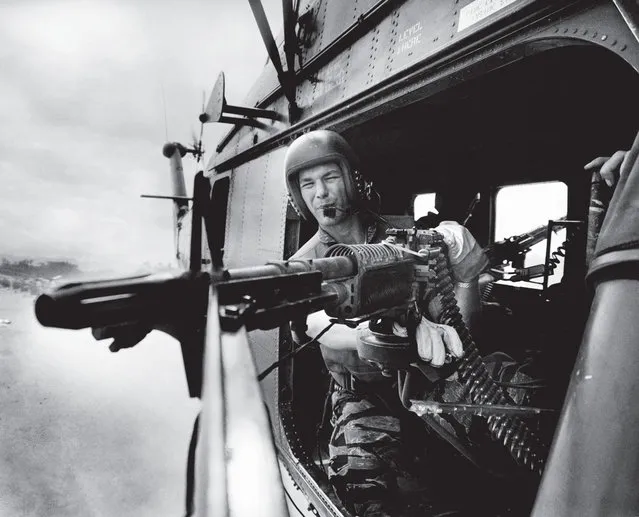
Man your battle stations: The crew chief of helicopter Yankee Papa 13, lance corporal James C. Farley, mans an M-60 machine gun during a mission near Da Nang, Vietnam on March 31, 1965. (Photo by Larry Burrows/Time & Life Pictures)

In the spring of 1965, within weeks of 3,500 American Marines arriving in Vietnam, a 39-year-old Briton named Larry Burrows began work on a feature for LIFE magazine, chronicling the day-to-day experience of U.S. troops on the ground – and in the air – in the midst of the rapidly widening war. The photographs in this gallery focus on a calamitous March 31, 1965, helicopter mission; Burrows’ “report from Da Nang”, featuring his pictures and his personal account of the harrowing operation, was published two weeks later as a now-famous cover story in the April 16, 1965, issue of LIFE.

Photo: Man your battle stations: The crew chief of helicopter Yankee Papa 13, lance corporal James C. Farley, mans an M-60 machine gun during a mission near Da Nang, Vietnam on March 31, 1965. (Photo by Larry Burrows/Time & Life Pictures)
Details
07 Apr 2013 07:08:00
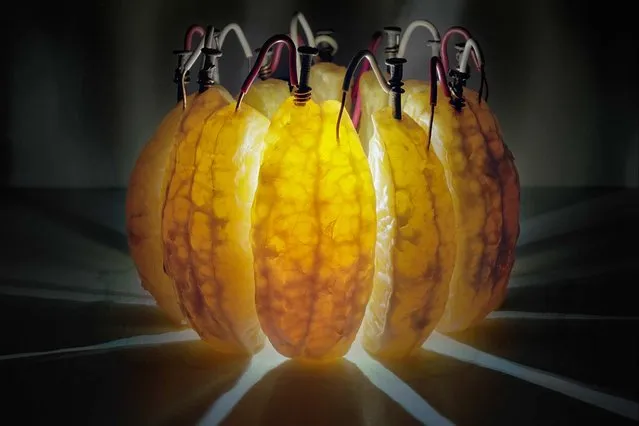
Wedges of an orange generate enough current and electrical juice – 3.5 volts – to power an LED. The fruit’s citric acid helps electrons flow from galvanized nails to copper wire in this 14-hour exposure. This image was published in September’s Visions of Earth, a trio of photos that appear in each issue of National Geographic. (Photo by Caleb Charland/National Geographic)

Wedges of an orange generate enough current and electrical juice – 3.5 volts – to power an LED. The fruit’s citric acid helps electrons flow from galvanized nails to copper wire in this 14-hour exposure. This image was published in September’s Visions of Earth, a trio of photos that appear in each issue of National Geographic. (Photo by Caleb Charland/National Geographic)
Details
06 Jan 2014 12:09:00
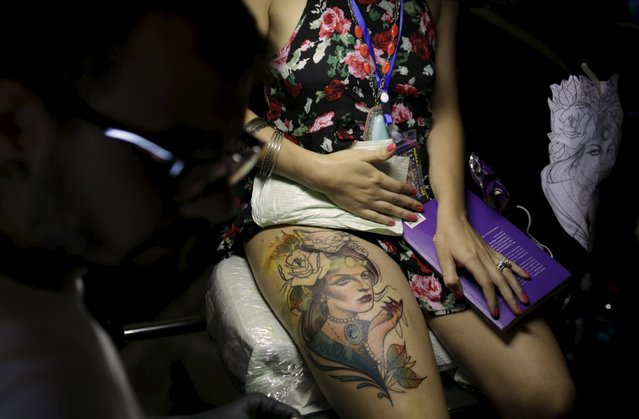
A woman sits as she gets a tattoo on her leg during the annual Panama City Ink Fest in Panama City August 16, 2015. (Photo by Carlos Jasso/Reuters)

A woman sits as she gets a tattoo on her leg during the annual Panama City Ink Fest in Panama City August 16, 2015. (Photo by Carlos Jasso/Reuters)
Details
18 Aug 2015 14:40:00