Loading...
Done
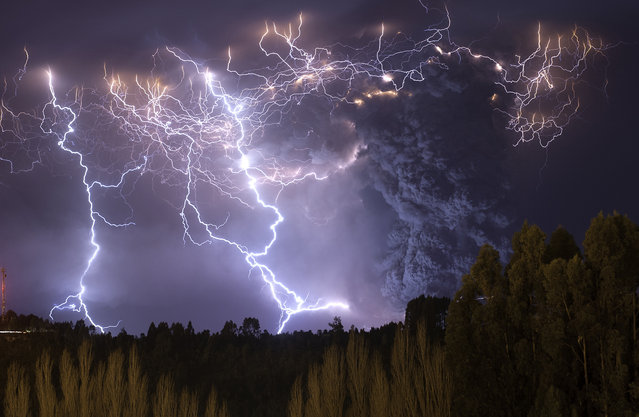
The eruption of Cordon Caulle began on June 4, 2011, located in the Region of Los Rios in Chile. For about 12 months, people and animals became accustomed to living with the daily fall of ash, which also caused problems in the air traffic in South America. The explosions and lightning during first days of the eruption could be seen from hundreds of miles around. This photograph was taken on the second night of eruption from the town of Lago Ranco. (Photo and caption by Francisco Negroni/National Geographic Traveler Photo Contest)

The eruption of Cordon Caulle began on June 4, 2011, located in the Region of Los Rios in Chile. For about 12 months, people and animals became accustomed to living with the daily fall of ash, which also caused problems in the air traffic in South America. The explosions and lightning during first days of the eruption could be seen from hundreds of miles around. This photograph was taken on the second night of eruption from the town of Lago Ranco. (Photo and caption by Francisco Negroni/National Geographic Traveler Photo Contest)

ATTENTION! All pictures are presented in high resolution. To see Hi-Res images – just TWICE click on any picture. In other words, click small picture – opens the BIG picture. Click BIG picture – opens VERY BIG picture.
Details
23 Jun 2013 11:24:00
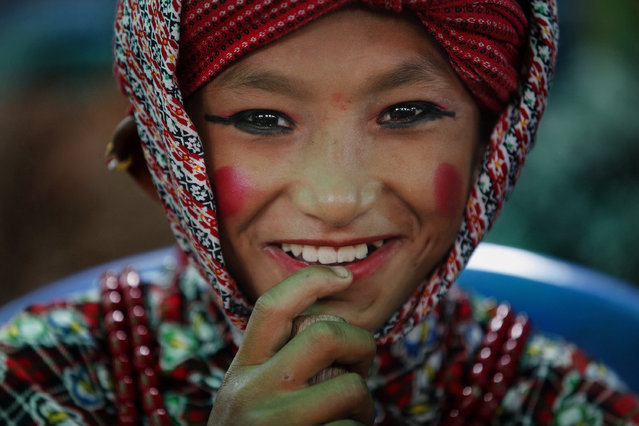
A Nepalese boy gets ready to perform a stick dance during a rally held to pay tribute to the victims of an earthquake, in Bhaktapur, Nepal, Wednesday, September 2, 2015. Two powerful earthquakes in April and May devastated the Himalayan nation killing more than 8,800 people. (Photo by Niranjan Shrestha/AP Photo)

A Nepalese boy gets ready to perform a stick dance during a rally held to pay tribute to the victims of an earthquake, in Bhaktapur, Nepal, Wednesday, September 2, 2015. Two powerful earthquakes in April and May devastated the Himalayan nation killing more than 8,800 people. (Photo by Niranjan Shrestha/AP Photo)
Details
03 Sep 2015 13:07:00
A performer dressed as a lobster is seen during a lobster-themed electronic music party at a water park on August 01, 2020 in Hangzhou, Zhejiang Province of China. (Photo by Lian Guoqing/VCG via Getty Images)

A performer dressed as a lobster is seen during a lobster-themed electronic music party at a water park on August 01, 2020 in Hangzhou, Zhejiang Province of China. (Photo by Lian Guoqing/VCG via Getty Images)
Details
12 Aug 2020 00:03:00
Iraqi Kurdish women train weight lifting at a centre in Iraq's Kurdish regional capital of Arbil on February 2, 2022. Women's sports have developed at a sluggish pace across much of conservative Iraq, which has struggled through decades of conflict. But the Kurdistan region was spared the brunt of the violence and destruction, and its infrastructure, facilities and government funding have paved the way for a boom in professional women's sports. (Photo by AFP Photo/Stringer)

Iraqi Kurdish women train weight lifting at a centre in Iraq's Kurdish regional capital of Arbil on February 2, 2022. Women's sports have developed at a sluggish pace across much of conservative Iraq, which has struggled through decades of conflict. But the Kurdistan region was spared the brunt of the violence and destruction, and its infrastructure, facilities and government funding have paved the way for a boom in professional women's sports. (Photo by AFP Photo/Stringer)
Details
23 Mar 2022 05:45:00
Guards wait for the start of former Egyptian President Hosni Mubarak's funeral at Field Marshal Mohammed Hussein Tantawi Mosque east of Cairo, Egypt on February 26, 2020. (Photo by Amr Abdallah Dalsh/Reuters)

Guards wait for the start of former Egyptian President Hosni Mubarak's funeral at Field Marshal Mohammed Hussein Tantawi Mosque east of Cairo, Egypt on February 26, 2020. (Photo by Amr Abdallah Dalsh/Reuters)
Details
28 Feb 2020 00:01:00
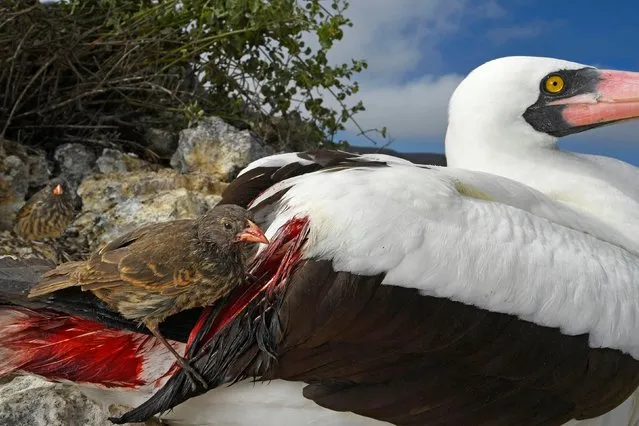
Bloodthirsty by Thomas P Peschak, Germany/South Africa — winner, Behaviour: birds. When rations run short on Wolf Island, in the remote northern Galápagos, the sharp-beaked ground finches become vampires. Their sitting targets are Nazca boobies and other large birds. The finches rely on a scant diet of seeds and insects, which regularly dries up, so they drink blood to survive. ‘I’ve seen more than half a dozen finches drinking from a single Nazca booby,’ says Tom. Rather than leave their nests the boobies tolerate the vampires, and the blood loss doesn’t seem to cause permanent harm. (Photo by Thomas P Peschak/2018 Wildlife Photographer of the Year)

Bloodthirsty by Thomas P. Peschak, Germany/South Africa — winner, Behaviour: birds. When rations run short on Wolf Island, in the remote northern Galápagos, the sharp-beaked ground finches become vampires. Their sitting targets are Nazca boobies and other large birds. The finches rely on a scant diet of seeds and insects, which regularly dries up, so they drink blood to survive. ‘I’ve seen more than half a dozen finches drinking from a single Nazca booby,’ says Tom. Rather than leave their nests the boobies tolerate the vampires, and the blood loss doesn’t seem to cause permanent harm. (Photo by Thomas P. Peschak/2018 Wildlife Photographer of the Year)
Details
19 Oct 2018 00:05:00
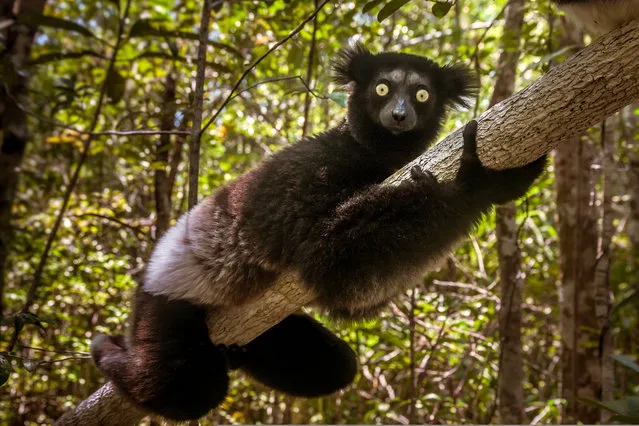
The secretive indri (Indri indri) of Madagascar, the largest living lemur. It is also critically endangered and highly evolutionarily distinct with no close relatives, which makes its branch one of most precarious on the mammal evolutionary tree. In the likely event that the indri goes extinct, we will lose 19m years of unique evolutionary history from the mammal tree of life. (Photo by Pierre-Yves Babelon/Aarhus University)

The secretive indri (Indri indri) of Madagascar, the largest living lemur. It is also critically endangered and highly evolutionarily distinct with no close relatives, which makes its branch one of most precarious on the mammal evolutionary tree. In the likely event that the indri goes extinct, we will lose 19m years of unique evolutionary history from the mammal tree of life. (Photo by Pierre-Yves Babelon/Aarhus University)
Details
18 Nov 2018 00:02:00
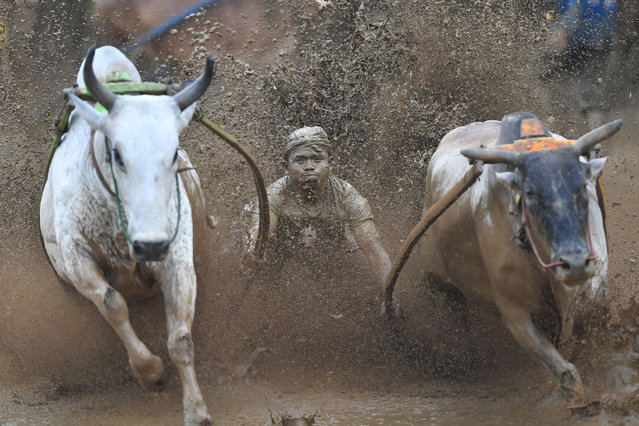
An Indonesian jockey rides two bulls with a cart during a traditional sport bull race locally called “pacu jawi” in Pariangan of Tanah Datar regency in West Sumatra on December 1, 2018. (Photo by Adek Berry/AFP Photo)

An Indonesian jockey rides two bulls with a cart during a traditional sport bull race locally called “pacu jawi” in Pariangan of Tanah Datar regency in West Sumatra on December 1, 2018. (Photo by Adek Berry/AFP Photo)
Details
08 Feb 2019 00:05:00