Loading...
Done
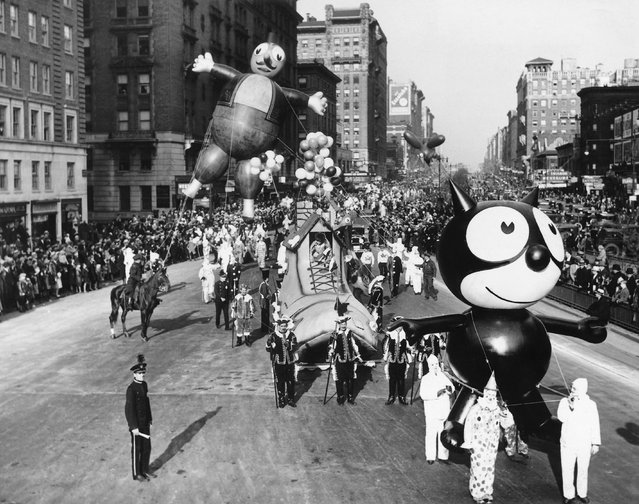
A Felix the Cat balloon and other parade floats and balloons are led down Broadway during the annual Macy's Thanksgiving Day Parade; ca. 1900s, Broadway, Manhattan, New York City, New York State, USA. (Photo by Underwood & Underwood/Corbis)

A Felix the Cat balloon and other parade floats and balloons are led down Broadway during the annual Macy's Thanksgiving Day Parade; ca. 1900s, Broadway, Manhattan, New York City, New York State, USA. (Photo by Underwood & Underwood/Corbis)
Details
27 Nov 2014 15:09:00
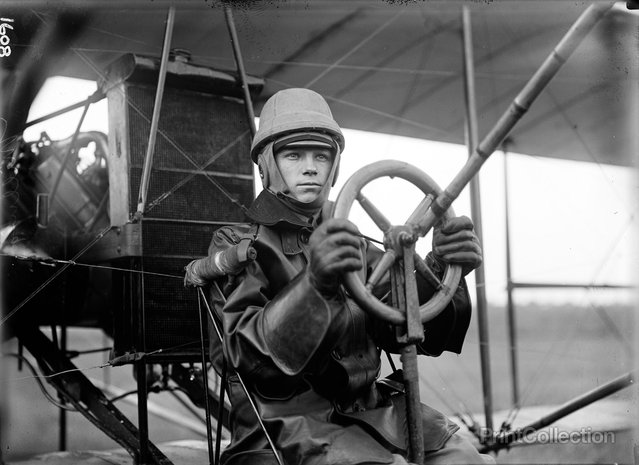
Aviation, Army, College Park. Tests of Curtiss Palne for Army, Single Control. Created by Harris & Ewing. Published in 1912.

Harris & Ewing Inc. photographed people, events, and architecture, particularly in Washington, D.C., during the period 1905-1945. Photo: Tests of Curtiss Palne for Army, Single Control. Created by Harris & Ewing. Published in 1912.
Details
18 Mar 2013 12:10:00
Sally Gomez drives to rescue of friend Michele Moore in flooded parking lot at Hyannis, Mass., September 9, 1969, after torrential rains of Hurricane Gerda flooded low areas of Cape Cod. Ann Davis of Osterville stands up in roof opening to lend a hand. Sally and Michele are from Centerville on the Cape. (Photo by Frank C. Curtin/AP Photo)

Sally Gomez drives to rescue of friend Michele Moore in flooded parking lot at Hyannis, Mass., September 9, 1969, after torrential rains of Hurricane Gerda flooded low areas of Cape Cod. Ann Davis of Osterville stands up in roof opening to lend a hand. Sally and Michele are from Centerville on the Cape. (Photo by Frank C. Curtin/AP Photo)
Details
10 Sep 2015 13:05:00
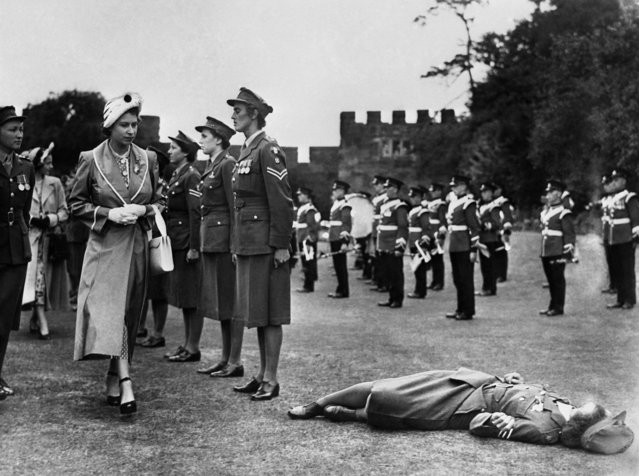
Britain's Princess Elizabeth clasps her hands in sympathy as Sergeant Jean Bayliss faints at her feet during an inspection of the guard of honour of the Women's Royal Army Corps at Shrewsbury Castle, Shropshire, on July 6, 1949. (Photo by AP Photo)

Britain's Princess Elizabeth clasps her hands in sympathy as Sergeant Jean Bayliss faints at her feet during an inspection of the guard of honour of the Women's Royal Army Corps at Shrewsbury Castle, Shropshire, on July 6, 1949. (Photo by AP Photo)
Details
18 Jul 2017 08:54:00
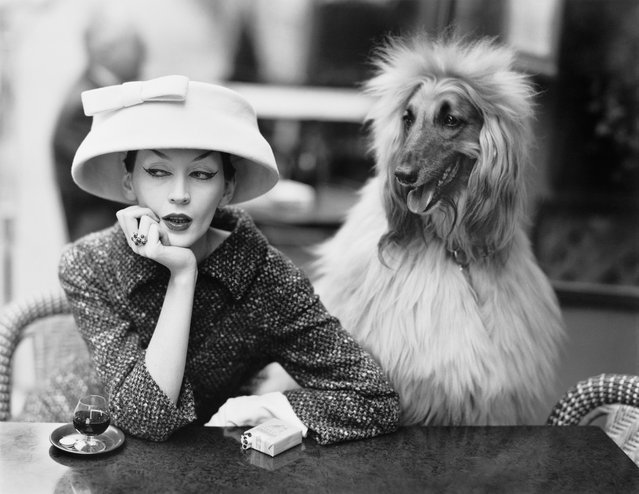
The model Dovima in a suit and cloche hat at Les Deux Magots cafe in Paris, France in 1955. (Photo by Richard Avedon/The Richard Avedon Foundation/The Guardian)

The model Dovima in a suit and cloche hat at Les Deux Magots cafe in Paris, France in 1955. (Photo by Richard Avedon/The Richard Avedon Foundation/The Guardian)
Details
22 Oct 2019 00:01:00
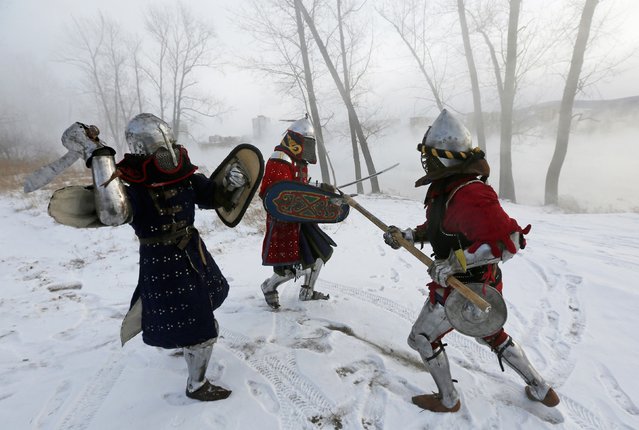
Members of the “Avalon” team wearing 14th century knight costumes fight against each other on the bank of the Yenisei River during the regional amateurs tournament of clubs of historical reconstruction, “The Battle of the Nations 2015. Siberia”, in Krasnoyarsk January 24, 2015. (Photo by Ilya Naymushin/Reuters)

Members of the “Avalon” team wearing 14th century knight costumes fight against each other on the bank of the Yenisei River during the regional amateurs tournament of clubs of historical reconstruction, “The Battle of the Nations 2015. Siberia”, in Krasnoyarsk January 24, 2015. (Photo by Ilya Naymushin/Reuters)
Details
31 Jan 2015 13:09:00
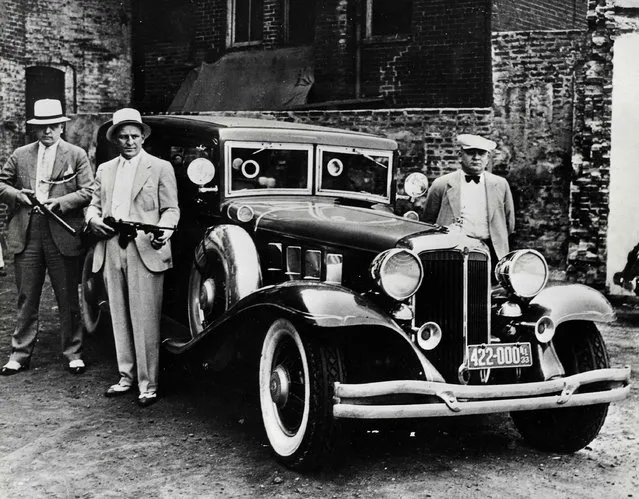
An armoured vehicle surrounded by Chicago cops at the time of the American depression, 1933. (Photo by Rolls Press/Popperfoto/Getty Images)

An armoured vehicle surrounded by Chicago cops at the time of the American depression, 1933. (Photo by Rolls Press/Popperfoto/Getty Images)
Details
10 Feb 2017 00:02:00
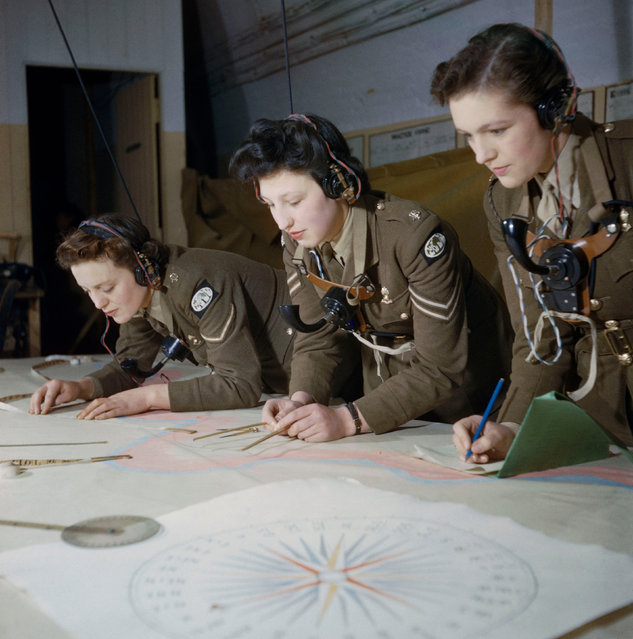
Auxiliary Territorial Service (ATS) plotters at work at Coastal Artillery Headquarters in Dover, December 1942. (Photo by Ted Dearberg/IWM/PA Wire)

Auxiliary Territorial Service (ATS) plotters at work at Coastal Artillery Headquarters in Dover, December 1942. The Auxiliary Territorial Service was the women's branch of the British Army during the Second World War. It was formed on 9 September 1938, initially as a women's voluntary service, and existed until 1 February 1949, when it was merged into the Women's Royal Army Corps. The ATS had its roots in the Women's Auxiliary Army Corps (WAAC), which was formed in 1917 as a voluntary service. During the First World War its members served in a number of jobs including clerks, cooks, telephonists and waitresses. The WAAC was disbanded after four years in 1921. (Photo by Ted Dearberg/IWM/PA Wire)

Details
13 Jul 2017 07:52:00