Loading...
Done
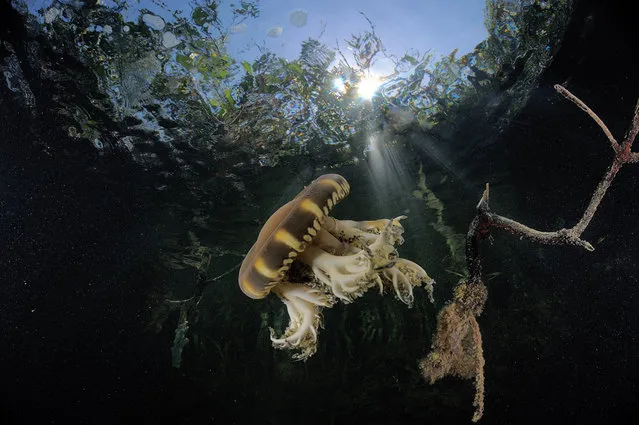
Under Water Photographers By Andrew Shpatak

I'm born in Russia in a village on the coast of the Sea of ​​Japan. The sea itself that always catches the attention of divers and underwater photographers from all over the Soviet Union.

I started with underwater photography recently, in 1998, with a simple underwater "boom box" "Canon" and "Epic".
Then a "Nikonos-5", complete with wide-angle and close-up.
The first trip to the Red Sea, with colorful fish .. The first attempts to make the macro and the knowledge that this equipment was not good.
ANDREY SHPATAK
Details
18 Apr 2013 11:13:00
Participants in the Grelka Fest at the Sheregesh resort in Tashtagolsky District of Kemerovo Oblast, Russia on April 22, 2017. (Photo by Grelka Fest/The Siberian Times)

Participants in the Grelka Fest at the Sheregesh resort in Tashtagolsky District of Kemerovo Oblast, Russia on April 22, 2017. Russian girls marked the end of the ski season with a record-breaking bikini ski festival at Siberia’s top winter resort, Sheregesh. Some 1,498 skiers and snowboarders undressed to impress in the annual event as they took to the pistes under blues skies and sunshine in a bracing temperature of just 5°C. (Photo by Grelka Fest/The Siberian Times)
Details
25 Apr 2017 09:42:00
People carry drinks at 80s Bar in Damascus, Syria, March 11, 2016. (Photo by Omar Sanadiki/Reuters)

People carry drinks at 80s Bar in Damascus, Syria, March 11, 2016. In Damascus's Old City, just a mile from the battered frontline between government and rebel-held territory, young Syrians smoke, drink beer or soft drinks, and talk about anything but the war. The revival of activity in this once-vibrant quarter is part of efforts to project an air of normality in the Syrian capital, even as the five-year-old war that has killed more than 250,000 people and created 5 million refugees continues to rage nearby. (Photo by Omar Sanadiki/Reuters)
Details
28 Apr 2016 12:07:00
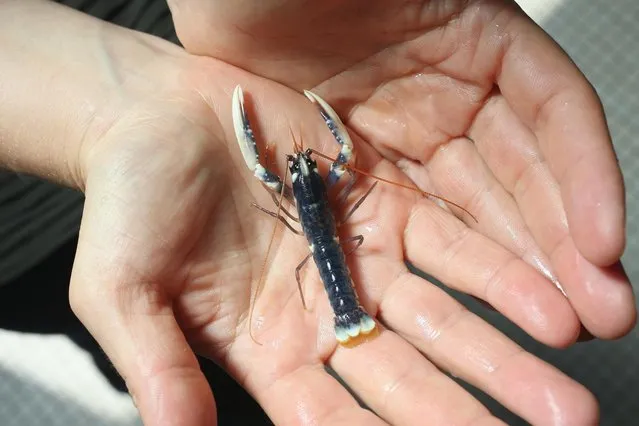
Isabel Schmalenbach, an environmental scientist with the Helgoland Biological Institute (Biologische Anstalt Helgoland), part of the Alfred Wegener Institute for Polar and Marine Research, holds a one-year old baby European lobster (Homarus gammarus) raised at the institute on August 3, 2013 on Helgoland Island, Germany. (Photo by Sean Gallup/Getty Images)

Isabel Schmalenbach, an environmental scientist with the Helgoland Biological Institute (Biologische Anstalt Helgoland), part of the Alfred Wegener Institute for Polar and Marine Research, holds a one-year old baby European lobster (Homarus gammarus) raised at the institute on August 3, 2013 on Helgoland Island, Germany. Later in the day Schmalenbach and her colleagues released a total of 415 one-year old lobsters into the North Sea as part of an effort to repopulate the lobster population around Helgoland (also called Heligoland). In the 19th century local fishermen caught up to 80,000 lobsters a year in the surrounding waters, combined with the heavy allied bombing of the island during and after World War II, as well as other environmental factors, decimated the lobster population. (Photo by Sean Gallup)
Details
05 Aug 2013 08:39:00
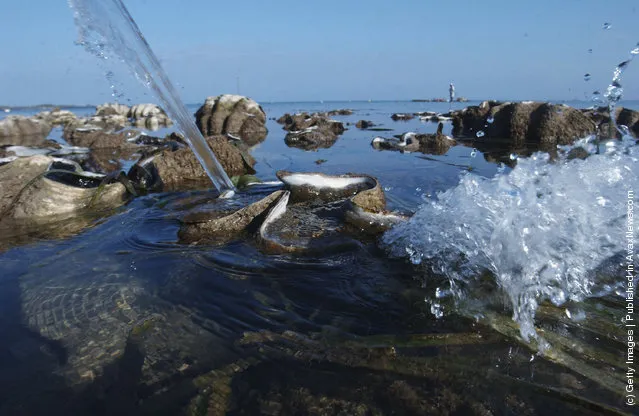
Tridacna Gigas, or Giant Clams

“The giant clam, Tridacna gigas (known as pā’ua in Cook Islands Māori), is the largest living bivalve mollusc. T. gigas is one of the most endangered clam species. It was mentioned as early as 1825 in scientific reports. One of a number of large clam species native to the shallow coral reefs of the South Pacific and Indian oceans, they can weigh more than 200 kilograms (440 lb) measure as much as 120 cm (47 in) across, and have an average lifespan in the wild of 100 years or more”. – Wikipedia

Photo: Tridacna Gigas, or Giant Clams spew water as a traditional fisherman passes by a small sanctuary on January 23, 2004 near Bolinao in the Northern Philippines. The clams, prime builders for coral reefs and providing shelter for spawning fish and other marine life, are exposed by low tides in the sanctuary. Overfishing and pollution throughout the country are not only threatening food security, but are also starting to choke one of the few working clam sanctuaries in the world. (Photo by David Greedy/Getty Images)
Details
01 Oct 2011 13:10:00
A member of the Indian company Margi Kathakali theatre performs during “Kijote Kathakali”, a Kathakali recital based on the Spanish classic “Don Quixote”, at the Niemeyer Center in Aviles, northern Spain, July 29, 2016. The performance and text captured the essence of the novel while sticking to the format of Kathakali. Kathakali is one of the major forms of classical Indian dance. It is another “story play” genre of art, but one distinguished by its elaborately colorful make-up, costumes and face masks wearing actor-dancers, who have traditionally been all males. (Photo by Eloy Alonso/Reuters)

A member of the Indian company Margi Kathakali theatre performs during “Kijote Kathakali”, a Kathakali recital based on the Spanish classic “Don Quixote”, at the Niemeyer Center in Aviles, northern Spain, July 29, 2016. The performance and text captured the essence of the novel while sticking to the format of Kathakali. Kathakali is one of the major forms of classical Indian dance. (Photo by Eloy Alonso/Reuters)
Details
31 Jul 2016 11:02:00
Liu Chunxia, a supporter of Xu Zhiyong, one of China's most prominent rights advocates, is detained by policemen while she gathers with other supporters nearby a court where Xu's trial is being held in Beijing January 22, 2014. (Photo by Kim Kyung-Hoon/Reuters)

Liu Chunxia, a supporter of Xu Zhiyong, one of China's most prominent rights advocates, is detained by policemen while she gathers with other supporters nearby a court where Xu's trial is being held in Beijing January 22, 2014. When dozens of activists unfurled banners across the country last March and April calling for officials to disclose their assets, they did so at the urging of one of China's most prominent rights advocates, Xu Zhiyong. Xu, 40, stands trial on Wednesday on a charge of “gathering a crowd to disturb public order” punishable by up to five years in prison. His case will almost certainly spark fresh criticism from Western governments over Beijing's crackdown on dissent. (Photo by Kim Kyung-Hoon/Reuters)
Details
26 Jan 2014 12:26:00
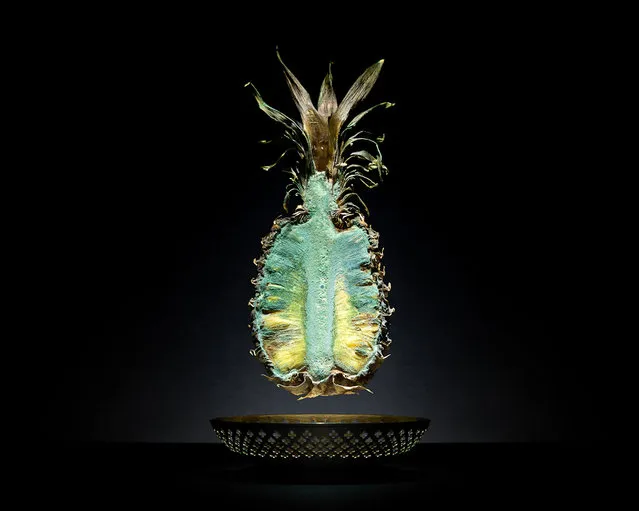
Pineapple

“One Third” – a project on food waste by an Austrian photography Klaus Pichler. According to a UN study one third of the world's food goes to waste – the largest part thereof in the industrialized nations of the global north. Equally, 925 million people around the world are threatened by starvation. The series “One Third” describes the connection between individual wastage of food and globalized food production.

Photo: Pineapple. Place of production: Guayaquil, Ecuador. Cultivation method: Outdoor plantation • Time of harvest: All- season. Transporting distance: 10.666 km (linear distance) • Means of transportation: Aircraft, truck. Carbon footprint (total) per kg: 11,94 kg • Water requirement (total) per kg: 360 l. Price: 2,10 € / kg. (Photo by Klaus Picher)
Details
02 May 2012 11:01:00