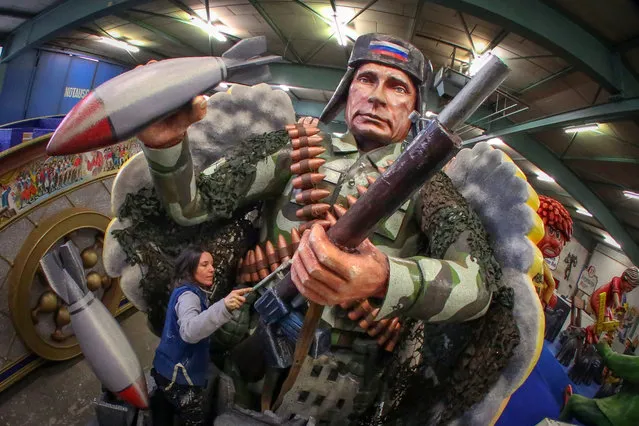
Float builder Andrea works on a float which depicts Russia's President Vladimir Putin as warmonger, at the float hall of the Mainz Carnival Association (MCV), in Mainz, Germany, 02 February 2016. The MCV invited journalists to a preview of this year's floats for the upcoming Shrove Monday carnival parade. The main carnival season festivities will happen around Rose Monday on 08 February. (Photo by Fredrik von Erichsen/EPA)
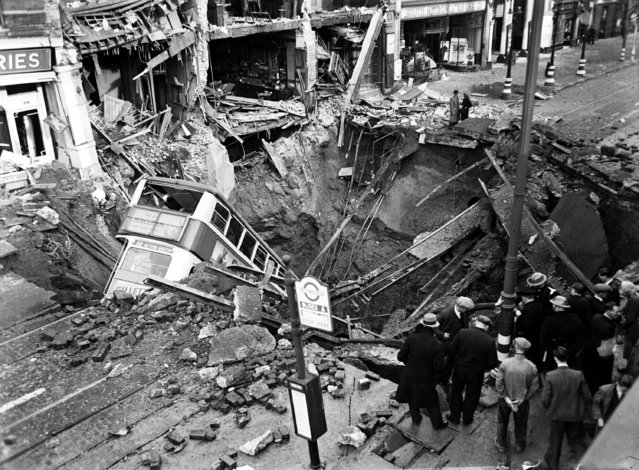
Following a large air raid by German bombers, local people, coming out of their air raid shelters found a bus standing on end in a large crater, in Balham, London, October 15, 1940. (Photo by AP Photo)
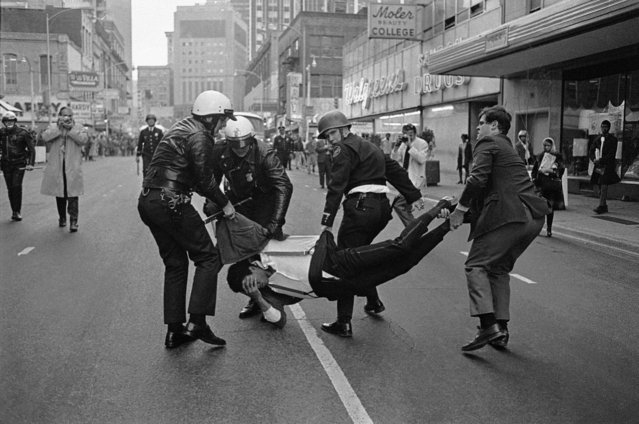
Police haul a youth to the paddy wagon as an undetermined number of arrest were made in downtown Atlanta, Georgia, February 25, 1971, as police moved in to disperse black youths after windows were broken and rocks and fruit thrown in what officers called “a major disturbance”. (Photo by Charles Kelly/AP Photo)
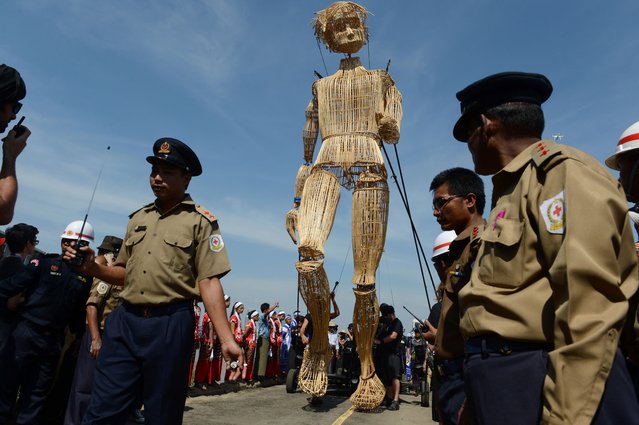
Myanmar civil security personnel escort an eight-metre tall wicker puppet from the French cultural group L'Homme Debout during a parade in Yangon city's Dala township on December 2, 2016 to mark the opening of the Mingalabar Festival. (Photo by Romeo Gacad/AFP Photo)
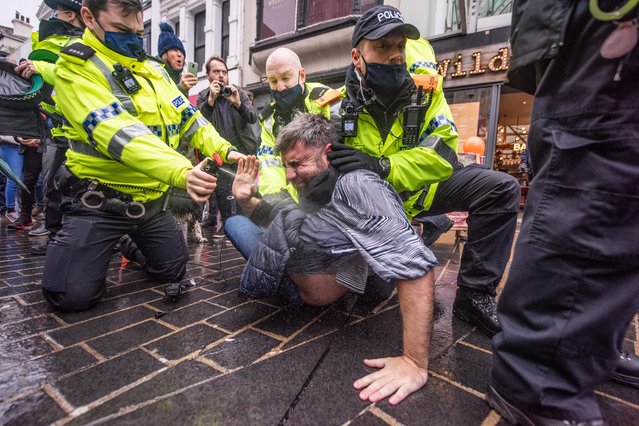
Police officers arrest a protester during an anti-lockdown march in Liverpool, United Kingdom on November 21, 2020. The StandUpX movement organised a protest under the banner March for Freedom, Save Our City. (Photo by Mercury Press)
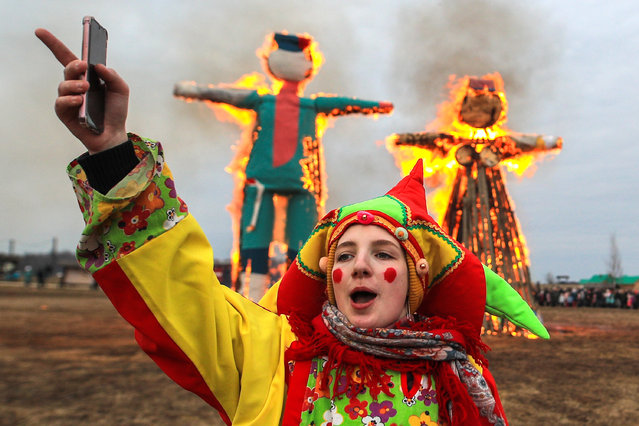
Burning effigies of winter during a celebration of Maslenitsa festival (Pancake Week) at the Etnomir (Ethnoworld) cultural and educational center in Kaluga Region, Russia on March 1, 2020. The holiday celebrates the end of winter and marks the arrival of spring. (Photo by Sergei Bobylev/TASS)
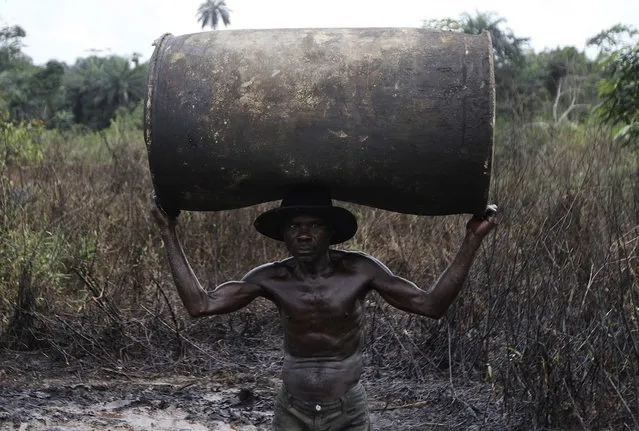
Ebiowei, 48, carries an empty oil container on his head to a place where it would be filled with refined fuel at an illegal refinery site near river Nun in Nigeria's oil state of Bayelsa November 27, 2012. Locals in the industry say workers can earn $50 to $60 a day. Thousands of people in Nigeria engage in a practice known locally as “oil bunkering” – hacking into pipelines to steal crude then refining it or selling it abroad. The practice, which leaves oil spewing from pipelines for miles around, managed to lift around a fifth of Nigeria's two million barrel a day production last year according to the finance ministry. (Photo by Akintunde Akinleye/Reuters)