Loading...
Done
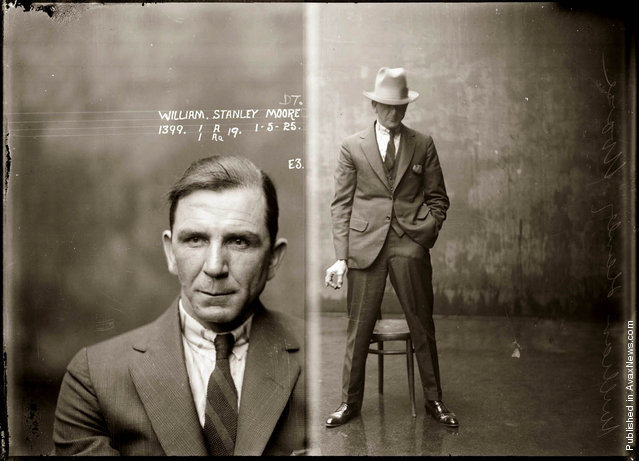
Mug shot of William Stanley Moore, 1 May 1925, Central Police Station, Sydney

Mug shot of William Stanley Moore, 1 May 1925, Central Police Station, Sydney. This picture appears in the Photo Supplement to the NSW Police Gazette, 28 July, 1926 captioned: “Opium dealer. Operates with large quantities of faked opium and cocaine. A wharf labourer; associates with water front thieves and drug traders”. (Photo by NSW Police Forensic Photography Archive, Justice & Police Museum, Histiric Houses Trust of NSW)
Details
24 Apr 2012 11:46:00
Robots made by local enthusiasts and employees of an automobile repair workshop are seen during installation works on the outskirts of the rebel-controlled city of Donetsk, Ukraine, November 26, 2020. According to creators, who plan to open a robotics engineering park, 13-metre and 6-metre-high sculptures featuring transformer robots were made of waste metal including car components and weigh about 4 and 2 tonnes respectively. (Photo by Alexander Ermochenko/Reuters)

Robots made by local enthusiasts and employees of an automobile repair workshop are seen during installation works on the outskirts of the rebel-controlled city of Donetsk, Ukraine, November 26, 2020. According to creators, who plan to open a robotics engineering park, 13-metre and 6-metre-high sculptures featuring transformer robots were made of waste metal including car components and weigh about 4 and 2 tonnes respectively. (Photo by Alexander Ermochenko/Reuters)
Details
28 Nov 2020 00:07:00
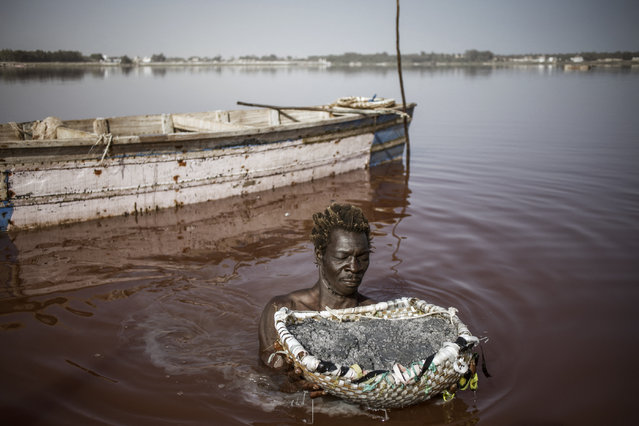
Toure, a Gambian salt harvester, holds a basket filled with  the salt collected from the crust of the bottom of the Lake Retba (Pink Lake) in Senegal on March 16, 2021. Lake Retba, divided from the Atlantic Ocean by a narrow corridor of dunes, owes its name to the pink waters caused by the Dunaliella salina algae and is known for its high salt content, up to 40% in some areas. (Photo by Marco Longari/AFP Photo)

Toure, a Gambian salt harvester, holds a basket filled with the salt collected from the crust of the bottom of the Lake Retba (Pink Lake) in Senegal on March 16, 2021. Lake Retba, divided from the Atlantic Ocean by a narrow corridor of dunes, owes its name to the pink waters caused by the Dunaliella salina algae and is known for its high salt content, up to 40% in some areas. (Photo by Marco Longari/AFP Photo)
Details
24 Mar 2021 10:29:00
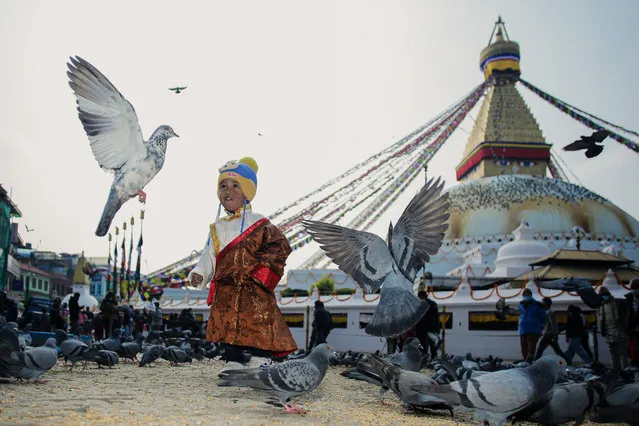
A young boy dressed in traditional Tamang dress plays with pigeons as Sonam Lhosar (the new year festival) is observed in Kathmandu, Nepal on February 2, 2022. (Photo by Amit Machamasi/ZUMA Press Wire/Rex Features/Shutterstock)

A young boy dressed in traditional Tamang dress plays with pigeons as Sonam Lhosar (the new year festival) is observed in Kathmandu, Nepal on February 2, 2022. (Photo by Amit Machamasi/ZUMA Press Wire/Rex Features/Shutterstock)
Details
07 Mar 2022 05:36:00
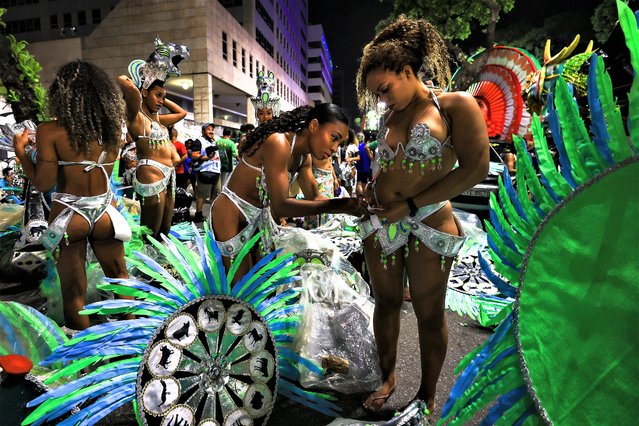
Members of Imperio Serrano samba school get ready prior to their entrance during 2023 Carnival parades at Marquês de Sapucaí Sambodrome on February 19, 2023 in Rio de Janeiro, Brazil. (Photo by Buda Mendes/Getty Images)

Members of Imperio Serrano samba school get ready prior to their entrance during 2023 Carnival parades at Marquês de Sapucaí Sambodrome on February 19, 2023 in Rio de Janeiro, Brazil. (Photo by Buda Mendes/Getty Images)
Details
30 Jun 2024 03:13:00
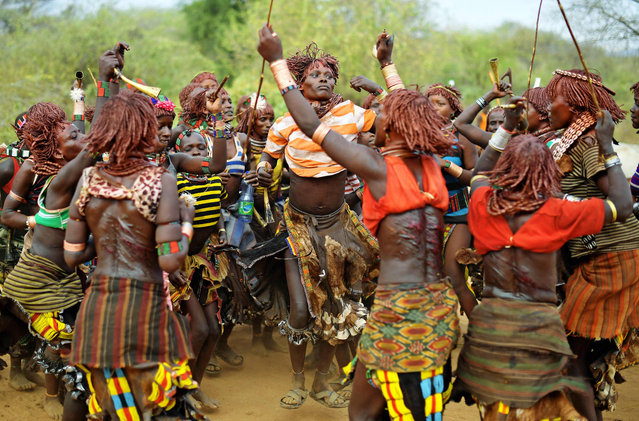
Hamar women dance before a bull jumping ceremony in Ethiopia's southern Omo Valley region near Turmi on September 19, 2016. The Hamar are a Nilotic ethnic group in Ethiopia. The construction of the Gibe III dam, the third largest hydroelectric plant in Africa, and large areas of very “thirsty” cotton and sugar plantations and factories along the Omo river are impacting heavily on the lives of tribes living in the Omo Valley who depend on the river for their survival and way of life. Human rights groups fear for the future of the tribes if they are forced to scatter, give up traditional ways through loss of land or ability to keep cattle as globalisation and development increases. (Photo by Carl De Souza/AFP Photo)

Hamar women dance before a bull jumping ceremony in Ethiopia's southern Omo Valley region near Turmi on September 19, 2016. The Hamar are a Nilotic ethnic group in Ethiopia. The construction of the Gibe III dam, the third largest hydroelectric plant in Africa, and large areas of very “thirsty” cotton and sugar plantations and factories along the Omo river are impacting heavily on the lives of tribes living in the Omo Valley who depend on the river for their survival and way of life. (Photo by Carl De Souza/AFP Photo)
Details
02 Oct 2016 08:45:00
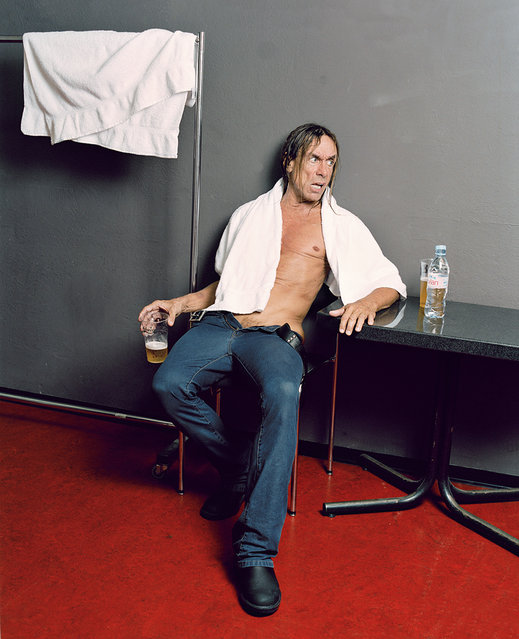
“The Moment After the Show”: Iggy Pop. (Photo by Matthias Willi/Olivier Joliat/The Moment After The Show)

“That’s the only way to show how we really are” – sweaty, exhausted, but happy, actress and singer Juliette Lewis said about the idea of a photo collection capturing musicians moments after a concert. Photographer Matthias Willi and journalist Olivier Joliat have persuaded about 100 bands to take part in their “The Moment After the Show” project since 2005. Photo: Iggy Pop. (Photo by Matthias Willi/Olivier Joliat/The Moment After The Show)
Details
25 Aug 2014 10:36:00
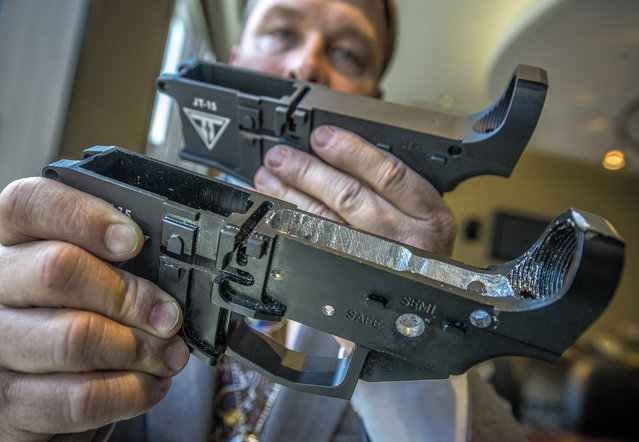
An ATF agent holds a generic unfinished receiver, back, and one that has been machined, front, at an ATF field office, on May, 06, 2014 in Washington, DC. Unfinished receivers can be turned into working automatic weapons that are untraceable. (Photo by Bill O'Leary/The Washington Post)

An unknown number of guns are being built with the mechanisms, causing problems for the police and ATF officials. Photo: An ATF agent holds a generic unfinished receiver, back, and one that has been manufactured, front, at an ATF field office in Washington, on May 06, 2014. The ATF is trying to crack down on the trade in the makeshift guns by targeting shops and individuals who offer to turn the unfinished receivers into functional pieces for firearms. (Photo by Bill O'Leary/The Washington Post)
Details
19 May 2014 09:22:00