Loading...
Done
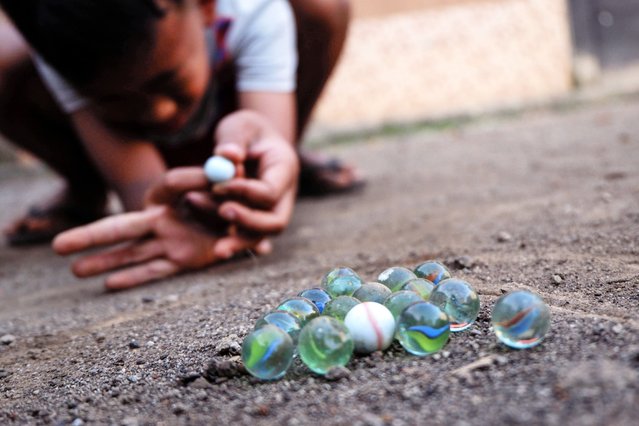
Children play marbles on the dirt in Garut, West Java, Indonesia on October 17, 2025. This traditional game, which was popular in the 1980s, is now rarely played by children due to the increasing popularity of modern games with advanced technology. According to a survey by the Indonesian Child Protection Commission (KPAI), more than 71.3% of school-age children own gadgets and play them for a considerable amount of time each day, and as many as 79% of child respondents are allowed to play gadgets for purposes other than learning. (Photo by Algi Febri Sugita/ZUMA Press Wire/Rex Features/Shutterstock)

Children play marbles on the dirt in Garut, West Java, Indonesia on October 17, 2025. This traditional game, which was popular in the 1980s, is now rarely played by children due to the increasing popularity of modern games with advanced technology. According to a survey by the Indonesian Child Protection Commission (KPAI), more than 71.3% of school-age children own gadgets and play them for a considerable amount of time each day, and as many as 79% of child respondents are allowed to play gadgets for purposes other than learning. (Photo by Algi Febri Sugita/ZUMA Press Wire/Rex Features/Shutterstock)
Details
26 Nov 2025 03:06:00
Magbola Alhadi, 20, and her three children pose for a portrait in Jamam refugee camp in Maban County, South Sudan on August 11th, 2012. Magboola and her family weathered aerial bombing raids for several months, but decided it was time to leave their village of Bofe the night that soldiers arrived and opened fire. (Photo by Brian Sokol/Panos Pictures)

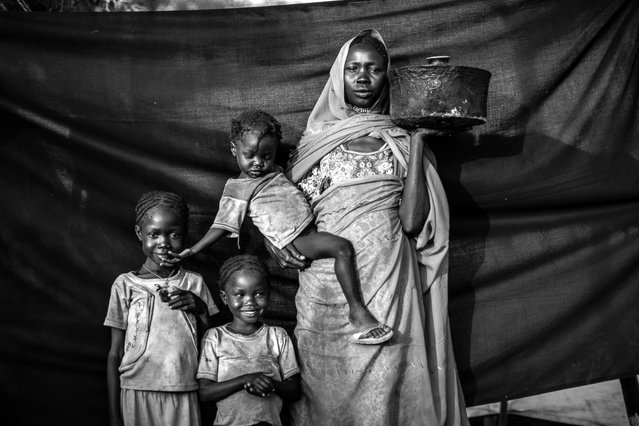
Magbola Alhadi, 20, and her three children pose for a portrait in Jamam refugee camp in Maban County, South Sudan on August 11th, 2012. Magboola and her family weathered aerial bombing raids for several months, but decided it was time to leave their village of Bofe the night that soldiers arrived and opened fire. With her three children, she travelled for 12 days from Bofe to the town of El Fudj, on the South Sudanese border. The most important thing that Magboola was able to bring with her is the saucepan she holds in this photograph. It wasn't the largest pot that she had in Bofe, but it was small enough she could travel with it, yet big enough to cook sorghum for herself and her three daughters (from left: Aduna Omar, 6, Halima Omar, 4, and Arfa Omar, 2) during their journey. (Photo by Brian Sokol/Panos Pictures)
Details
18 Sep 2015 15:04:00
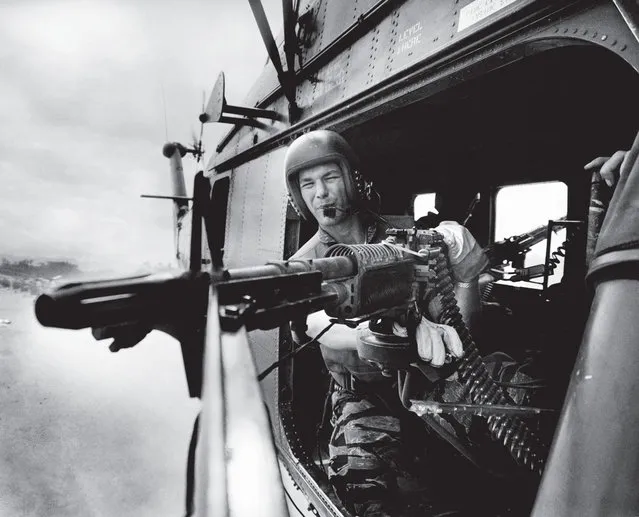
Man your battle stations: The crew chief of helicopter Yankee Papa 13, lance corporal James C. Farley, mans an M-60 machine gun during a mission near Da Nang, Vietnam on March 31, 1965. (Photo by Larry Burrows/Time & Life Pictures)

In the spring of 1965, within weeks of 3,500 American Marines arriving in Vietnam, a 39-year-old Briton named Larry Burrows began work on a feature for LIFE magazine, chronicling the day-to-day experience of U.S. troops on the ground – and in the air – in the midst of the rapidly widening war. The photographs in this gallery focus on a calamitous March 31, 1965, helicopter mission; Burrows’ “report from Da Nang”, featuring his pictures and his personal account of the harrowing operation, was published two weeks later as a now-famous cover story in the April 16, 1965, issue of LIFE.

Photo: Man your battle stations: The crew chief of helicopter Yankee Papa 13, lance corporal James C. Farley, mans an M-60 machine gun during a mission near Da Nang, Vietnam on March 31, 1965. (Photo by Larry Burrows/Time & Life Pictures)
Details
07 Apr 2013 07:08:00
“Attacking Howler Monkey”. Due to a major tropical rainstorm my wife and I were forced to stay overnight in a Howler Monkey Rescue center in Panama. I used the time to explore the area and to take photos of the monkeys. Just after the rain finally stopped, I ran into this monkey that tried to mock attack me. I quickly took a couple of photos before retreating to a (more) safe distance. (Photo and caption by Christian Mueller-Planitz/National Geographic Traveler Photo Contest)

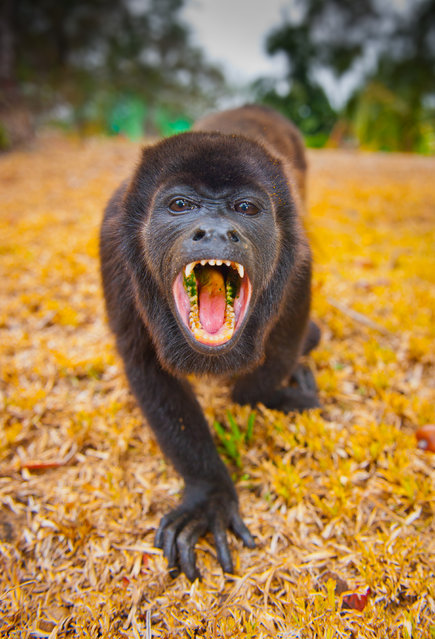
“Attacking Howler Monkey”. Due to a major tropical rainstorm my wife and I were forced to stay overnight in a Howler Monkey Rescue center in Panama. I used the time to explore the area and to take photos of the monkeys. Just after the rain finally stopped, I ran into this monkey that tried to mock attack me. I quickly took a couple of photos before retreating to a (more) safe distance. (Photo and caption by Christian Mueller-Planitz/National Geographic Traveler Photo Contest)

ATTENTION! All pictures are presented in high resolution. To see Hi-Res images – just TWICE click on any picture. In other words, click small picture – opens the BIG picture. Click BIG picture – opens VERY BIG picture.
Details
30 Jun 2013 12:25:00
Mohammed El-Dahshan, 38-year-old “Mesaharati”, or dawn caller, accompanies his donkey wrapped with colored led lights to wake Muslims up for a meal before sunrise, during the Islamic holy month of Ramadan, in the Delta city of Dikernis, about 93 miles (150 km) North of Cairo, Egypt early Wednesday, April 12, 2023. Each night, El-Dahshan, sets out after midnight with his donkey banging his drum, chanting traditional religious phrases and calling out on residents by name to wake them in time for the vital pre-dawn meal known as “Suhour”. (Photo by Amr Nabil/AP Photo)

Mohammed El-Dahshan, 38-year-old “Mesaharati”, or dawn caller, accompanies his donkey wrapped with colored led lights to wake Muslims up for a meal before sunrise, during the Islamic holy month of Ramadan, in the Delta city of Dikernis, about 93 miles (150 km) North of Cairo, Egypt early Wednesday, April 12, 2023. Each night, El-Dahshan, sets out after midnight with his donkey banging his drum, chanting traditional religious phrases and calling out on residents by name to wake them in time for the vital pre-dawn meal known as “Suhour”. (Photo by Amr Nabil/AP Photo)
Details
15 May 2023 04:04:00
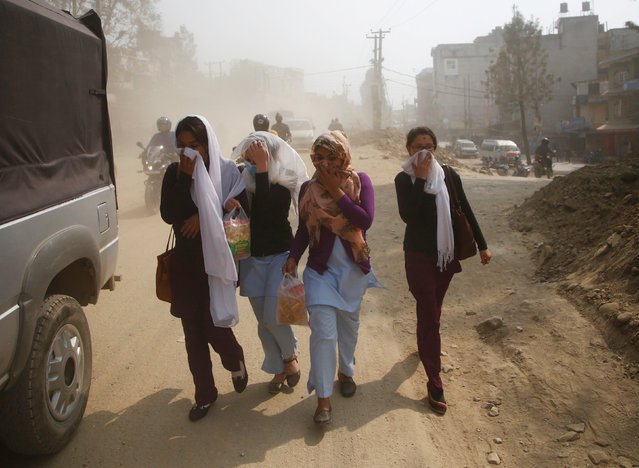
Pedestrians cover their face as they walk along the dusty road in Kathmandu, Nepal February 27, 2017. Nepal has forced 2,500 old vehicles off roads in its capital city of Kathmandu, part of a fight against alarming air pollution levels that have hit nine times World Health Organisation (WHO) limits. Air pollution has been a chronic problem in rapidly growing Kathmandu, which sits in a Himalayan valley and is home to more than 3mn people. Rising public anger with the smog is turning into a headache for a beleaguered government headed by former Maoist rebels. Dust from road works, exhaust from old, poorly maintained vehicles and smoke from coal-burning brick kilns blend in a murky haze that hangs over the ancient city, raising the risk of cancer, stroke, asthma and high blood pressure, experts say. Officials hope the ban on vehicles more than 20 years old will be a step towards a cleaner future. (Photo by Navesh Chitrakar/Reuters)

Pedestrians cover their face as they walk along the dusty road in Kathmandu, Nepal February 27, 2017. Nepal has forced 2,500 old vehicles off roads in its capital city of Kathmandu, part of a fight against alarming air pollution levels that have hit nine times World Health Organisation (WHO) limits. Air pollution has been a chronic problem in rapidly growing Kathmandu, which sits in a Himalayan valley and is home to more than 3mn people. (Photo by Navesh Chitrakar/Reuters)
Details
04 Mar 2017 00:04:00
A man wearing a hazmat suit and a mask holds a sign reading “The end is near – call grandma” at Times Square on March 14, 2020 in New York City. The World Health Organization said March 13, 2020 it was not yet possible to say when the COVID-19 pandemic, which has killed more than 5,000 people worldwide, will peak. “It's impossible for us to say when this will peak globally”, Maria Van Kerkhove, who heads the WHO's emerging diseases unit, told a virtual press conference, adding that “we hope that it is sooner rather than later”. (Photo by Johannes Eisele/AFP Photo)

A man wearing a hazmat suit and a mask holds a sign reading “The end is near – call grandma” at Times Square on March 14, 2020 in New York City. The World Health Organization said March 13, 2020 it was not yet possible to say when the COVID-19 pandemic, which has killed more than 5,000 people worldwide, will peak. “It's impossible for us to say when this will peak globally”, Maria Van Kerkhove, who heads the WHO's emerging diseases unit, told a virtual press conference, adding that “we hope that it is sooner rather than later”. (Photo by Johannes Eisele/AFP Photo)
Details
16 Mar 2020 00:07:00
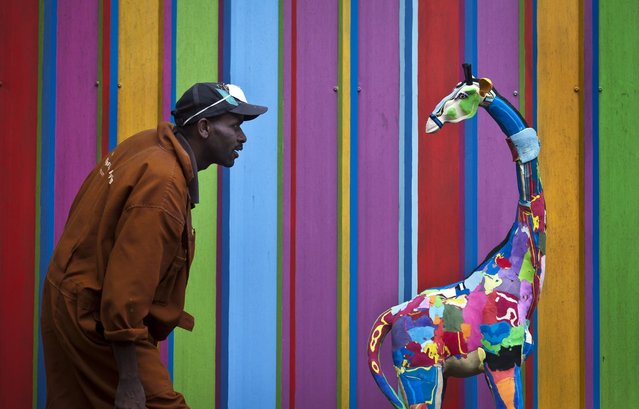
In this photo taken Monday, April 29, 2013, carver Jackson Mbatha, 40, poses next to a an unfinished large toy giraffe he is making from pieces of discarded flip-flops, in front of a painted workshop wall at the Ocean Sole flip-flop recycling company in Nairobi, Kenya. The company is cleaning the East African country's beaches of used, washed-up flip-flops and the dirty pieces of rubber that were once cruising the Indian Ocean's currents are now being turned into colorful handmade giraffes, elephants and other toy animals. (Ben Curtis/AP Photo)

In this photo taken Monday, April 29, 2013, carver Jackson Mbatha, 40, poses next to a an unfinished large toy giraffe he is making from pieces of discarded flip-flops, in front of a painted workshop wall at the Ocean Sole flip-flop recycling company in Nairobi, Kenya. The company is cleaning the East African country's beaches of used, washed-up flip-flops and the dirty pieces of rubber that were once cruising the Indian Ocean's currents are now being turned into colorful handmade giraffes, elephants and other toy animals. (Ben Curtis/AP Photo)
Details
09 May 2013 09:01:00