Loading...
Done
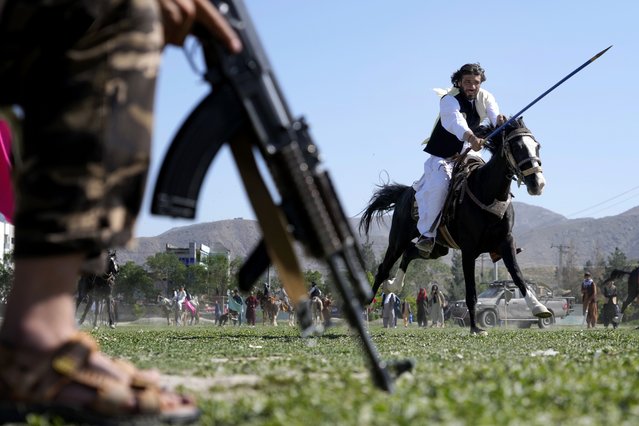
An Afghan man rushes to the target with his horse as a Taliban fighter stands guard during a spear racing in the sprawling Chaman-e-Huzori park in downtown Kabul, Afghanistan, Friday, May 6, 2022. (Photo by Ebrahim Noroozi/AP Photo)

An Afghan man rushes to the target with his horse as a Taliban fighter stands guard during a spear racing in the sprawling Chaman-e-Huzori park in downtown Kabul, Afghanistan, Friday, May 6, 2022. (Photo by Ebrahim Noroozi/AP Photo)
Details
27 May 2022 04:53:00
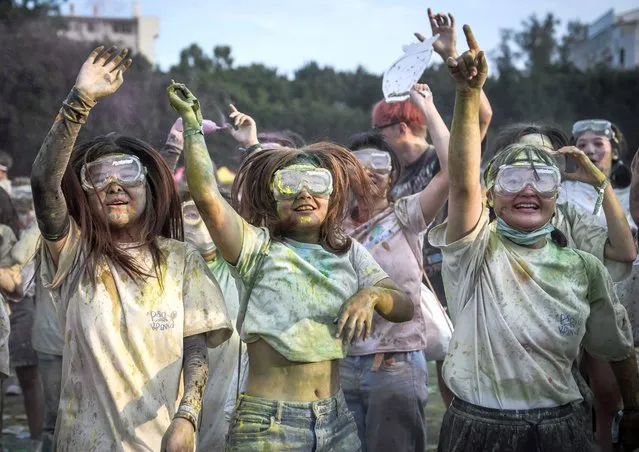
People enjoy the color run in Guangzhou, Guangdong province of China on May 29, 2022. (Photo by Stringer/Anadolu Agency via Getty Images)

People enjoy the color run in Guangzhou, Guangdong province of China on May 29, 2022. (Photo by Stringer/Anadolu Agency via Getty Images)
Details
06 Jun 2022 04:47:00
Performers ride on a train before the 40th annual Coney Island Mermaid Parade in the Brooklyn borough of New York, New York, USA, 18 June 2022. The annual event is one of the largest art parades in the country. (Photo by Yuki Iwamura/EPA/EFE)

Performers ride on a train before the 40th annual Coney Island Mermaid Parade in the Brooklyn borough of New York, New York, USA, 18 June 2022. The annual event is one of the largest art parades in the country. (Photo by Yuki Iwamura/EPA/EFE)
Details
27 Jun 2022 05:30:00
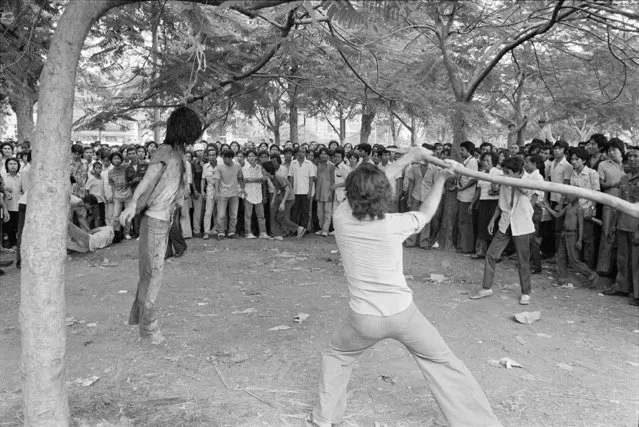
In this October 6, 1976 file photo a member of a Thai political faction strikes at the lifeless body of a hanged student outside Thammasat University in Bangkok Oct. 6, 1976. (Photo by Neal Ulevich/AP Photo)

In this October 6, 1976 file photo a member of a Thai political faction strikes at the lifeless body of a hanged student outside Thammasat University in Bangkok October 6, 1976. For some Thais, the bloody events of October 6, 1976 are still a nightmare. On that day, heavily armed security forces shot up Bangkok's Thammasat University campus and killed scores of students, while right-wing vigilantes captured would-be escapees, subjecting them to ghoulish lynchings. (Photo by Neal Ulevich/AP Photo)
Details
05 Oct 2016 09:22:00
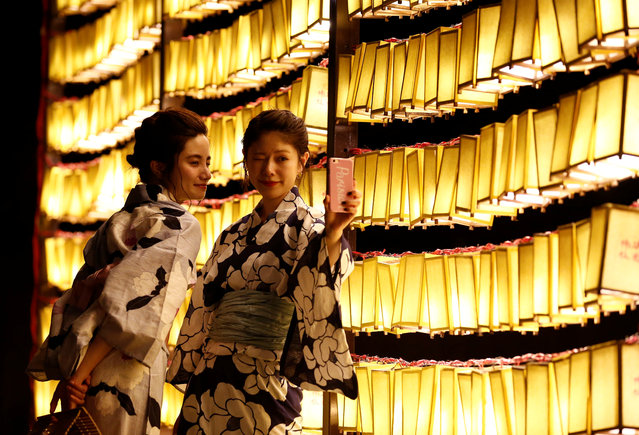
Women in yukatas, or casual summer kimonos, take their selfie in front of paper lanterns during the annual Mitama Festival at the Yasukuni Shrine, where more than 2.4 million war dead are enshrined, in Tokyo, Japan July 13, 2017. (Photo by Kim Kyung-Hoon/Reuters)

Women in yukatas, or casual summer kimonos, take their selfie in front of paper lanterns during the annual Mitama Festival at the Yasukuni Shrine, where more than 2.4 million war dead are enshrined, in Tokyo, Japan July 13, 2017. (Photo by Kim Kyung-Hoon/Reuters)
Details
18 Aug 2017 08:39:00
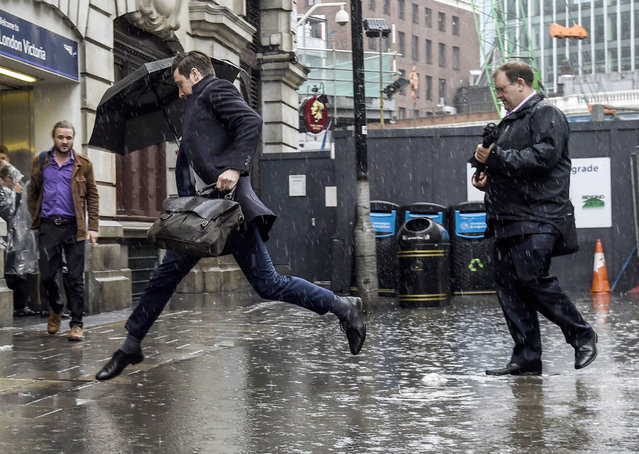
A man jumps over a puddle outside Victoria Station, as heavy rain falls,  in London, Monday June 20, 2016. Monday marks the Summer Solstice – the longest day of the year and the astronomical change of seasons when days are longest and nights are shortest in the Northern Hemisphere. (Photo by Lauren Hurley/PA Wire via AP Photo)

A man jumps over a puddle outside Victoria Station, as heavy rain falls, in London, Monday June 20, 2016. Monday marks the Summer Solstice – the longest day of the year and the astronomical change of seasons when days are longest and nights are shortest in the Northern Hemisphere. (Photo by Lauren Hurley/PA Wire via AP Photo)
Details
21 Jun 2016 07:25:00
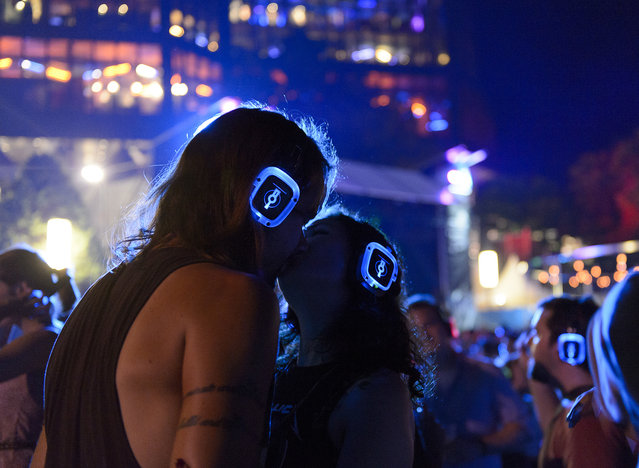
Festival goers kiss in the “Silent Disco” at the “Music in the Park” stage during the 50th Montreux Jazz Festival, in Montreux, Switzerland, July 9, 2016. (Photo by Anthony Anex/EPA)

Festival goers kiss in the “Silent Disco” at the “Music in the Park” stage during the 50th Montreux Jazz Festival, in Montreux, Switzerland, July 9, 2016. (Photo by Anthony Anex/EPA)
Details
11 Jul 2016 12:49:00
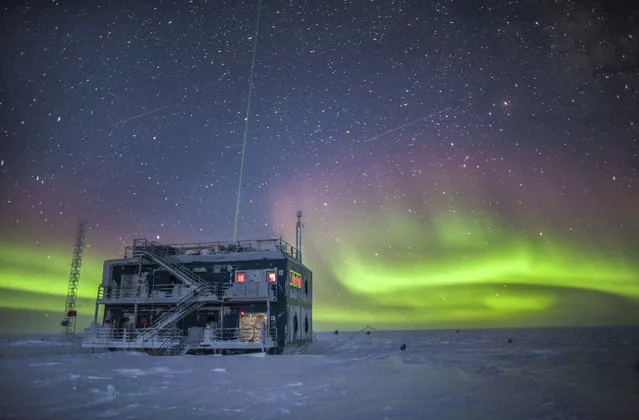
This undated photo provided by NOAA in May 2018 shows aurora australis near the South Pole Atmospheric Research Observatory in Antarctica. When a hole in the ozone formed over Antarctica, countries around the world in 1987 agreed to phase out several types of ozone-depleting chemicals called chlorofluorocarbons (CFCs). Production was banned, emissions fell and the hole shriveled. But according to a study released on Wednesday, May 16, 2018, scientists say since 2013, there’s more of a banned CFC going into the atmosphere. (Photo by Patrick Cullis/NOAA via AP Photo)

This undated photo provided by NOAA in May 2018 shows aurora australis near the South Pole Atmospheric Research Observatory in Antarctica. When a hole in the ozone formed over Antarctica, countries around the world in 1987 agreed to phase out several types of ozone-depleting chemicals called chlorofluorocarbons (CFCs). Production was banned, emissions fell and the hole shriveled. But according to a study released on Wednesday, May 16, 2018, scientists say since 2013, there’s more of a banned CFC going into the atmosphere. (Photo by Patrick Cullis/NOAA via AP Photo)
Details
15 Aug 2018 00:05:00