Loading...
Done
The Weird Shaped Trees Of Axel Erlandson

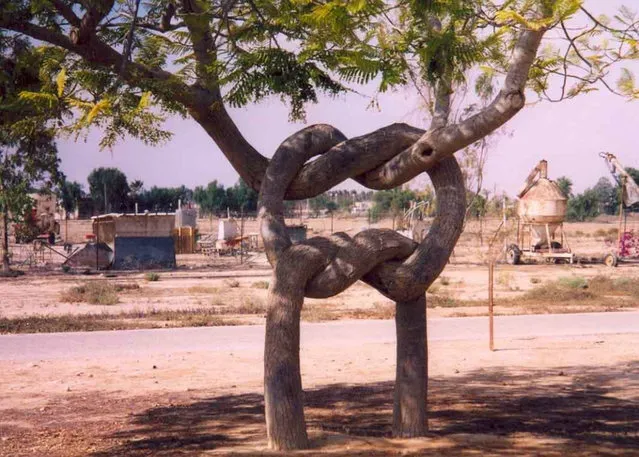
Axel Erlandson (December 15, 1884 – April 28, 1964) was a Swedish American farmer who shaped trees as a hobby, and opened a horticultural attraction in 1947 advertised as "See the World's Strangest Trees Here," and named "The Tree Circus."
The trees appeared in the column of Robert Ripley's Believe It or Not! twelve times. Erlandson sold his attraction shortly before his death. The trees were moved to Gilroy Gardens in 1985.
Details
20 Sep 2013 11:38:00
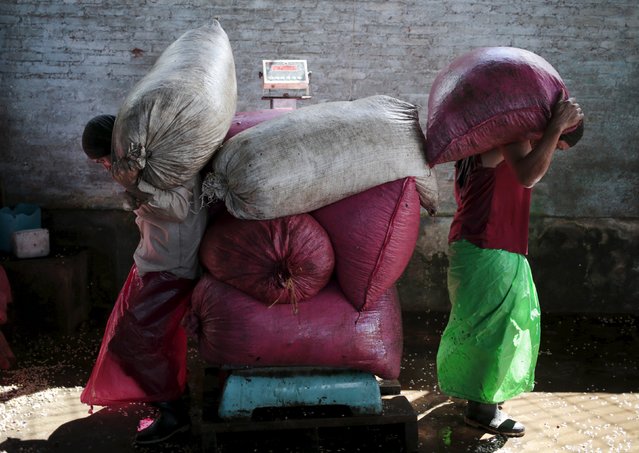
Workers carry sacks of coffee beans at a warehouse at the Nogales farm in Jinotega, Nicaragua January 7, 2016. (Photo by Oswaldo Rivas/Reuters)

Workers carry sacks of coffee beans at a warehouse at the Nogales farm in Jinotega, Nicaragua January 7, 2016. Soaring temperatures in Central America due to climate change are forcing farmers to pull up coffee trees and replace them with cocoa, spurring a revival in the cultivation of a crop once so essential to the region's economy. (Photo by Oswaldo Rivas/Reuters)
Details
20 Jan 2016 08:00:00
School children celebrate after being rewarded for their dance performance during India's Independence Day celebrations in Chandigarh, India, August 15, 2015. (Photo by Ajay Verma/Reuters)

School children celebrate after being rewarded for their dance performance during India's Independence Day celebrations in Chandigarh, India, August 15, 2015. Indian Prime Minister Narendra Modi's independence day speech focused on measures his “Team India” had rolled out to include millions of poor Indians in the banking and insurance systems, policies for workers and farmers and successes in the fights against inflation and corruption. (Photo by Ajay Verma/Reuters)
Details
16 Aug 2015 13:02:00
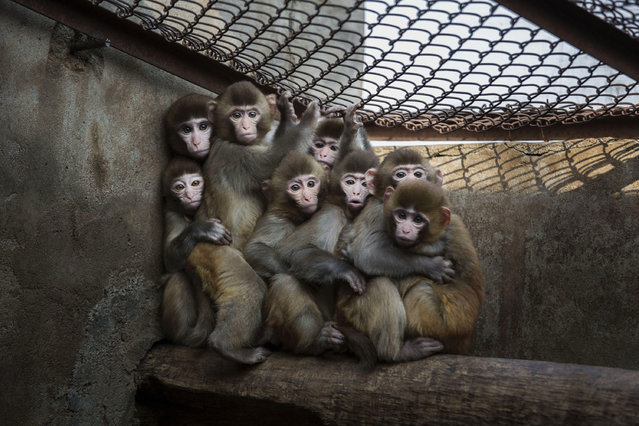
Macaque monkeys crowd together in their cage at a monkey farm on February 3, 2016 in Xinye county, Henan province, China. The area boasts a centuries-long and lucrative history of raising and training monkeys for performance. In Xinye, villagers are seeing an increase in business with the lunar calendar's “Year of the Monkey”. Farmers say most of the monkeys are bred and raised for domestic zoos, circuses, and performing groups, but add that some are also sold for medical research in China and the United States. Despite the popularity of the tradition, critics contend the training methods and conditions constitute animal cruelty. (Photo by Kevin Frayer/Getty Images)

Macaque monkeys crowd together in their cage at a monkey farm on February 3, 2016 in Xinye county, Henan province, China. The area boasts a centuries-long and lucrative history of raising and training monkeys for performance. In Xinye, villagers are seeing an increase in business with the lunar calendar's “Year of the Monkey”. Farmers say most of the monkeys are bred and raised for domestic zoos, circuses, and performing groups, but add that some are also sold for medical research in China and the United States. Despite the popularity of the tradition, critics contend the training methods and conditions constitute animal cruelty. (Photo by Kevin Frayer/Getty Images)
Details
31 Dec 2016 09:56:00
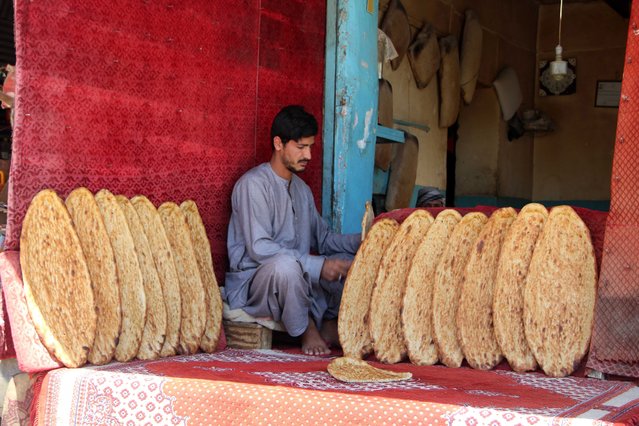
An Afghani man sells bread on a roadside in Kandahar, Afghanistan, 23 April 2024.  A recent World Bank report reveals a 26% decrease in Afghanistan's gross output over the past year, primarily attributed to a 1.3 billion USD income reduction for farmers due to the ban on drug cultivation. Although tax revenue saw a modest increase of 13% in 2023, exports experienced a 15% decline specifically to Pakistan. Afghan officials highlighted efforts to spur domestic production, improve trade, stabilize the national currency, and initiate key economic projects. (Photo by Qudratullah Razwan/EPA/EFE)

An Afghani man sells bread on a roadside in Kandahar, Afghanistan, 23 April 2024. A recent World Bank report reveals a 26% decrease in Afghanistan's gross output over the past year, primarily attributed to a 1.3 billion USD income reduction for farmers due to the ban on drug cultivation. Although tax revenue saw a modest increase of 13% in 2023, exports experienced a 15% decline specifically to Pakistan. Afghan officials highlighted efforts to spur domestic production, improve trade, stabilize the national currency, and initiate key economic projects. (Photo by Qudratullah Razwan/EPA/EFE)
Details
22 May 2024 03:16:00
Funny Cartoons By Lucas Levitan Part 2

Being able to look at this world in a different light is the main thing that distinguishes a true artist from a common person. We can clearly see that Lucas Levitan is a true artist despite the crude drawings that he makes. By hunting through thousands of photos that people post on Instagram, he finds the ones that might have a completely different, surprising, and comical theme. For example, a sensual photo of lady’s eyelashes is transformed into a scene in which a farmer is harvesting his crops. This is imagination at its finest, which is why the art works of Lucas Levitan are so interesting to look at. (Photo by Lucas Levitan)
Details
04 Jan 2015 12:39:00
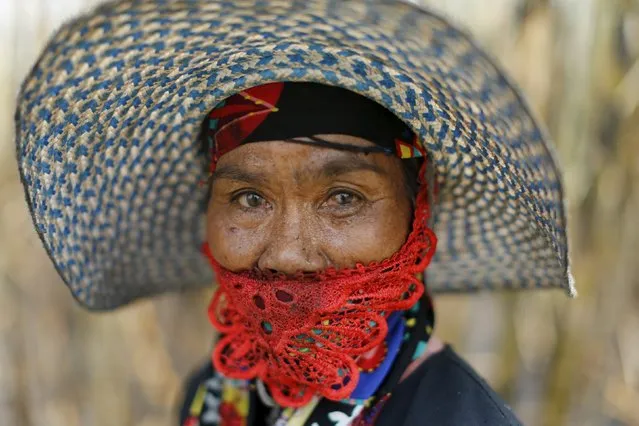
A sugar cane worker poses while working in a field at Pakchong district in Ratchaburi province, Thailand March 22, 2016. (Photo by Jorge Silva/Reuters)

A sugar cane worker poses while working in a field at Pakchong district in Ratchaburi province, Thailand March 22, 2016. The El Nino weather phenomenon has played havoc with crops across Southeast Asia and beyond. Thailand, the world's second-largest sugar exporter, will ship 20 percent less of the sweetener to international markets this year than last, and farmers fear the damage already inflicted on young cane plants could make next year worse. (Photo by Jorge Silva/Reuters)
Details
02 Apr 2016 09:49:00
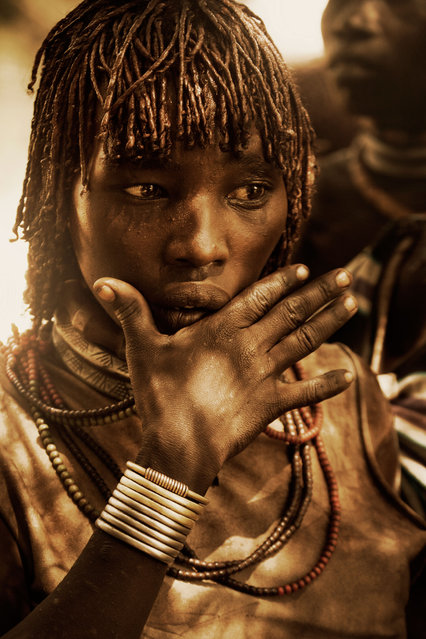
The Hamar people traditionally use red ocher clay to braid the hair of their women. (Photo by Diego Arroyo)

During his time in Ethiopia, New York-based art director and photographer Diego Arroyo spent time with the Hamar, Mursi, Dassanech, and Arbore Tribes. They, along with several others tribes, make up the 200,000 people situated in Africa’s Great Rift Valley. The people of the Omo Valley are still primarily herders and farmers, living an isolated and simple life. While they have yet to be truly touched by globalization, they could soon disappear. Their way of life is being threatened by a massive hydroelectric dam. (Photo by Diego Arroyo)
Details
13 Aug 2014 10:00:00