Loading...
Done
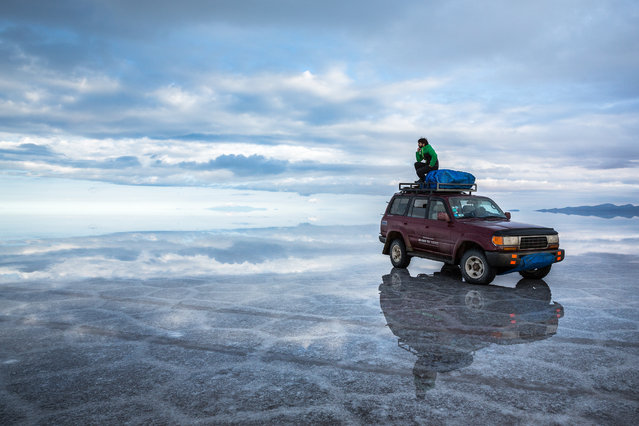
At 10,582 square kilometres, the Bolivian salt flats – otherwise known as Salar de Uyuni – are the largest on the planet and contain between 50 and 70% of the world’s lithium reserves. After exploring Chile and Argentina, photographer Joel Santos decided to travel to Bolivia in January 2017 to check the salt flats off his bucket list. With an electrical storm rolling in, Joel and his two travelling companions were the only souls left on the vast flats and captured the eerie flats without a person in sight. (Photo by Joel Santos/Barcroft Images)

At 10,582 square kilometres, the Bolivian salt flats – otherwise known as Salar de Uyuni – are the largest on the planet and contain between 50 and 70% of the world’s lithium reserves. After exploring Chile and Argentina, photographer Joel Santos decided to travel to Bolivia in January 2017 to check the salt flats off his bucket list. With an electrical storm rolling in, Joel and his two travelling companions were the only souls left on the vast flats and captured the eerie flats without a person in sight. (Photo by Joel Santos/Barcroft Images)
Details
12 Aug 2019 00:03:00
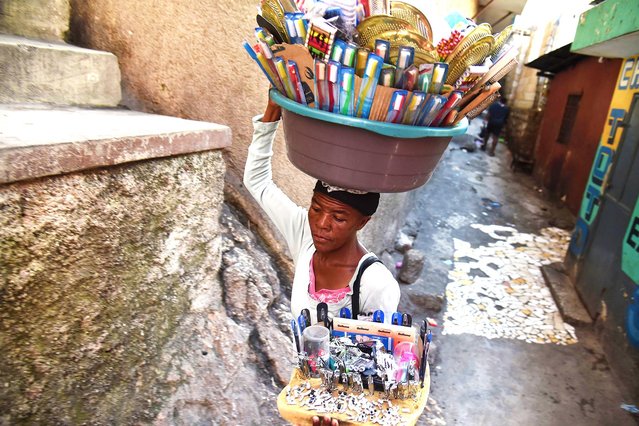
A vendor carries her products in a bucket on her head as she walks through the neighborhood of Jalousie, in the commune of Petion Ville, Port-au-Prince, on December 17, 2018. On the hills of Port-au-Prince, a chaotic jumble of structures stretches ever farther into the distance: Haiti's capital is suffering under the weight of high inflation, endemic corruption and a perilous drop in the value of its currency. Jalousie is a poor neighborhood of the capital which lacks sanitation and potable water. (Photo by Hector Retamal/AFP Photo)

A vendor carries her products in a bucket on her head as she walks through the neighborhood of Jalousie, in the commune of Petion Ville, Port-au-Prince, on December 17, 2018. On the hills of Port-au-Prince, a chaotic jumble of structures stretches ever farther into the distance: Haiti's capital is suffering under the weight of high inflation, endemic corruption and a perilous drop in the value of its currency. Jalousie is a poor neighborhood of the capital which lacks sanitation and potable water. (Photo by Hector Retamal/AFP Photo)
Details
30 Jan 2019 00:01:00
“Slow”. A calm cow in the messy streets of Jodhpur. Photo location: India. (Photo and caption by Matthias Troeger/National Geographic Photo Contest)

“Slow”. A calm cow in the messy streets of Jodhpur. Photo location: India. (Photo and caption by Matthias Troeger/National Geographic Photo Contest)
Details
20 May 2014 12:18:00
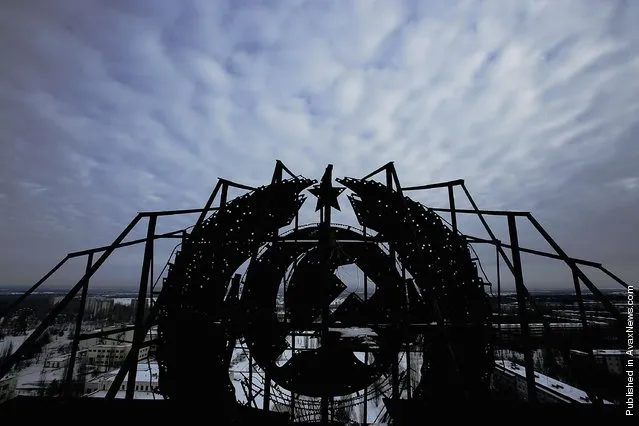
Chernobyl

Scaffolding holding a remnant of the Soviet Union, the hammer and sickle, is seen on a rooftop of an abandoned building in the town of Pripyat on January 25, 2006 near Chernobyl, Ukraine. The town of Pripyat, deserted since the 1986 catastrophe, once housed 30,000 people, the majority of being workers from the Chernobyl Nuclear Power Plant. Days after the catastrophe the inhabitants were relocated to other locations in the Soviet Union. The town of Pripyat has remained uninhabited since. Prypyat and the surrounding area will not be safe for human habitation for several centuries. Scientists estimate that the most dangerous radioactive elements will take up to 900 years to decay sufficiently to render the area safe.
Details
14 Mar 2011 10:20:00
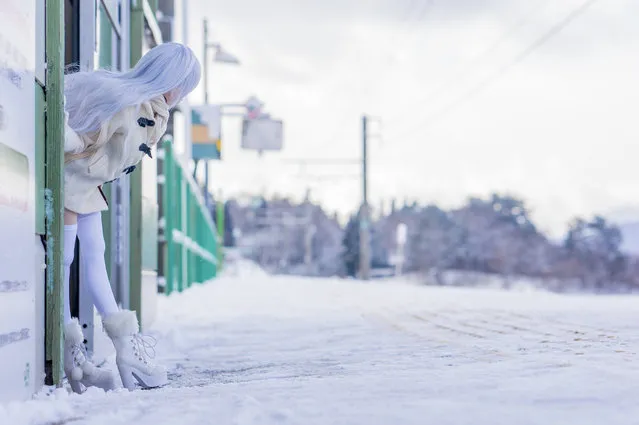
“Can't wait”. Location: Inao Station (JR Oito-Line). (AZURE)

“Can't wait”. Location: Inao Station (JR Oito-Line), Nagano Prefecture, Japan. (Photo by AZURE)
Details
25 Mar 2013 12:20:00
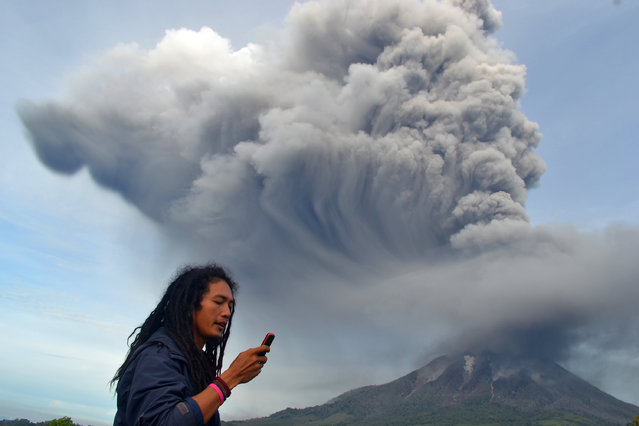
A man uses his mobile phone as Mount Sinabung continues to erupt, with hot smoke spewing from the volcano, in the Karo district on the north of Indonesia's Sumatra island on November 18, 2013. Officials said a week ago at more than 5,000 people had fled their homes since the volcano erupted early this month. (Photo by Sutanta Aditya/AFP Photo)

Starting in September, Indonesia's Mount Sinabung began erupting yet again. In the days that followed, ash and smoke were shot into the air multiple times. As a result, nearby towns turned gray from repeated blows by the volcano. Photo: A man uses his mobile phone as Mount Sinabung continues to erupt, with hot smoke spewing from the volcano, in the Karo district on the north of Indonesia's Sumatra island on November 18, 2013. Officials said a week ago at more than 5,000 people had fled their homes since the volcano erupted early this month. (Photo by Sutanta Aditya/AFP Photo)
Details
22 Nov 2013 08:08:00
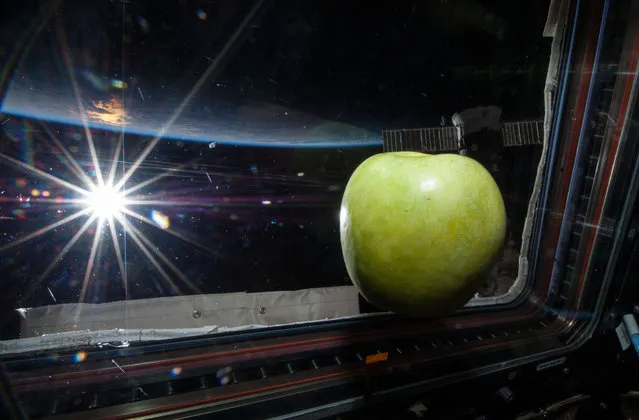
Viewing The Earth From Space

Despite any political differences between the United States and Russia, the space agencies of the two countries continue their cooperative work in Earth's orbit, aboard the International Space Station. Apart from the research being done in microgravity, ISS crew members continue to send back amazing images of our home world, photographed from low Earth orbit. Gathered here are recent images of Earth from aboard the ISS, and from a handful of other NASA satellites.
Details
01 Jun 2014 12:36:00
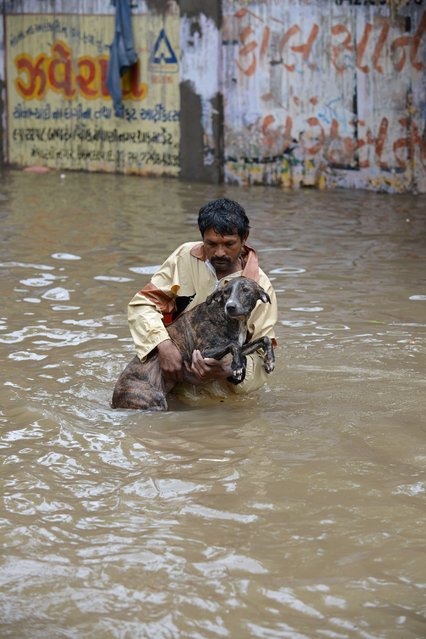
An Indian resident assists a dog as he wades through floodwaters in Ahmedabad on July 30, 2014. Rains lashed Ahmedabad and many regions of India's western Gujarat state, wth the Indian Metrological Department warning of heavy rains for the next 48 hours. (Photo by Sam Panthaky/AFP Photo)

An Indian resident assists a dog as he wades through floodwaters in Ahmedabad on July 30, 2014. Rains lashed Ahmedabad and many regions of India's western Gujarat state, wth the Indian Metrological Department warning of heavy rains for the next 48 hours. (Photo by Sam Panthaky/AFP Photo)
Details
31 Jul 2014 09:58:00