Loading...
Done
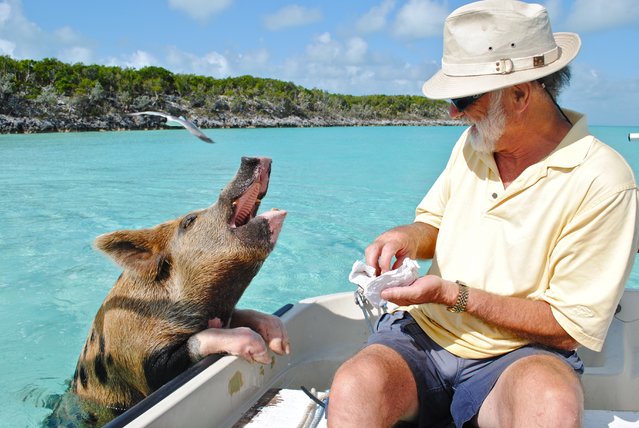
“So you're on a boat in Bahamas and then this pig swims by begging for food”. (Photo and caption by Lisa Larsen/Public Domain)

The Bahamas, the Commonwealth nation of hundreds of islands roughly the size of Connecticut and with population of just a bit over Anaheim, is known for its crystal waters and pristine beaches. This is possibly one of the world’s most beautiful havens of nature, yet people are coming here to see pigs. It is unclear when the pigs first appeared on Exuma Island or where they come from. There’s talk about a daring escape from a shipwreck, or sailors releasing the swine on purpose. In all probability, there were no pigs on this tropical paradise before European settlers came, so their mere presence is the work of human. The intriguing feat of nature, however, is that this population of pigs developed a fine aptitude for swimming. Here: “So you're on a boat in Bahamas and then this pig swims by begging for food”. (Photo and caption by Lisa Larsen/Public Domain)
Details
03 Sep 2015 11:53:00
Norwegian Trolls By Ivar Rodningen Part 1

Ivar Rodningem is a professional illustrator, whose imaginative mind transports us into a parallel world where trolls roam the lands. These creatures might seem scary at first sight, but in reality they are very docile and friendly, help each other and humans that they happen to meet. One of their characteristic features is of course their large noses and long tails. They are one with the nature, which is why it is almost impossible to see a troll if he doesn’t want to be found. Just like you and I they love having fun, though it is hard thing to do, considering their size.


See also:Part 2
Details
26 Feb 2015 20:03:00
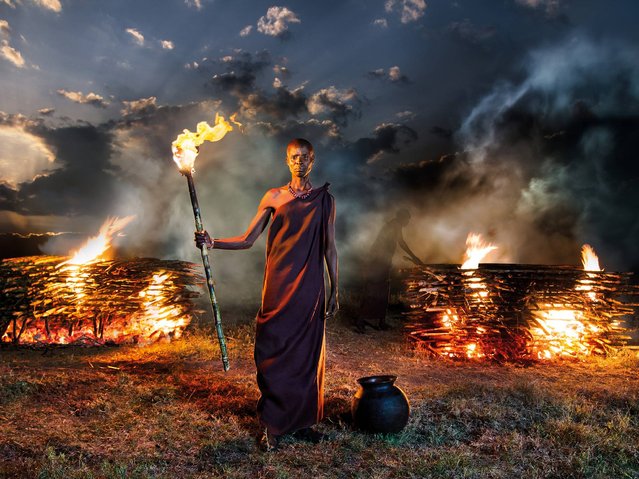
“The Salt of the Presidium”. Andrew Wanyonyi Sikanga is a salt producer in Nabuyole, western Kenya, who produces salt from an aquatic plant. (Photo by Steve McCurry/2015 Lavazza Calendar)

Extraordinary tales of everyday heroism have been illustrated beautifully by renowned US photographer Steve McCurry in the new 2015 Lavazza Calendar. The calendar which has been created in collaboration with the Slow Food movement, features twelve breathtaking pictures, capturing the spirit, strength and humanity of the Earth Defenders – women and men who protect their land and projects in Africa with passion and bravery. The proceeds from sales of the calendar and all donations will be contributed entirely to create 10,000 food gardens in African schools and villages by the end of 2016. (Photo by Steve McCurry/2015 Lavazza Calendar)
Details
27 Oct 2014 12:08:00
Dan surrounded by seven days of her own rubbish in Pasadena, California. (Photo by Gregg Segal/Barcroft Media)

Dan surrounded by seven days of her own rubbish in Pasadena, California. If you've never thought about how much rubbish you throw away an honest photographic series will open your eyes. Men, women, couples and families with young children have been photographed lying on their backs surrounded by a week's worth of their own rubbish – from old cartons of milk, used nappies and even tampons. The startling series “Seven Days of Garbage” by Californian photographer Gregg Segal is an unforgettable reminder of the amount of waste a human collects in just seven days. (Photo by Gregg Segal/Barcroft Media)
Details
16 Jul 2014 14:41:00
A young Crimean girl wears military-type clothes during a Victory Day celebration in Sevastopol on May 9, 2018. (Photo by Oleksandra Surgan/Radio Free Europe/Radio Liberty)

Children carrying guns and flags or wearing Soviet-style uniforms have become a common sight at Victory Day parades and other events in Russian-controlled Crimea. Russian and Ukrainian human rights activists have warned that such displays point to a growing trend of promoting Russian patriotism among kids on the Crimean peninsula, annexed from Ukraine in 2014. Here: A young Crimean girl wears military-type clothes during a Victory Day celebration in Sevastopol on May 9, 2018. (Photo by Oleksandra Surgan/Radio Free Europe/Radio Liberty)
Details
18 May 2019 00:03:00
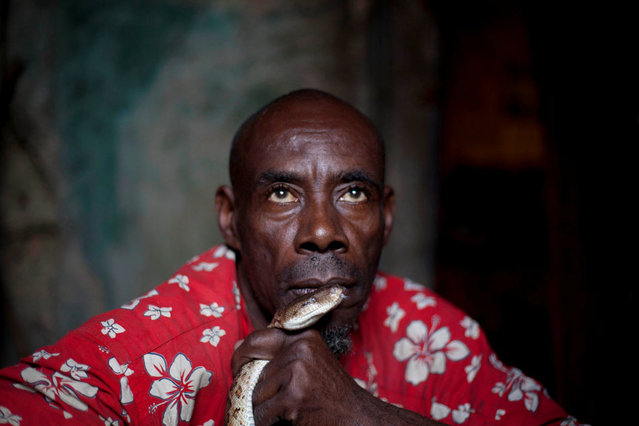
In this January 25, 2013 photo, snake handler Saintilus Resilus holds a snake in front of his lips as he trains the snake to recognize his smell as he prepares for his street performances during the pre-Lenten Carnival season, at his home in Petionville, Haiti. Resilus sees himself as something of a performance artist, showing off with snakes and other animals that Haitians don't see every day, earning tips from impromptu audiences. (Photo by Dieu Nalio Chery/AP Photo/Matt Dayhoff)

In this January 25, 2013 photo, snake handler Saintilus Resilus holds a snake in front of his lips as he trains the snake to recognize his smell as he prepares for his street performances during the pre-Lenten Carnival season, at his home in Petionville, Haiti. Resilus sees himself as something of a performance artist, showing off with snakes and other animals that Haitians don't see every day, earning tips from impromptu audiences. (Photo by Dieu Nalio Chery/AP Photo via Matt Dayhoff)
Details
02 Feb 2013 10:11:00
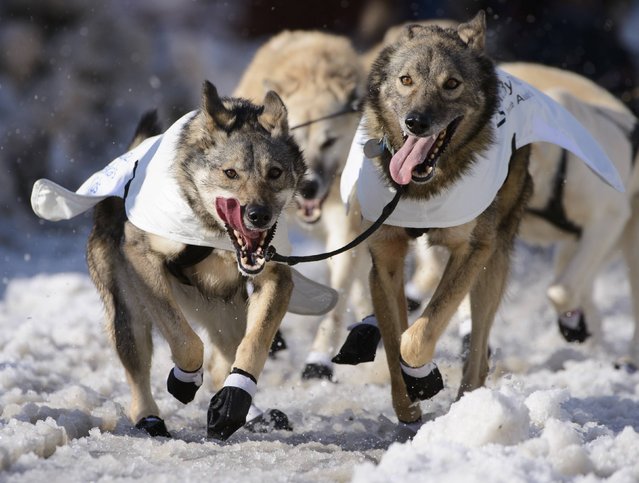
Richie Diehl team charges out of the chute over trucked-in snow at the 2015 ceremonial start of the Iditarod Trail Sled Dog race in downtown Anchorage, Alaska March 7, 2015. The timed portion of the race, which typically lasts nine days or longer, begins on Monday in Fairbanks, about 300 miles (482 km) away. Traditionally held in Willow, the timed start was moved to Fairbanks this year to accommodate an alternate trail selected after race officials deemed sections of the traditional path unsafe.    REUTERS/Mark Meyer  (UNITED STATES - Tags: SPORT ANIMALS SOCIETY)

Richie Diehl team charges out of the chute over trucked-in snow at the 2015 ceremonial start of the Iditarod Trail Sled Dog race in downtown Anchorage, Alaska March 7, 2015. The timed portion of the race, which typically lasts nine days or longer, begins on Monday in Fairbanks, about 300 miles (482 km) away. Traditionally held in Willow, the timed start was moved to Fairbanks this year to accommodate an alternate trail selected after race officials deemed sections of the traditional path unsafe. REUTERS/Mark Meyer (UNITED STATES - Tags: SPORT ANIMALS SOCIETY)
Details
09 Mar 2015 13:22:00
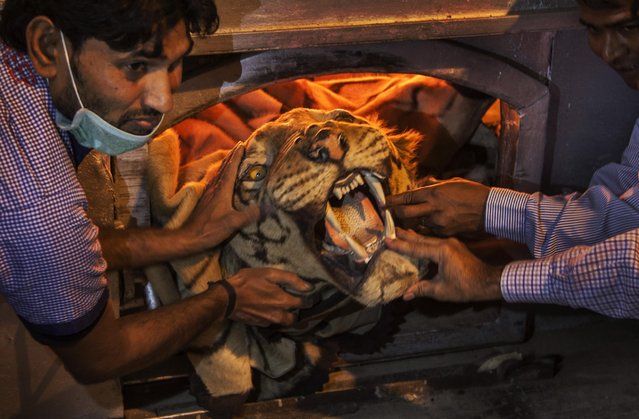
Indian authorities hold a tiger skin as they set fire to a stockpile of illegal wildlife parts at the Delhi Zoo in New Delhi, India, Sunday, November 2, 2014. A stockpile of tiger skins, elephant tusks, rhino horns and other illegal animal parts were burned Sunday in an effort to discourage wildlife smuggling in South Asia. (Photo by Tsering Topgyal/AP Photo)

Indian authorities hold a tiger skin as they set fire to a stockpile of illegal wildlife parts at the Delhi Zoo in New Delhi, India, Sunday, November 2, 2014. A stockpile of tiger skins, elephant tusks, rhino horns and other illegal animal parts were burned Sunday in an effort to discourage wildlife smuggling in South Asia. (Photo by Tsering Topgyal/AP Photo)
Details
03 Nov 2014 12:44:00