Loading...
Done
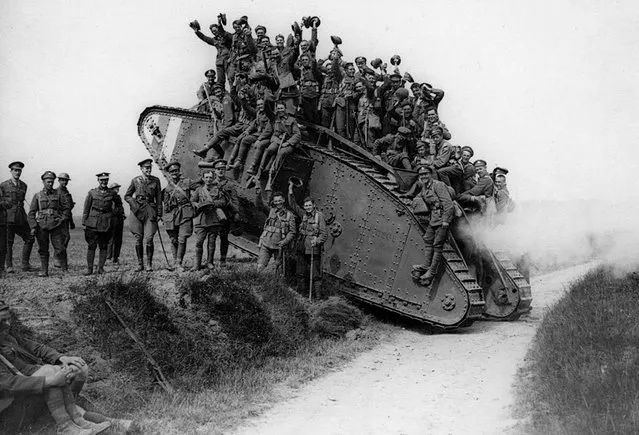
These black-and-white photos are taken from the new book “Armoured Warfare in the First World War 1916 – 1918” by Anthony Tucker-Jones and published by Pen & Sword Military. “Interestingly the British, French and Germans took completely different approaches with varying results”. The British military produced “Little Willie” in Autumn 1915 weighing 18 tonnes, which had a crew of two plus four gunners. “Inspired by a tracked artillery tractor “Little Willie” was referred to as a water tank – hence the name tank – to ensure secrecy”, said Anthony. “This led to the strange looking Mark I with its peculiar rhomboid shape, designed to cross trenches with guns in sponsons on either side. The Germans saw the tank as unchivalrous and were slow to grasp its utility. They favoured the Stormtrooper (specialist soldiers used to infiltrate enemy trenches) and artillery, not the tank”, said Anthony. “However, they didn’t hesitate to make use of captured British tanks. Although the tank helped secure victory and German soldiers dubbed it “Germany’s Downfall” the country was ultimately brought to its knees by the Allies blockade”. Here: British troops hitch a ride on a Mark IV after the massed tank fleet spearheading attack at Cambrai on November 20, 1917. (Photo by Anthony Tucker-Jones/Mediadrumworld.com)

These black-and-white photos are taken from the new book “Armoured Warfare in the First World War 1916 – 1918” by Anthony Tucker-Jones and published by Pen & Sword Military. Here: British troops hitch a ride on a Mark IV after the massed tank fleet spearheading attack at Cambrai on November 20, 1917. (Photo by Anthony Tucker-Jones/Mediadrumworld.com)
Details
23 Feb 2017 00:02:00
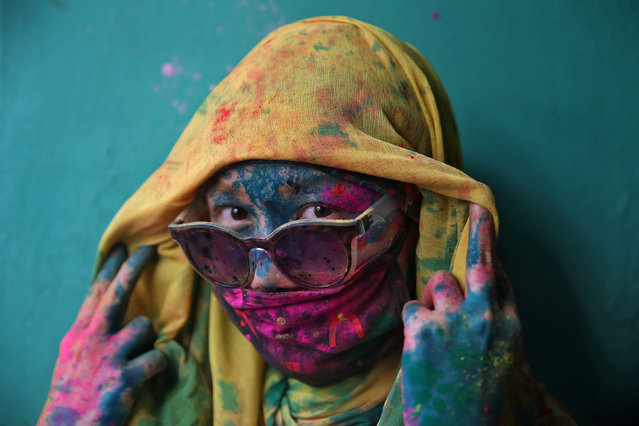
A woman poses for a photograph during Holi celebrations in the town of Barsana in the state of Uttar Pradesh, India, March 6, 2017. (Photo by Cathal McNaughton/Reuters)

A woman poses for a photograph during Holi celebrations in the town of Barsana in the state of Uttar Pradesh, India, March 6, 2017. (Photo by Cathal McNaughton/Reuters)
Details
08 Mar 2017 00:06:00
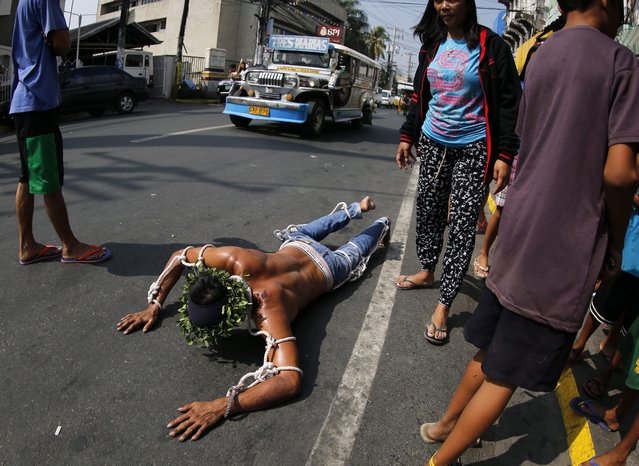
A Filipino flagellant crawls along a street on Maundy Thursday, in San Fernando city, Pampanga Province, north of Manila, Philippines, 24 March 2016. Many Filipino Catholic penitents mark the Holy Week by submitting to different forms of physical penance in the hopes of being forgiven for their sins. (Photo by Francis R. Malasig/EPA)

A Filipino flagellant crawls along a street on Maundy Thursday, in San Fernando city, Pampanga Province, north of Manila, Philippines, 24 March 2016. Many Filipino Catholic penitents mark the Holy Week by submitting to different forms of physical penance in the hopes of being forgiven for their sins. (Photo by Francis R. Malasig/EPA)
Details
27 Mar 2016 12:08:00
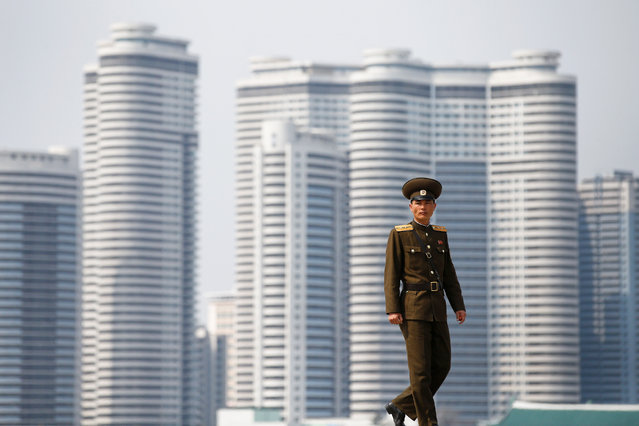
A soldier walks on the bank of the river in central Pyongyang, North Korea on April 16, 2017. (Photo by Damir Sagolj/Reuters)

A soldier walks on the bank of the river in central Pyongyang, North Korea on April 16, 2017. (Photo by Damir Sagolj/Reuters)
Details
20 Jan 2018 07:01:00
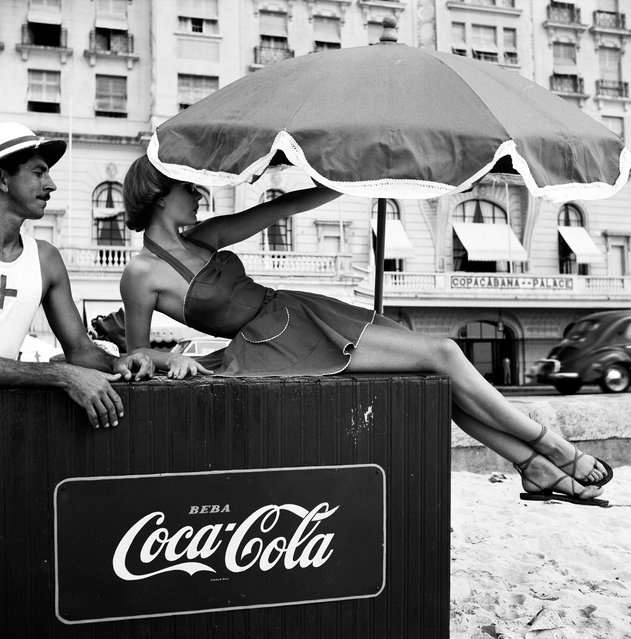
Writing about the Ambassador, the art critic Robert Melville said it was “the most daring and enterprising trade journal ever conceived … No other magazine … has so consistently and brilliantly demonstrated the relevance of works of art to the problems of industrial design”. Here: Shelagh Wilson, Copacabana beach, Rio de Janeiro, 1951. (Photo by Elsbeth Juda Archive/Victoria and Albert Museum)

“Grit and Glamour”, a retrospective of the late British photographer Elsbeth Juda, who fled Nazi occupation and came to England in 1933, is at the Jewish Museum, in London, until July 1, 2018. Here: Shelagh Wilson, Copacabana beach, Rio de Janeiro, 1951. (Photo by Elsbeth Juda Archive/Victoria and Albert Museum)
Details
31 Mar 2018 00:05:00
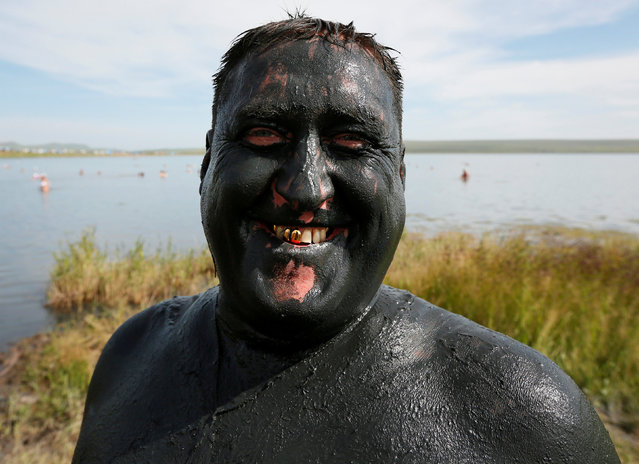
A man covered with mineral-rich mud smiles on a bank of lake Tus in Khakassia region, southwest of the Siberian city of Krasnoyarsk, Russia, July 16, 2016. (Photo by Ilya Naymushin/Reuters)

A man covered with mineral-rich mud smiles on a bank of lake Tus in Khakassia region, southwest of the Siberian city of Krasnoyarsk, Russia, July 16, 2016. (Photo by Ilya Naymushin/Reuters)
Details
18 Jul 2016 12:26:00
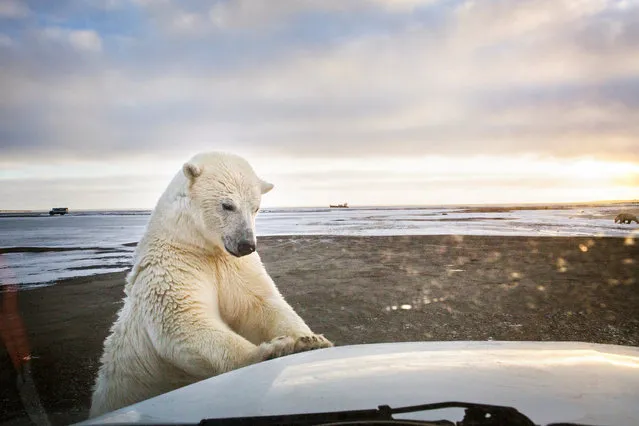
In late summer and early autumn polar bears flock to the native village of Kaktovik in the Alaskan Arctic to eat at “the boneyard” – the remains of whales annually hunted by the community. (Photo by Katie Orlinsky/Getty Images)

A selection of work by four photojournalists who have won grants of $10,000 and editorial support from the agency. Here: “Chasing Winter” by Katie Orlinksy. In late summer and early autumn polar bears flock to the native village of Kaktovik in the Alaskan Arctic to eat at “the boneyard” – the remains of whales annually hunted by the community. (Photo by Katie Orlinsky/Getty Images)
Details
02 Sep 2016 13:55:00
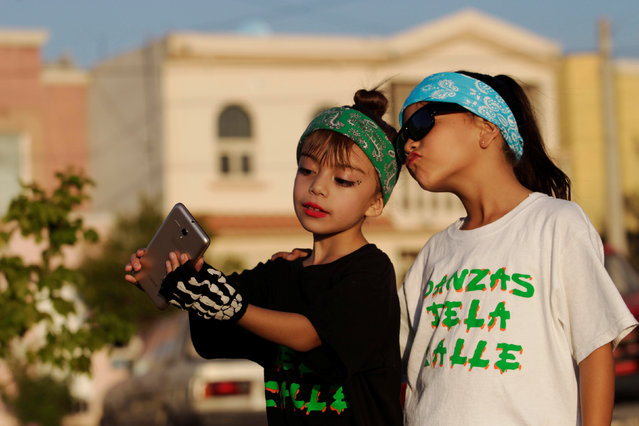
Children residents take a selfie as they wait for the police to dance, an unconventional approach to connect the police with the community in rough neighbourhoods, as part of the “Tirando Barrio” (Marking territory) programme in Saltillo, Northern Mexico September 9, 2016. T-Shirt reads “Street Dancers”. (Photo by Daniel Becerril/Reuters)

Children residents take a selfie as they wait for the police to dance, an unconventional approach to connect the police with the community in rough neighbourhoods, as part of the “Tirando Barrio” (Marking territory) programme in Saltillo, Northern Mexico September 9, 2016. T-Shirt reads “Street Dancers”. (Photo by Daniel Becerril/Reuters)
Details
13 Sep 2016 10:12:00