Loading...
Done
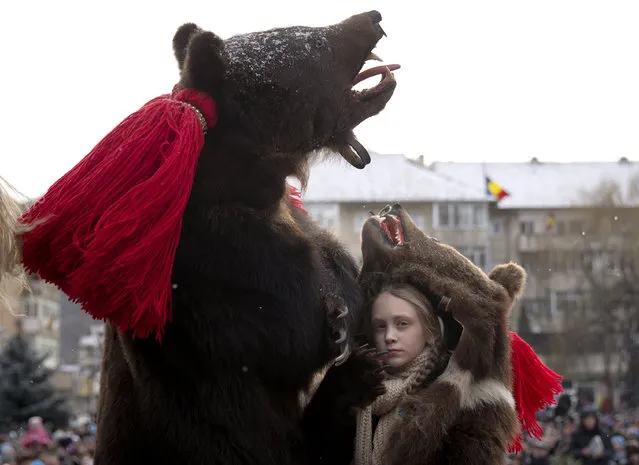
People wearing bear furs perform during a festival of New Year ritual dances attended by hundreds in Comanesti, northern Romania, Wednesday, December 30 2015. In pre-Christian rural traditions, dancers wearing colored costumes or animal furs, toured from house to house in villages singing and dancing to ward off evil, in the present the tradition has moved to Romania's cities too, where dancers travel to perform the ritual for money. (Photo by Vadim Ghirda/AP Photo)

People wearing bear furs perform during a festival of New Year ritual dances attended by hundreds in Comanesti, northern Romania, Wednesday, December 30 2015. In pre-Christian rural traditions, dancers wearing colored costumes or animal furs, toured from house to house in villages singing and dancing to ward off evil, in the present the tradition has moved to Romania's cities too, where dancers travel to perform the ritual for money. (Photo by Vadim Ghirda/AP Photo)
Details
31 Dec 2015 08:52:00
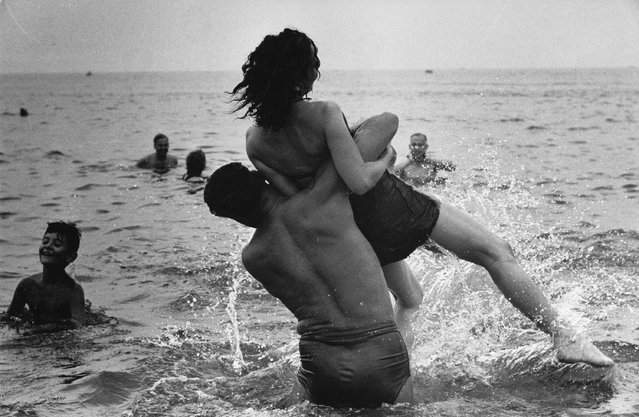
"The Family of Man" opened at The Museum of Modern Art in January 1955 and was curated by Edward Steichen. It was groundbreaking in its scope – 503 images by 273 photographers from 68 countries – as well as in the numbers of people who experienced it on its tour through 88 venues in 37 countries. The touring exhibit drew over 9 million people and the accompanying catalog sold over 2.5 million copies. Here: "Coney Island, New York," by American photographer Garry Winogrand, circa 1952. (Photo by Garry Winogrand)

“The Family of Man” opened at The Museum of Modern Art in January 1955 and was curated by Edward Steichen. It was groundbreaking in its scope – 503 images by 273 photographers from 68 countries – as well as in the numbers of people who experienced it on its tour through 88 venues in 37 countries. The touring exhibit drew over 9 million people and the accompanying catalog sold over 2.5 million copies. Here: “Coney Island, New York”, by American photographer Garry Winogrand, circa 1952. (Photo by Garry Winogrand)
Details
04 Jan 2016 08:02:00
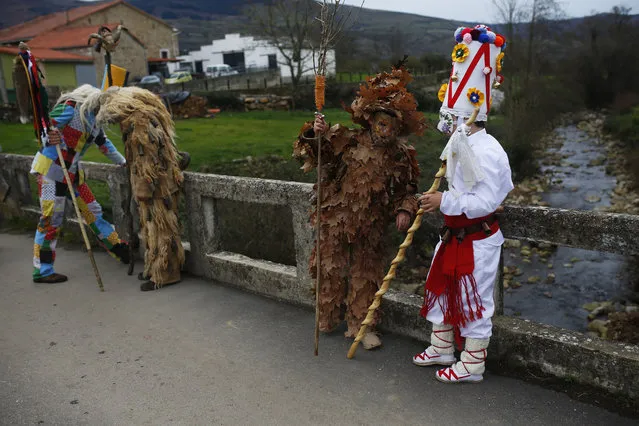
People dressed in costumes have a break while marching during the Vijanera Festival, in the small village of Silio, northern Spain, Sunday, January 3, 2016. The Vijanera masquerade, of pre-Roman origin, is the first carnival of the year in Europe symbolizing the triumph of good over evil and involving the participation of crowds of residents wearing different masks, animal skins and brightly coloured clothing with its own complex function and symbolism and becoming the living example of the survival of archaic cults to nature. (Photo by Francisco Seco/AP Photo)

People dressed in costumes have a break while marching during the Vijanera Festival, in the small village of Silio, northern Spain, Sunday, January 3, 2016. The Vijanera masquerade, of pre-Roman origin, is the first carnival of the year in Europe symbolizing the triumph of good over evil and involving the participation of crowds of residents wearing different masks, animal skins and brightly coloured clothing with its own complex function and symbolism and becoming the living example of the survival of archaic cults to nature. (Photo by Francisco Seco/AP Photo)
Details
04 Jan 2016 10:17:00
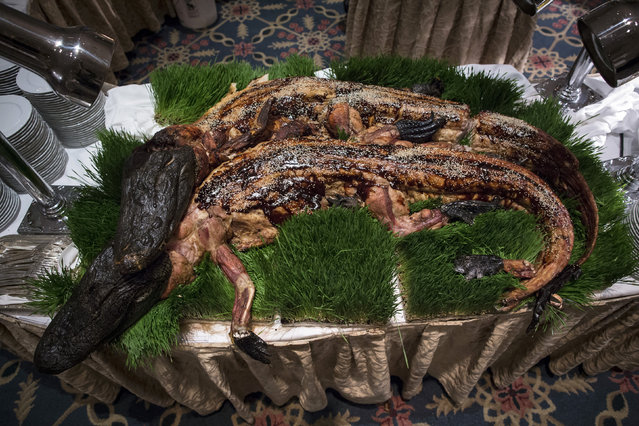
Whole cooked alligators are displayed before being served at the 110th Explorers Club Annual Dinner at the Waldorf Astoria in New York March 15, 2014. The club, which promotes the scientific exploration of land, sea, air and space featured catering by chef and exotic creator Gene Rurka. Chef Rurka prepared a variety of dishes featuring an array of insects, wildlife, animal body parts and invasive species. (Photo by Andrew Kelly/Reuters)

Whole cooked alligators are displayed before being served at the 110th Explorers Club Annual Dinner at the Waldorf Astoria in New York March 15, 2014. The club, which promotes the scientific exploration of land, sea, air and space featured catering by chef and exotic creator Gene Rurka. Chef Rurka prepared a variety of dishes featuring an array of insects, wildlife, animal body parts and invasive species. (Photo by Andrew Kelly/Reuters)
Details
20 Mar 2014 10:03:00
Satirical sculptures burn during the traditional Fallas festival in Valencia, Spain, on March 19, 2014. Every year the city celebrates the ancient “Las Fallas” fiesta, a noisy week that is full of fireworks and processions in honor of Saint Joseph that ends on midnight of March 19, burning large satiric figures displayed around the streets of the city. (Photo by Alberto Saiz/Associated Press)

Satirical sculptures burn during the traditional Fallas festival in Valencia, Spain, on March 19, 2014. Every year the city celebrates the ancient “Las Fallas” fiesta, a noisy week that is full of fireworks and processions in honor of Saint Joseph that ends on midnight of March 19, burning large satiric figures displayed around the streets of the city. (Photo by Alberto Saiz/Associated Press)
Details
21 Mar 2014 07:17:00
Undated handout photo of Buckbeak, a Hippogriff that lived with Rubeus Hagrid in the Harry Potter series, has his feathers preened and replenished by featherologist Val Jones, as he will feature in the the Feathers and Flight event at Warner Bros. Studio Tour London. (Photo credit should read: Tim Anderson/PA Wire)

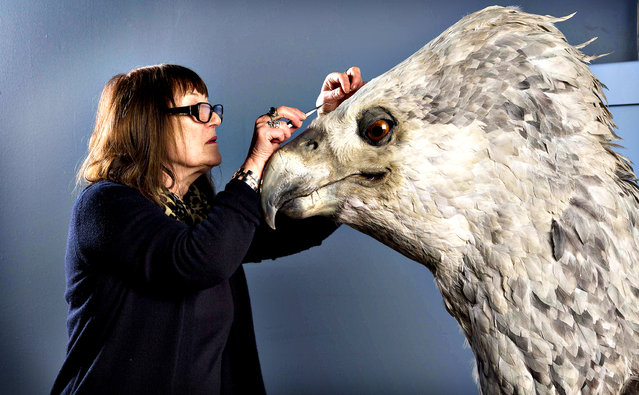
Undated handout photo of Buckbeak, a Hippogriff that lived with Rubeus Hagrid in the Harry Potter series, has his feathers preened and replenished by featherologist Val Jones, as he will feature in the the Feathers and Flight event at Warner Bros. Studio Tour London. This is the first make-over Buckbeak has received since the hugely popular Harry Potter film series was made. His intricate coat is created from thousands of individually airbrushed chicken and goose feathers that Val will carefully clean and replenish in time for the start of Feathers and Flight. Val will lead an expert team to demonstrate the techniques that made winged wonders such as Buckbeak and Fawkes the Phoenix a reality on screen. (Photo by Tim Anderson/PA Wire)
Details
22 Mar 2014 13:56:00
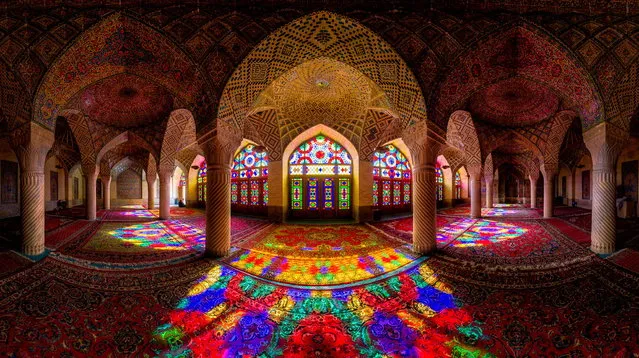
The Nasir Al-Mulk Mosque

The Nasīr al-Mulk Mosque or Pink Mosque is a traditional mosque in Shiraz, Iran, located in Goade-e-Araban place (near the famous Shah Cheragh mosque). The mosque was built during the Qājār era, and is still in use under protection by Nasir al Mulk's Endowment Foundation. It was built by the order of Mirza Hasan Ali Nasir al Molk, one of the lords of the Qajar Dynasty, in 1876 and was finished in 1888. The designers were Muhammad Hasan-e-Memar and Muhammad Reza Kashi Paz-e-Shirazi. The mosque extensively uses colored glass in its facade, and displays other traditional elements such as panj kāseh-i (five concaves) in its design, it is also named in popular culture as Pink Mosque due to the usage of beautiful pink color tiles for its interior design.
Details
26 Mar 2014 14:04:00
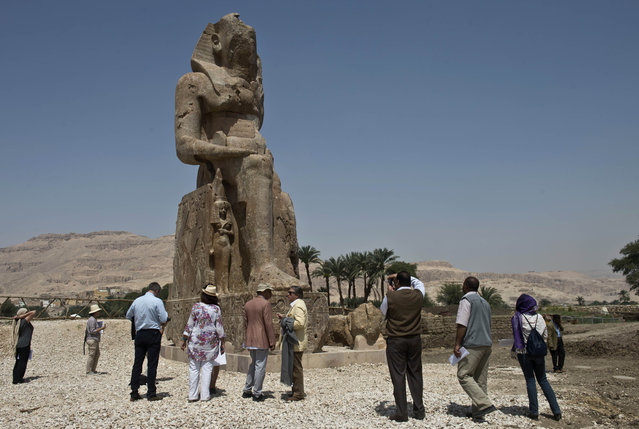
Tourists and journalists stand next to a newly displayed statue of pharaoh Amenhotep III and his wife Tiye (Down) in Egypt's temple city of Luxor on March 23, 2014. Two colossal statues of pharaoh Amenhotep III were unveiled by archaeologists today in their original sites in the funerary temple of the king, on the west bank of the Nile in Luxor, adding to the existing two famous ancient Memnon colossi. (Photo by Khaled Desouki/AFP Photo)

Tourists and journalists stand next to a newly displayed statue of pharaoh Amenhotep III and his wife Tiye (Down) in Egypt's temple city of Luxor on March 23, 2014. Two colossal statues of pharaoh Amenhotep III were unveiled by archaeologists today in their original sites in the funerary temple of the king, on the west bank of the Nile in Luxor, adding to the existing two famous ancient Memnon colossi. (Photo by Khaled Desouki/AFP Photo)
Details
25 Mar 2014 09:02:00