Loading...
Done
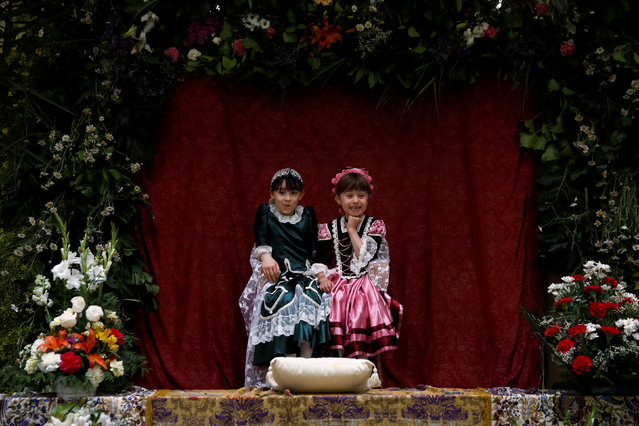
“Maya” girl Ines de la Paloma, 9, (L), sits with her friend Nuria Sanchez Caballero, 6, at an altar during “Las Mayas” festivity in Madrid, Spain, May 8, 2016. “Las Mayas” festival is held annually at the beginning of May to celebrate the awakening of nature in Spring. Young girls are chosen to become “Mayas” and sit at altars decorated with flowers so that people can admire them. The “Mayas” are dressed in traditional costumes, often displaying shawls and a wreath of flowers on their heads. (Photo by Susana Vera/Reuters)

“Maya” girl Ines de la Paloma, 9, (L), sits with her friend Nuria Sanchez Caballero, 6, at an altar during “Las Mayas” festivity in Madrid, Spain, May 8, 2016. “Las Mayas” festival is held annually at the beginning of May to celebrate the awakening of nature in Spring. Young girls are chosen to become “Mayas” and sit at altars decorated with flowers so that people can admire them. (Photo by Susana Vera/Reuters)
Details
11 May 2016 11:36:00
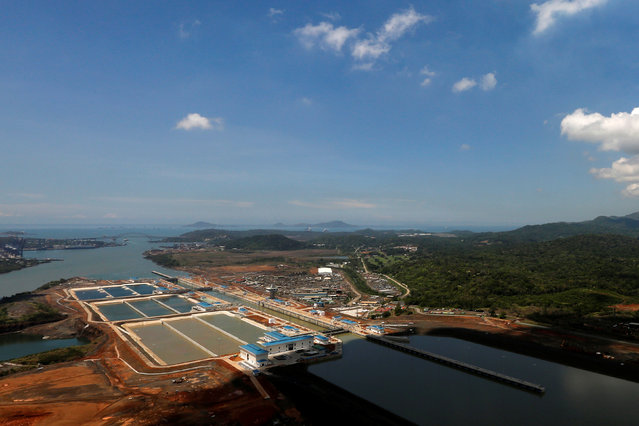
An aerial view of the new Panama Canal expansion project on the Atlantic side of the Panama Canal during an organized media tour by Italy's Salini Impregilo, one of the main sub contractors of the Panama Canal Expansion project, in Panama City May 11, 2016. The newly expanded Panama Canal will be inaugurated on June 26, 2016. (Photo by Carlos Jasso/Reuters)

An aerial view of the new Panama Canal expansion project on the Atlantic side of the Panama Canal during an organized media tour by Italy's Salini Impregilo, one of the main sub contractors of the Panama Canal Expansion project, in Panama City May 11, 2016. The newly expanded Panama Canal will be inaugurated on June 26, 2016. (Photo by Carlos Jasso/Reuters)
Details
13 May 2016 11:54:00
A picture made available on 13 May 2016 shows A Tiwa girl performing her traditional dance as they celebrated the Wanchuwa festival in Karbi Anglong District of Assam state, India, 11 May 2016. Wanchuwa is one of the most important festivals of the Tiwa tribal community living in the hills as it is related with agriculture which is the mainstay of their economy. Tiwas pray for a bountiful harvest during this festival and to protect their crops from pest and other natural calamities. (Photo by EPA/Stringer)

A picture made available on 13 May 2016 shows A Tiwa girl performing her traditional dance as they celebrated the Wanchuwa festival in Karbi Anglong District of Assam state, India, 11 May 2016. Wanchuwa is one of the most important festivals of the Tiwa tribal community living in the hills as it is related with agriculture which is the mainstay of their economy. Tiwas pray for a bountiful harvest during this festival and to protect their crops from pest and other natural calamities. Tiwa is a major tribe of Assam state who practice Jhum or shifting cultivation for their living in the hills. (Photo by EPA/Stringer)
Details
14 May 2016 11:45:00
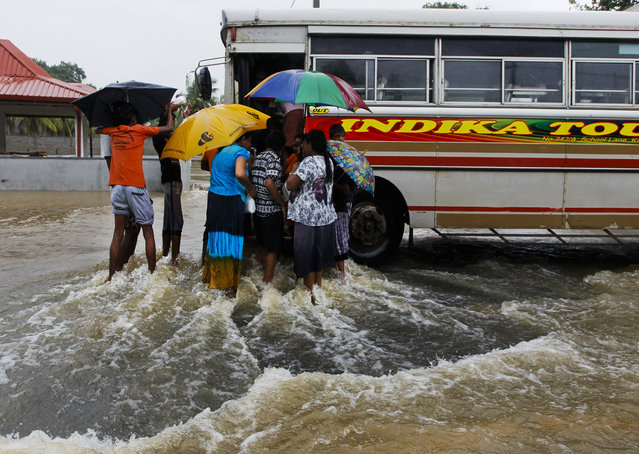
Sri Lankan flood victims flock around a bus to receive food parcels on a inundated road in Colombo, Sri Lanka, Tuesday, May 17, 2016. The Disaster Management Center said that 114 homes have been destroyed and more than 137,000 people have been evacuated to safe locations as heavy rains continue. (Photo by Eranga Jayawardena/AP Photo)

Sri Lankan flood victims flock around a bus to receive food parcels on a inundated road in Colombo, Sri Lanka, Tuesday, May 17, 2016. The Disaster Management Center said that 114 homes have been destroyed and more than 137,000 people have been evacuated to safe locations as heavy rains continue. (Photo by Eranga Jayawardena/AP Photo)
Details
18 May 2016 14:31:00
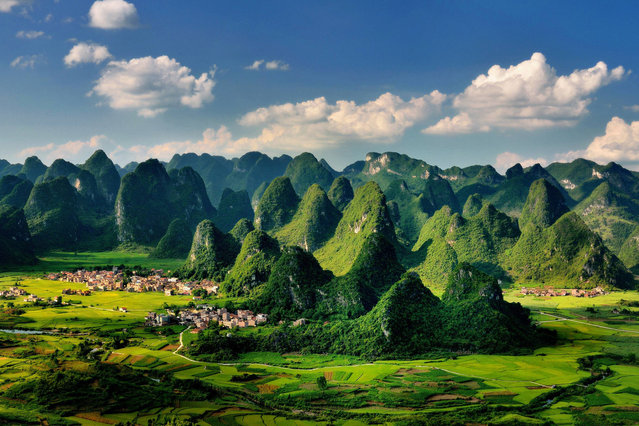
File photo taken on July 24, 2011 shows the scenery of karst landform in Dacai Township under Maonan Autonomous County of Huaijiang, south China's Guangxi Zhuang Autonomous Region. The World Heritage Committee on Monday inscribed an extension of South China Karst, a natural World Heritage Site since 2007, into the UNESCO's World Heritage List. (Photo by Wang Xiufa/Xinhua)

File photo taken on July 24, 2011 shows the scenery of karst landform in Dacai Township under Maonan Autonomous County of Huaijiang, south China's Guangxi Zhuang Autonomous Region. The World Heritage Committee on Monday inscribed an extension of South China Karst, a natural World Heritage Site since 2007, into the UNESCO's World Heritage List. (Photo by Wang Xiufa/Xinhua)
Details
07 Aug 2014 10:19:00
A woman crowd-surfs in front of the main stage at the Woodstock Festival in Kostrzyn-upon-Odra, close to the Polish-German border, August 2, 2014. Some 500 thousand people attended the festival that is the brainchild of Polish journalist and social campaigner Jerzy Owsiak. He initiated the event to say thank you to those who donated money to his GOCC charity organisation that delivers medical care for children. (Photo by Thomas Peter/Reuters)

A woman crowd-surfs in front of the main stage at the Woodstock Festival in Kostrzyn-upon-Odra, close to the Polish-German border, August 2, 2014. Some 500 thousand people attended the festival that is the brainchild of Polish journalist and social campaigner Jerzy Owsiak. He initiated the event to say thank you to those who donated money to his GOCC charity organisation that delivers medical care for children. (Photo by Thomas Peter/Reuters)
Details
09 Aug 2014 11:26:00
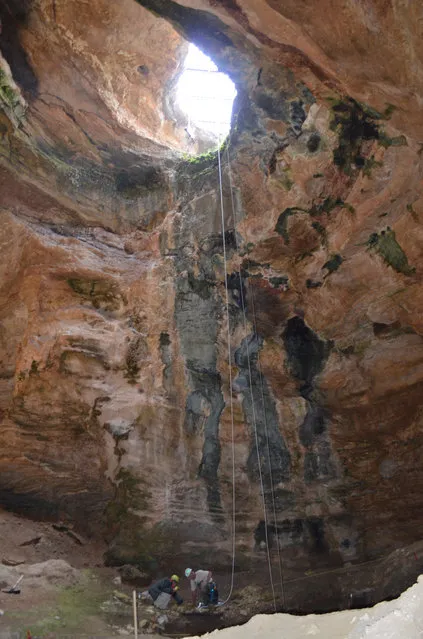
This July 2014 image provided by the Bureau of Land Management shows the interior of the Natural Trap Cave in north-central Wyoming. The cave holds the remains of tens of thousands of animals, including many now-extinct species, from the late Pleistocene period tens of thousands of years ago. Scientists have resumed digging for the first time in more than 30 years. (Photo by AP Photo/Bureau of Land Management)

This July 2014 image provided by the Bureau of Land Management shows the interior of the Natural Trap Cave in north-central Wyoming. The cave holds the remains of tens of thousands of animals, including many now-extinct species, from the late Pleistocene period tens of thousands of years ago. Scientists have resumed digging for the first time in more than 30 years. (Photo by AP Photo/Bureau of Land Management)
Details
10 Aug 2014 10:35:00
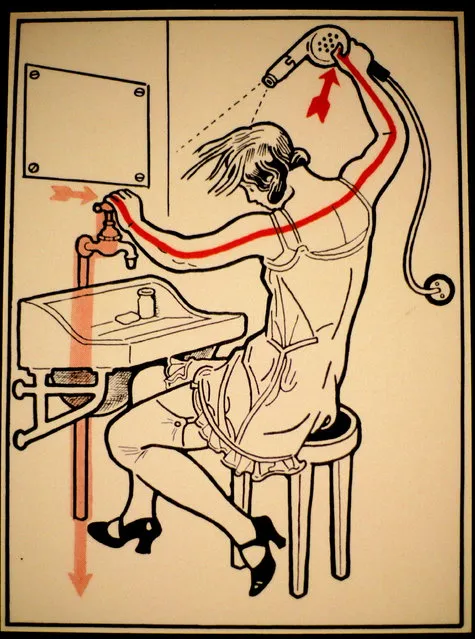
The book “Elektroschutz in 132 Bildern” (Electrical Protection in 132 Pictures) was published in Vienna in the early 1900s by a Viennese physician named Stefan Jellinek (1878-1968, a founder of the Electro-Pathological Museum). The pictures are nice and direct and unambiguous; they teach, graphically, that the surest way to kill yourself with electricity is to form a complete path from source (usually the bright red arrow) to ground (the screened back, pink arrow). Arrowheads provide the path for current flow. (Photo by The Vienna Technical Museum)

The book “Elektroschutz in 132 Bildern” (Electrical Protection in 132 Pictures) was published in Vienna in the early 1900s by a Viennese physician named Stefan Jellinek (1878-1968, a founder of the Electro-Pathological Museum). The pictures are nice and direct and unambiguous; they teach, graphically, that the surest way to kill yourself with electricity is to form a complete path from source (usually the bright red arrow) to ground (the screened back, pink arrow). Arrowheads provide the path for current flow. (Photo by The Vienna Technical Museum)
Details
11 Aug 2014 11:10:00