Loading...
Done
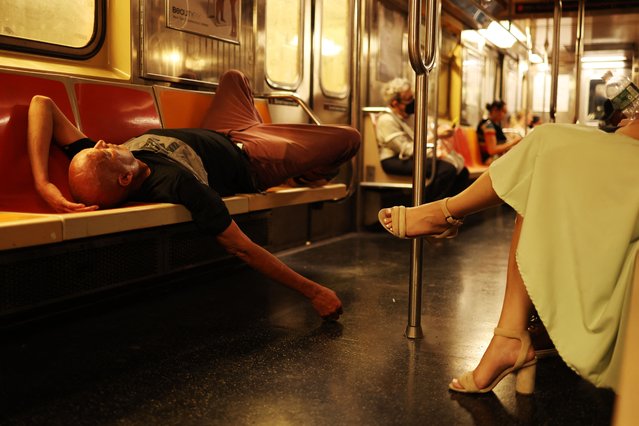
A man sleeps in a subway train in New York city on August 1, 2024. (Photo by Charly Triballeau/AFP Photo)

A man sleeps in a subway train in New York city on August 1, 2024. (Photo by Charly Triballeau/AFP Photo)
Details
12 Aug 2024 03:35:00
Tony the Tiger poses for a photo prior to the Tony the Tiger Sun Bowl Game on Tuesday, December 31, 2024 in El Paso, TX. (Photo by Jorge Salgado/AP Content Services for Kellogg's Frosted Flakes)

Tony the Tiger poses for a photo prior to the Tony the Tiger Sun Bowl Game on Tuesday, December 31, 2024 in El Paso, TX. (Photo by Jorge Salgado/AP Content Services for Kellogg's Frosted Flakes)
Details
06 Jan 2025 04:20:00
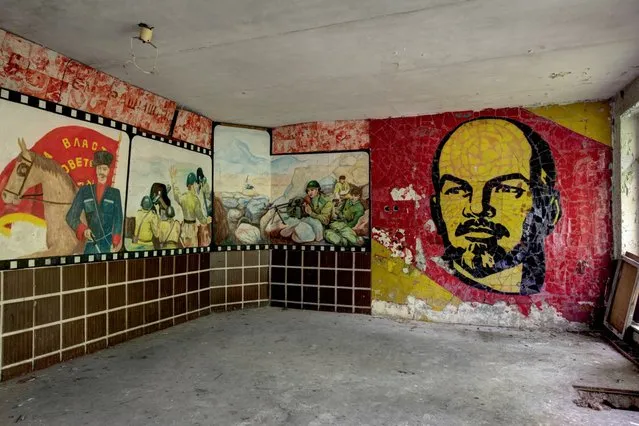
The Soviet Union Abandoned: A Communist Empire In Decay By Rebecca Litchfield

Only the most intrepid urban explorers cross the tattered ruins of the old Iron Curtain to endure the excessive bureaucracy, military paranoia and freezing winds of the East to hunt for the ghosts of an empire. Rebecca Litchfield is one who couldn’t resist the haunting allure of the ruins of the Soviet Union.
Details
21 Jul 2014 11:03:00
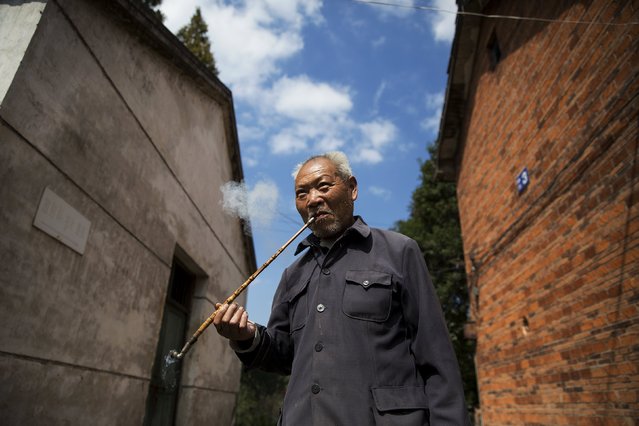
Wang Zhengqing, a 74 year old pneumoconiosis patient, smokes his pipe at Yangjia Hospital in Wuyi County, Zhejiang Province, China October 19, 2015. Former miner Wang was diagnosed with the disease, which is caused by dust inhalation, when he was 24 and has lived at Yangjia Hospital for ten years. (Photo by Damir Sagolj/Reuters)

Wang Zhengqing, a 74 year old pneumoconiosis patient, smokes his pipe at Yangjia Hospital in Wuyi County, Zhejiang Province, China October 19, 2015. Former miner Wang was diagnosed with the disease, which is caused by dust inhalation, when he was 24 and has lived at Yangjia Hospital for ten years. (Photo by Damir Sagolj/Reuters)

Details
31 Oct 2015 08:00:00
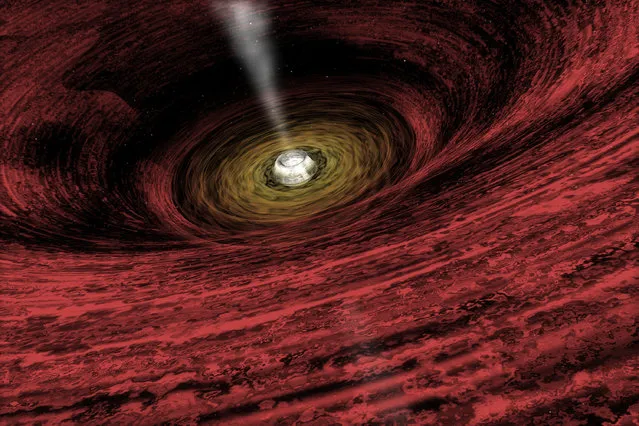
An artist's impression of a growing supermassive black hole located in the early Universe is seen in this NASA handout illustration released on June 15, 2011. Using the deepest X-ray image ever taken, astronomers found the first direct evidence that massive black holes were common in the early universe. This discovery from NASA's Chandra X-Ray Observatory shows that very young black holes grew more aggressively than previously thought, in tandem with the growth of their host galaxies. (Photo by Reuters/NASA/Chandra X-Ray Observatory/A.Hobart)

An artist's impression of a growing supermassive black hole located in the early Universe is seen in this NASA handout illustration released on June 15, 2011. Using the deepest X-ray image ever taken, astronomers found the first direct evidence that massive black holes were common in the early universe. This discovery from NASA's Chandra X-Ray Observatory shows that very young black holes grew more aggressively than previously thought, in tandem with the growth of their host galaxies. (Photo by Reuters/NASA/Chandra X-Ray Observatory/A.Hobart)
Details
11 Feb 2016 12:57:00
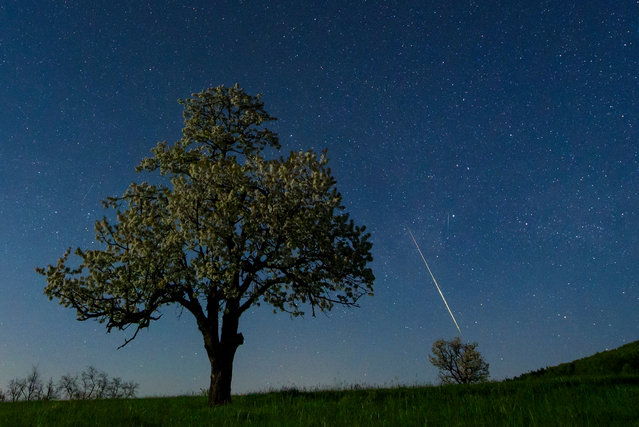
Tiny pieces of space rocks, called meteorites, are seen burning in the atmosphere over the night sky near Salgótarján, some 109km northeast of Budapest, Hungary, 21 April 2018 (issued 22 April 2018). (Photo by Peter Komka/EPA/EFE)

Tiny pieces of space rocks, called meteorites, are seen burning in the atmosphere over the night sky near Salgótarján, some 109km northeast of Budapest, Hungary, 21 April 2018 (issued 22 April 2018). (Photo by Peter Komka/EPA/EFE)
Details
24 Apr 2018 00:03:00
Kelley McMann, Gator Rebel, 2002. (Photo by Malcolm Lightner)

The Mile O' Mud is a 7/8-mile oval track with a 1/8-mile diagonal lane slashed through the center. The racing lanes are approximately 60 feet wide. On average, the muddy water is four to six feet deep, with three strategically placed holes. The largest hole, located in front of the grandstand, is the treacherous “Sippy Hole”, named for the legendary driver “Mississippi” Milton Morris, Swamp Buggy King 1955, who repeatedly got stuck in it. (Photo by Malcolm Lightner)
Details
19 May 2016 11:20:00
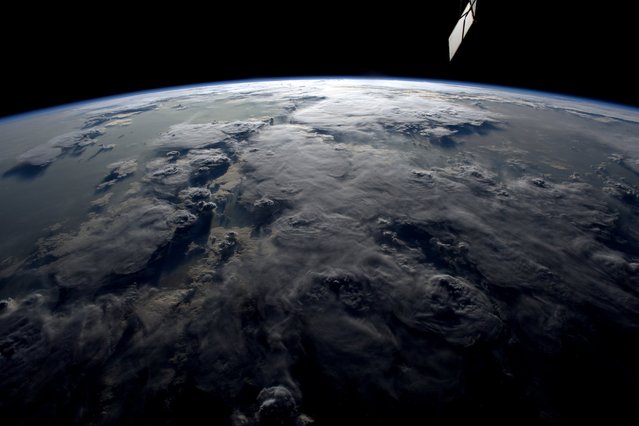
European Space Agency astronaut Tim Peake will return home after a six-month long mission on the International Space Station,on June 18, 2016. Peake was the first British ESA astronaut to visit the ISS and captured hundreds of photographs of the Earth during his mission. Here: “Lots of sun-glint right now during our whole orbit – we haven't seen a sunset for over 3 days”, he wrote. (Photo by Tim Peake/ESA/NASA)

European Space Agency astronaut Tim Peake will return home after a six-month long mission on the International Space Station,on June 18, 2016. Peake was the first British ESA astronaut to visit the ISS and captured hundreds of photographs of the Earth during his mission. Here: “Lots of sun-glint right now during our whole orbit – we haven't seen a sunset for over 3 days”, he wrote. (Photo by Tim Peake/ESA/NASA)
Details
18 Jun 2016 13:08:00