Loading...
Done
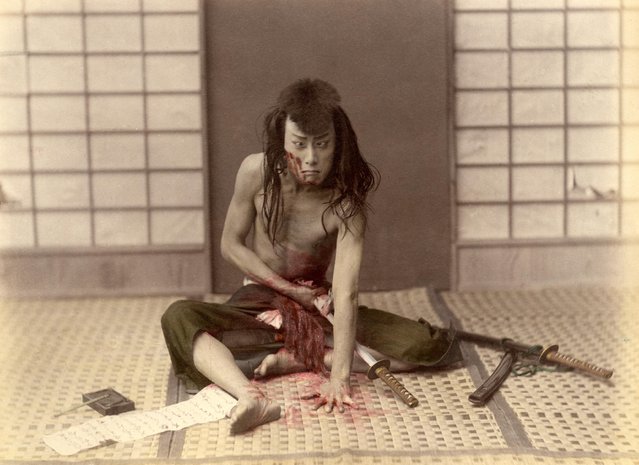
Samurai commiting seppuku (hara-kiri) in Japan, circa 1880. (Photo by adoc-photos/Corbis via Getty Images)

Samurai commiting seppuku (hara-kiri) in Japan, circa 1880. (Photo by adoc-photos/Corbis via Getty Images)
Details
27 Jan 2017 10:43:00
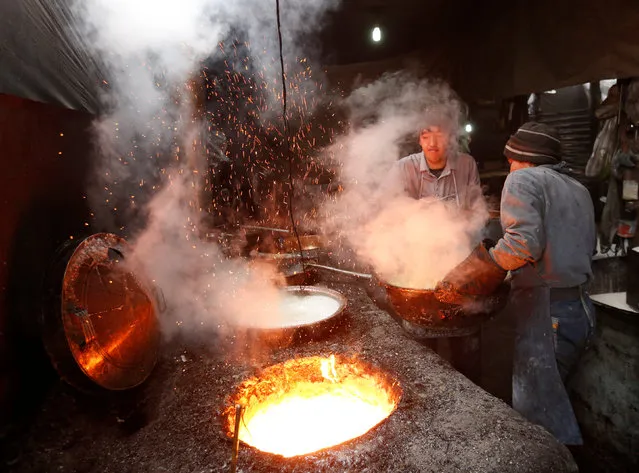
Afghan men work in a small sweets factory in Kabul, Afghanistan January 5, 2017. (Photo by Mohammad Ismail/Reuters)

Afghan men work in a small sweets factory in Kabul, Afghanistan January 5, 2017. (Photo by Mohammad Ismail/Reuters)
Details
11 Jan 2017 14:49:00
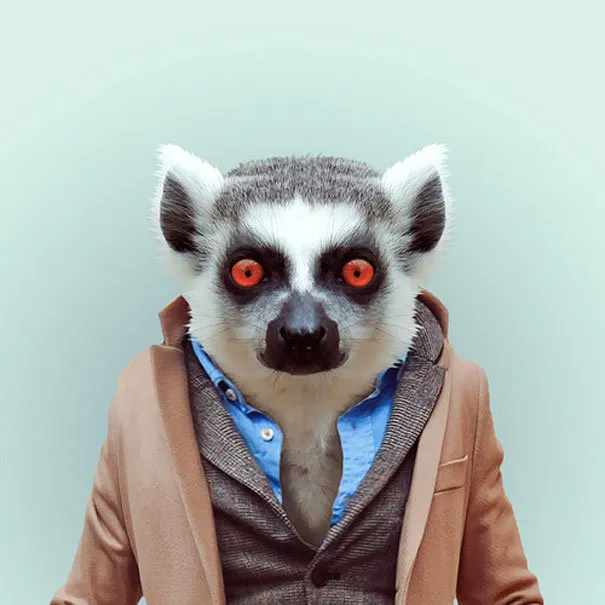
Zoo Portraits By Yago Partal

Zoo Portraits is amazing and creative project by Yago Partal, talented Barcelona-based graphic artist and photographer, who mixes fashion photography and animals in an excellent series of portraits of animals dressed as humans. via PhotoHab
Details
04 Apr 2013 10:02:00
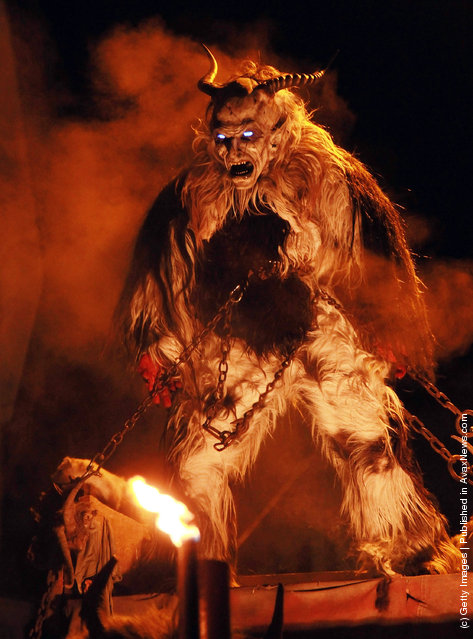
Devils Parade In Krampus Procession

Members of the Koatlacker devil's association (Koatlacker Tuifl) dressed as demonic creatures take part in a Krampus procession on December 4, 2011 in Prad near Merano, Italy. (Photo by Johannes Simon/Getty Images)
Details
05 Dec 2011 13:17:00


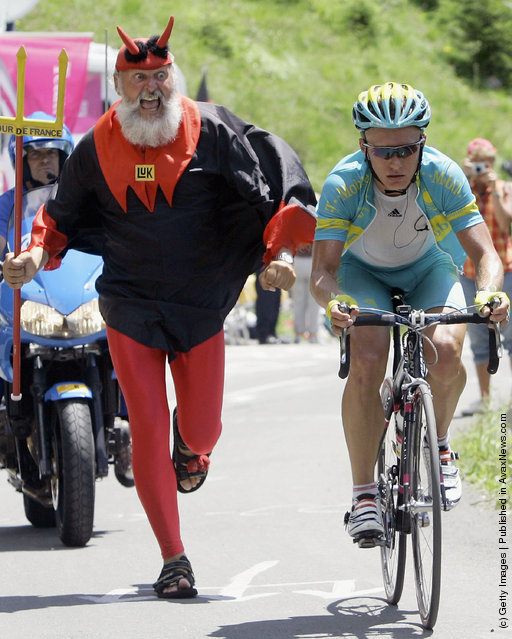
Alexandre Vinokourov of Kazakhstan from the T-Mobile Team is chased by eccentric german inventor Didi Senft dressed as the red devil during the stage 16 of the 92nd Tour de France between Mourenx and Pau on July 19, 2005, France. (Photo by Friedemann Vogel/Bongarts/Getty Images)
Details
25 Mar 2011 14:16:00
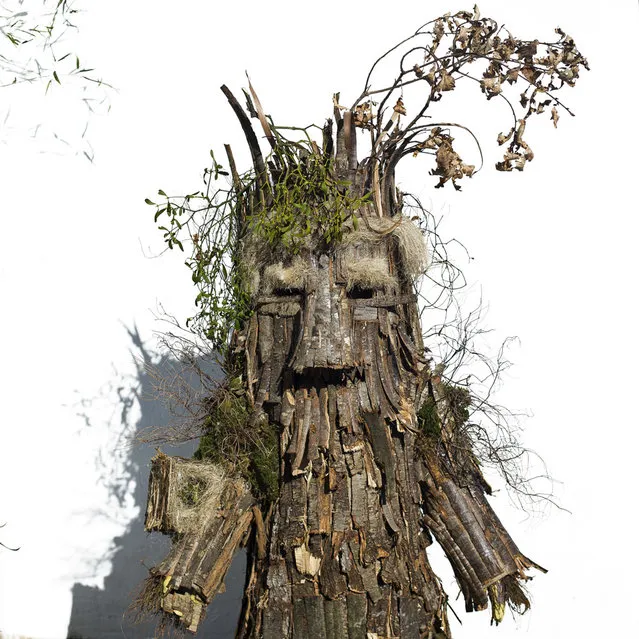
A man dressed as a  “Trapajon”, representing entities of nature, poses for a picture after taking part in the Vijanera Festival in Silio, northern Spain, Sunday, Jan. 6, 2013. The Vijanera masquerade, of pre-Roman origin, is the first carnival of the year in Europe symbolizing the triumph of good over evil and involving the participation of crowds of residents wearing different masks, animal skins and brightly colored clothing with its own complex function and symbolism and becoming the living example of the survival of archaic cults to nature. (Photo by Daniel Ochoa de Olza/AP Photo)

A man dressed as a “Trapajon”, representing entities of nature, poses for a picture after taking part in the Vijanera Festival in Silio, northern Spain, Sunday, Jan. 6, 2013. The Vijanera masquerade, of pre-Roman origin, is the first carnival of the year in Europe symbolizing the triumph of good over evil and involving the participation of crowds of residents wearing different masks, animal skins and brightly colored clothing with its own complex function and symbolism and becoming the living example of the survival of archaic cults to nature. (Photo by Daniel Ochoa de Olza/AP Photo)
Details
19 Jan 2013 13:01:00
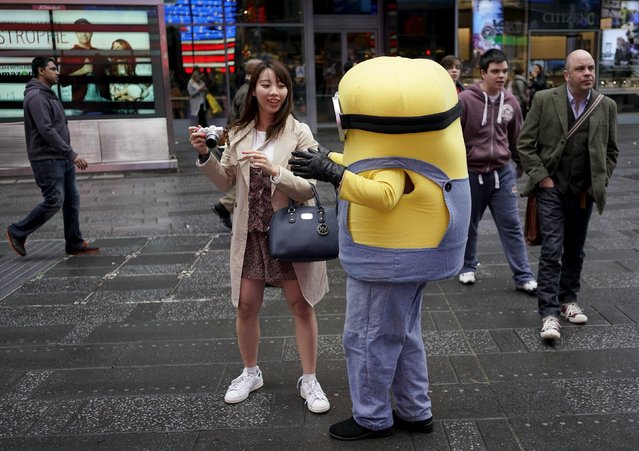
A man dresses as a Minion tries to convince a tourist to have her picture taken with him, in Times Square, in New York, April 7, 2016. The assortment of costumed characters, painted naked women and ticket sellers who make the streets of New York's Times Square their office, catering to tourists, may soon be restricted after a City Council vote Thursday. (Photo by Rickey Rogers/Reuters)

A man dresses as a Minion tries to convince a tourist to have her picture taken with him, in Times Square, in New York, April 7, 2016. The assortment of costumed characters, painted naked women and ticket sellers who make the streets of New York's Times Square their office, catering to tourists, may soon be restricted after a City Council vote Thursday. (Photo by Rickey Rogers/Reuters)
Details
24 Apr 2016 09:07:00
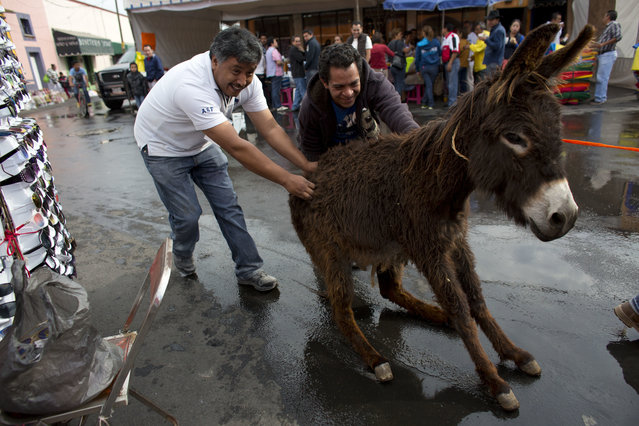
In this May 1, 2016 photo, a reluctant donkey is alternately pushed and pulled and enticed with carrots toward town hall in order to be dressed for the costume competition at the annual donkey festival in Otumba, Mexico state, Mexico. Otumba was an important donkey market during Spanish colonial times, standing at the crossroads of major roads leading to Mexico City, where the beasts pulled heavy loads and carried travelers. Today, however, farmers use tractors and pickup trucks, and the donkey population is in decline. (Photo by Rebecca Blackwell/AP Photo)

In this May 1, 2016 photo, a reluctant donkey is alternately pushed and pulled and enticed with carrots toward town hall in order to be dressed for the costume competition at the annual donkey festival in Otumba, Mexico state, Mexico. Otumba was an important donkey market during Spanish colonial times, standing at the crossroads of major roads leading to Mexico City, where the beasts pulled heavy loads and carried travelers. Today, however, farmers use tractors and pickup trucks, and the donkey population is in decline. (Photo by Rebecca Blackwell/AP Photo)
Details
04 May 2016 11:55:00