Loading...
Done
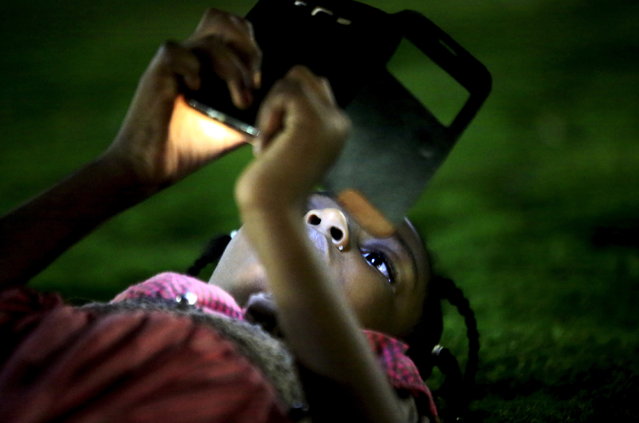
A girl uses her mobile phone during the evening at the National Park in Khartoum, Sudan, April 24, 2015. (Photo by Mohamed Nureldin Abdallah/Reuters)

A girl uses her mobile phone during the evening at the National Park in Khartoum, Sudan, April 24, 2015. (Photo by Mohamed Nureldin Abdallah/Reuters)
Details
14 Jul 2015 13:23:00
A picture made available on 17 July 2015 shows the bright line of the Milky Way above the old oaks at the Rogalin landscape Park in Rogalin village, near Poznan, on the night of 16 July 2015. (Photo by Lukasz Ogrodowczyk/EPA)

A picture made available on 17 July 2015 shows the bright line of the Milky Way above the old oaks at the Rogalin landscape Park in Rogalin village, near Poznan, on the night of 16 July 2015. (Photo by Lukasz Ogrodowczyk/EPA)
Details
21 Jul 2015 10:55:00
A Russian-made rifle, carried by this woman when she was captured in Nearby Brush, is slung around her neck by South Vietnamese soldiers before they began their interrogation of her as Viet Cong suspect near AP La Ghi in Vietnam, August 25, 1965. The girl behind the woman, also was captured in the brush. (Photo by AP Photo)

A Russian-made rifle, carried by this woman when she was captured in Nearby Brush, is slung around her neck by South Vietnamese soldiers before they began their interrogation of her as Viet Cong suspect near AP La Ghi in Vietnam, August 25, 1965. The girl behind the woman, also was captured in the brush. (Photo by AP Photo)
Details
26 Aug 2015 09:55:00
The rising sun illuminates the sky above the spires of a church in Vienna, Austria, November 17, 2015. (Photo by Heinz-Peter Bader/Reuters)

The rising sun illuminates the sky above the spires of a church in Vienna, Austria, November 17, 2015. (Photo by Heinz-Peter Bader/Reuters)
Details
19 Nov 2015 08:05:00
The Lun-class Ekranoplane was used by the Soviet Navy starting in 1987, and wasn't retired until the late 1990s, after the Soviet Union's fall. (Igor113)

“The Lun-class ekranoplan (NATO reporting name Duck) was a ground effect vehicle (GEV) designed by Rostislav Evgenievich Alexeev and used by the Soviet and Russian navies from 1987 until sometime in the late 1990s. It “flew” using the lift generated by the ground effect of its large wings when close to the surface of the water – about four metres or less. Although they might look similar and/or have related technical characteristics, ekranoplans like the Lun are not aircraft, seaplanes, hovercraft, or hydrofoils – ground effect is a separate technology altogether. The International Maritime Organization classifies these vehicles as maritime ships. The name Lun comes from the Russian for harrier”. – Wikipedia (Photo by Igor113)
Details
08 Aug 2014 10:51:00
In this February 11, 2105 photo, 72-year-old Aurea Murillo prepares to make a pass during a handball match among elderly Aymara indigenous women in El Alto, Bolivia. Dozens of traditional Aymara grandmothers ease many of the aches and pains of aging by practicing a sport that is decidedly untraditional in Bolivia: team handball. (Photo by Juan Karita/AP Photo)

In this February 11, 2105 photo, 72-year-old Aurea Murillo prepares to make a pass during a handball match among elderly Aymara indigenous women in El Alto, Bolivia. Dozens of traditional Aymara grandmothers ease many of the aches and pains of aging by practicing a sport that is decidedly untraditional in Bolivia: team handball. (Photo by Juan Karita/AP Photo)
Details
27 Feb 2015 19:34:00
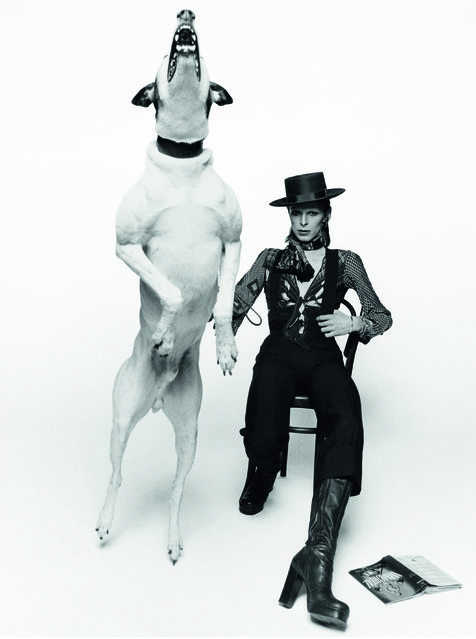
David Bowie, 1974. David Bowie's quirky character and style was perfectly encapsulated in this shot by Terry O'Neill, which shows the music legend posing next to a barking dog on the artwork for his 1974 album “Diamond Dogs” in London. (Photo by Terry O'Neill)

David Bowie, 1974. David Bowie's quirky character and style was perfectly encapsulated in this shot by Terry O'Neill, which shows the music legend posing next to a barking dog on the artwork for his 1974 album “Diamond Dogs” in London. (Photo by Terry O'Neill)
Details
15 Jan 2014 10:31:00
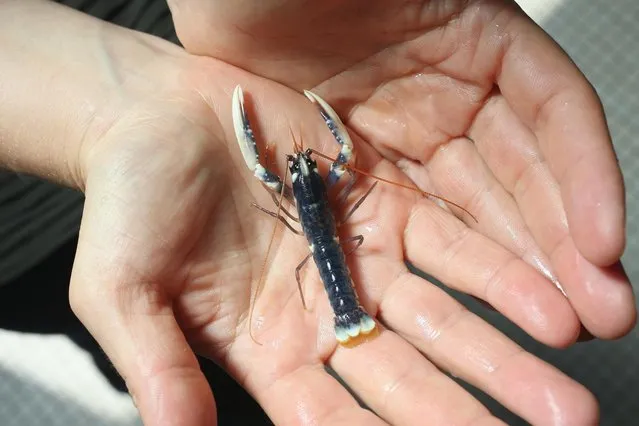
Isabel Schmalenbach, an environmental scientist with the Helgoland Biological Institute (Biologische Anstalt Helgoland), part of the Alfred Wegener Institute for Polar and Marine Research, holds a one-year old baby European lobster (Homarus gammarus) raised at the institute on August 3, 2013 on Helgoland Island, Germany. (Photo by Sean Gallup/Getty Images)

Isabel Schmalenbach, an environmental scientist with the Helgoland Biological Institute (Biologische Anstalt Helgoland), part of the Alfred Wegener Institute for Polar and Marine Research, holds a one-year old baby European lobster (Homarus gammarus) raised at the institute on August 3, 2013 on Helgoland Island, Germany. Later in the day Schmalenbach and her colleagues released a total of 415 one-year old lobsters into the North Sea as part of an effort to repopulate the lobster population around Helgoland (also called Heligoland). In the 19th century local fishermen caught up to 80,000 lobsters a year in the surrounding waters, combined with the heavy allied bombing of the island during and after World War II, as well as other environmental factors, decimated the lobster population. (Photo by Sean Gallup)
Details
05 Aug 2013 08:39:00