Loading...
Done
Bride Fan Huixiang (front R), a 25-year-old cancer patient, receives flowers from nurses on her bed before her wedding ceremony at a hospital in Zhengzhou, Henan province November 17, 2014. Fan was diagnosed with late stage adenocarcinoma, a type of cancerous tumor, at her thoracic vertebra this June. (Photo by Reuters/China Daily)

Bride Fan Huixiang (front R), a 25-year-old cancer patient, receives flowers from nurses on her bed before her wedding ceremony at a hospital in Zhengzhou, Henan province November 17, 2014. Fan was diagnosed with late stage adenocarcinoma, a type of cancerous tumor, at her thoracic vertebra this June. She and her 24-year-old husband Yu Haining held their wedding ceremony at the hospital on Monday after five years of relationship, local media reported. (Photo by Reuters/China Daily)
Details
19 Nov 2014 14:15:00
In this Thursday, July 10, 2014, photo, Mike Fitzgerald, right, teaches behind a sample display of cannabis-infused products during a cooking class at the New England Grass Roots Institute in Quincy, Mass. Some pot users turn to edibles because they don't like to inhale or smell the smoke, or just want variety or a longer lasting, more intense high. (Photo by Michael Dwyer/AP Photo)

The proliferation of marijuana edibles for both medical and recreational purposes is giving rise to a cottage industry of baked goods, candies, infused oils, cookbooks and classes that promises a slow burn as more states legalize the practice and awareness spreads about the best ways to deliver the drug. Edibles and infused products such as snack bars, olive oils and tinctures popular with medical marijuana users have flourished into a gourmet market of chocolate truffles, whoopie pies and hard candies as Colorado and Washington legalized the recreational use of marijuana in the past year. Photo: In this Thursday, July 10, 2014, photo, Mike Fitzgerald, right, teaches behind a sample display of cannabis-infused products during a cooking class at the New England Grass Roots Institute in Quincy, Mass. (Photo by Michael Dwyer/AP Photo)
Details
21 Jul 2014 11:02:00
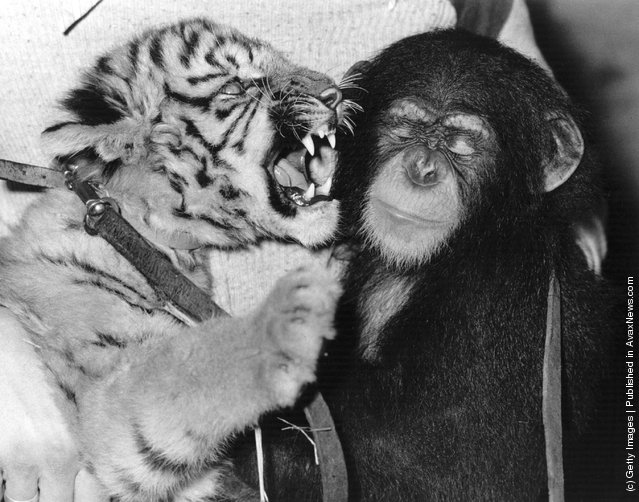
27th November 1979:  A tiger cub has a short chat with a chimp

A tiger cub has a short chat with a chimp. (Photo by Ian Tyas/Keystone Features/Getty Images). 27th November 1979
Details
01 Dec 2011 13:05:00
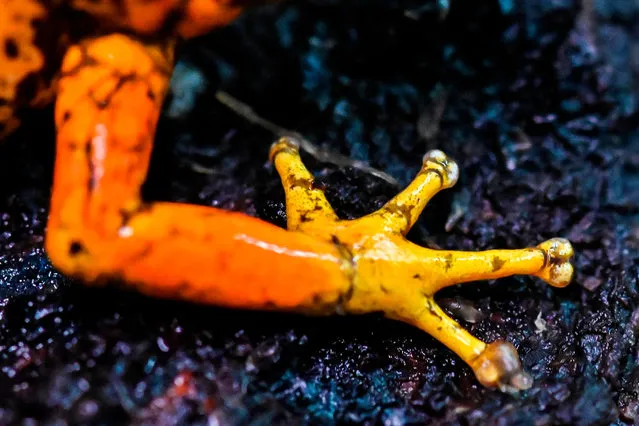
A leg of a “diablito” frog (Oophaga sylvatica) is photographed in a laboratory at a laboratory in the zoo of Cali, Colombia, on July 19, 2019. Colombia is the second country with the largest number of amphibians in the world after Brazil. More than 40% of amphibian species worldwide are in danger of extinction. (Photo by Luis Robayo/AFP Photo)

A leg of a “diablito” frog (Oophaga sylvatica) is photographed in a laboratory at a laboratory in the zoo of Cali, Colombia, on July 19, 2019. Colombia is the second country with the largest number of amphibians in the world after Brazil. More than 40% of amphibian species worldwide are in danger of extinction. (Photo by Luis Robayo/AFP Photo)
Details
28 Nov 2020 00:03:00
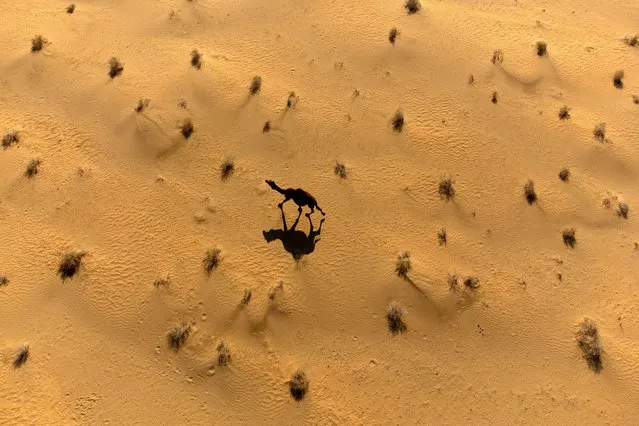
This aerial photograph taken on January 27, 2024 shows a camel in the desert of Samawa in Iraq's southern province of al-Muthanna. (Photo by Hussein Faleh/AFP Photo)

This aerial photograph taken on January 27, 2024 shows a camel in the desert of Samawa in Iraq's southern province of al-Muthanna. (Photo by Hussein Faleh/AFP Photo)
Details
29 Feb 2024 01:36:00
A Palestinian man walks on the beach, as storm winds blow, near a camp for internally displaced on the beach near the Nuseirat refugee in the central Gaza Strip on December 20, 2024, amid the continuing war between Israel and Hamas. (Photo by Eyad Baba/AFP Photo)

A Palestinian man walks on the beach, as storm winds blow, near a camp for internally displaced on the beach near the Nuseirat refugee in the central Gaza Strip on December 20, 2024, amid the continuing war between Israel and Hamas. (Photo by Eyad Baba/AFP Photo)
Details
28 Dec 2024 02:53:00
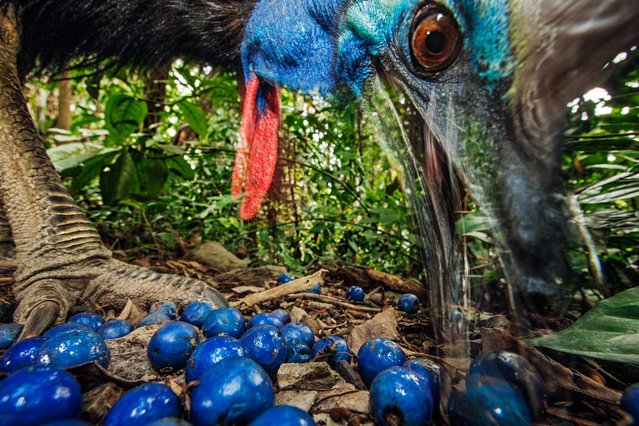
“Cassowaries are large, flightless birds related to emus and (more distantly) to ostriches, rheas, and kiwis”, writes Olivia Judson in the September issue of National Geographic magazine. (Photo by Christian Ziegler/National Geographic)

“Cassowaries are large, flightless birds related to emus and (more distantly) to ostriches, rheas, and kiwis”, writes Olivia Judson in the September issue of National Geographic magazine. How large? People-size: Adult males stand well over five foot five and top 110 pounds. Females are even taller, and can weigh more than 160 pounds. Dangerous when roused, they’re shy and peaceable when left alone. But even birds this big and tough are prey to habitat loss. The dense New Guinea and Australia rain forests where they live have dwindled. Today cassowaries might number 1,500 to 2,000. And because they help shape those same forests – by moving seeds from one place to another – “if they vanish”, Judson writes, “the structure of the forest would gradually change” too. (Photo by Christian Ziegler/National Geographic)
Details
06 Jan 2014 12:21:00
In this June 1, 2016 photo, Maria Arias stands near her kitchen as she puts on earrings while getting ready for school in Caracas, Venezuela. So many students have fainted from hunger at Maria's school that administrators told parents to keep their children home until they could find more food. (Photo by Ariana Cubillos/AP Photo)

In this June 1, 2016 photo, Maria Arias stands near her kitchen as she puts on earrings while getting ready for school in Caracas, Venezuela. So many students have fainted from hunger at Maria's school that administrators told parents to keep their children home until they could find more food. (Photo by Ariana Cubillos/AP Photo)
Details
17 Jun 2016 13:03:00