Loading...
Done
Tibetan Mastiff

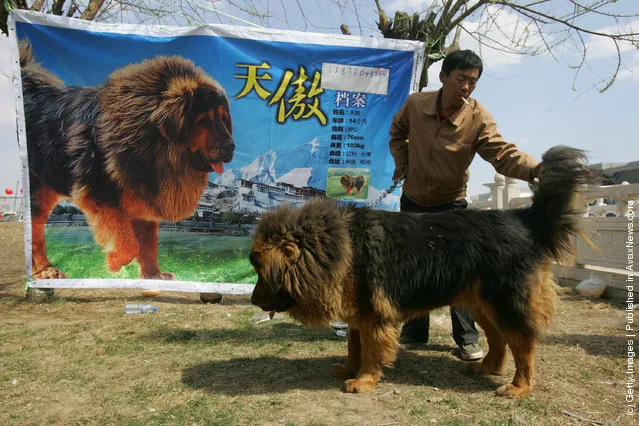
“The Tibetan Mastiff also known as Do-khyi (variously translated as “home guard”, “door guard”, “dog which may be tied”, “dog which may be kept”), reflects its use as a guardian of herds, flocks, tents, villages, monasteries, and palaces, much as the old English ban-dog (also meaning tied dog) was a dog tied outside the home as a guardian. However, in nomad camps and in villages, the Do-khyi is traditionally allowed to run loose at night and woe be unto the stranger who walks abroad after dark”. – Wikipedia

Photo: A man displays a Tibetan Mastiff he raised during the Tibetan Mastiff exposition on April 7, 2007 in Langfang of Hebei Province, China. (Photo by China Photos/Getty Images)
Details
05 Oct 2011 14:27:00
Water Babies

A toddler held by her father swims underwater during a swimming class for babies at Lane Cove pool February 16, 2007 in Sydney, Australia. (Photo by Ian Waldie/Getty Images)
Details
06 Dec 2011 13:30:00
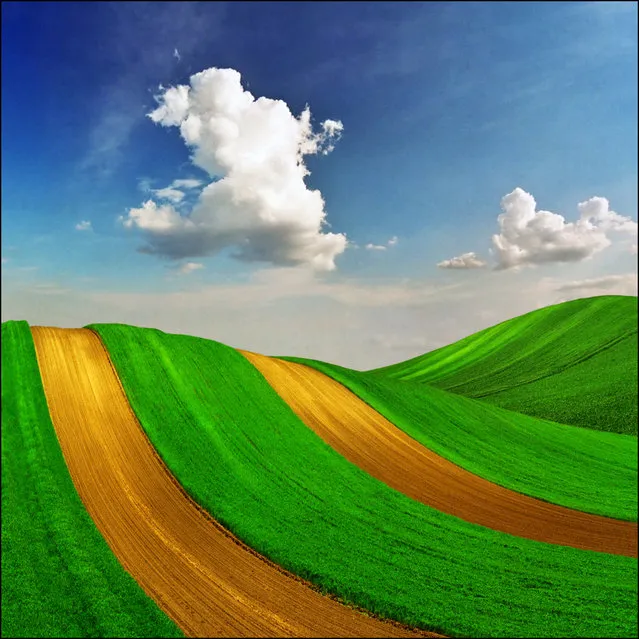
Happy dog (..?) – Pannonian spring fantasy

“I am not a photo reporter, so I don’t feel obligated to honour every detail. What I’m trying to achieve is to emphasize the whole potential of a shot, creating a sight that I'd like if existed.. And since it’s impossible in real life, I do it in virtual :) My work is maybe more similar to ‘photo-painting’ than photography”. – Katarina Stefanović

Photo: Pannonian spring fantasy. (Photo by by Katarina Stefanović)
Details
17 Aug 2012 10:17:00
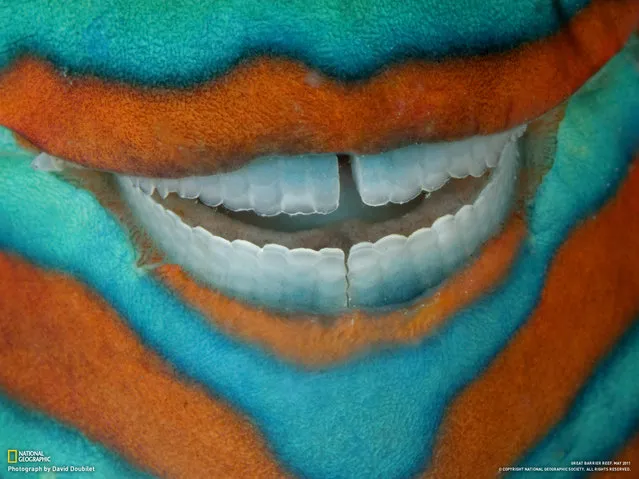
Photographers: David Doubilet

“David Doubilet (born 28 November 1946) is a well known underwater photographer known primarily for his work published in National Geographic Magazine. He was born in New York and started taking photos underwater at the young age of 12. He started with a Brownie Hawkeye in a rubber anesthesiologist's bag to keep the water out of the camera. During his summer holidays, he spent his time along the New Jersey coast. He later worked as a diver and photographer for the Sandy Hook Marine Laboratories in New Jersey. He also spent much time in the Caribbean. While a dive instructor in the Bahamas he found his motivation to capture the beauty of the sea and everything in it”. – Wikipedia. (Photo by David Doubilet/National Geographic)
Details
16 May 2012 12:21:00
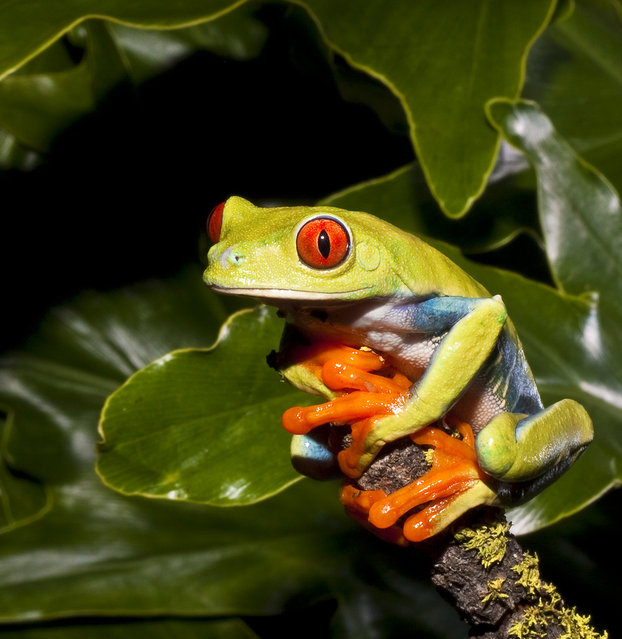
The Red-eyed Treefrog (Agalychnis callidryas)

“The Red-eyed Treefrog (Agalychnis callidryas) is an arboreal hylid native to Neotropical rainforests in Central America. Red-eyed tree frogs, as their name states, have red eyes with vertically narrowed noses, a vibrant green body with yellow and blue vertically striped sides, and orange or yellow webbed feet and toes”. – Wikipedia. (Photo by Donald Quintana)
Details
26 Jun 2012 10:13:00
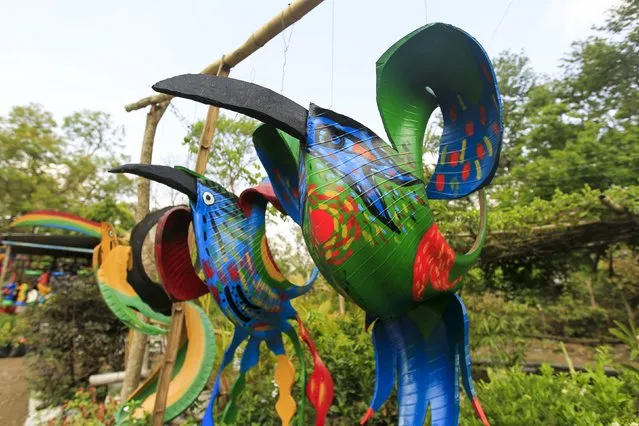
Birds made of recycled tires are displayed in a shop located on the Panamerican highway near Catarina town, May 7, 2015. (Photo by Oswaldo Rivas/Reuters)

Birds made of recycled tires are displayed in a shop located on the Panamerican highway near Catarina town, May 7, 2015. Salazar recycles used tyres to make bird figurines and sofas to sell in his shop located on the Panamerican highway. (Photo by Oswaldo Rivas/Reuters)
Details
10 May 2015 12:49:00
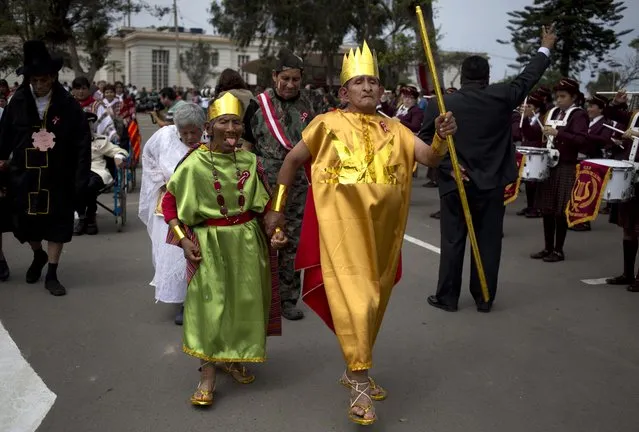
Patients from the Larco Herrera Psychiatric Hospital wear costumes in the likeness of the first governor and founder of the Inca civilization, Manco Capac, right, and his wife Mama Ocllo, during the hospital's Independence Day parade in Lima, Peru, Wednesday, July 22, 2015. (Photo by Martin Mejia/AP Photo)

Patients from the Larco Herrera Psychiatric Hospital wear costumes in the likeness of the first governor and founder of the Inca civilization, Manco Capac, right, and his wife Mama Ocllo, during the hospital's Independence Day parade in Lima, Peru, Wednesday, July 22, 2015. The parade is held on the hospital's campus every year ahead of the Andean nation's official Independence Day celebrations on July 28. (Photo by Martin Mejia/AP Photo)
Details
23 Jul 2015 10:52:00
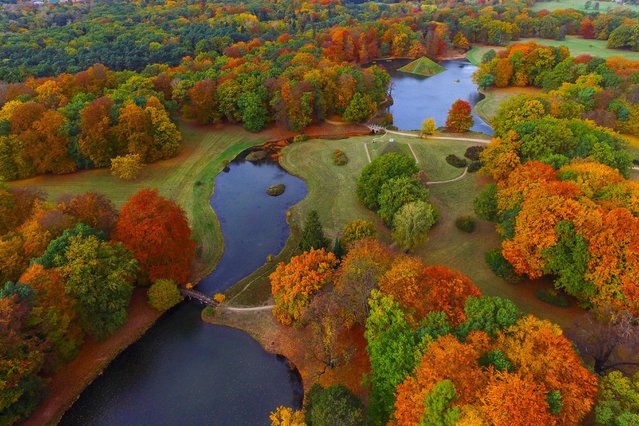
An aerial view taken with a drone shows the autumnally colored Fuerst-Pueckler-Park near Cottbus, eastern Germany, Saturday, October 29, 2016. The park, composed with great sensitivity in the 19th century by Prince Hermann von Pueckler-Muskau, is considered as one of the last great German landscape gardens. (Photo by Patrick Pleul/DPA via AP Photo)

An aerial view taken with a drone shows the autumnally colored Fuerst-Pueckler-Park near Cottbus, eastern Germany, Saturday, October 29, 2016. The park, composed with great sensitivity in the 19th century by Prince Hermann von Pueckler-Muskau, is considered as one of the last great German landscape gardens. (Photo by Patrick Pleul/DPA via AP Photo)
Details
18 Jan 2017 08:01:00