Loading...
Done
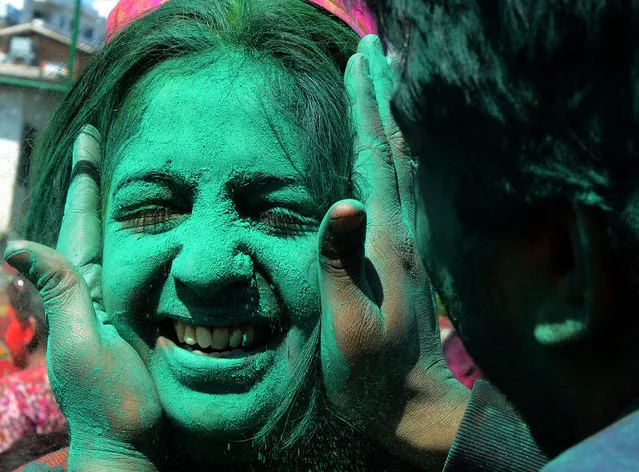
Members of the Nepalese ethnic Madhesi community daub each other's faces with coloured powders during Holi festival celebrations in Kathmandu on March 6, 2015. The Holi festival of colours is a riotous celebration of the coming of spring and falls on the day of the full moon in March every year. AFP PHOTO / PRAKASH MATHEMA        (PRAKASH MATHEMA/AFP/Getty Images)

Members of the Nepalese ethnic Madhesi community daub each other's faces with coloured powders during Holi festival celebrations in Kathmandu on March 6, 2015. The Holi festival of colours is a riotous celebration of the coming of spring and falls on the day of the full moon in March every year. AFP PHOTO / PRAKASH MATHEMA (PRAKASH MATHEMA/AFP/Getty Images)
Details
07 Mar 2015 22:35:00
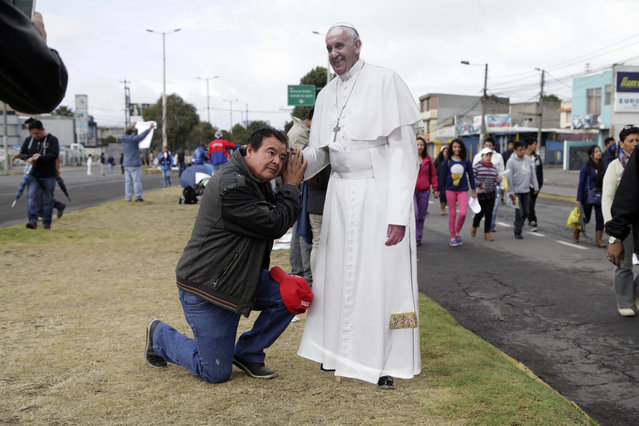
A man poses for a photo with a life size cutout of Pope Francis at Bicentennial Park where the pontiff celebrated Mass for an estimated half-million people, in Quito, Ecuador, Tuesday, July 7, 2015. (Photo by Ana Buitron/AP Photo)

A man poses for a photo with a life size cutout of Pope Francis at Bicentennial Park where the pontiff celebrated Mass for an estimated half-million people, in Quito, Ecuador, Tuesday, July 7, 2015. Francis told an estimated half-million people gathered for the Mass that in a world divide by wars, violence and individualism, Catholics should be “builders of unity”, bringing together hopes and ideals of their people. (Photo by Ana Buitron/AP Photo)
Details
08 Jul 2015 12:14:00
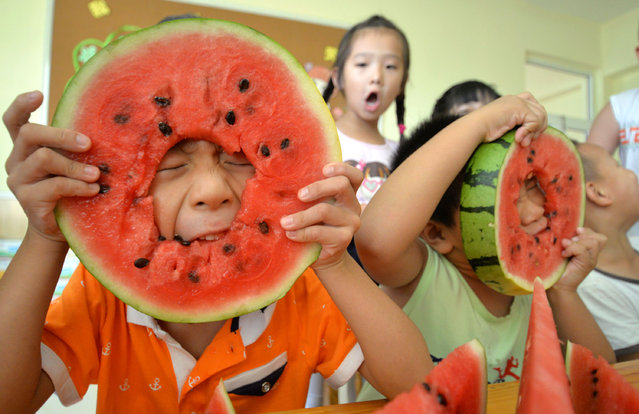
Children eat watermelons to meet the “beginning of autumn” at a kindergarten in Handan, China on August 7, 2015. Chinese tradition to eat watermelons or peaches before that day symbolises “biting away summer”. The solar term ‘beginning of autumn’ falls on 8 August this year. (Photo by Xinhua/REX Shutterstock)

Children eat watermelons to meet the “beginning of autumn” at a kindergarten in Handan, China on August 7, 2015. Chinese tradition to eat watermelons or peaches before that day symbolises “biting away summer”. The solar term ‘beginning of autumn’ falls on 8 August this year. (Photo by Xinhua/REX Shutterstock)
Details
11 Aug 2015 14:29:00
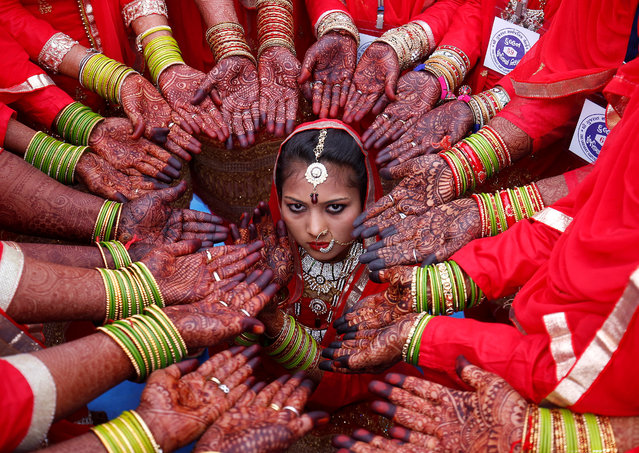
Brides display their hands decorated with henna around a bride as she poses for her own photographer during a mass marriage ceremony in which, according to its organizers, 70 Muslim couples took their wedding vows, in Ahmedabad, India, February 11, 2018. (Photo by Amit Dave/Reuters)

Brides display their hands decorated with henna around a bride as she poses for her own photographer during a mass marriage ceremony in which, according to its organizers, 70 Muslim couples took their wedding vows, in Ahmedabad, India, February 11, 2018. (Photo by Amit Dave/Reuters)
Details
19 Feb 2018 00:01:00
Italian rider Eva Lechner competes in the women's elite race of the “Hotondcross” cyclocross, the competition's fourth stage of the DVV Trofee Cyclocross in Ronse, on December 14, 2019. (Photo by David Stockman/BELGA/AFP Photo)

Italian rider Eva Lechner competes in the women's elite race of the “Hotondcross” cyclocross, the competition's fourth stage of the DVV Trofee Cyclocross in Ronse, on December 14, 2019. (Photo by David Stockman/BELGA/AFP Photo)
Details
16 Dec 2019 00:05:00
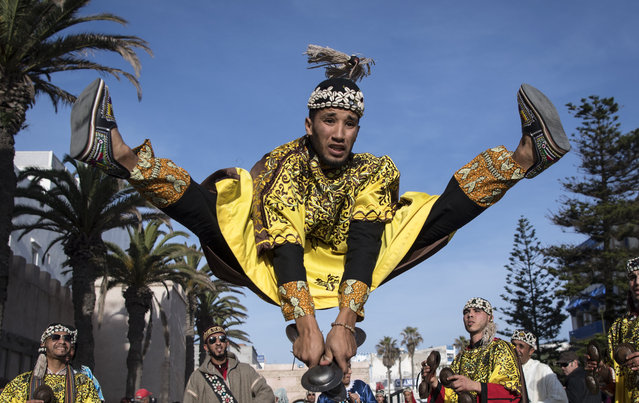
A Gnawa traditional group performs in the city of Essaouira on December 14, 2019, to celebrate the decision of adding the Gnawa culture to UNESCO's list of Intangible Cultural Heritage of Humanity. Gnawa culture, a centuries-old Moroccan practice rooted in music, African rituals and Sufi traditions, was added to UNESCO's list of Intangible Cultural Heritage of Humanity earlier in the week. Gnawa refers to a “set of musical productions, fraternal practices and therapeutic rituals where the secular mixes with the sacred”, according to the nomination submitted by Morocco. Often dressed in colourful outfits, Gnawa musicians play the guenbri, a type of lute with three strings, accompanied by steel castanets called krakebs. (Photo by Fadel Senna/AFP Photo)

A Gnawa traditional group performs in the city of Essaouira on December 14, 2019, to celebrate the decision of adding the Gnawa culture to UNESCO's list of Intangible Cultural Heritage of Humanity. Gnawa culture, a centuries-old Moroccan practice rooted in music, African rituals and Sufi traditions, was added to UNESCO's list of Intangible Cultural Heritage of Humanity earlier in the week. Gnawa refers to a “set of musical productions, fraternal practices and therapeutic rituals where the secular mixes with the sacred”, according to the nomination submitted by Morocco. Often dressed in colourful outfits, Gnawa musicians play the guenbri, a type of lute with three strings, accompanied by steel castanets called krakebs. (Photo by Fadel Senna/AFP Photo)
Details
18 Dec 2019 00:05:00
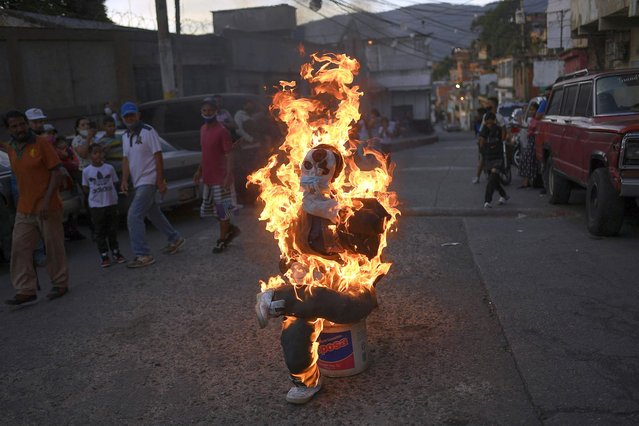
An effigy representing Judas Iscariot burns as some people wearing masks watch during Holy Week in the Catia neighborhood of Caracas, Venezuela, Sunday, April 4, 2021. The Burning of Judas is an Easter-time ritual in many communities, where an effigy of Judas Iscariot is hanged on Good Friday, then burned on Easter Sunday. (Photo by Matias Delacroix/AP Photo)

An effigy representing Judas Iscariot burns as some people wearing masks watch during Holy Week in the Catia neighborhood of Caracas, Venezuela, Sunday, April 4, 2021. The Burning of Judas is an Easter-time ritual in many communities, where an effigy of Judas Iscariot is hanged on Good Friday, then burned on Easter Sunday. (Photo by Matias Delacroix/AP Photo)
Details
22 Apr 2021 09:53:00
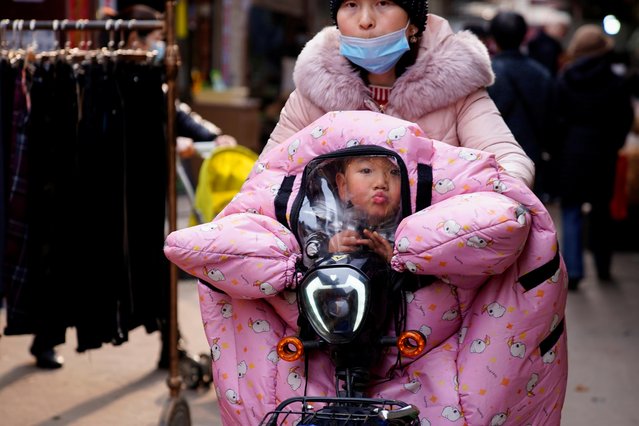
A woman wearing a face mask rides a bicycle with a child, following an outbreak of the coronavirus disease (COVID-19) in Wuhan, Hubei province, China on February 8, 2021. (Photo by Aly Song/Reuters)

A woman wearing a face mask rides a bicycle with a child, following an outbreak of the coronavirus disease (COVID-19) in Wuhan, Hubei province, China on February 8, 2021. (Photo by Aly Song/Reuters)
Details
16 Feb 2021 09:59:00