Loading...
Done
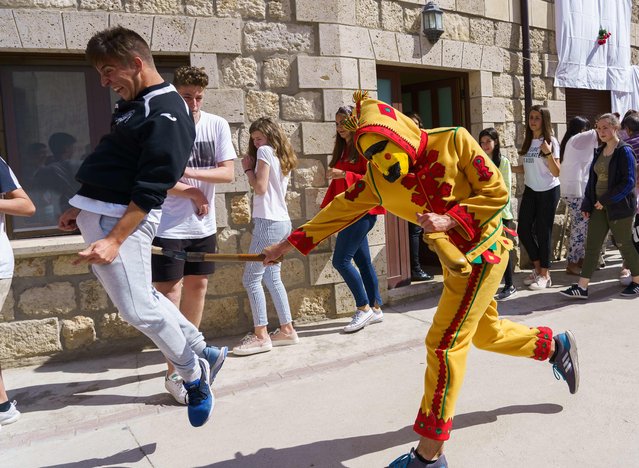
A “colacho” (a person dressed up as a devil) chases people during “El salto del Colacho”, the baby jumping festival in the village of Castrillo de Murcia, near Burgos on June 3, 2018. (Photo by Cesar Manso/AFP Photo)

A “colacho” (a person dressed up as a devil) chases people during “El salto del Colacho”, the baby jumping festival in the village of Castrillo de Murcia, near Burgos on June 3, 2018. (Photo by Cesar Manso/AFP Photo)
Details
05 Jun 2018 10:24:00
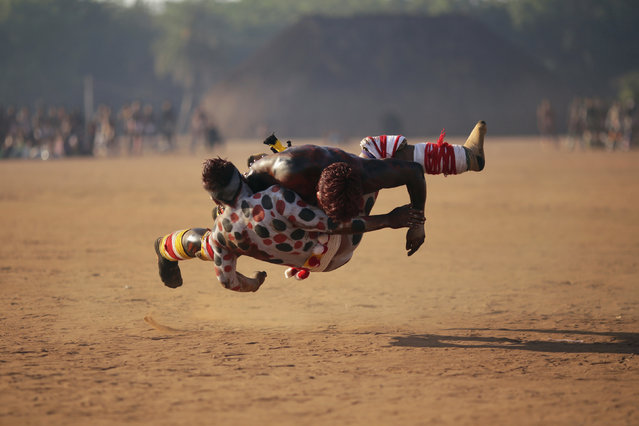
Waura Indians wrestle during this year's “quarup”, a ritual held over several days to honour in death a person of great importance to them, in Xingu National Park, Mato Grosso State, Brazil August 25, 2013. (Photo by Ueslei Marcelino/Reuters)

Waura Indians wrestle during this year's “quarup”, a ritual held over several days to honour in death a person of great importance to them, in Xingu National Park, Mato Grosso State, Brazil August 25, 2013. (Photo by Ueslei Marcelino/Reuters)
Details
09 Aug 2015 10:26:00
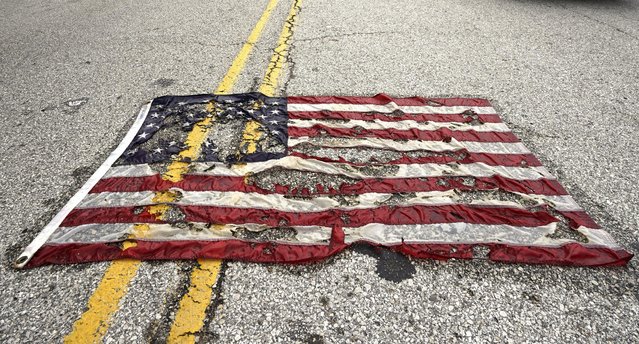
A partially burned American flag lies on the street near the spot where Michael Brown was killed before an event to mark the one year anniversary of his killing in Ferguson, Missouri August 9, 2015. (Photo by Rick Wilking/Reuters)

A partially burned American flag lies on the street near the spot where Michael Brown was killed before an event to mark the one year anniversary of his killing in Ferguson, Missouri August 9, 2015. (Photo by Rick Wilking/Reuters)
Details
10 Aug 2015 08:38:00
A man enters an adult amusement establishment in Shinjuku's nightlife district of Kabukicho in Tokyo, August 27, 2015. (Photo by Thomas Peter/Reuters)

A man enters an adult amusement establishment in Shinjuku's nightlife district of Kabukicho in Tokyo, August 27, 2015. (Photo by Thomas Peter/Reuters)
Details
28 Aug 2015 11:19:00
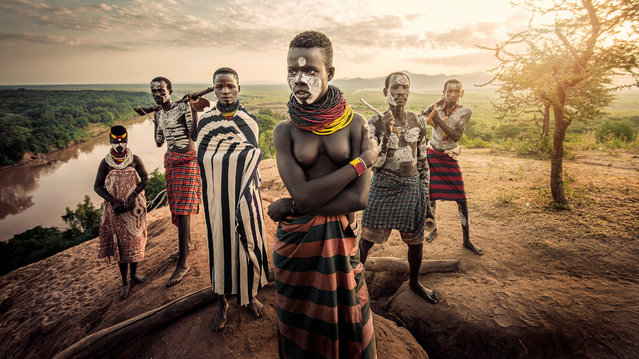
“People of the River”. This is a Karo tribe family; father, mother, two sisters and two brothers. The tribe, who live along the Omo River in east Africa, incorporate rich symbolism into their rituals by using ornate body art, headdresses and body scarification to express beauty and significance. (Photo by Jatenipat Ketpradit/International Portrait Photographer of the Year)

“People of the River”. This is a Karo tribe family; father, mother, two sisters and two brothers. The tribe, who live along the Omo River in east Africa, incorporate rich symbolism into their rituals by using ornate body art, headdresses and body scarification to express beauty and significance. (Photo by Jatenipat Ketpradit/International Portrait Photographer of the Year)
Details
04 Jul 2021 09:39:00
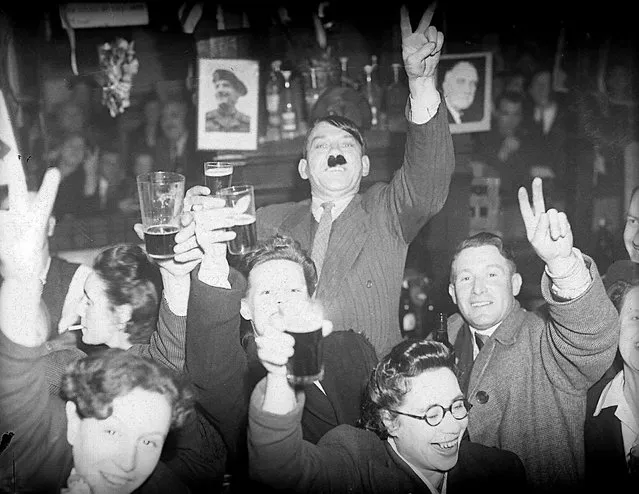
Victory day celebrations in Lambeth London on May 8, 1945 as man dresses up as Hitler in a pub saluting with beer. (Photo by Trinity Mirror/Mirrorpix/Alamy Stock Photo)

Victory day celebrations in Lambeth London on May 8, 1945 as man dresses up as Hitler in a pub saluting with beer. (Photo by Trinity Mirror/Mirrorpix/Alamy Stock Photo)
Details
09 May 2020 00:03:00
Sheep are herded during the annual sheep parade through Madrid November 2, 2014. (Photo by Susana Vera/Reuters)

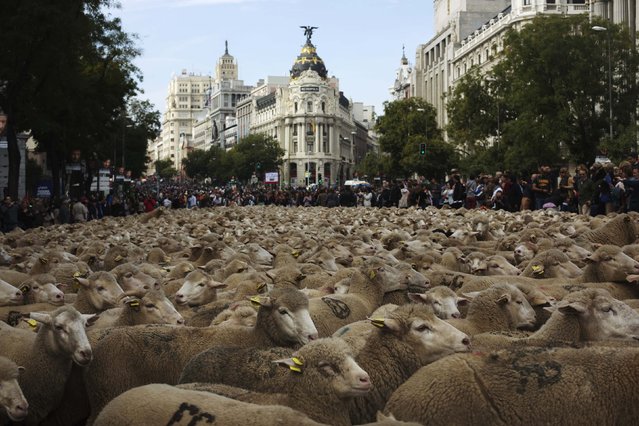
Sheep are herded during the annual sheep parade through Madrid November 2, 2014. Shepherds parade the sheep through the city every year in order to exercise their right to use traditional routes to migrate their livestock from northern Spain to winter grazing pasture land in southern Spain. (Photo by Susana Vera/Reuters)
Details
03 Nov 2014 12:23:00
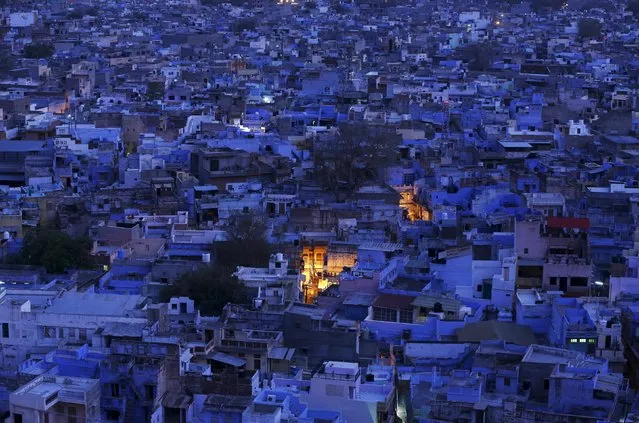
A general view of the residential area is pictured during dusk at Jodhpur in Rajasthan, April 5, 2015. Jodhpur, also known as the blue city in the desert Indian state of Rajasthan, which residents say originally, was used to show where the highest caste of priestly Hindus live, who wanted to set them apart from the rest of the population. Later the rest of the population followed suit. Another reason for the city to be blue is to keep the buildings cool during the summers, local residents said. (Photo by Adnan Abidi/Reuters)

A general view of the residential area is pictured during dusk at Jodhpur in Rajasthan, April 5, 2015. Jodhpur, also known as the blue city in the desert Indian state of Rajasthan, which residents say originally, was used to show where the highest caste of priestly Hindus live, who wanted to set them apart from the rest of the population. Later the rest of the population followed suit. Another reason for the city to be blue is to keep the buildings cool during the summers, local residents said. (Photo by Adnan Abidi/Reuters)
Details
12 Apr 2015 08:27:00