Loading...
Done
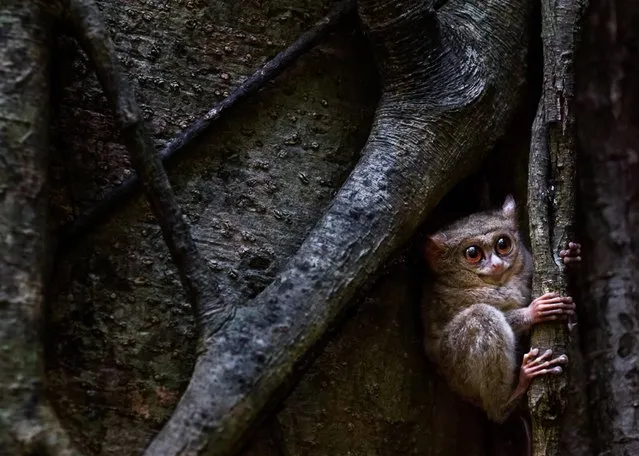
“Spectral Tarsier”. Tangkoko, Northern Sulawesi, Indonesia: Spectral tarsier by Wolfgang Weinhardt. (Photo and caption by Wolfgang Weinhardt/UK Society of Biology Photography Award 2014)

From rural life in India to a chick growing inside its embryo and a sea turtle eating a purple jellyfish, the Society of Biology has released their stunning photography competition shortlist. Here: “Spectral Tarsier”. Tangkoko, Northern Sulawesi, Indonesia: Spectral tarsier by Wolfgang Weinhardt. (Photo and caption by Wolfgang Weinhardt/UK Society of Biology Photography Award 2014)
Details
06 Oct 2014 09:20:00
A decades-old television. (Photo by Mark C. O'Flaherty)

The official name for this tiny speck of land – the size of 12 football pitches – is Hashima, but few call it that. In English, its most commonly used name means “Battleship Island” and, viewed from a certain angle offshore, its silhouette is uncannily dreadnought in nature. It was a mining facility until 1974, when it was abandoned to the elements, before partially reopening as a tourist attraction in 2009. Photo: A decades-old television. (Photo by Mark C. O'Flaherty)
Details
15 Jun 2014 11:24:00
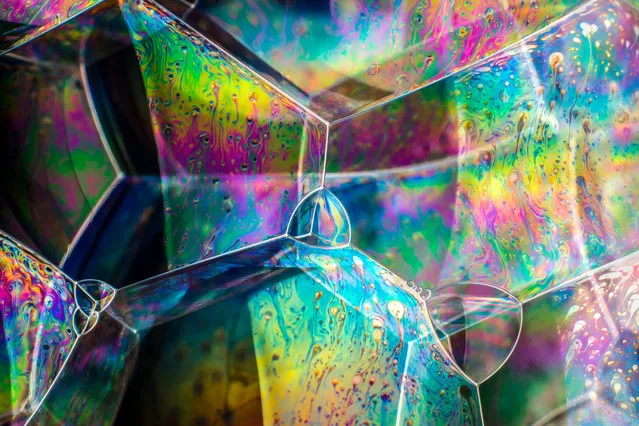
Soap Bubble Structures by Kym Cox. Bubbles optimise space and minimise their surface area for a given volume of air. This phenomenon makes them a useful tool in many areas of research, in particular, materials science and ‘packing’ – how things fit together. Bubble walls drain under gravity, thin at the top, thick at the bottom, which interferes with travelling lightwaves to create bands of colour. Black spots show the wall is too thin for interference colours, indicating the bubble is about to burst. (Photo by Kym Cox/2019 Science Photographer of the Year/RPS)

Soap Bubble Structures by Kym Cox. Bubbles optimise space and minimise their surface area for a given volume of air. This phenomenon makes them a useful tool in many areas of research, in particular, materials science and “packing” – how things fit together. Bubble walls drain under gravity, thin at the top, thick at the bottom, which interferes with travelling lightwaves to create bands of colour. Black spots show the wall is too thin for interference colours, indicating the bubble is about to burst. (Photo by Kym Cox/2019 Science Photographer of the Year/RPS)
Details
15 Aug 2019 00:03:00
People take a selfie as the sun sets over Manhattan aligned exactly with the streets in a phenomenon known as “Manhattanhenge”, in New York City, U.S., July 11, 2016. (Photo by Mark Kauzlarich/Reuters)

People take a selfie as the sun sets over Manhattan aligned exactly with the streets in a phenomenon known as “Manhattanhenge”, in New York City, U.S., July 11, 2016. (Photo by Mark Kauzlarich/Reuters)
Details
13 Jul 2016 14:04:00
Performers wait for delegations to arrive for traditional nomadic Naadam festival performance during the Asia-Europe Meeting (ASEM) summit just outside Ulaanbaatar, Mongolia, July 15, 2016. (Photo by Damir Sagolj/Reuters)

Performers wait for delegations to arrive for traditional nomadic Naadam festival performance during the Asia-Europe Meeting (ASEM) summit just outside Ulaanbaatar, Mongolia, July 15, 2016. (Photo by Damir Sagolj/Reuters)
Details
16 Jul 2016 09:01:00
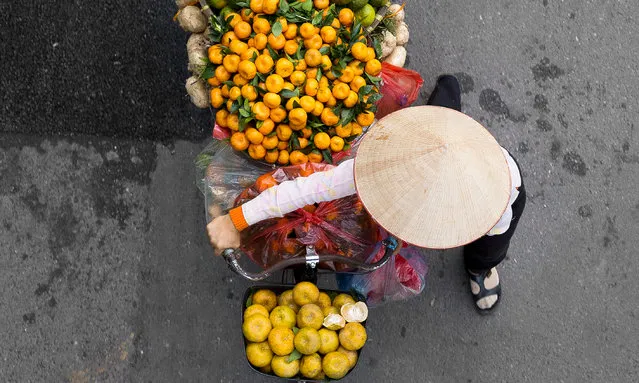
Photographer Loes Heerink spent hours waiting on bridges in Hanoi to capture the street vendors who walked underneath. She recently launched a Kickstarter project to publish a book of these images. Here: “In Hanoi there are a lot of street vendors who roam the city with their bicycles trying to sell goods, from vegetables to flowers”. (Photo by Loes Heerink/The Guardian)

Photographer Loes Heerink spent hours waiting on bridges in Hanoi to capture the street vendors who walked underneath. She recently launched a Kickstarter project to publish a book of these images. Here: “In Hanoi there are a lot of street vendors who roam the city with their bicycles trying to sell goods, from vegetables to flowers”. (Photo by Loes Heerink/The Guardian)
Details
05 Nov 2016 12:16:00
Before heading up to Alaska, the ship loads up with 3 months worth of food. Even so, it's hardly necessary. The ship's cook is constantly steaming fresh crab legs and seafood caught during the day. The hard labour of fishing requires a diet heavy in fat, protein, and omega-3s. Here, a sea lion gets a bite of the grub. (Photo by Corey Arnold)

In 2002 photographer Corey Arnold left behind a poor economy in San Francisco and headed up to Alaska to try his luck at his longtime passion of fishing. Arnold, who had worked summers during college on a salmon boat in Alaska, signed onto the f/v Rollo, a crabbing boat that fishes in the dangerous Bering Sea. While working long, strenuous hours on the Rollo, Arnold often stole away with the captain’s permission to grab his camera and photograph the crew and the ship. Arnold eventually put together “Fish Work: Bering Sea”, a documentation of his seven adventurous and dicey crab seasons aboard the Rollo. (Photo by Corey Arnold)
Details
20 Aug 2014 10:05:00
In a military base in the Thai province of Chon Buri February 20 U.S. Marines Navy with Thailand began their studies in jungle survival. The event is held in joint military exercises “Cobra Gold 2013”. During a jungle survival program February 20, 2013 taught by Royal Thai Special Forces in Sannapit, Thailand, U.S. Marines learned to catch cobras and drink their fresh blood, not to mention eat forest insects and pull the heads off of chicken. The training was part of Operation Cobra Gold 13, the 32nd edition of international military exercises hosted by the Thai. According to a U.S. Marines press release, Cobra Gold is the largest exercise of its kind in Asia and incorporates troops from five other nations in addition to the U.S. and Thailand. The Daily Mail reports that the Marines were invited to experience the local custom of drinking cobra blood after being taught to catch and kill cobras in the wild. As CNN notes, Cobra blood is believed to be a panacea and aphrodiasic in parts of Southeast Asia. In Jakarta, vendors can earn over $100 a night selling shots of cobra blood mixed with liquor. (Photo by Pornchai Kittiwongsakul/AFP Photo)

During a jungle survival program February 20, 2013 taught by Royal Thai Special Forces in Sannapit, Thailand, U.S. Marines learned to catch cobras and drink their fresh blood, not to mention eat forest insects and pull the heads off of chicken. The training was part of Operation Cobra Gold 13, the 32nd edition of international military exercises hosted by the Thai. According to a U.S. Marines press release, Cobra Gold is the largest exercise of its kind in Asia and incorporates troops from five other nations in addition to the U.S. and Thailand. The Daily Mail reports that the Marines were invited to experience the local custom of drinking cobra blood after being taught to catch and kill cobras in the wild. As CNN notes, Cobra blood is believed to be a panacea and aphrodiasic in parts of Southeast Asia. In Jakarta, vendors can earn over $100 a night selling shots of cobra blood mixed with liquor. (Photo by Pornchai Kittiwongsakul/AFP Photo)
Details
23 Feb 2013 11:52:00