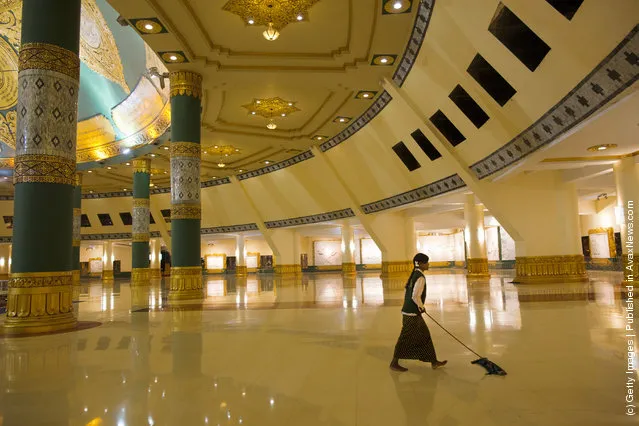
A Burmese worker sets up Christmas lights inside a woman's clothing store inside a shopping mall December 6, 2011 in Nay Pyi Taw, Myanmar. (Photo by Paula Bronstein/Getty Images)
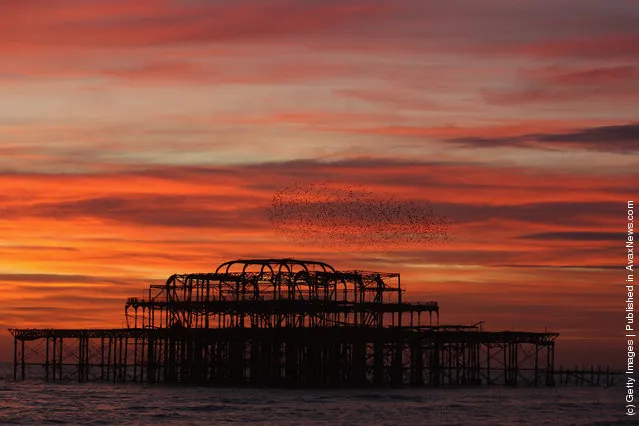
Starlings come home to roost on Brighton's Old Pier as the sun sets on December 21, 2011 in Brighton, England. December 21 marks the winter solstice, the shortest day of the year. (Photo by Dan Kitwood/Getty Images)
(L-R) Actors Oscar Sinela, Luis Fernandez, Ursula Corbero, Amaia Salamanca, Maxi Iglesias and Alba Ribas attend “XP3D” premiere at the Callao cinema on December 27, 2011 in Madrid, Spain. (Photo by Carlos Alvarez/Getty Images)
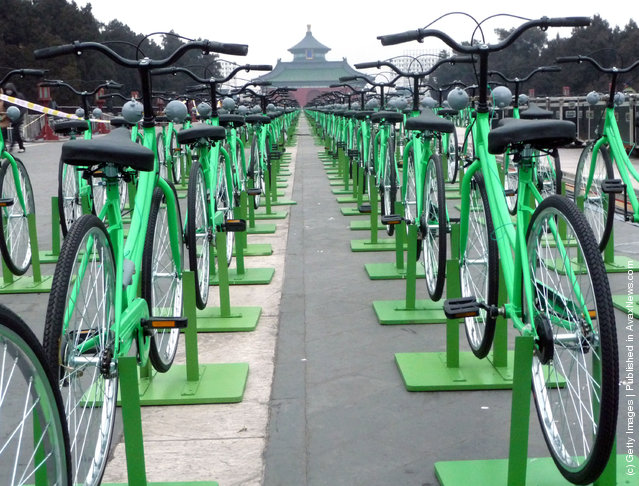
Hundreds of green bicycles are prepared as 960 of them await riders for the new year gala at the Temple of Heaven Park on December 29, 2011 in Beijing, China. Annual New Year countdown ceremony will be held at the park on December 31. (Photo by ChinaFotoPress/ChinaFotoPress via Getty Images)
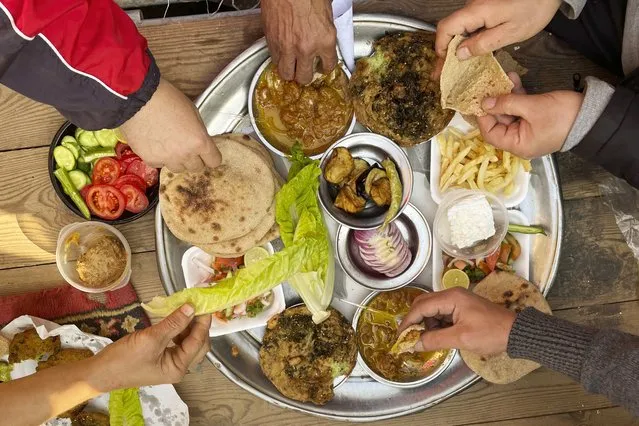
Egyptian workers eat on a truck in Cairo, Egypt, Sunday, January 22, 2023. Egypt is in an economic crisis is partly caused by the yearlong grinding Russian invasion of Ukraine. But the conflict in Europe has also exposed the frailties of an economy suffering from decades of mismanagement, turmoil from its 2011 Arab Spring popular uprising, years of militant attacks and then, the coronavirus pandemic. (Photo by Amr Nabil/AP Photo)
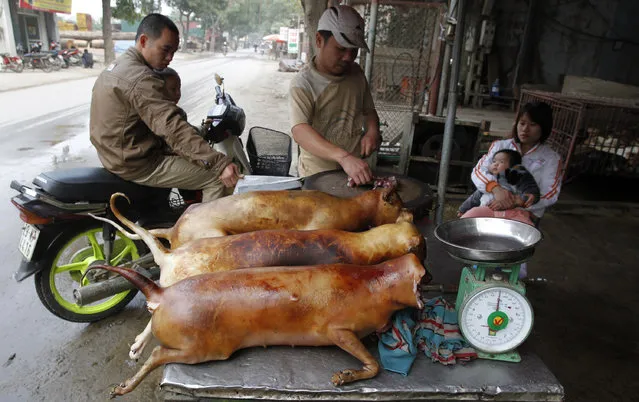
A vendor (C) cuts slaughtered dogs for sale at his roadside stall in Duong Noi village, outside Hanoi December 16, 2011. While animal rights activists have condemned eating dog meat as cruel treatment of the animals, it is still an accepted popular delicacy for some Vietnamese, as well in some other Asian countries. Duong Noi is well-known as a dog-meat village, where hundreds of dogs are killed each day for sale as popular traditional food. Dog-eating as a custom is rooted in Vietnam and was developed as a result of poverty. One kilogram of dog meat costs about 130,000 dongs ($6.2). (Photo by Reuters/Kham)
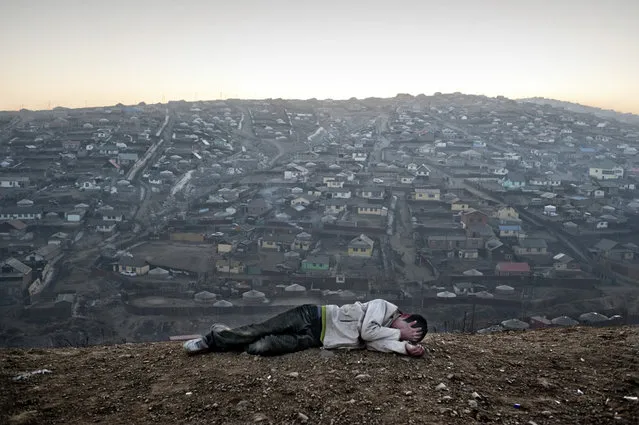
“Environmental Migrants: The Last Illusion” by photographer Alessandro Grassani, documents the life of people in Kenya, Mongolia and Bangladesh who migrate to escape environmental stresses to the city of their own countries in hopes for a better life. Here: Asia, Mongolia, March 27, 2011. A view of Ulaan Baator over the shoulder of a slumbering drunk. Alcoholism is a huge problem in the city, home to almost half of Mongolia's people. The capital's population has doubled in the past two years. High levels of unemployment and poverty await herders who abandon rural areas and arrive in the city, illiterate and untrained in any skills necessary for urban jobs. (Photo by Alessandro Grassani)
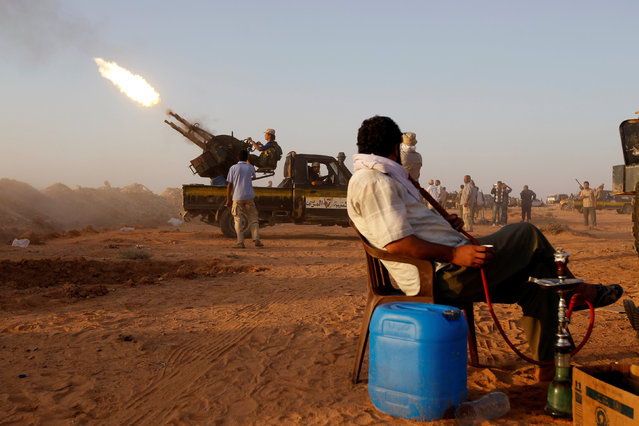
An anti-Gaddafi fighter tests an anti-aircraft gun southwest of Sirte, Libya one of Muammar Gaddafi's last remaining strongholds, September 16, 2011. A timeline of images dating from 2010 from Sirte, Libya, the home town of deposed Libyan leader Muammar Gaddafi. Libyan forces battling Islamic State in the city of Sirte say they have defeated the militant group after months of street to street fighting backed by U.S. air strikes. Islamic State took control of the city more than a year ago and set up its main base outside Syria and Iraq. (Photo by Goran Tomasevic/Reuters)