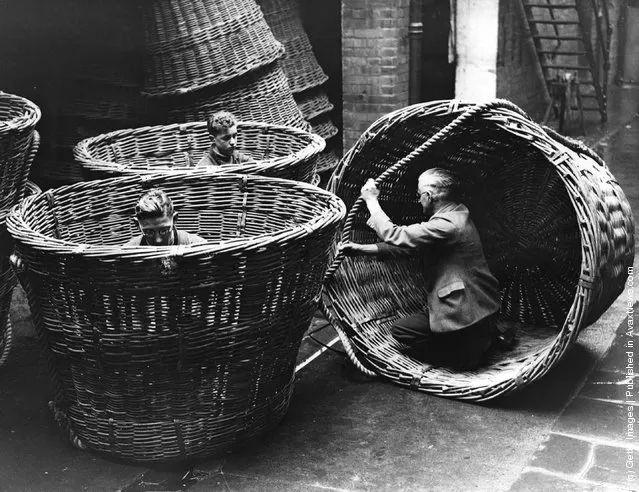
Men at work at the Cardiff Institute, making huge baskets, unique in size and construction, for loading oil cake in South Africa. (Photo by Maeers/Getty Images). 1938
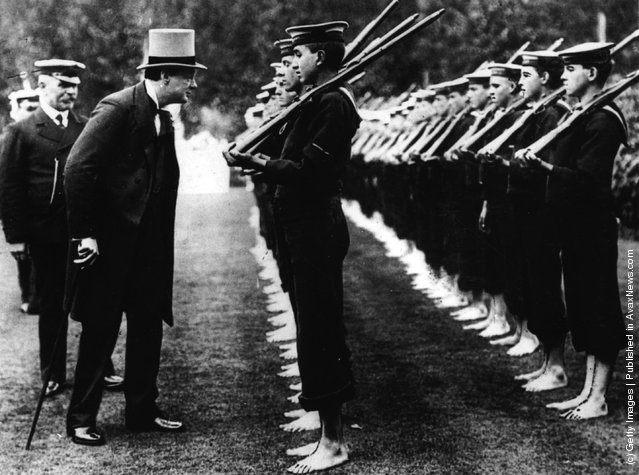
Winston Leonard Spencer Churchill (1874–1965), British Statesman and Prime Minister inspecting the boys from a training ship. (Photo by Hulton Archive/Getty Images). 1912
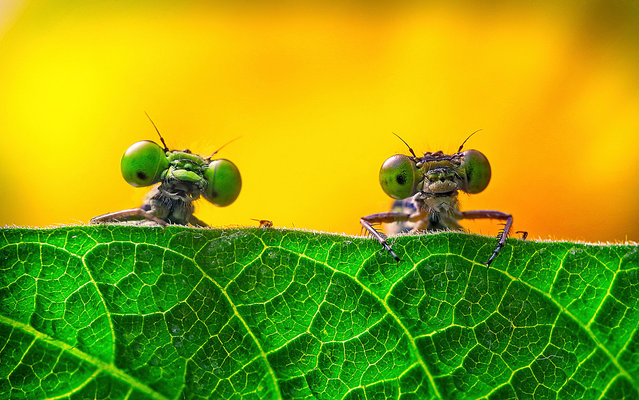
Shortlisted: “Two big eyes” by Miao Yong (Zejiang province, China). Damselflies look over the leaves. “I was photographing insects in a park near my home when suddenly I found two damselflies in the grass. They kept flying and it was very difficult to focus until suddenly they parked behind a leaf”. (Photo by Miao Yong/2017 Royal Society of Biology Photographer of the Year)
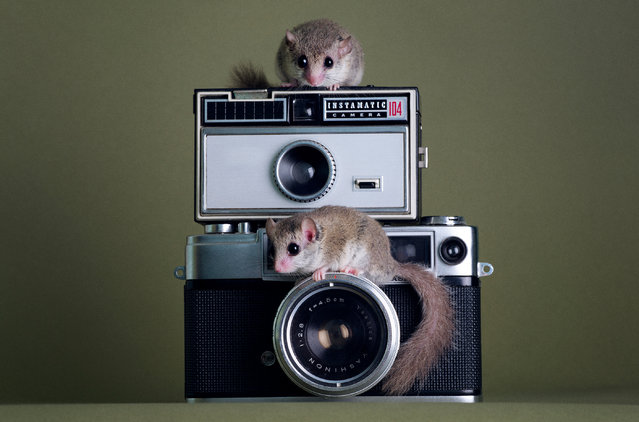
David Yeo’s photography places naturally small species alongside animals that have been selectively bred to be tiny and cute. Here: “The most difficult aspect of this shoot was to get each African pygmy dormouse – also known as micro squirrels – on to a separate camera. Once in place, they needed to remain still long enough to get them both in the frame and looking at me. Often solitary, they naturally wanted to move away”. (Photo by David Yeo/Leica Studio Mayfair/The Guardian)
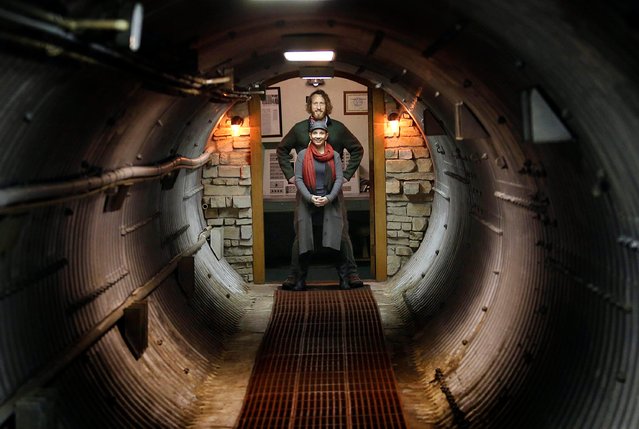
In this November 2, 2017 photo, Mathew Fulkerson and his wife Leigh Ann pose at their Subterra Airbnb located in a former underground missile silo base near Eskridge, Kan. It was designed to house a nuclear warhead six decades ago – but now, this Cold War silo is the perfect spot for a mini break at just $133 a night. (Photo by Thad Allton/The Topeka Capital-Journal via AP Photo)
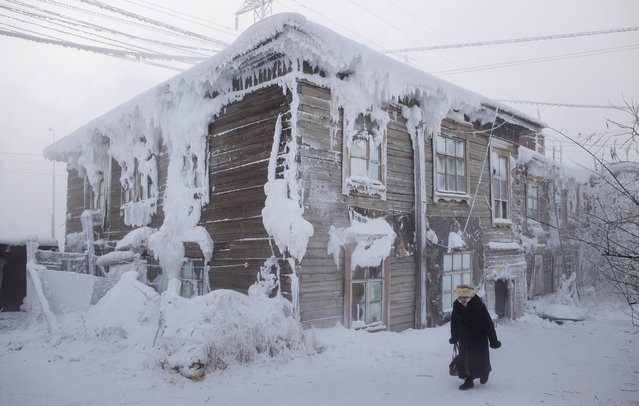
Yakutsk, with a population of around 270,000, holds its own title: that of the coldest city on Earth. Here: Frost-encrusted house in the city centre. (Photo by Amos Chapple/Courtesy Images/RFE/RL)
Vladimir Mogilnikov, 62, washes his hands in a communal washing room in a dormitory for the workers of Proletarka textile factory in the town of Tver, 200 kilometres north-west from Moscow on August 8, 2020. (Photo by Andrey Borodulin/AFP Photo)
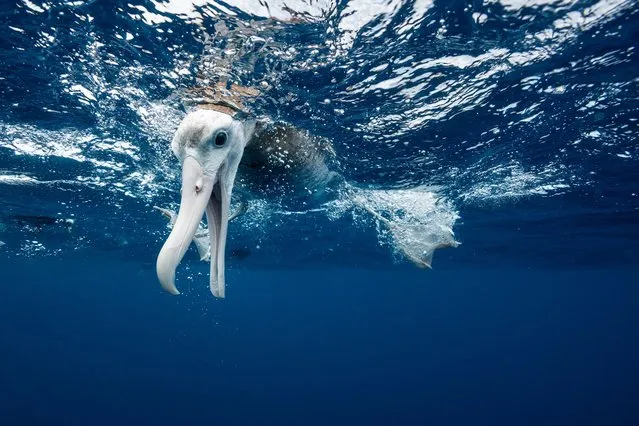
The endangered antipodean albatross, which is often caught in fishing nets, won most first-choice votes out of the more than 55,000 votes cast during the 2020 New Zealand’s bird of the year competition. (Photo by Wildestanimal/Getty Images)