Loading...
Done
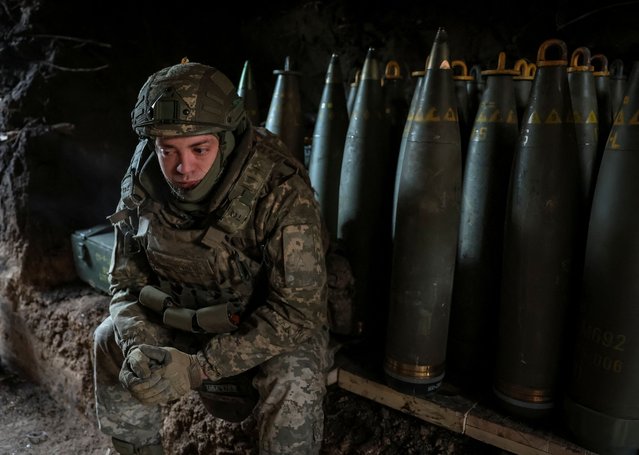
A serviceman of the 148th Separate Artillery Zhytomyr Brigade of the Armed Forces of Ukraine sits near shells as he and a soldier await command to fire a M777 Howitzer towards Russian troops at a position in a front line, amid Russia's attack on Ukraine, in Donetsk region, Ukraine, on February 8, 2025. (Photo by Anatolii Stepanov/Reuters)

A serviceman of the 148th Separate Artillery Zhytomyr Brigade of the Armed Forces of Ukraine sits near shells as he and a soldier await command to fire a M777 Howitzer towards Russian troops at a position in a front line, amid Russia's attack on Ukraine, in Donetsk region, Ukraine, on February 8, 2025. (Photo by Anatolii Stepanov/Reuters)
Details
19 Feb 2025 03:49:00
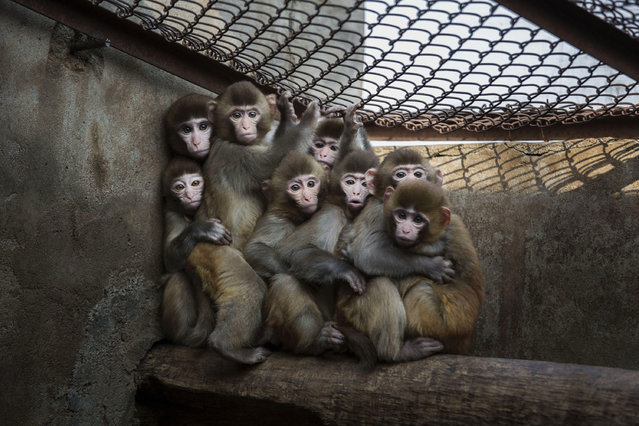
Macaque monkeys crowd together in their cage at a monkey farm on February 3, 2016 in Xinye county, Henan province, China. The area boasts a centuries-long and lucrative history of raising and training monkeys for performance. In Xinye, villagers are seeing an increase in business with the lunar calendar's “Year of the Monkey”. Farmers say most of the monkeys are bred and raised for domestic zoos, circuses, and performing groups, but add that some are also sold for medical research in China and the United States. Despite the popularity of the tradition, critics contend the training methods and conditions constitute animal cruelty. (Photo by Kevin Frayer/Getty Images)

Macaque monkeys crowd together in their cage at a monkey farm on February 3, 2016 in Xinye county, Henan province, China. The area boasts a centuries-long and lucrative history of raising and training monkeys for performance. In Xinye, villagers are seeing an increase in business with the lunar calendar's “Year of the Monkey”. Farmers say most of the monkeys are bred and raised for domestic zoos, circuses, and performing groups, but add that some are also sold for medical research in China and the United States. Despite the popularity of the tradition, critics contend the training methods and conditions constitute animal cruelty. (Photo by Kevin Frayer/Getty Images)
Details
31 Dec 2016 09:56:00
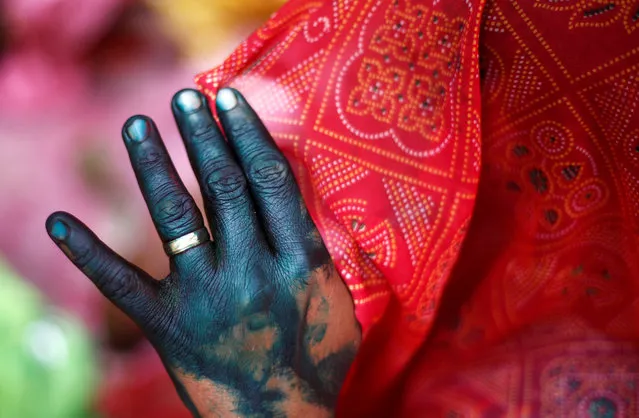
A woman holds her veil as she takes part in Huranga, a game played between men and women a day after Holi, at Dauji temple near Mathura, March 3, 2018. (Photo by Adnan Abidi/Reuters)

A woman holds her veil as she takes part in Huranga, a game played between men and women a day after Holi, at Dauji temple near Mathura, March 3, 2018. (Photo by Adnan Abidi/Reuters)
Details
12 Mar 2018 00:03:00
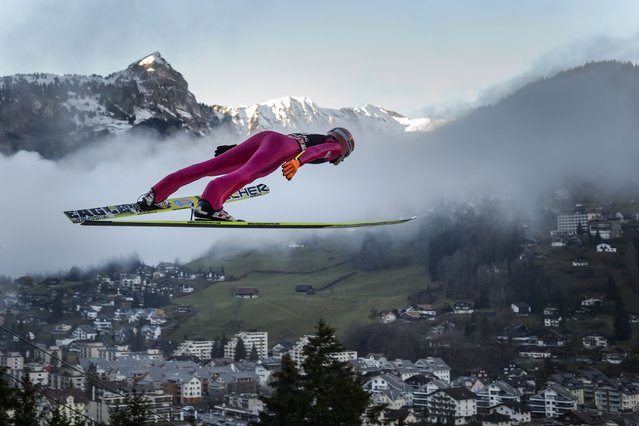
Poland's Dawid Kubacki soars through the air during the men's FIS Ski Jumping World Cup competition in Engelberg, central Switzerland, on December 20, 2014. (Photo by Fabrice Coffrini/AFP Photo)

Poland's Dawid Kubacki soars through the air during the men's FIS Ski Jumping World Cup competition in Engelberg, central Switzerland, on December 20, 2014. (Photo by Fabrice Coffrini/AFP Photo)
Details
27 Dec 2014 12:11:00
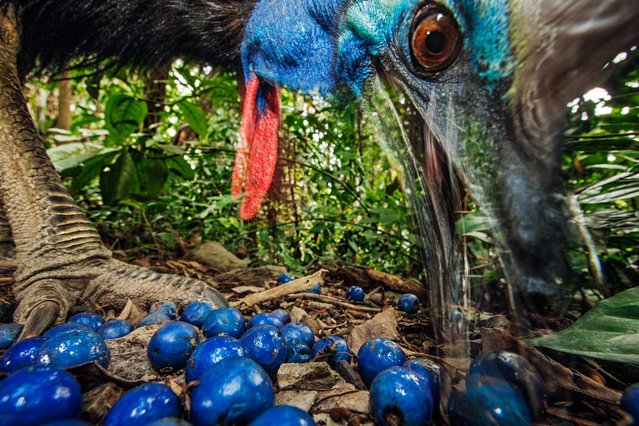
“Cassowaries are large, flightless birds related to emus and (more distantly) to ostriches, rheas, and kiwis”, writes Olivia Judson in the September issue of National Geographic magazine. (Photo by Christian Ziegler/National Geographic)

“Cassowaries are large, flightless birds related to emus and (more distantly) to ostriches, rheas, and kiwis”, writes Olivia Judson in the September issue of National Geographic magazine. How large? People-size: Adult males stand well over five foot five and top 110 pounds. Females are even taller, and can weigh more than 160 pounds. Dangerous when roused, they’re shy and peaceable when left alone. But even birds this big and tough are prey to habitat loss. The dense New Guinea and Australia rain forests where they live have dwindled. Today cassowaries might number 1,500 to 2,000. And because they help shape those same forests – by moving seeds from one place to another – “if they vanish”, Judson writes, “the structure of the forest would gradually change” too. (Photo by Christian Ziegler/National Geographic)

Details
06 Jan 2014 12:21:00
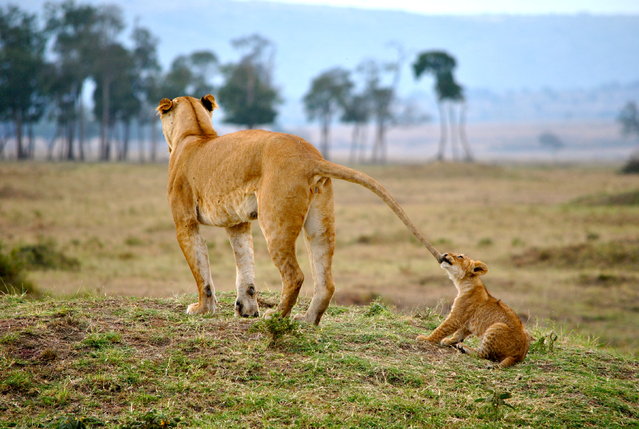
“A Mothers Tail”. A baby cub pulls on his mother's tail to get attention. Photo location: Masai Mara, Kenya. (Photo and caption by Tori Marsh/National Geographic Photo Contest)

“A Mothers Tail”. A baby cub pulls on his mother's tail to get attention. Photo location: Masai Mara, Kenya. (Photo and caption by Tori Marsh/National Geographic Photo Contest)
Details
21 Oct 2014 12:40:00
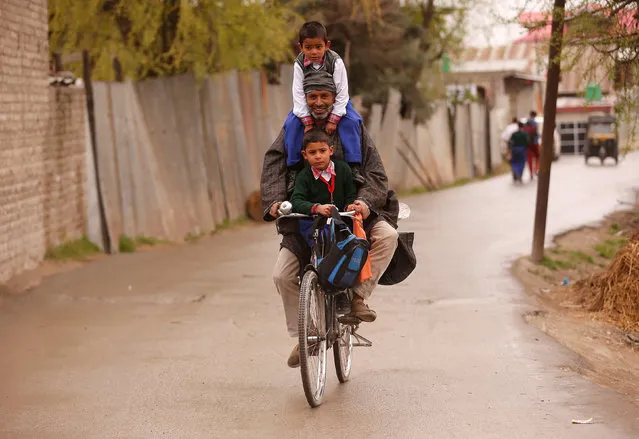
A man carries schoolchildren on his bicycle on a road in Srinagar, March 28, 2017. (Photo by Danish Ismail/Reuters)

A man carries schoolchildren on his bicycle on a road in Srinagar, March 28, 2017. (Photo by Danish Ismail/Reuters)
Details
02 Apr 2017 10:21:00
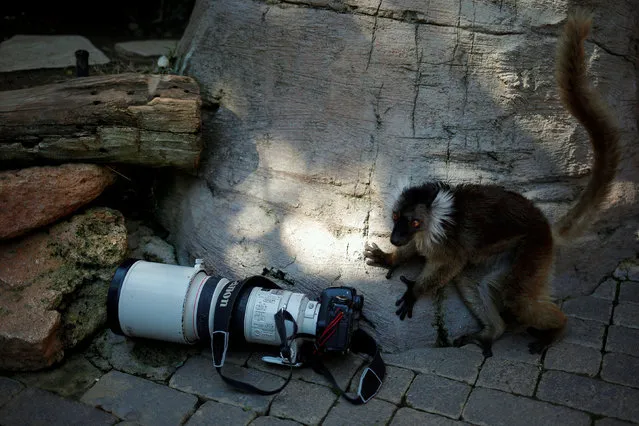
A female black lemur (Eulemur macaco), looks at a camera in its enclosure at Bioparc Fuengirola in Fuengirola, near Malaga, southern Spain, February 8, 2017. (Photo by Jon Nazca/Reuters)

A female black lemur (Eulemur macaco), looks at a camera in its enclosure at Bioparc Fuengirola in Fuengirola, near Malaga, southern Spain, February 8, 2017. (Photo by Jon Nazca/Reuters)
Details
12 Feb 2017 00:02:00