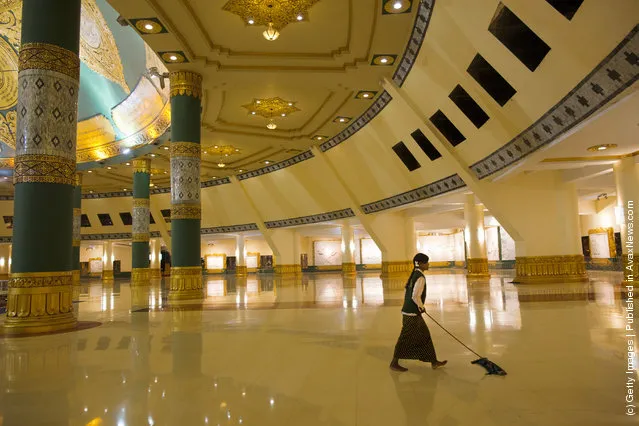
A Burmese worker sets up Christmas lights inside a woman's clothing store inside a shopping mall December 6, 2011 in Nay Pyi Taw, Myanmar. (Photo by Paula Bronstein/Getty Images)
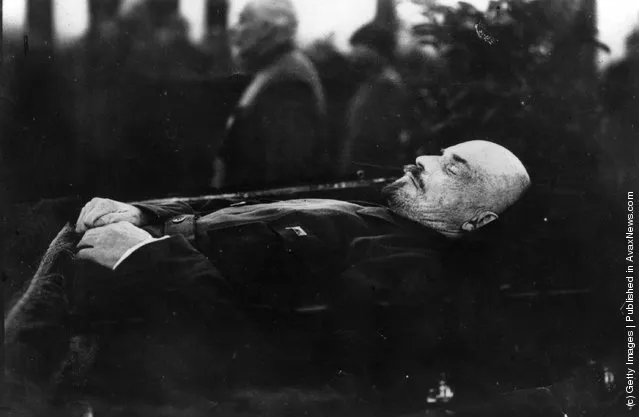
Photo: Vladimir Ilyich Lenin (1870 – 1924) lying in state in the Kremlin. (Photo by Hulton Archive/Getty Images). 1924
Important! For the same article in Russian language click here.
Something quite intriguing is happening within Russian-speaking internet during the last few – should you type a fully academic inquiry (at least, according to Russian academic requirements) in national search engines for "Lenin's mausoleum" – the first thing you get (even in top 10 searches) is website pages talking about black magic and occult. Website authors view this construction differently, but unconditionally agree on one thing: the mausoleum of the "leader of the world proletariat” – the essence of a magical artifact, a sort of “energy vampire”. It was built with a certain purpose: to drain the energy out of miserable Soviet citizens on one hand; and to poison the anthroposphere of one-sixth part of the earth with its vibes (the exact territory that was occupied by the former Soviet Union), depriving the Russian people of will to resist on the other hand. Complete nonsense? No doubt. Nevertheless, an intriguing one. Well, probably because some oddities do exist in mausoleum's history. These oddities are the thing we are going to discuss this time. First, let me refresh you memory on the subject.
Wakhi nomad women milk yaks in Wakhan, Afghanistan. About 12,000 villagers live at an altitude of 4,500 metres in the harsh, desolate terrain. The Wakhi people live a simple, relaxed life with their livestock. (Photo by Eric Lafforgue/Barcroft Images)
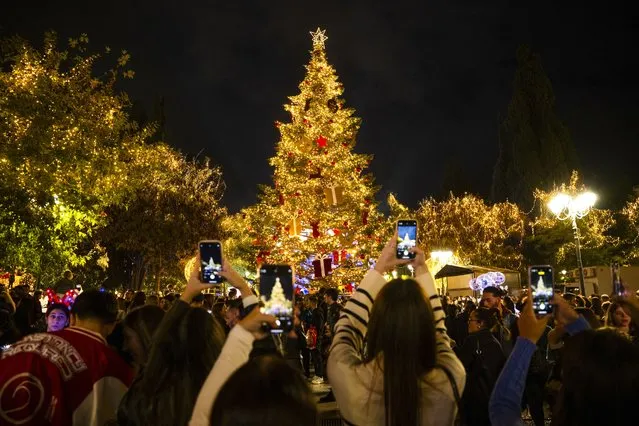
Pedestrians use their smartphones to capture the newly illuminated Christmas tree at the Syntagma square in Athens on November 23, 2023. (Photo by Angelos Tzortzinis/AFP Photo)
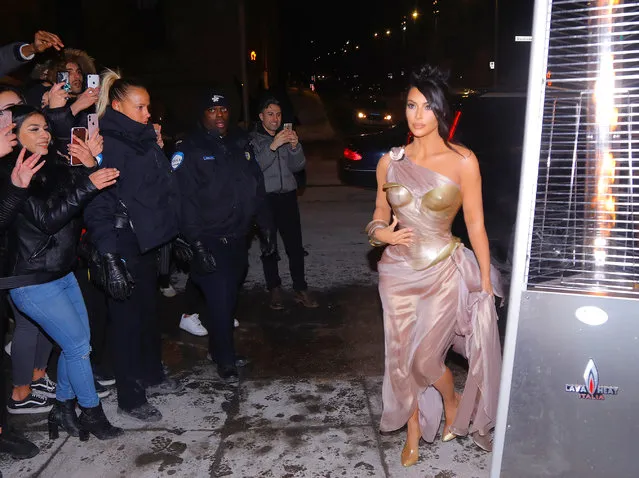
Kim Kardashian arrives for the Thierry Mugler exhibition opening at the Montreal Museum of Fine Arts in Montreal, Chittenango, United States of America on February 26, 2019. (Photo by Splash News and Pictures)
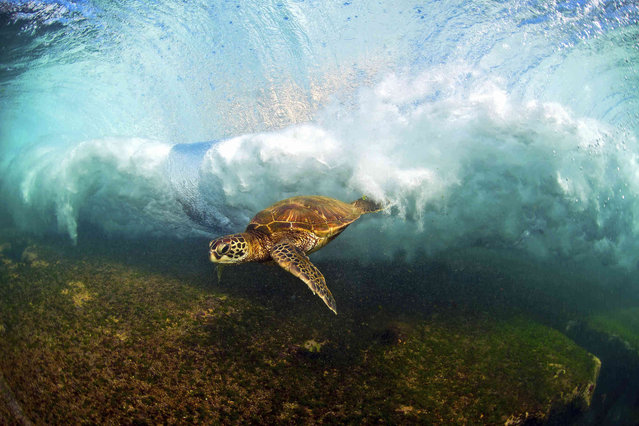
In this undated photo entitled “Close Call”, a Hawaiian green sea turtle swims through a breaking wave on the North Shore of Oahu near Haleiwa, Hawaii. The image appears in photographer Clark Little's new book, “The Art of Waves”. (Photo by Clark Little via AP Photo)