Loading...
Done
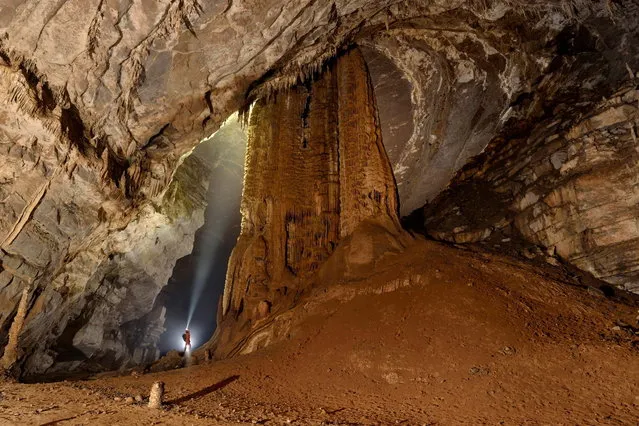
Perfectly situated in the middle of the passage this giant calcite stal boss makes a huge statement. Dwarfed by it's sheer size, Hong Meigui team member; Matt Ryan can only look up in amazement. This is one of many gigantic formations in San Wang Dong. (Photo by Robbie Shone/Caters News/ImagineChina)

“A team of expert cavers and photographers had been exploring caves in the Chongquing province of China – when they were amazed to discover the entrance to a hidden cave that was previously undiscovered. And they were stunned when they managed to enter the ginormous cave – and found that it was so large there was even a cloud inside it – a cave so large it has its own weather system. Photographer and caver Robbie Shone, from Manchester, was part of a team of 15 explorers on a month-long expedition who stumbled across the natural wonder”. – Caters News
Details
23 Mar 2014 00:03:00
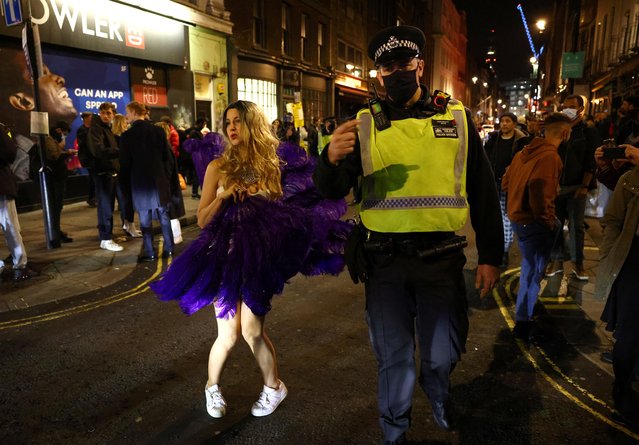
A police officer patrols as people party on a street as pubs shut for the night due to tier 3 restrictions in Soho, as the spread of the coronavirus disease (COVID-19) continues in London, Britain, December 15, 2020. (Photo by Henry Nicholls/Reuters)

A police officer patrols as people party on a street as pubs shut for the night due to tier 3 restrictions in Soho, as the spread of the coronavirus disease (COVID-19) continues in London, Britain, December 15, 2020. (Photo by Henry Nicholls/Reuters)
Details
17 Dec 2020 00:07:00
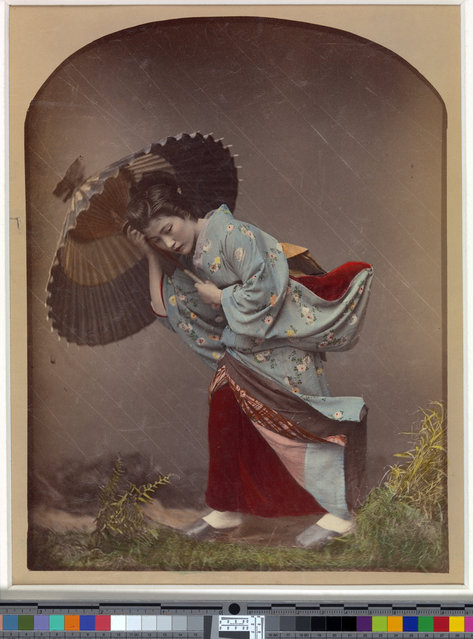
“Woman with Umbrella in Rain” by Raimund von Stillfried. Artist: Kusakabe Kimbei (Japanese, 1841–1934), 1870s. (Photo courtesy of The Metropolitan Museum of Art)

“Woman with Umbrella in Rain” by Raimund von Stillfried. Artist: Kusakabe Kimbei (Japanese, 1841–1934), 1870s. Commercial photography studios in Meiji-era Japan were renowned for the subtlety and refinement of their coloring techniques. This hand-tinted image of a young woman caught in a heavy rainstorm achieved its naturalistic effect by knitting together multiple strands of artifice: the greenery in the foreground was a studio prop; the flaps of the kimono were suspended by thin wires to create the impression of a strong wind; and long, diagonal marks were made on the negative to suggest streaks of rain. (Photo courtesy of The Metropolitan Museum of Art)
Details
12 May 2013 10:13:00
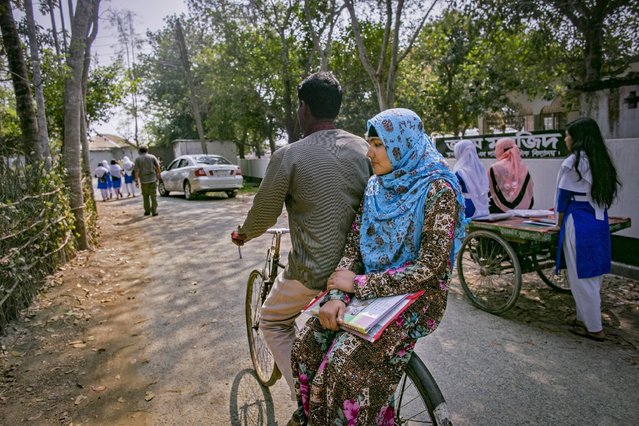
Rani rides home with her father on the back of his bicycle on March 6, 2017 in Khulna division, Bangladesh. Rani, who is now 16, was under pressure to marry a boy when she was 14-years-old despite the reluctance of Rani and her father, Abdul. (Photo by Allison Joyce/Getty Images)

Rani rides home with her father on the back of his bicycle on March 6, 2017 in Khulna division, Bangladesh. Rani, who is now 16, was under pressure to marry a boy when she was 14-years-old despite the reluctance of Rani and her father, Abdul. (Photo by Allison Joyce/Getty Images)
Details
11 Mar 2017 00:00:00
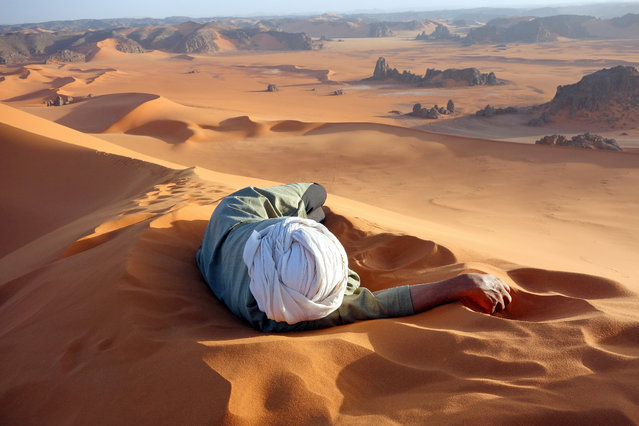
“A Well Earned Rest in the Sahara”. This photo of Moussa Macher, our Tuareg guide, was taken at the summit of Tin-Merzouga, the largest dune (or erg) in the Tadrat region of the Sahara desert in southern Algeria. Moussa rested while waiting for us to finish our 45-minute struggle to the top. Photo location: Summit of Tin-Merzouga, Tadrat, Tassili N'Ajjer National Park, Algeria. (Photo and caption by Evan Cole/National Geographic Photo Contest)

Merit Prize Winner: “A Well Earned Rest in the Sahara”. This photo of Moussa Macher, our Tuareg guide, was taken at the summit of Tin-Merzouga, the largest dune (or erg) in the Tadrat region of the Sahara desert in southern Algeria. Moussa rested while waiting for us to finish our 45-minute struggle to the top. It only took ten minutes of rolling, running, and jumping to get back down. The Tadrat is part of the Tassili N'Ajjer National Park World Heritage area, famous for its red sand and engravings and rock paintings of cattle, elephants, giraffes, and rhinos that lived there when the climate was milder. Photo location: Summit of Tin-Merzouga, Tadrat, Tassili N'Ajjer National Park, Algeria. (Photo and caption by Evan Cole/National Geographic Photo Contest)
Details
01 Aug 2014 11:38:00
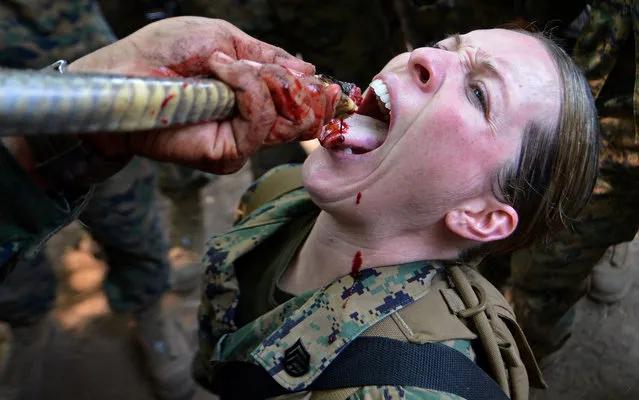
In a military base in the Thai province of Chon Buri February 20 U.S. Marines Navy with Thailand began their studies in jungle survival. The event is held in joint military exercises “Cobra Gold 2013”. During a jungle survival program February 20, 2013 taught by Royal Thai Special Forces in Sannapit, Thailand, U.S. Marines learned to catch cobras and drink their fresh blood, not to mention eat forest insects and pull the heads off of chicken. The training was part of Operation Cobra Gold 13, the 32nd edition of international military exercises hosted by the Thai. According to a U.S. Marines press release, Cobra Gold is the largest exercise of its kind in Asia and incorporates troops from five other nations in addition to the U.S. and Thailand. The Daily Mail reports that the Marines were invited to experience the local custom of drinking cobra blood after being taught to catch and kill cobras in the wild. As CNN notes, Cobra blood is believed to be a panacea and aphrodiasic in parts of Southeast Asia. In Jakarta, vendors can earn over $100 a night selling shots of cobra blood mixed with liquor. (Photo by Pornchai Kittiwongsakul/AFP Photo)

During a jungle survival program February 20, 2013 taught by Royal Thai Special Forces in Sannapit, Thailand, U.S. Marines learned to catch cobras and drink their fresh blood, not to mention eat forest insects and pull the heads off of chicken. The training was part of Operation Cobra Gold 13, the 32nd edition of international military exercises hosted by the Thai. According to a U.S. Marines press release, Cobra Gold is the largest exercise of its kind in Asia and incorporates troops from five other nations in addition to the U.S. and Thailand. The Daily Mail reports that the Marines were invited to experience the local custom of drinking cobra blood after being taught to catch and kill cobras in the wild. As CNN notes, Cobra blood is believed to be a panacea and aphrodiasic in parts of Southeast Asia. In Jakarta, vendors can earn over $100 a night selling shots of cobra blood mixed with liquor. (Photo by Pornchai Kittiwongsakul/AFP Photo)
Details
23 Feb 2013 11:52:00
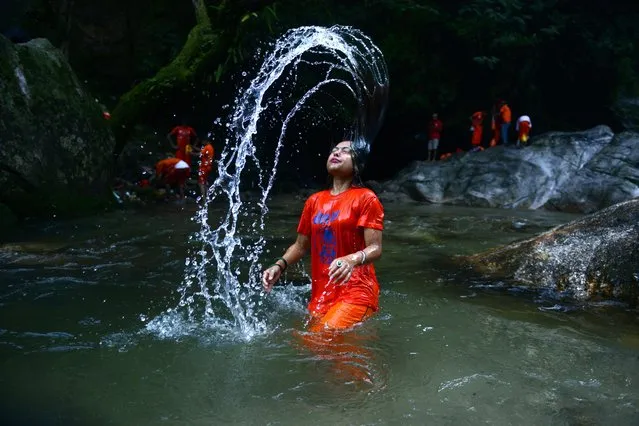
A Nepalese Hindu devotee bathes in the Bagmati River on her way to the Pashupatinath Temple to offer prayers to Lord Shiva, Hindu god of destruction during Shravan festivities in Sundarijal, on the outskirts of Kathmandu on August 3, 2015. According to the Nepali calendar, Shravan is considered the holiest month of the year with each Monday of the month known as Shravan Somvar when worshippers offer prayers for a happy and prosperous life. (Photo by Prakash Mathema/AFP Photo)

A Nepalese Hindu devotee bathes in the Bagmati River on her way to the Pashupatinath Temple to offer prayers to Lord Shiva, Hindu god of destruction during Shravan festivities in Sundarijal, on the outskirts of Kathmandu on August 3, 2015. According to the Nepali calendar, Shravan is considered the holiest month of the year with each Monday of the month known as Shravan Somvar when worshippers offer prayers for a happy and prosperous life. (Photo by Prakash Mathema/AFP Photo)
Details
04 Aug 2015 12:46:00
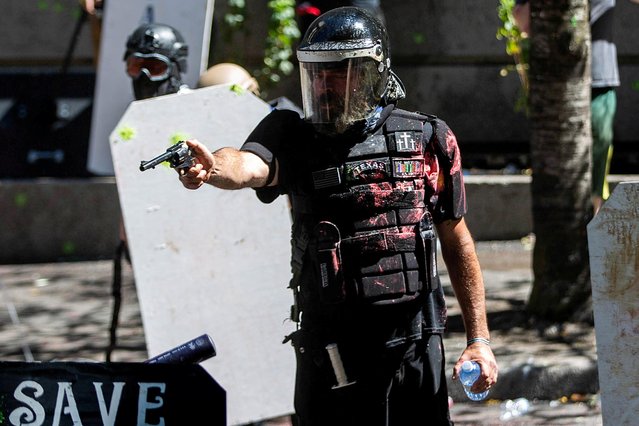
Alan Swinney points a gun during clashes between groups like Proud Boys and Patriot Prayer, and protesters against police brutality and racial injustice in Portland, Oregon, U.S., August 22, 2020. (Photo by Maranie Staab/Reuters)

Alan Swinney points a gun during clashes between groups like Proud Boys and Patriot Prayer, and protesters against police brutality and racial injustice in Portland, Oregon, U.S., August 22, 2020. (Photo by Maranie Staab/Reuters)
Details
30 Aug 2020 00:01:00