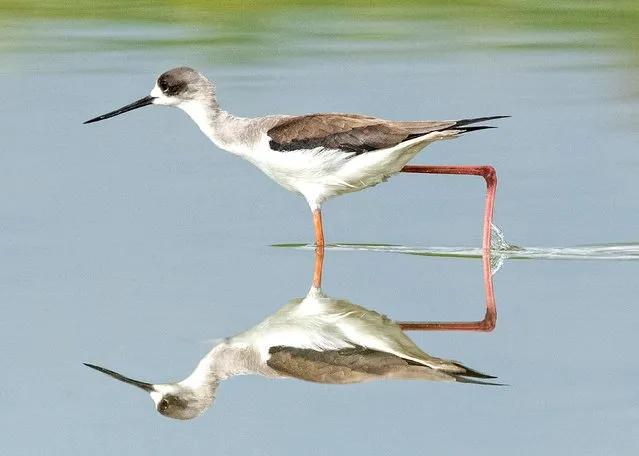
A black-winged stilt patrols a reservoir in Jezreel Valley in Israel early April 2023. Their eggs are a golden colour mottled with brown. (Photo by Itamar Procaccia/Solent News)
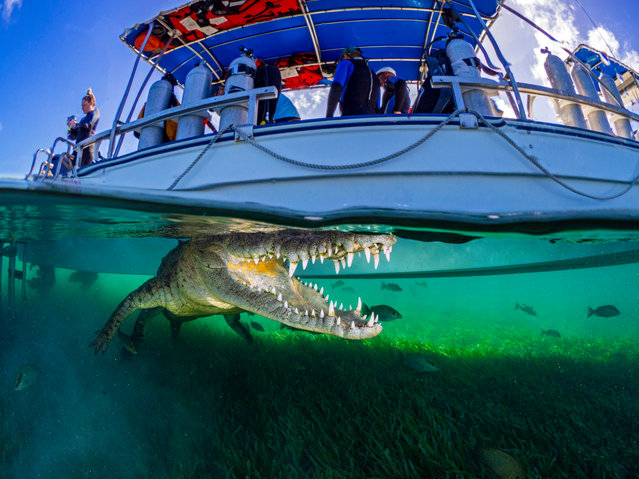
British holidaymaker Sean Chinn captures a crocodile on camera during a dive at the Jardines de la Reina marine park in Caribbean Sea, Cuba. (Photo by Sean Chinn/Caters News Agency)
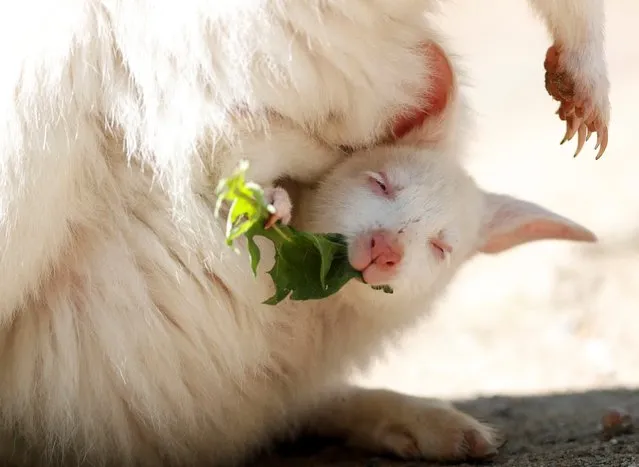
A newly born albino red-necked wallaby joey eats as it is being carried by its mother in their enclosure at the zoo in Decin, Czech Republic, May 18, 2022. (Photo by David W. Cerny/Reuters)
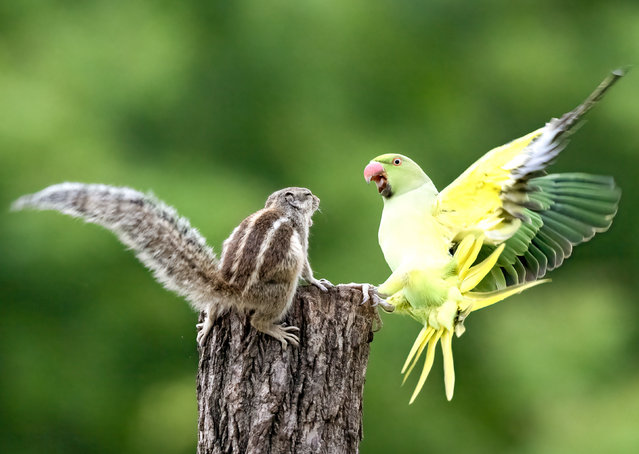
A palm squirrel and ring-rosed parakeet compete for space on a stump in a residential area of Chandigarh, India in the last decade of August 2024. (Photo by Anuj Jain/Solent News)
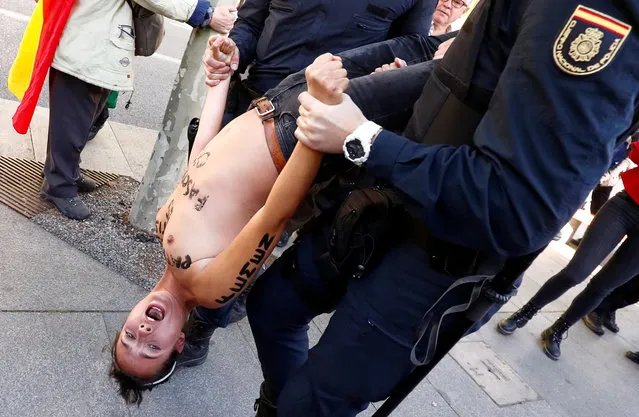
A protester is taken away by police during an electoral campaign closing rally of Spain's far-right party VOX in Madrid, Spain on April 26, 2019. (Photo by Juan Medina/Reuters)
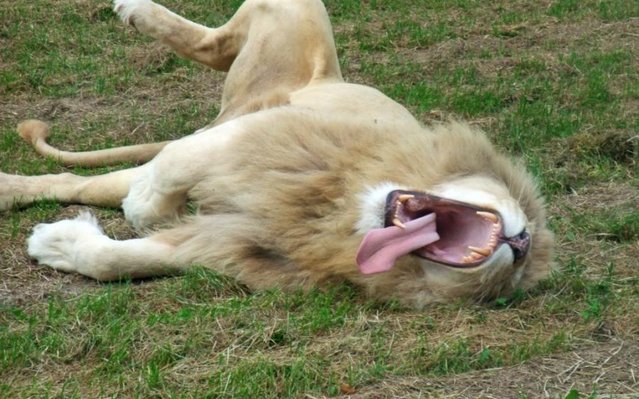
In animals, yawning can serve as a warning signal. For example, Charles Darwin, in his book The Expression of the Emotions in Man and Animals, mentioned that baboons yawn to threaten their enemies, possibly by displaying large canine teeth. Similarly, Siamese fighting fish yawn only when they see a conspecific (same species) or their own mirror-image, and their yawn often accompanies aggressive attack. Guinea pigs also yawn in a display of dominance or anger, displaying their impressive incisor teeth. This is often accompanied by teeth chattering, purring and scent marking.