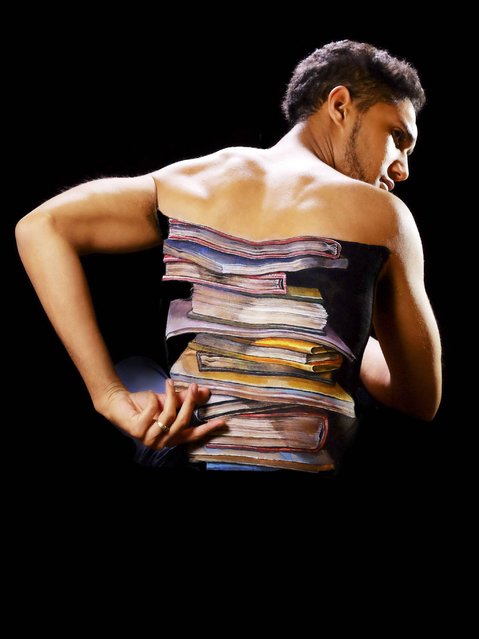
Hikaru Cho believes that we should challenge our imaginations to create new work using traditional tools, not fancy computers and software. (Photo by Jim Marks/PA Wire)
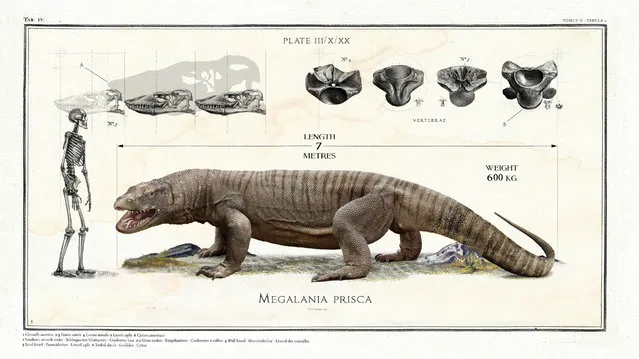
Fossil records indicate that this early lizard, Megalania (Megalania prisca or Varanus priscus), was a whopping seven metres in length. They were part of a megafaunal assemblage that inhabited southern Australia during the Pleistocene. The youngest fossil remains date to around 50,000 years ago. The first aboriginal settlers of Australia might have encountered them and been a factor in their extinction. (Photo by Sky TV/The Guardian)
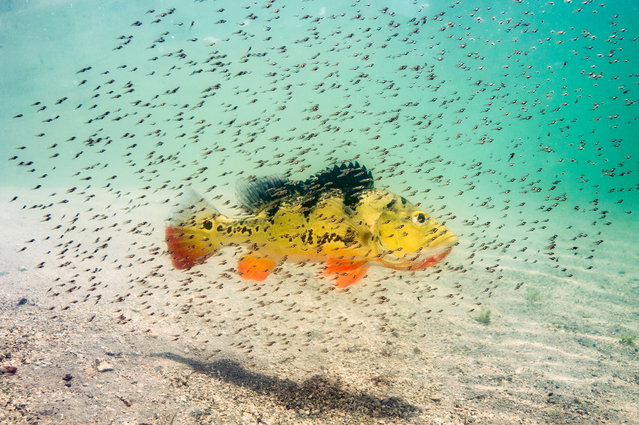
Michael O’Neill won a prize in animal portraits with fry of a peacock bass hovering around their mother for protection against predators in South Florida. (Photo by Michael Patrick O'Neill/2016 National Geographic Nature Photographer of the Year)
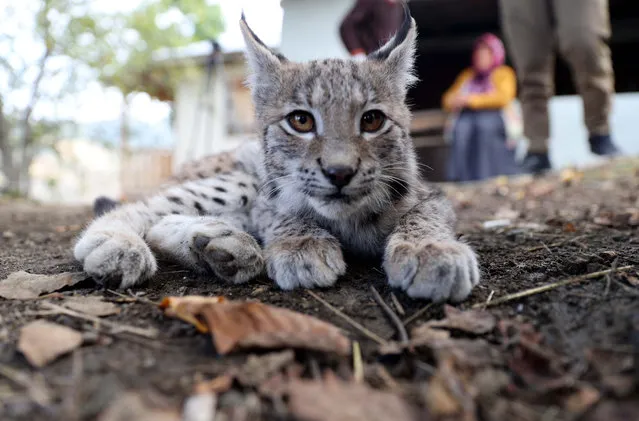
A lynx cub that followed a villager in the forest, is fed by a mother and her son for 2 days at the Koyulhisar district of Sivas, Turkiye on October 4, 2023. After 2 days, the lynx cub was taken under protection by the Sivas Department of Nature Conservation and National Parks teams. (Photo by Serhat Zafer/Anadolu Agency via Getty Images)
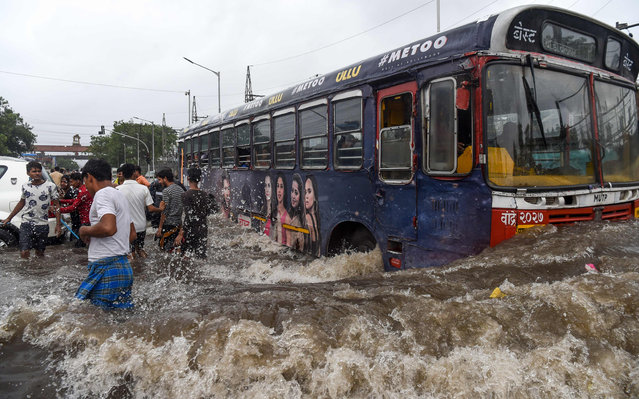
A public bus makes its way on a flooded road after heavy monsoon rains in Mumbai, India on August 4, 2019. India receives its monsoon rains from June to September. (Photo by Indranil Mukherjee/AFP Photo)
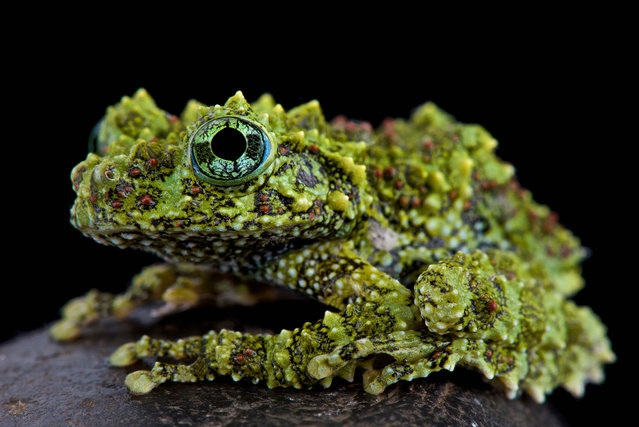
Renowned amphibian and reptile photographer Matthijs Kuijpers has released his first book, “Cold Instinct”. Kuijpers says the aim of the work is “for the viewer to abandon the fear and negative thoughts that often surround these animals”. What’s left is the bizarre beauty of these creatures in their simplest form – no backgrounds and no distractions. Here: Mossy frog (Theloderma corticale). (Photo by Matthijs Kuijpers/The Guardian)
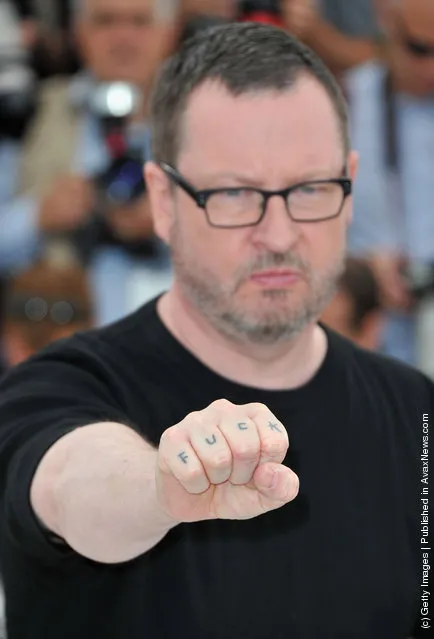
Director Lars Von Trier attends the “Melancholia” photocall at the Palais des Festivals during the 64th Cannes Film Festival on May 18, 2011 in Cannes, France. (Photo by Pascal Le Segretain/Getty Images)