Loading...
Done
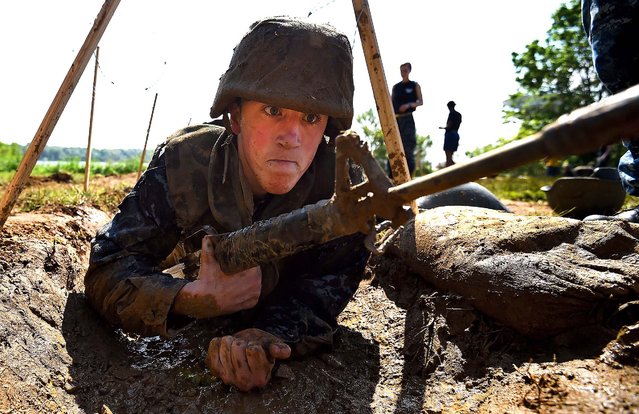
A member of the United States Naval Academy freshman class crawls through trenches at the wet and sandy station during the annual Sea Trials training exercise at the U.S. Naval Academy on May 13, 2014 in Annapolis, Maryland. (Photo by Patrick Smith/Getty Images)

A member of the United States Naval Academy freshman class crawls through trenches at the wet and sandy station during the annual Sea Trials training exercise at the U.S. Naval Academy on May 13, 2014 in Annapolis, Maryland. For 14 hours, the United States Naval Academy freshman class, also known as Plebes, worked as a team to complete many grueling physical and mental challenges that help prepare them for real-world experiences and reinforce leadership, bonds, trust, and teamwork. Of the challenges, they endured: a two-mile regimental run, ground fights, water tactics, aquatics challenges, and survival skills, amongst many others. (Photo by Patrick Smith/Getty Images)
Details
14 May 2014 07:52:00
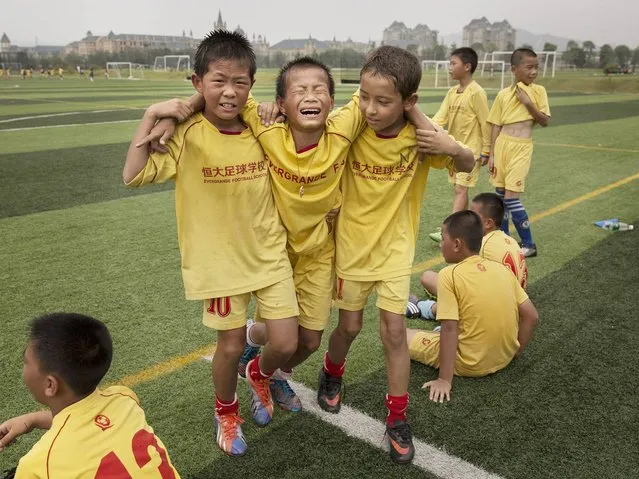
Football players help an injured player off the field during training at the Evergrande International Football School near Qingyuan in Guangdong Province. (Photo by Kevin Frayer/Getty Images)

Young Chinese football players help an injured player off the field during training at the Evergrande International Football School on June 12, 2014 near Qingyuan in Guangdong Province, China. The sprawling 167-acre campus is the brainchild of property tycoon Xu Jiayin, whose ambition is to train a generation of young athletes to establish China as a football powerhouse. The school is considered the largest football academy in the world with 2400 students, more than 50 pitches and a squad of Spanish coaches through a partnership with Real Madrid. (Photo by Kevin Frayer/Getty Images)
Details
18 Jun 2014 12:56:00
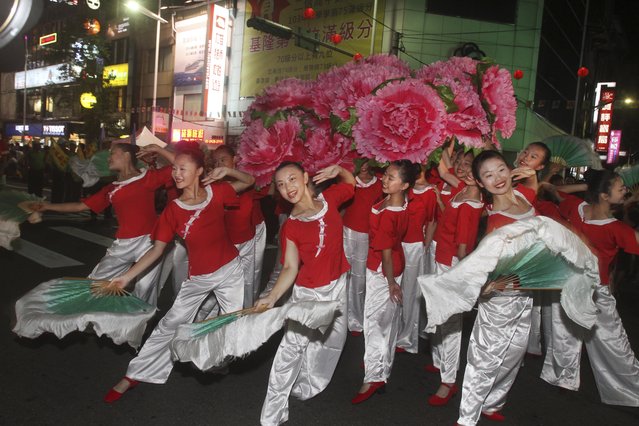
In this photo made late Saturday, August 9, 2014, in Keelung, Taiwan, a traditional Chinese dance troupe performs during a parade marking the beginning of the Chinese folklore's mid-summer's Ghost Month Festival. (Photo by Chiang Ying-ying/AP Photo)

In this photo made late Saturday, August 9, 2014, in Keelung, Taiwan, a traditional Chinese dance troupe performs during a parade marking the beginning of the Chinese folklore's mid-summer's Ghost Month Festival. Fourteen days into the seventh month of the lunar calendar, August 9, in 2014, marks the traditional Chinese Ghost Month where the gates of the underworld are opened and spirits of the deceased are set free to roam the world of the living. The month long festivities are aimed to please the roaming spirits. (Photo by Chiang Ying-ying/AP Photo)
Details
12 Aug 2014 11:57:00
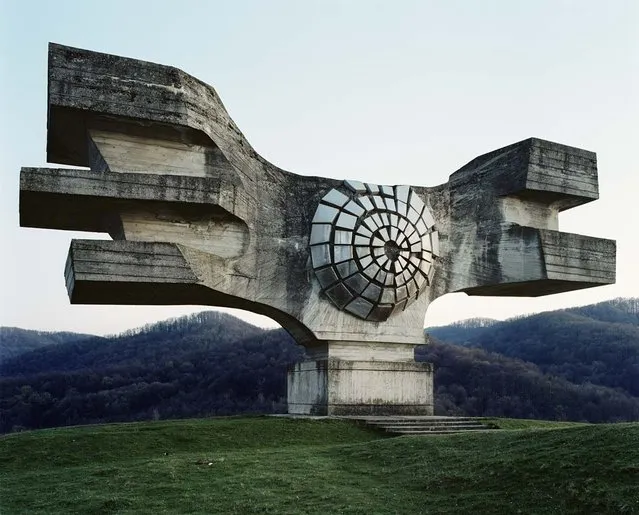
The monument of Ilirska Bistrica was designed by Janez Lenassi and built in 1965. It is dedicated to Slovenian soldiers that fell in World War II. (Photo by Jan Kempenaers)

The brutalist war memorials found throughout the former Yugoslavia were weird enough when they were built in the 1960s and 70s. Today, separated by the end of an architectural movement and the disintegration of the country, they seem almost alien. Belgian photographer Jan Kempenaers treats them purely as artistic objects in his book, “Spomenik”, named for the Serb-Croat word for monument. Known for photographing geographical oddities, Kempenaers was captivated by the spomenik after seeing them in an art encyclopedia. After hearing that many had been destroyed or abandoned, he set out to record what was left. (Photo by Jan Kempenaers)
Details
18 Aug 2014 09:07:00
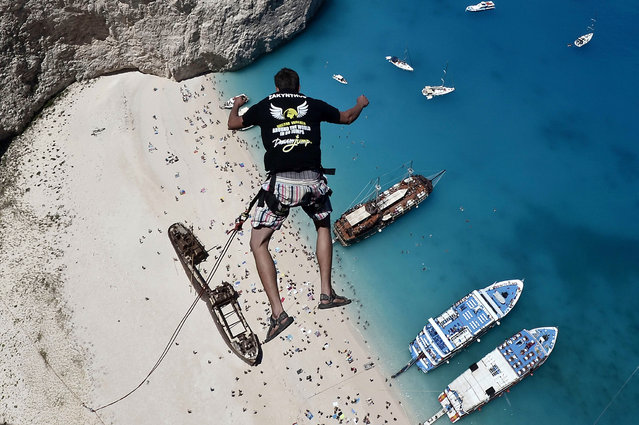
Lukas Michul, a member of the “dream walker” group jumps from atop the rugged rocks overlooking the azure waters of Navagio beach, one of the Greece's most renowned leisure spots on the popular tourist island of Zakynthos on June 23, 2014. (Photo by Louisa Gouliamaki/AFP Photo)

Lukas Michul, a member of the “dream walker” group jumps from atop the rugged rocks overlooking the azure waters of Navagio beach, one of the Greece's most renowned leisure spots on the popular tourist island of Zakynthos on June 23, 2014. This is rope jumping – part diving, part rock climbing, with a touch of engineering. The aim of the project is to dream jump in 80 places with most ravishing nature and architecture all over the world .They plan to stage their next leaps at a cave complex in Croatia, a French viaduct, skyscrapers in Las Vegas and Johannesburg, and the Grand Canyon. (Photo by Louisa Gouliamaki/AFP Photo)
Details
01 Sep 2014 10:38:00
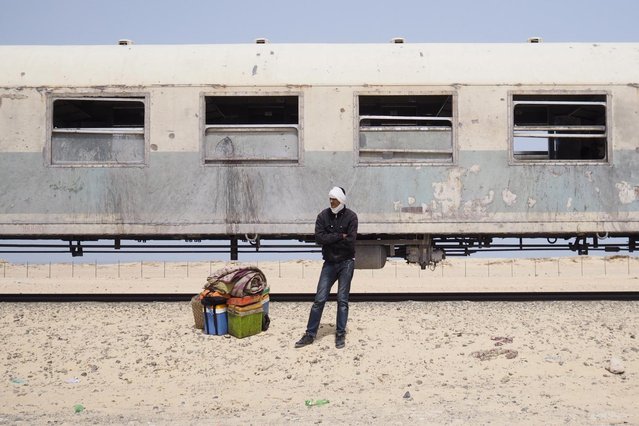
A passenger on a SNIM train carrying iron ore and mine workers waits for transport after arriving in Nouadhibou June 25, 2014. (Photo by Joe Penney/Reuters)

A passenger waits after his train arrived in Nouadhibou, Mauritania’s second largest city and the main export port for the country’s iron ore industry, on June 25, 2014. The mining company’s employees proudly call their firm the lung of their nation's economy and the train that ferries the ore to the coast stretches some two kilometres, making it one of the world's longest. SNIM mines black iron ore in the northern town of Zouerate, a remote desert location which nevertheless attracts people from all over the country looking for work. (Photo by Joe Penney/Reuters)
Details
27 Oct 2014 11:51:00
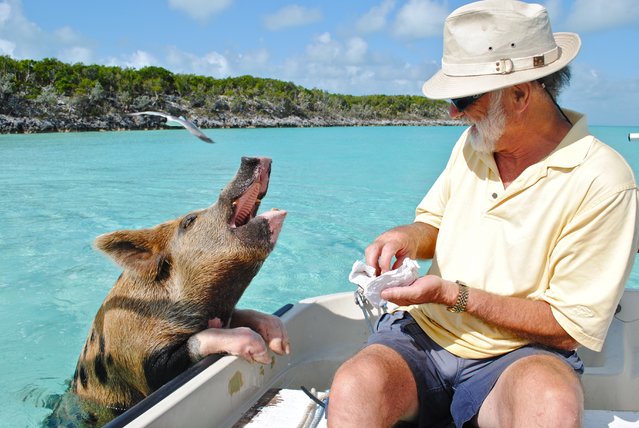
“So you're on a boat in Bahamas and then this pig swims by begging for food”. (Photo and caption by Lisa Larsen/Public Domain)

The Bahamas, the Commonwealth nation of hundreds of islands roughly the size of Connecticut and with population of just a bit over Anaheim, is known for its crystal waters and pristine beaches. This is possibly one of the world’s most beautiful havens of nature, yet people are coming here to see pigs. It is unclear when the pigs first appeared on Exuma Island or where they come from. There’s talk about a daring escape from a shipwreck, or sailors releasing the swine on purpose. In all probability, there were no pigs on this tropical paradise before European settlers came, so their mere presence is the work of human. The intriguing feat of nature, however, is that this population of pigs developed a fine aptitude for swimming. Here: “So you're on a boat in Bahamas and then this pig swims by begging for food”. (Photo and caption by Lisa Larsen/Public Domain)
Details
03 Sep 2015 11:53:00
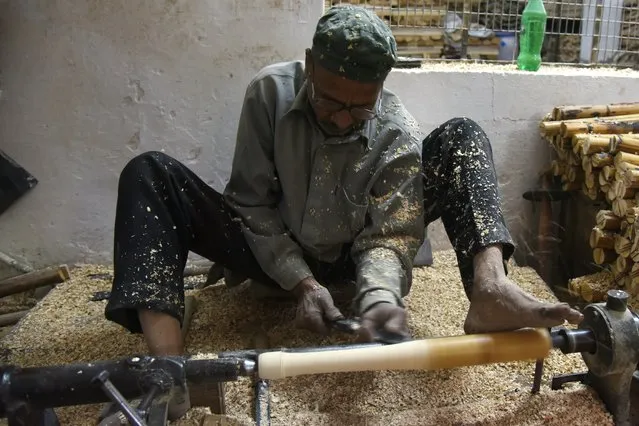
In this photograph taken on December 14, 2016, an Indian craftsman works on unfinished cricket bats in a factory in Meerut, some 70 kms north- east of New Delhi. As Indian factory worker Jitender Singh carves out another big- hitting slab of thick willow he insists MCC proposals to limit the size of cricket bats won' t tame Twenty20 marauders. “I don' t think the thickness matters. It' s more about the balance of the bat and the talent of the batsman”, says Singh, who has made bats for many stars, including South Africa's AB de Villiers. The World Cricket committee of the MCC, the guardians of the game, recommended in December 2016 that limitations be placed on the width and depth of bats because it had become too easy to smash fours and sixes. (Photo by Dominique Faget/AFP Photo)

In this photograph taken on December 14, 2016, an Indian craftsman works on unfinished cricket bats in a factory in Meerut, some 70 kms north- east of New Delhi. (Photo by Dominique Faget/AFP Photo)
Details
11 Jan 2017 14:32:00