Loading...
Done
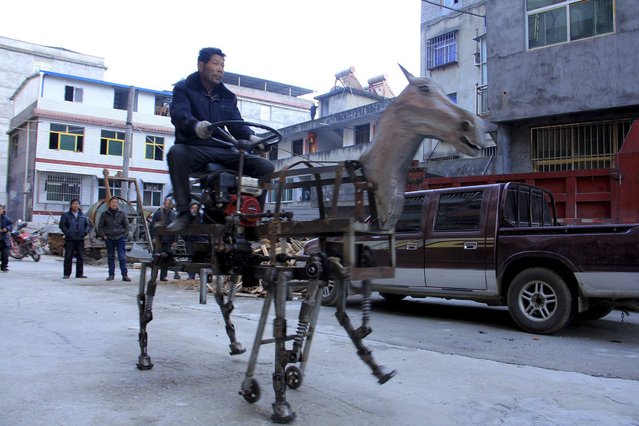
Su Daocheng rides his home-made mechanical horse vehicle on a street in Shiyan, Hubei province January 18, 2015. Su spent 2 months making this 1.5 metre high and 2 metre long horse, which weighed 250 kilograms with 4 legs and 2 supportive wheels, local media reported. (Photo by Reuters/Stringer)

Su Daocheng rides his home-made mechanical horse vehicle on a street in Shiyan, Hubei province January 18, 2015. Su spent 2 months making this 1.5 metre high and 2 metre long horse, which weighed 250 kilograms with 4 legs and 2 supportive wheels, local media reported. (Photo by Reuters/Stringer)
Details
23 Jan 2015 12:48:00
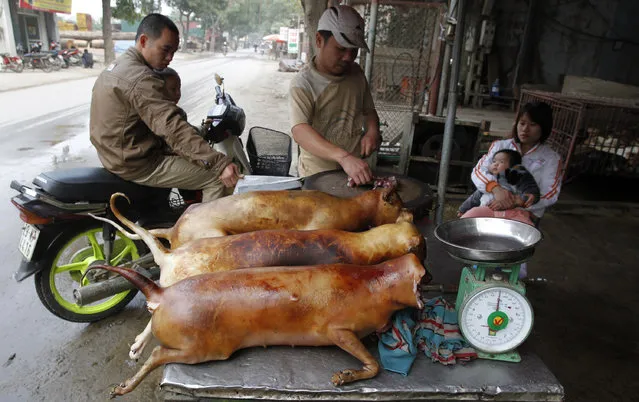
A vendor (C) cuts slaughtered dogs for sale at his roadside stall in Duong Noi village, outside Hanoi December 16, 2011. While animal rights activists have condemned eating dog meat as cruel treatment of the animals, it is still an accepted popular delicacy for some Vietnamese, as well in some other Asian countries. (Photo by Reuters/Kham)

A vendor (C) cuts slaughtered dogs for sale at his roadside stall in Duong Noi village, outside Hanoi December 16, 2011. While animal rights activists have condemned eating dog meat as cruel treatment of the animals, it is still an accepted popular delicacy for some Vietnamese, as well in some other Asian countries. Duong Noi is well-known as a dog-meat village, where hundreds of dogs are killed each day for sale as popular traditional food. Dog-eating as a custom is rooted in Vietnam and was developed as a result of poverty. One kilogram of dog meat costs about 130,000 dongs ($6.2). (Photo by Reuters/Kham)
Details
16 Jul 2013 11:40:00
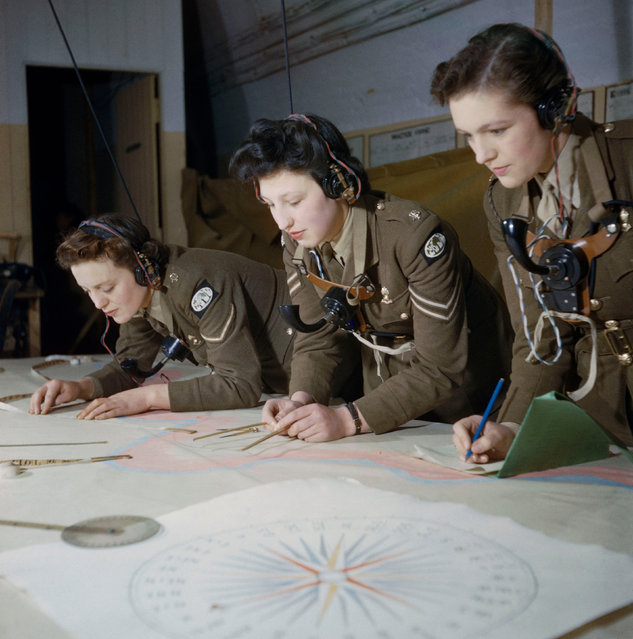
Auxiliary Territorial Service (ATS) plotters at work at Coastal Artillery Headquarters in Dover, December 1942. (Photo by Ted Dearberg/IWM/PA Wire)

Auxiliary Territorial Service (ATS) plotters at work at Coastal Artillery Headquarters in Dover, December 1942. The Auxiliary Territorial Service was the women's branch of the British Army during the Second World War. It was formed on 9 September 1938, initially as a women's voluntary service, and existed until 1 February 1949, when it was merged into the Women's Royal Army Corps. The ATS had its roots in the Women's Auxiliary Army Corps (WAAC), which was formed in 1917 as a voluntary service. During the First World War its members served in a number of jobs including clerks, cooks, telephonists and waitresses. The WAAC was disbanded after four years in 1921. (Photo by Ted Dearberg/IWM/PA Wire)

Details
13 Jul 2017 07:52:00
In this October 5, 2016 photo a man looks at the work “Not to be Reproduced” by Rene Magritte at the Kunsthalle art gallery in Hamburg, Germany. The exhibition, which runs from Oct. 7,  2016 until Jan. 22,  2017, features more than 150 masterpieces of surrealism from four of the most significant European private collections of the 20th century. (Photo by Daniel Reinhardt/DPA via AP Photo)

In this October 5, 2016 photo a man looks at the work “Not to be Reproduced” by Rene Magritte at the Kunsthalle art gallery in Hamburg, Germany. The exhibition, which runs from Oct. 7, 2016 until Jan. 22, 2017, features more than 150 masterpieces of surrealism from four of the most significant European private collections of the 20th century. (Photo by Daniel Reinhardt/DPA via AP Photo)
Details
07 Oct 2016 10:29:00
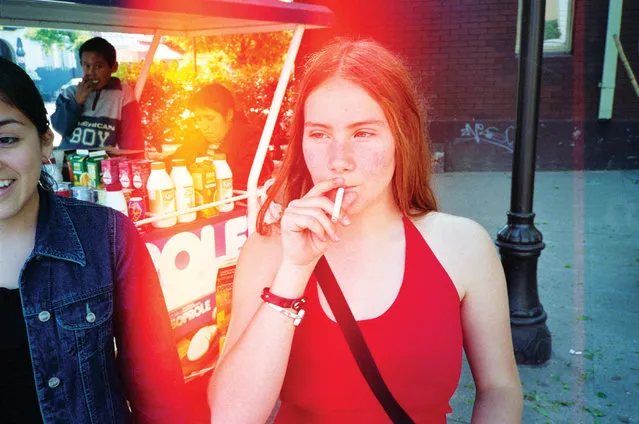
When Ed Templeton was a young skateboarder in California, he took Polaroids of his friends smoking at their local park. Those pictures in 1994 were the start of a lifelong habit – Templeton has been capturing youngsters all over the world experimenting with cigarettes ever since. Here: Santiago, Chile, 2002. (Photo by Ed Templeton/Robert & Tilton Gallery, Culver City)

When Ed Templeton was a young skateboarder in California, he took Polaroids of his friends smoking at their local park. Those pictures in 1994 were the start of a lifelong habit – Templeton has been capturing youngsters all over the world experimenting with cigarettes ever since. Here: Santiago, Chile, 2002. (Photo by Ed Templeton/Robert & Tilton Gallery, Culver City)
Details
10 Dec 2015 08:04:00
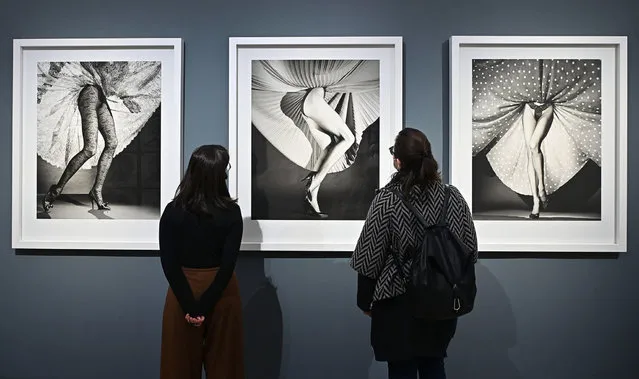
Visitors look at photographs in the exhibition “Lisette Model Street Life e Horst P. Horst Syle and Glamour” at the art gallery “Camera – Centro Italiano per la fotografia” in Turin, Italy, 27 April 2021. Culture venues reopened to the public as several Italian region are back to COVID-19 yellow zone in the country's tier system. (Photo by Alessandro di Marco/EPA/EFE)

Visitors look at photographs in the exhibition “Lisette Model Street Life e Horst P. Horst Syle and Glamour” at the art gallery “Camera – Centro Italiano per la fotografia” in Turin, Italy, 27 April 2021. Culture venues reopened to the public as several Italian region are back to COVID-19 yellow zone in the country's tier system. (Photo by Alessandro di Marco/EPA/EFE)
Details
28 Apr 2021 09:11:00
In his series “Ballerinas of Cairo”, photographer Mohamed Taher documents Egyptian dancers making the city streets their stage – pirouetting, leaping and posing their way through their country’s sprawling capital. The photos are, at first glance, stunning snapshots of a city’s vibrant culture in motion. But considering the dangers Egyptian women face for roaming these same streets on a daily basis, their impact is far deeper. Sexual harassment continues to present not just a possibility but a terrifying reality in present-day Egypt. A 2013 United Nations report calculated that 99.3 percent of women in the country have experienced sexual harassment on the streets, a problem that’s sparked initiatives giving women a way to fight back. The violence is rooted in an extreme conservative perspective encouraging women to stay in the home. (Photo by Mohamed Taher/Ballerinas of Cairo)

In his series “Ballerinas of Cairo”, photographer Mohamed Taher documents Egyptian dancers making the city streets their stage – pirouetting, leaping and posing their way through their country’s sprawling capital. The photos are, at first glance, stunning snapshots of a city’s vibrant culture in motion. (Photo by Mohamed Taher/Ballerinas of Cairo)
Details
17 Jan 2017 12:30:00
Alexei Gruk, 45, mechanic and supporter of presidential candidate Pavel Grudinin, poses for a picture in St. Petersburg, Russia, January 31, 2018. “The most important thing for me is that our foreign policy stays the same”, said Gruk. “To hell with the sanctions… So what if they don’t bring foreign stuff here anymore? As if that means we have to give up. I don't care”. (Photo by Anton Vaganov/Reuters)

Most Russians intending to vote for Vladimir Putin in Sunday's election say stability is at the root of their faith in their candidate – though many young voters believe it's time for a change of leader. Putin, 65, is expected to win a fourth term in office with 69 percent of the vote, according to the latest survey by a state-run pollster. Reuters correspondents and photographers who travelled around the country talking to voters ahead of the March 18 election found nothing to contradict expectation of an emphatic Putin victory. (Photo by Anton Vaganov/Reuters)
Details
15 Mar 2018 00:01:00