Loading...
Done
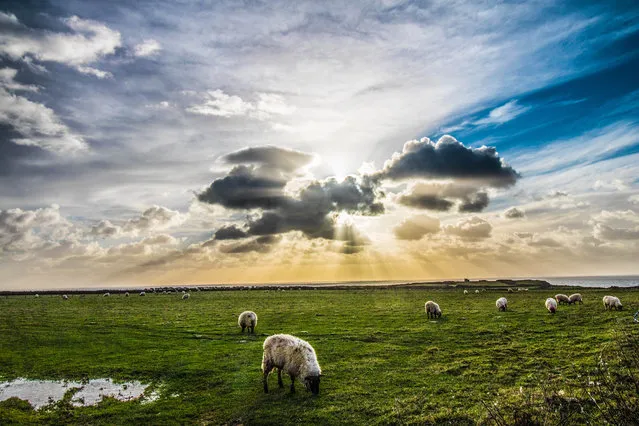
“After an afternoon of hiking and exploring the caves of Rhossili Bay, West Glamorgan, we caught the sun breaking through the clouds”. (Photo by Megan Warren-Davis/The Guardian)

“After an afternoon of hiking and exploring the caves of Rhossili Bay, West Glamorgan, we caught the sun breaking through the clouds”. (Photo by Megan Warren-Davis/The Guardian)
Details
05 Feb 2017 01:05:00
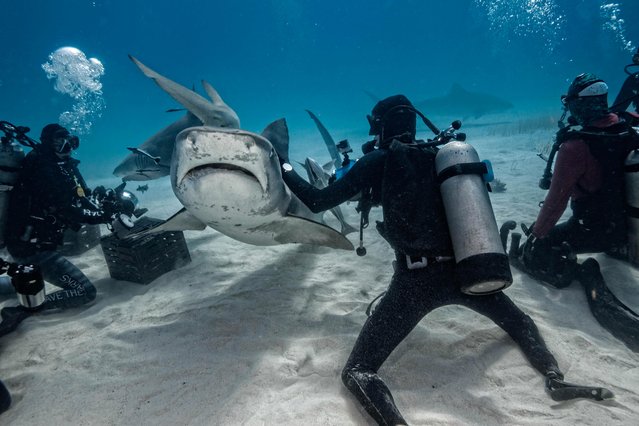
The spectacular sequence shows the divers reaching out and even petting the 500kg predators. (Photo by Steve Hinczynski/Mediadrumworld)

The spectacular sequence shows the divers reaching out and even petting the 1,000-pound predators as the inquisitive beasts happily pose for the camera. Other pictures show the sharks appearing to swim with the divers as they move towards the water’s surface. The photographs were taken at Tiger Beach, Grand Bahama by photographer, Steve Hinczynski (49) from Venice, Florida, USA. To take his images Steve used a Canon 7D Mark II camera equipped with Ikelite underwater housing. (Photo by Steve Hinczynski/Mediadrumworld)
Details
09 Mar 2017 00:01:00
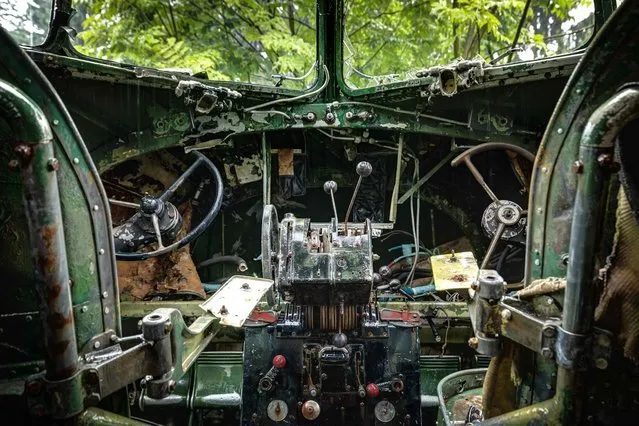
The eerie military base is on the Croatian border with Bosnia-Herzegovina. (Photo by Thomas Windisch/Exclusivepix Media)

Željava Air Base, situated on the border between Croatia and Bosnia and Herzegovina under Plješevica Mountain, near the city of Bihać, Bosnia, was the largest underground airport and military air base in the former Yugoslavia, and one of the largest in Europe. (Photo by Thomas Windisch/Exclusivepix Media)
Details
18 Mar 2017 10:15:00
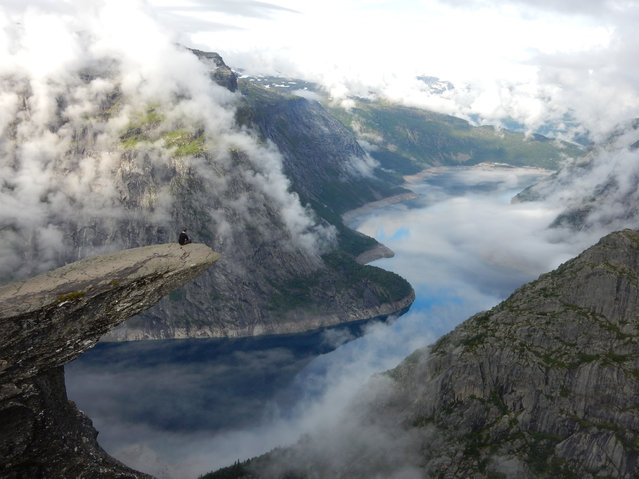
Taking it all in at Trolltunga, a piece of rock which juts horizontally out of a mountain, 700 metres above lake Ringedalsvatnet in Norway. (Photo by Sam Rogers/GuardianWitness)

Taking it all in at Trolltunga, a piece of rock which juts horizontally out of a mountain, 700 metres above lake Ringedalsvatnet in Norway. (Photo by Sam Rogers/GuardianWitness)
Details
05 May 2017 07:31:00
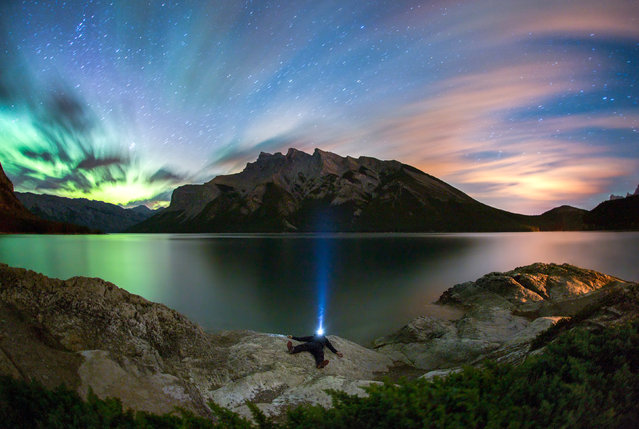
Lake Minnewanka, Banff National Park, Alberta, Canada. (Photo by Paul Zizka/Caters News Agency)

A landscape photographer turned the camera on himself to take a set of incredible selfie while visiting some of the world's most beautiful destinations. Paul Zizka, 39, from Alberta, Canada, has been a photographer for nine years, and thought that featuring in his own pictures would emphasize the nature surrounding him and create a more unique shot. Here: Lake Minnewanka, Banff National Park, Alberta, Canada. (Photo by Paul Zizka/Caters News Agency)
Details
03 Sep 2019 00:03:00
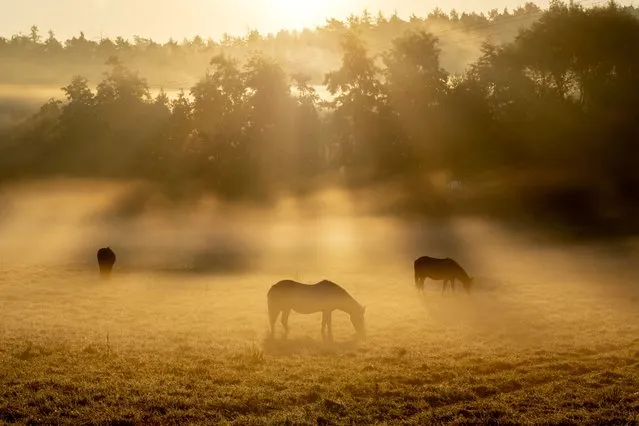
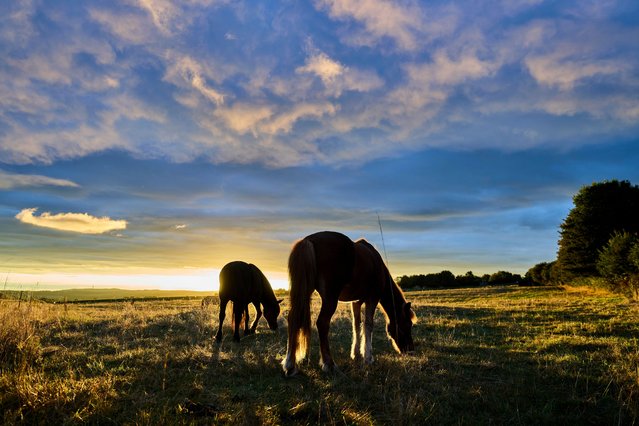
Young Icelandic mares graze on a meadow in Wehrheim near Frankfurt, Germany, on a foggy Tuesday, September 26, 2023. (Photo by Michael Probst/AP Photo)

Young Icelandic mares graze on a meadow in Wehrheim near Frankfurt, Germany, on a foggy Tuesday, September 26, 2023. (Photo by Michael Probst/AP Photo)
Details
07 Dec 2023 04:51:00
Icelandic horses graze on a meadow at a stud farm in Wehrheim near Frankfurt, Germany, Monday, September 1, 2025. (Photo by Michael Probst/AP Photo)

Icelandic horses graze on a meadow at a stud farm in Wehrheim near Frankfurt, Germany, Monday, September 1, 2025. (Photo by Michael Probst/AP Photo)
Details
30 Dec 2025 13:24:00
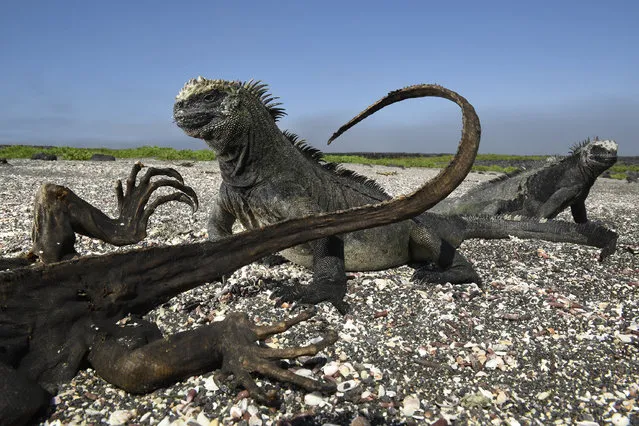
Galapagos – Rocking the Cradle: Four major ocean currents converge along the Galapagos archipelago, creating the conditions for an extraordinary diversity of animal life, April 25, 2016. The islands are home to at least 7,000 flora and fauna species, of which 97 percent of the reptiles, 80 percent of the land birds, 50 percent of the insects and 30 percent of the plants are endemic. The local ecosystem is highly sensitive to the changes in temperature, rainfall and ocean currents that characterize the climatic events known as El Niño and La Niña. These changes cause marked fluctuations in weather and food availability. Many scientists expect the frequency of El Niño and La Niña to increase as a result of climate change, making the Galapagos a possible early-warning location for its effects. (Photo by Thomas P. Peschak for National Geographic/World Press Photo)

Galapagos – Rocking the Cradle: Four major ocean currents converge along the Galapagos archipelago, creating the conditions for an extraordinary diversity of animal life, April 25, 2016. The islands are home to at least 7,000 flora and fauna species, of which 97 percent of the reptiles, 80 percent of the land birds, 50 percent of the insects and 30 percent of the plants are endemic. (Photo by Thomas P. Peschak for National Geographic/World Press Photo)
Details
16 Apr 2018 00:01:00