Loading...
Done
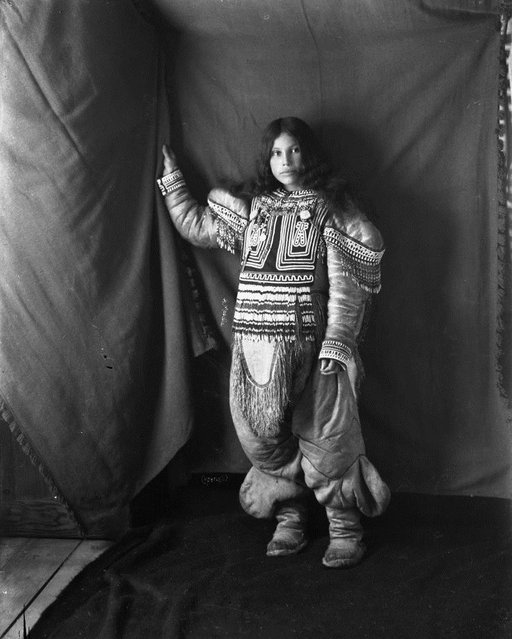
Moodie was born in 1854 in Toronto, and after a move to England she met and married John Douglas Moodie in 1878, and had six children. Here: Inuit woman, Kootucktuck, in her beaded attigi. Fullerton Harbour, Nunavut, February 1905. (Photo by Geraldine Moodie/The Guardian)

Geraldine Moodie overcame harsh conditions to become western Canada’s first professional female photographer, capturing beautiful images in the country’s most remote regions. An exhibition, “North of Ordinary: The Arctic Photographs of Geraldine and Douglas Moodie”, is at Glenbow, Calgary, 18 February – 10 September. Here: Inuit woman, Kootucktuck, in her beaded attigi. Fullerton Harbour, Nunavut, February 1905. (Photo by Geraldine Moodie/The Guardian)
Details
17 Feb 2017 00:04:00

An important historic event: For the first time a container ship sailed the Northern Sea Route through the Russian Arctic, traveling from China to Amsterdam. The journey, which began on August 15 and was completed on September 10, is only now possible due to high levels of Arctic sea ice melt that have occurred in the past several years.
Details
23 Sep 2013 12:57:00
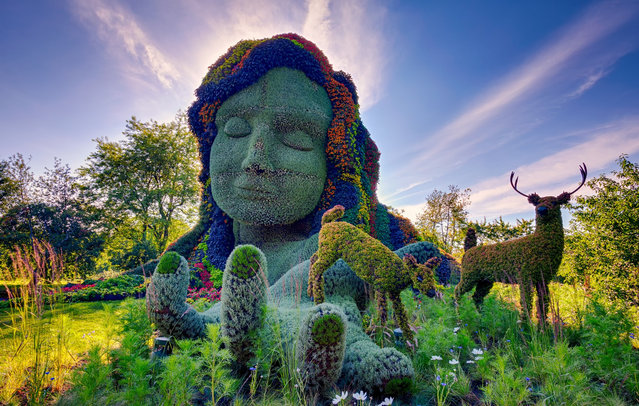
Monumental Plant Sculptures At The 2013 Mosaicultures Internationales De Montreal

Mosaïcultures Internationales de Montréal is an international mosaiculture competition held in Montréal, Canada. According to their website, mosaiculture “is a refined horticultural art that involves creating and mounting living artworks made primarily from plants with colourful foliage (generally annuals, and occasionally perennials).” The 2013 competition and exhibition opened June 22 and runs through September 29 at the Montréal Botanical Garden and features some 22,000 plant species and cultivars distributed throughout 10 exhibition greenhouses and 30 themed gardens.
Details
29 Jan 2014 11:38:00
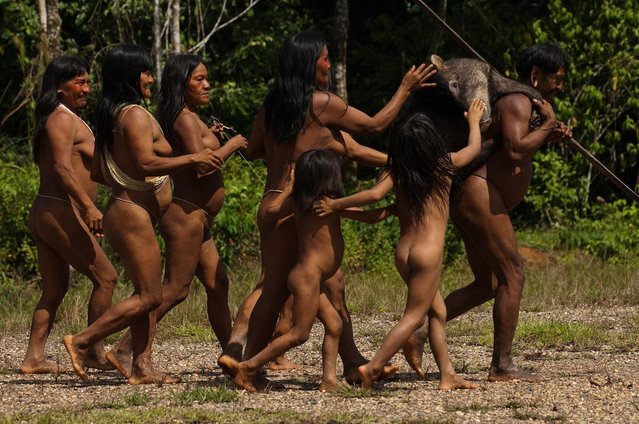
Spectacular images offering insight into the lives of the Huaorani people in the Ecuadorian Amazon have been revealed showing how they use traditional methods to hunt monkeys for food. The stunning pictures were taken by conservation photographer Pete Oxford from Torquay, Devon in the Ecuadorian Amazon. “The Huaorani Indians are a forest people highly in tune with their environment. Many are now totally acculturated since the 1950s by missionaries”, said Pete. “Today they face radical change to their culture to the proximity of oil exploration within their territory and the Yasuni National Park and Biosphere Reserve, they are vastly changed. Some still live very traditionally and for this shoot, through my Huaorani friend, a direct relative of those photographed he wanted to depict them as close to their original culture as possible. They still largely hunt with blow pipes and spears eating a lot of monkeys and peccaries”. The Huaorani are also known as the Waorani, Waodani or the Waos and are native Amerindians. Their lands are located between the Curaray and Napo rivers and speak the Huaorani language. Pete says that during his visit he was welcomed into the group and hopes that ancient cultures can be saved. Here: The tribe were seen celebrating after a hunter returned to camp with a wild pig. (Photo by Pete Oxford/Mediadrumworld.com)

Spectacular images offering insight into the lives of the Huaorani people in the Ecuadorian Amazon have been revealed showing how they use traditional methods to hunt monkeys for food. The stunning pictures were taken by conservation photographer Pete Oxford from Torquay, Devon in the Ecuadorian Amazon. Here: The tribe were seen celebrating after a hunter returned to camp with a wild pig. (Photo by Pete Oxford/Mediadrumworld.com)
Details
20 Jan 2017 07:58:00
These black-and-white photos are taken from the new book “Armoured Warfare in the First World War 1916 – 1918” by Anthony Tucker-Jones and published by Pen & Sword Military. “Interestingly the British, French and Germans took completely different approaches with varying results”. The British military produced “Little Willie” in Autumn 1915 weighing 18 tonnes, which had a crew of two plus four gunners. “Inspired by a tracked artillery tractor “Little Willie” was referred to as a water tank – hence the name tank – to ensure secrecy”, said Anthony. “This led to the strange looking Mark I with its peculiar rhomboid shape, designed to cross trenches with guns in sponsons on either side. The Germans saw the tank as unchivalrous and were slow to grasp its utility. They favoured the Stormtrooper (specialist soldiers used to infiltrate enemy trenches) and artillery, not the tank”, said Anthony. “However, they didn’t hesitate to make use of captured British tanks. Although the tank helped secure victory and German soldiers dubbed it “Germany’s Downfall” the country was ultimately brought to its knees by the Allies blockade”. Here: British troops hitch a ride on a Mark IV after the massed tank fleet spearheading attack at Cambrai on November 20, 1917. (Photo by Anthony Tucker-Jones/Mediadrumworld.com)

These black-and-white photos are taken from the new book “Armoured Warfare in the First World War 1916 – 1918” by Anthony Tucker-Jones and published by Pen & Sword Military. Here: British troops hitch a ride on a Mark IV after the massed tank fleet spearheading attack at Cambrai on November 20, 1917. (Photo by Anthony Tucker-Jones/Mediadrumworld.com)
Details
23 Feb 2017 00:02:00
In this Tuesday, September 12, 2017 photo, Amornrat Simapsaisan, a local shop manager, watches before she ate watermelon salad with bamboo worms, at Inspects in the Backyard restaurant, Bangkok, Thailand. Tucking into insects is nothing new in Thailand, where street vendors pushing carts of fried crickets and buttery silkworms have long fed locals and adventurous tourists alike. But bugs are now fine-dining at the Bangkok bistro aiming to revolutionize views of nature’s least-loved creatures and what you can do with them. She tucked in quite happily to her watermelon and cricket salad on a recent evening.  “It’s tasty. It’s munchy”, she said. (Photo by Sakchai Lalit/AP Photo)

In this Tuesday, September 12, 2017 photo, Amornrat Simapsaisan, a local shop manager, watches before she ate watermelon salad with bamboo worms, at Inspects in the Backyard restaurant, Bangkok, Thailand. Tucking into insects is nothing new in Thailand, where street vendors pushing carts of fried crickets and buttery silkworms have long fed locals and adventurous tourists alike. But bugs are now fine-dining at the Bangkok bistro aiming to revolutionize views of nature’s least-loved creatures and what you can do with them. She tucked in quite happily to her watermelon and cricket salad on a recent evening. “It’s tasty. It’s munchy”, she said. (Photo by Sakchai Lalit/AP Photo)
Details
04 Oct 2017 06:54:00
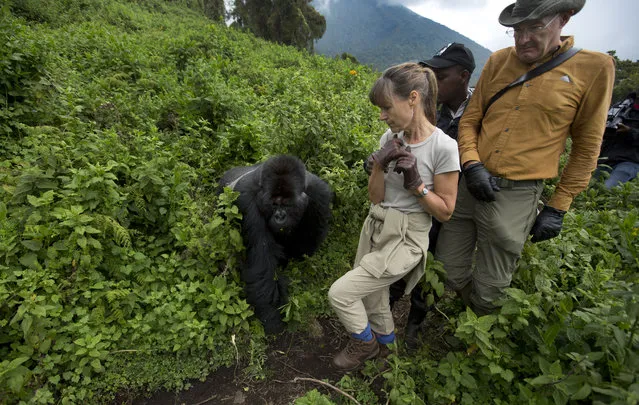
In this photo taken Friday, September 4, 2015, tourists Sarah and John Scott from Worcester, England, take a step back as a male silverback mountain gorilla from the family of mountain gorillas named Amahoro, which means “peace” in the Rwandan language, unexpectedly steps out from the bush to cross their path in the dense forest on the slopes of Mount Bisoke volcano in Volcanoes National Park, northern Rwanda. (Photo by Ben Curtis/AP Photo)

In this photo taken Friday, September 4, 2015, tourists Sarah and John Scott from Worcester, England, take a step back as a male silverback mountain gorilla from the family of mountain gorillas named Amahoro, which means “peace” in the Rwandan language, unexpectedly steps out from the bush to cross their path in the dense forest on the slopes of Mount Bisoke volcano in Volcanoes National Park, northern Rwanda. Deep in Rwanda's steep-sloped forest, increasing numbers of tourists are heading to see the mountain gorillas, a subspecies whose total population is an estimated 900 and who also live in neighboring Uganda and Congo, fueling an industry seen as key to the welfare of the critically endangered species as well as Rwanda's economy. (Photo by Ben Curtis/AP Photo)
Details
18 Sep 2015 14:55:00
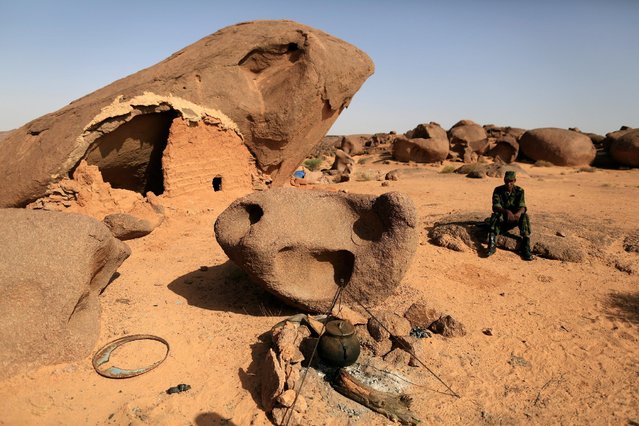
A Polisario fighter sits on a rock at a forward base on the outskirts of Tifariti, Western Sahara, September 9, 2016. At a rocky outpost in Western Sahara, a new generation of soldiers who have never known war are mobilising as tensions resurface in one of Africa's oldest disputes after a quarter century of uneasy peace. Young Sahrawi troops man new desert posts for the Polisario Front, which for more than 40 years has sought independence for the vast desert region - first in a guerrilla war against Morocco and then politically since a ceasefire deal in 1991. Now a standoff with Morocco, which controls the majority of Western Sahara, is renewing pressure for a diplomatic solution to ensure foot soldiers don't return to fighting as the last generation of commanders once did. The standoff since August has brought Moroccan and Polisario forces within 200 metres of each other in a narrow strip of land near the Mauritanian border. Rich in phosphate, Western Sahara has been contested since 1975 when Spanish colonial powers left. Morocco claimed the territory and fought the 16-year war with Polisario. (Photo by Zohra Bensemra/Reuters)

A Polisario fighter sits on a rock at a forward base on the outskirts of Tifariti, Western Sahara, September 9, 2016. At a rocky outpost in Western Sahara, a new generation of soldiers who have never known war are mobilising as tensions resurface in one of Africa's oldest disputes after a quarter century of uneasy peace. (Photo by Zohra Bensemra/Reuters)
Details
04 Nov 2016 12:09:00