Loading...
Done
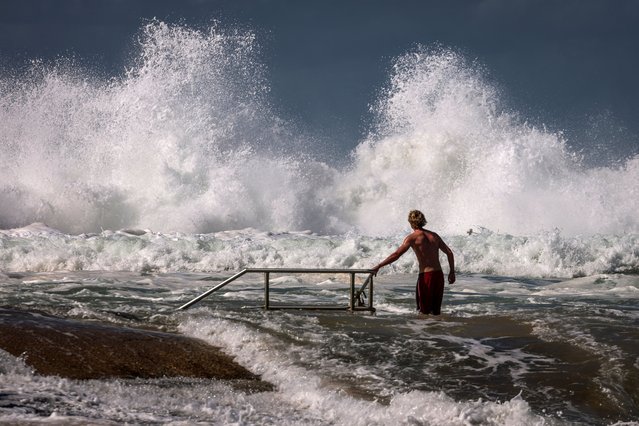
A man walks towards a wave breaking on a rock pool at North Narrabeen Beach in Sydney on April 18, 2025, as large swells hit the east coast of Australia. (Photo by David Gray/AFP Photo)

A man walks towards a wave breaking on a rock pool at North Narrabeen Beach in Sydney on April 18, 2025, as large swells hit the east coast of Australia. (Photo by David Gray/AFP Photo)
Details
28 Oct 2025 04:55:00


“The Trabant is a car that was produced by former East German auto maker VEB Sachsenring Automobilwerke Zwickau in Zwickau, Sachsen. It was the most common vehicle in East Germany, and was also exported to countries both inside and outside the communist bloc. The main selling points was that it had room for four adults and luggage in a compact, light and durable shell and that it was fast (when introduced) and durable. With its mediocre performance, smoky two-stroke engine, and production shortages, the Trabant is often cited as an example of the disadvantages of centralized planning; on the other hand, it is regarded with derisive affection as a symbol of the failed former East Germany and of the fall of communism (in former West Germany, as many East Germans streamed into West Berlin and West Germany in their Trabants after the opening of the Berlin Wall in 1989). It was in production without any significant changes for nearly 30 years with 3,096,099 Trabants produced in total”. – Wikipedia

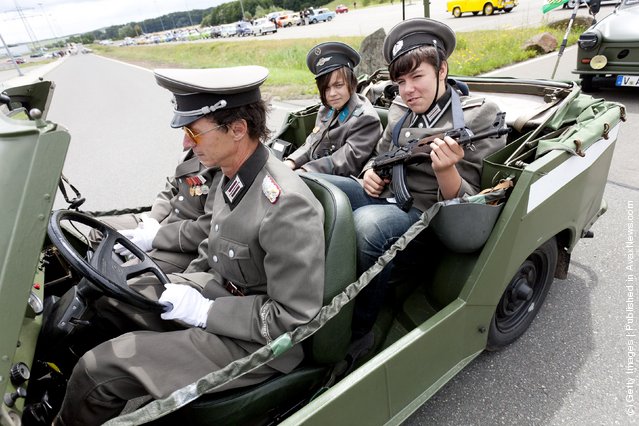
Photo: Enthusiasts weared in uniforms of the former eastern german army trive in a military Trabant car as fans and owners of East German-era Trabant cars gather at the 2011 International Trabantfahrer Treffen (International Trabant Drivers Meeting) on June 26, 2011 in Zwickau, Germany. The Trabant, also known as the Trabi, was among the main cars produced in communist East Germany and built by VEB Sachsenring Automobilwerke in Zwickau for 30 years until 1989. Today the car has cult status for many followers and one company, IndiKar, is even seeking to revive the brand in a modern, electric version. (Photo by Carsten Koall/Getty Images)
Details
27 Jun 2011 12:21:00
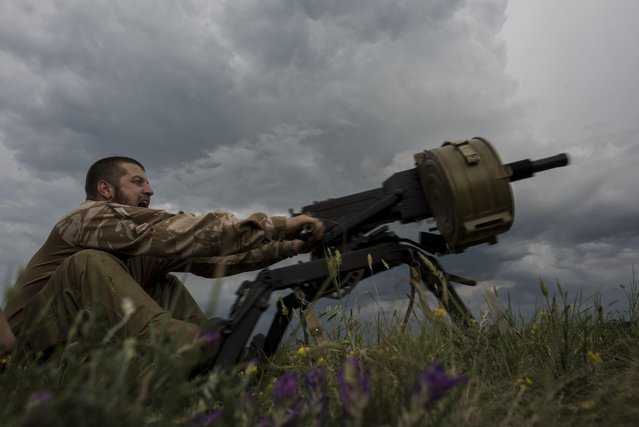
In this photo taken Tuesday, June 23, 2015, a Ukrainian serviceman from the Kiev-2 volunteer battalion fires an weapon at a frontline in the village of Krymske, east Ukraine. (Photo by Evgeniy Maloletka/AP Photo)

In this photo taken Tuesday, June 23, 2015, a Ukrainian serviceman from the Kiev-2 volunteer battalion fires an weapon at a frontline in the village of Krymske, east Ukraine. Few places along the front line in east Ukraine see regular fighting as bitter as the village of Krymske. For now, Krymske is in the hands of Ukrainian government forces and the volunteer battalions that fight alongside them. (Photo by Evgeniy Maloletka/AP Photo)
Details
28 Jun 2015 12:54:00


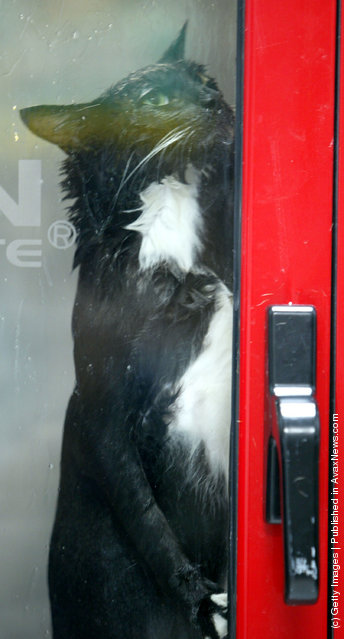
Magira, the cat, stands in a new pet cleaning machine known as the PetSpa June 21, 2002 in Miami, Florida. The side-loading washing machine features 37 spray nozzles and is capable of washing, rinsing and blow drying a dog or cat in 30 minutes. (Photo by Joe Raedle/Getty Images)
Details
16 Jun 2011 11:58:00


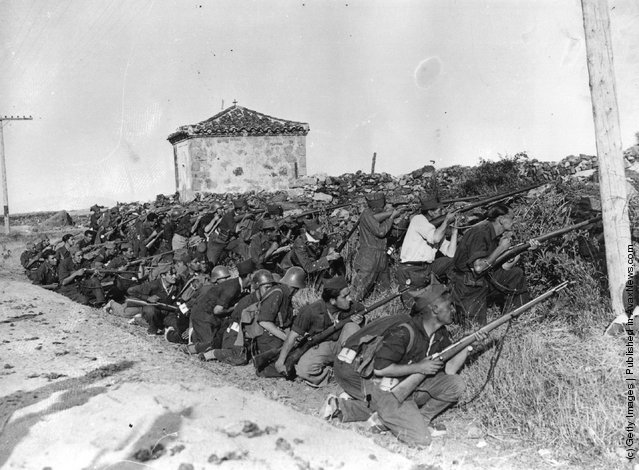
A Republican farmer defending a farm on the outskirts of Irun against Nationalist forces during the Spanish Civil War, 6th September 1936. A comrade lies dead by his side. (Photo by Keystone/Hulton Archive/Getty Images)
Details
23 May 2011 05:59:00
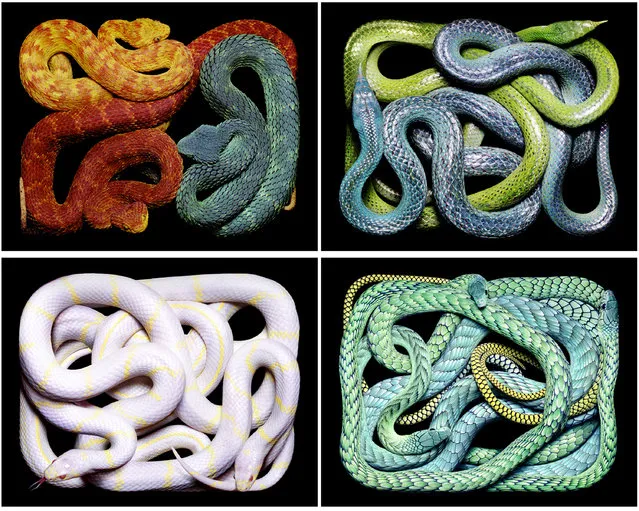
Snake

Out of 2,700 species of snakes, just few are dangerous to man and Guido Mocafico used them in his art to show there is a less frightening side to snakes. Take a look at his amazing coiled-snakes artworks and know they can be purchased from
Details
30 Jun 2012 10:02:00
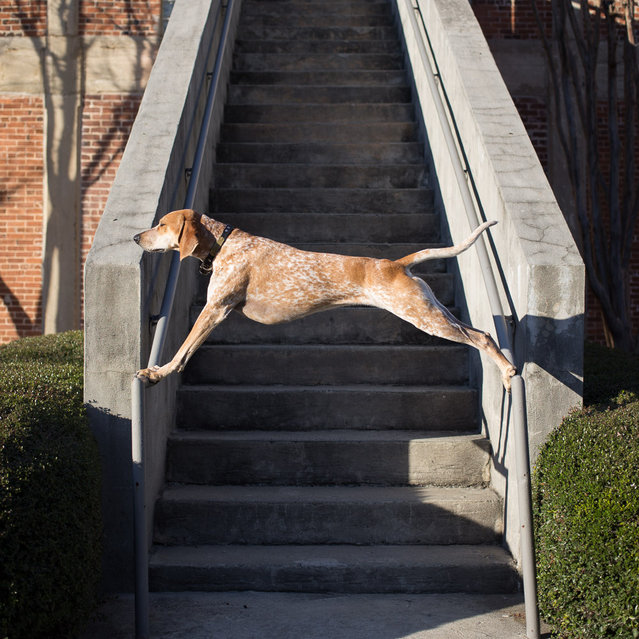
Maddie The Coonhound By Theron Humphrey

Maddie The Coonhound a fun side project of photographer Theron Humphrey as he travels across America shooting portraits and telling the stories of everyday people for his project, This Wild Idea. In between he takes pictures of his dog – Maddie The Coonhound – that seems to enjoy being a model.
Details
03 May 2013 11:23:00
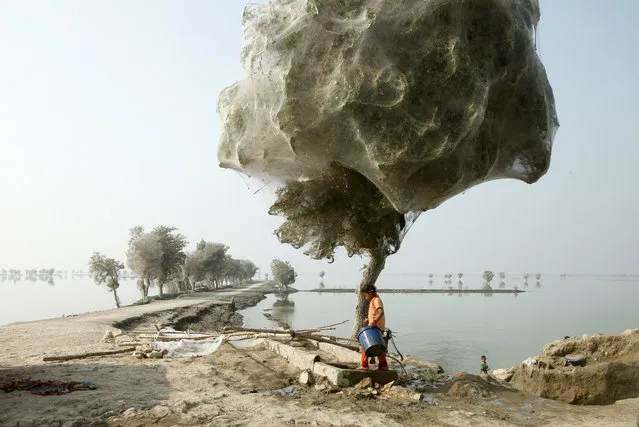
Spiderweb Cocooned Trees In Pakistan

An unexpected side-effect of the flooding in parts of Pakistan has been that millions of spiders climbed up into the trees to escape the rising flood waters. Because of the scale of the flooding and the fact that the water has taken so long to recede, many trees have become cocooned in spiders’ webs.
Details
15 May 2014 11:22:00