Loading...
Done
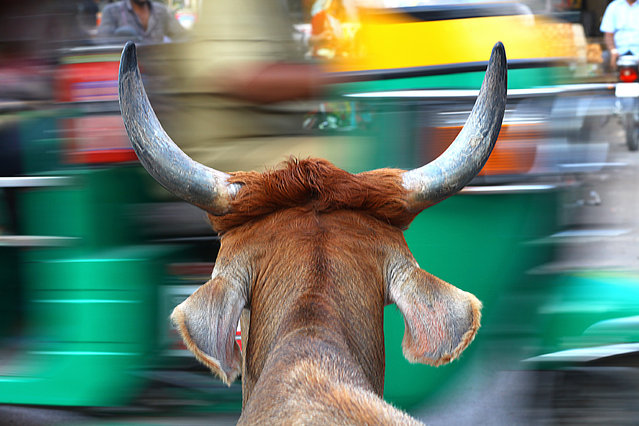
“Slow”. A calm cow in the messy streets of Jodhpur. Photo location: India. (Photo and caption by Matthias Troeger/National Geographic Photo Contest)

“Slow”. A calm cow in the messy streets of Jodhpur. Photo location: India. (Photo and caption by Matthias Troeger/National Geographic Photo Contest)
Details
20 May 2014 12:18:00
An aerial view shows a sinkhole 3.5 km (2 miles) to the east of Solikamsk-2 mine in Perm region, November 20, 2014. Shares in Russia's Uralkali, the world's top potash producer, fell sharply for a second day on Wednesday after a mine accident that could reduce global supplies and push up prices of the crop nutrient worldwide. (Photo by Reuters/Press service of Uralkali company)

An aerial view shows a sinkhole 3.5 km (2 miles) to the east of Solikamsk-2 mine in Perm region, November 20, 2014. Shares in Russia's Uralkali, the world's top potash producer, fell sharply for a second day on Wednesday after a mine accident that could reduce global supplies and push up prices of the crop nutrient worldwide. Uralkali shares have fallen 28 percent since Tuesday when it suspended work at its Solikamsk-2 mine, which accounts for a fifth of the company's output and 3.5 percent of global capacity, following an inflow of water. A sinkhole, stretching 30 by 40 metres (yards), found at an abandoned mine 3.5 km (2 miles) to the east, increased concern about the future of the mine because an inflow of water and the resulting sinkhole in 2006 forced another Uralkali operation to shut permanently. (Photo by Reuters/Press service of Uralkali company)
Details
22 Nov 2014 13:51:00
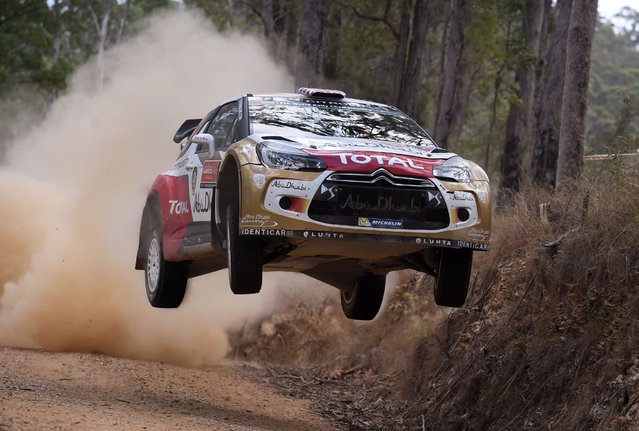
British rally driver Kris Meeke jumps his Citroen over a brow during the fifth special stage of the World Rally Championship (WRC) Rally of Australia, near Bellingen on the New South Wales central coast on September 12, 2014. (Photo by William West/AFP Photo)

British rally driver Kris Meeke jumps his Citroen over a brow during the fifth special stage of the World Rally Championship (WRC) Rally of Australia, near Bellingen on the New South Wales central coast on September 12, 2014. (Photo by William West/AFP Photo)
Details
13 Sep 2014 12:01:00
Galapagos – Rocking the Cradle: Four major ocean currents converge along the Galapagos archipelago, creating the conditions for an extraordinary diversity of animal life, April 25, 2016. The islands are home to at least 7,000 flora and fauna species, of which 97 percent of the reptiles, 80 percent of the land birds, 50 percent of the insects and 30 percent of the plants are endemic. The local ecosystem is highly sensitive to the changes in temperature, rainfall and ocean currents that characterize the climatic events known as El Niño and La Niña. These changes cause marked fluctuations in weather and food availability. Many scientists expect the frequency of El Niño and La Niña to increase as a result of climate change, making the Galapagos a possible early-warning location for its effects. (Photo by Thomas P. Peschak for National Geographic/World Press Photo)

Galapagos – Rocking the Cradle: Four major ocean currents converge along the Galapagos archipelago, creating the conditions for an extraordinary diversity of animal life, April 25, 2016. The islands are home to at least 7,000 flora and fauna species, of which 97 percent of the reptiles, 80 percent of the land birds, 50 percent of the insects and 30 percent of the plants are endemic. (Photo by Thomas P. Peschak for National Geographic/World Press Photo)
Details
16 Apr 2018 00:01:00
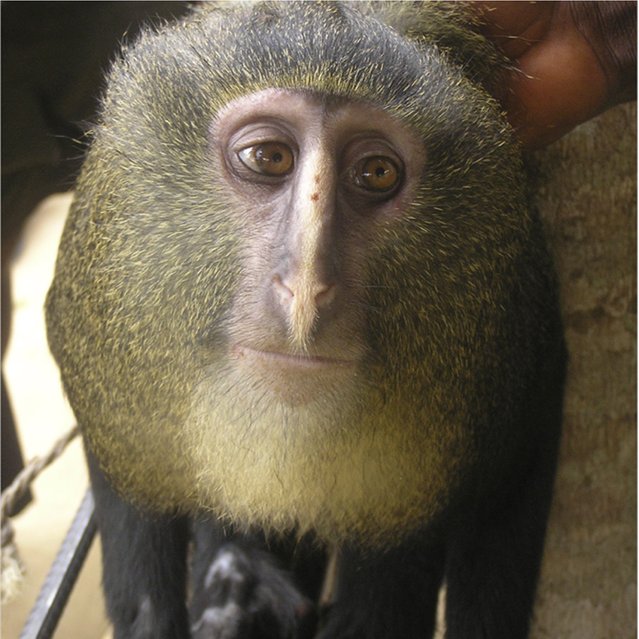
A new species of monkey found in the Democratic Republic of the Congo and identified as Lesula (Cercopithecus lomamiensis) is seen in this undated photograph from an article published September 12, 2012 in the science journal PLOS One. (Photo by Hart J. A., Detwiler K. M., Gilbert C. C./Reuters)

A new species of monkey found in the Democratic Republic of the Congo and identified as Lesula (Cercopithecus lomamiensis) is seen in this undated photograph from an article published September 12, 2012 in the science journal PLOS One. The monkey was first seen in 2007 by researchers John and Terese Hart of the Peabody Museum of Natural History at Yale Research Project. The finding of C. lomamiensis represents only the second new species of African monkey to be discovered in the past 28 years, according to the research article. (Photo by Hart J. A., Detwiler K. M., Gilbert C. C./Reuters)
Details
27 Sep 2012 08:17:00


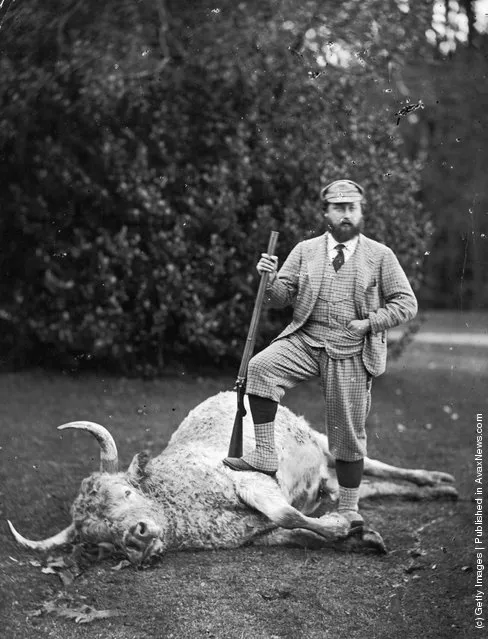
Edward, Prince of Wales (1840–1910), later King Edward VII, stands over the carcass of a wild Chillingham bull, shot by himself during a visit to Chillingham Castle, Northumberland, circa 1879. (Photo by Hulton Archive/Getty Images)
Details
05 Apr 2011 09:25:00


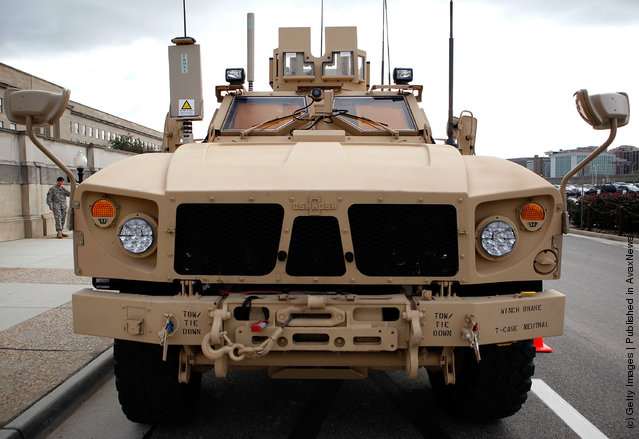
The Oshkosh M-ATV – MRAP (Mine Resistant Ambush Protected) vehicle developed by the Oshkosh Corporation of Oshkosh, Wisconsin. It is designed to provide the same levels of protection as the larger and heavier previous MRAPs but with improved mobility and it is intended to replace M1114 HMMWVs. (wikipedia) (Photo by Alex Wong/Getty Images)
Details
22 Nov 2011 04:03:00
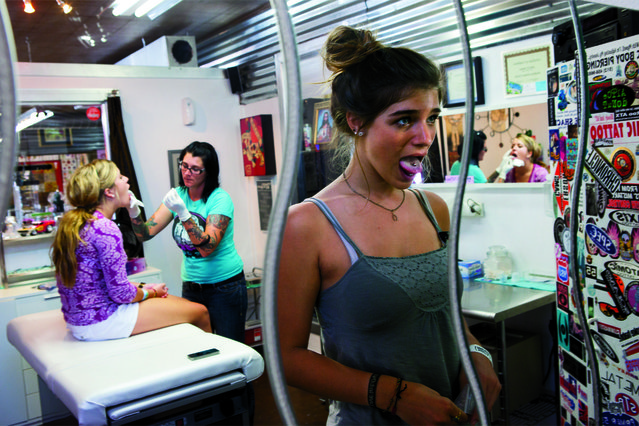
Getting her tongue pierced was “exciting and scary” says a teen who succumbed to pressure from her best friend in Austin, Texas, February 22, 2008. (Photo by Kitra Cahana/National Geographic)

Getting her tongue pierced was “exciting and scary” says a teen who succumbed to pressure from her best friend in Austin, Texas, February 22, 2008. This image is featured in National Geographic's exhibition “Women of Vision: National Geographic Photographers on Assignment”, on view at the Palm Beach Photographic Centre, Jan. 22 - Mar. 22, 2015. (Photo by Kitra Cahana/National Geographic)
Details
29 Jan 2015 11:40:00