Loading...
Done
Ocean voyage

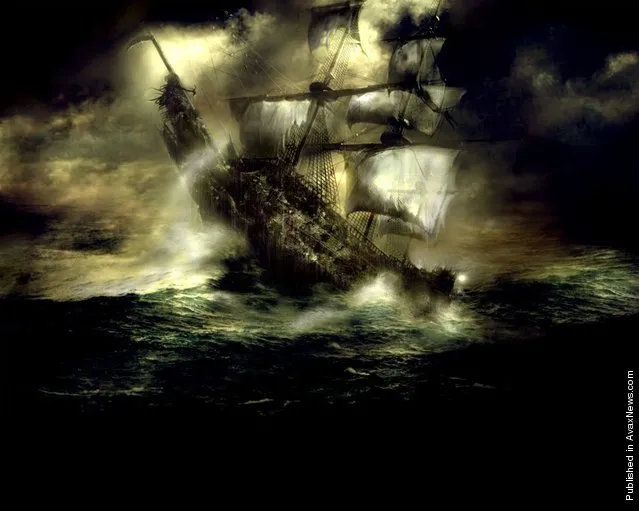
Do you think that history is a science? Well, not exactly. First, and foremost, history is the state's “legend of wars”, it’s official regalia. Of course, public historians are not interested in scientific truth – quite the opposite. In this respect, any attempt to present a state’s history as altruistic and benevolent as possible is welcomed and encouraged – as opposed to any revisionism attempts that may be more accurate. In this matter, Chinese have surpassed us all – they revised in highly creative manner (but rather shamelessly) the technology already invented by Europeans, a process that resulted in oldest state on the planet. Here is an interesting paradox: ask any sinologist about the Middle Kingdom during second century B.C., and he will describe it to you in such a vivid manner as if he has been living there all his life – but as soon as you will ask him to describe Chinese history in the 19-20th centuries… let's say, his eagerness will be greatly diminished. However, we will discuss China in a different article, and in the meantime we will try to understand how exactly historic “legend of wars” is formed and functions – based on a specific and well-known example. A great example is Ferdinand Magellan's first voyage around the world.
Details
14 Nov 2011 09:11:00
A) 1st place WINNER – Roy Rimmer. This rat was in an outdoor set I made, the set up is two meters long and a meter wide made of Perspex,it has a plywood front with holes cut in for my camera and flash guns, I placed two rusty paint cans in the set up and the rat would leap from one can too the other, I had to use flash to freeze the action.

A) 1st place WINNER – Roy Rimmer. “This rat was in an outdoor set I made, the set up is two meters long and a meter wide made of Perspex,it has a plywood front with holes cut in for my camera and flash guns, I placed two rusty paint cans in the set up and the rat would leap from one can too the other, I had to use flash to freeze the action”.
Details
08 Mar 2013 14:49:00
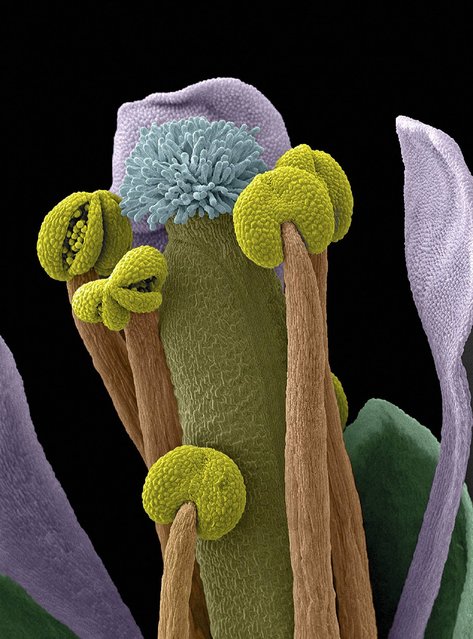
Scanning electron micrograph (SEM) of an Arabidopsis thaliana flower, also commonly known as thale cress. Some of the anthers are open, revealing pollen grains ready for dispersal. Arabidopsis was the first plant to have its entire genome sequenced and is widely used as a model organism in molecular and plant biology. Horizontal width of image is 1200 microns. Magnification 100x. (Photo by Stefan Eberhard/Wellcome Images)

Beautiful, strange and occasionally alarming pictures from the shortlist for this year’s Wellcome image awards – which celebrate the very best in science photography and imaging – from an x-ray of a bat to a micrograph of a kidney stone. The exhibition opens on 12 March at three science centres and the Museum of Science and Industry in Manchester. Photo: Scanning electron micrograph (SEM) of an Arabidopsis thaliana flower, also commonly known as thale cress. Some of the anthers are open, revealing pollen grains ready for dispersal. Arabidopsis was the first plant to have its entire genome sequenced and is widely used as a model organism in molecular and plant biology. Horizontal width of image is 1200 microns. Magnification 100x. (Photo by Stefan Eberhard/Wellcome Images)
Details
11 Mar 2014 05:58:00
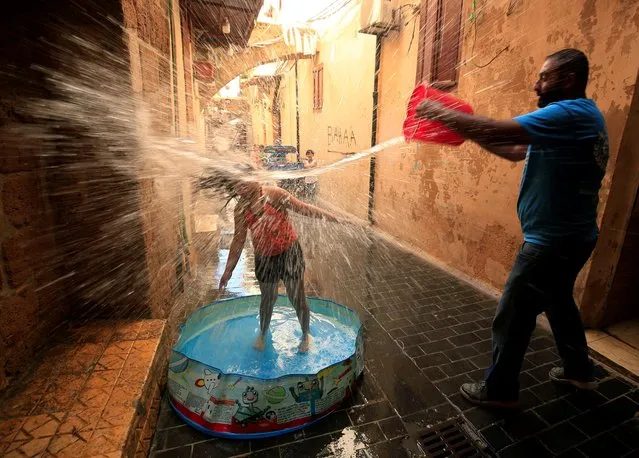
A man throws water on a girl playing in a pool, during a hot weather, amid concerns over the spread of coronavirus disease (COVID-19), in Sidon, southern Lebanon on May 21, 2020. (Photo by Ali Hashisho/Reuters)

A man throws water on a girl playing in a pool, during a hot weather, amid concerns over the spread of coronavirus disease (COVID-19), in Sidon, southern Lebanon on May 21, 2020. (Photo by Ali Hashisho/Reuters)
Details
24 May 2020 00:05:00
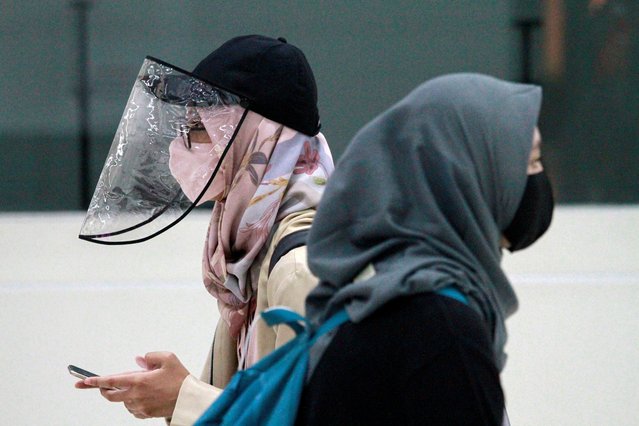
Women are pictured wearing a protective face mask and face shield as the Indonesian government eases restrictions to prevent the spread of the coronavirus disease (COVID-19) outbreak in Jakarta, Indonesia, June 8, 2020. (Photo by Ajeng Dinar Ulfiana/Reuters)

Women are pictured wearing a protective face mask and face shield as the Indonesian government eases restrictions to prevent the spread of the coronavirus disease (COVID-19) outbreak in Jakarta, Indonesia, June 8, 2020. (Photo by Ajeng Dinar Ulfiana/Reuters)
Details
15 Jul 2020 00:01:00
People pose for pictures on the banks of Yangtze River on New Year's Eve in Wuhan, in China’s central Hubei province on December 31, 2020. (Photo by Noel Celis/AFP Photo)

People pose for pictures on the banks of Yangtze River on New Year's Eve in Wuhan, in China’s central Hubei province on December 31, 2020. (Photo by Noel Celis/AFP Photo)
Details
06 Jan 2021 00:07:00
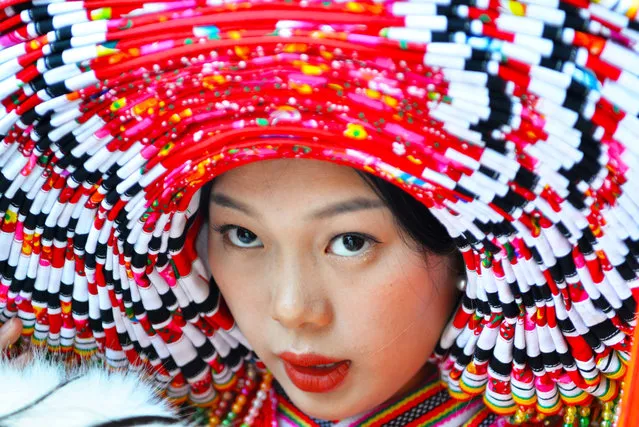
A woman wears a Yao bridal headdress in Hezhou, Guangxi, China on January 6, 2021. (Photo by Sipa Asia/Rex Features/Shutterstock)

A woman wears a Yao bridal headdress in Hezhou, Guangxi, China on January 6, 2021. (Photo by Sipa Asia/Rex Features/Shutterstock)
Details
11 Jan 2021 00:05:00
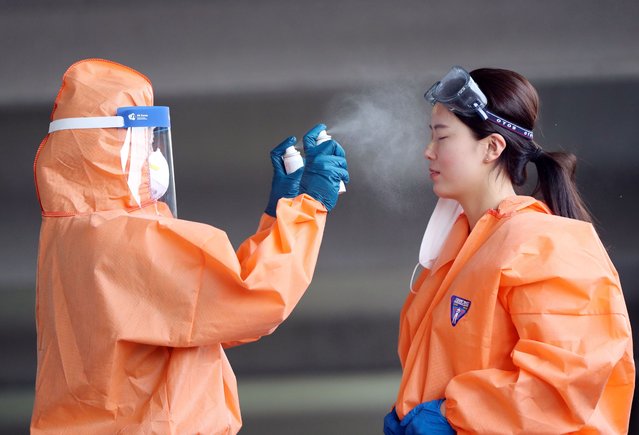
A medical worker in protective gear sprays mist on her colleague during a hot day at an outdoor clinic for coronavirus tests at a public health facility in the southwestern city of Gwangju, South Korea, 05 June 2020. (Photo by Yonhap/EPA/EFE)

A medical worker in protective gear sprays mist on her colleague during a hot day at an outdoor clinic for coronavirus tests at a public health facility in the southwestern city of Gwangju, South Korea, 05 June 2020. (Photo by Yonhap/EPA/EFE)
Details
17 Jan 2021 00:05:00